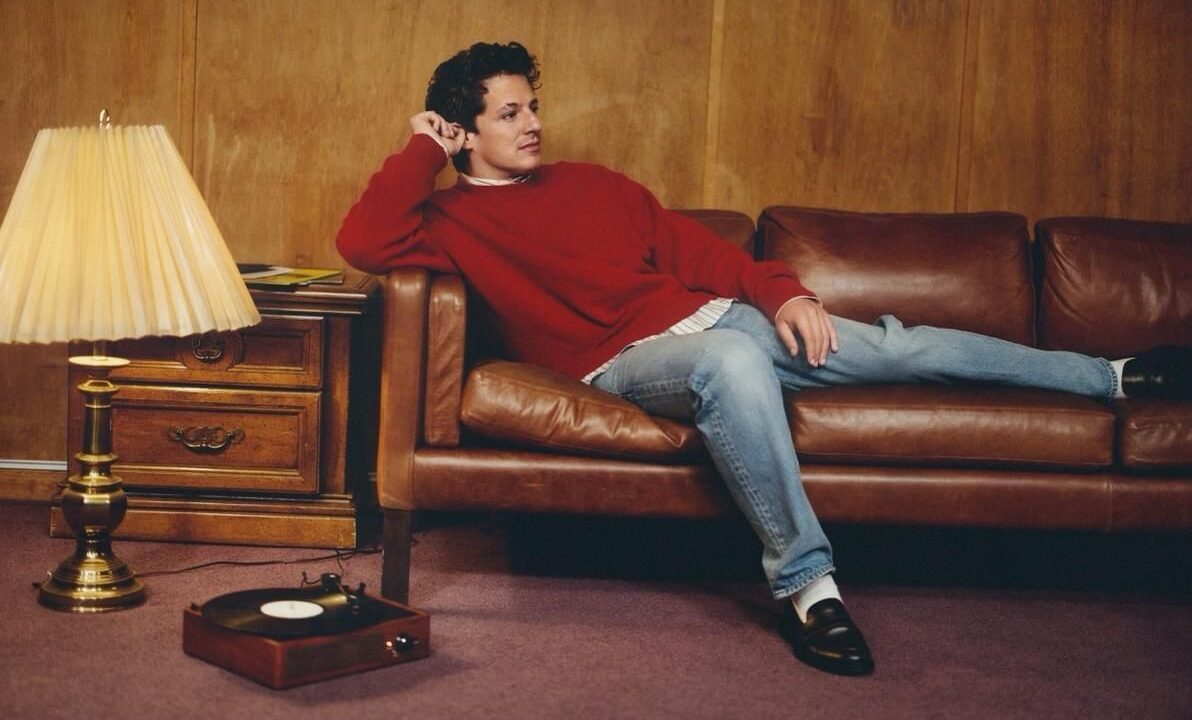
It won’t surprise you to learn that when Taylor Swift sang “Charlie Puth should be a bigger artist” on her 2024 album The Tortured Poets Department, she caught the attention of Charlie Puth himself.
“After I heard her say that,” he tells Vogue, “I just went ahead and made an album that I happened to be so proud of.”
After making his name with catchy pop hits—from his 2015 breakout “See You Again” to the radio-friendly “We Don’t Talk Anymore” the following year—the New Jersey-born musical prodigy decided to change his approach. In recent years, he’s grown his following on TikTok with bite-sized music theory lessons. Now, with his fourth studio album, Whatever’s Clever!, out March 27 from Atlantic Records, Puth offers a window into his personal and creative evolution, building on and transforming the sounds he grew up with. (He’s described the record as “Yacht Rock 2026.”)
Here, speaking to Vogue via Zoom (and, in fact, from a treadmill), Puth discusses his big appearance at Super Bowl LX, his approach to songwriting, and what it means to release a new album just as he and his wife, Brooke, are becoming parents. (Puth’s son Jude was born on March 13.)
Vogue: Audiences seemed to love your rendition of the national anthem at the Super Bowl. What was your headspace like before you went out there: quiet and zen, or taking shots?
Charlie Puth: Well, I definitely wasn’t taking shots. I was really more nervous for everything leading up to it, but once I stepped foot on the field, all that nervousness dissipated. It all just went away! But that’s what music does for me. It’s my ultimate balance. That’s why I always do interviews by the piano—although I’m not doing one now, but there is a piano over there. The sounds are very calming to me. So the moment I played those first couple of notes, my whole body relaxed.
When I looked up at the sky, I wasn’t shocked by how well everything sounded because we rehearsed it 20 times and we got it right, but I was surprised that the flyover was so musically on rhythm. That’s something we didn’t plan to happen on that last D major chord. It’s like the airplanes were right in sync with that hit musically. So that was pretty incredible.
Vogue: I know you’ve said you honored Whitney Houston in a musical sense. Can you describe how you did that?
Puth: Well, her rendition of the national anthem, in my opinion and in many people’s opinions, will always be the best one ever done. I wasn’t trying to compete with that, but being that I was the second New Jersey native to sing the national anthem, it would only be right to take bits of her arrangement, the way she sang certain phrases, and make it my own—singing note for note what she had sung at certain points, like how she sang lines such as “The rocket’s red glare” or “the land of the free.”
Vogue: I’d be remiss if I didn’t ask you about Taylor Swift’s shout-out on The Tortured Poets Department, which I know led to a shift in creative perspective for you. First off, how did you find out you were on that album?
Puth: I was just on the internet and I saw that my name was a searched topic, and I wondered why, because I hadn’t put out any music. Then I heard that great piece of music and I was excited. I mean, who wouldn’t be excited about that? I think I’ve said this before, that maybe that was her way of encouraging me to make a certain type of music. So I’m very grateful for the shout-out.
Vogue: What about that shout-out changed things for you?
Puth: I think it was such a specific lyric, and it inspired me to write specific lyrics.
Vogue: The album release happens to coincide with the birth of your first child. Where’s your head at these days?
Puth: I’m really excited that my life has finally lined up musically to where I want to be. The music is directly parallel with that, which is why Whatever’s Clever! is all…Yacht Rock 2026-style. With all respect to the artists featured on this album, it’s music I’d listen to as a dad, if that makes sense. So I feel very aligned with it. I think it’s all very serendipitous, and there’s meaning behind everything. There might be a reason why this album is arriving at this particular time.
Let’s talk about songs that lean into specificity. For example, “I Used To Be Cringe.” That’s actually the song I wrote after I heard The Tortured Poets Department.
Do you actually think you used to be cringe? You’ve been a big star for over a decade now. What’s cringe about that?
What I associate with the word “cringe,” in my case, is just not being honest about who I really was. I don’t blame myself, either; I was just a young man growing up. But I was trying on a lot of different suits, metaphorically. Dyeing my hair blonde, then shaving it; adjusting my appearance, adjusting the way I talked—just because I wanted to fit in so badly and I wanted people to listen to my music. What I didn’t realize, and what I ultimately understood when I got older, is that I didn’t need to mold myself into something just so people would like me. I just had to be myself the entire time. So I used to do cringey things to get attention when I didn’t need to. I should’ve just let the music speak for itself, and it took me a while to figure that out.
It’s interesting that with lyrics, the more general you are, the less people relate.
I think it speaks to the fact that we all go through unique things. Your situation is unique, but there are more people who are dying to hear from you because of it. I felt it was my duty as an artist to put some chords and a melody to that.
Let’s talk about “Don’t Meet Your Heroes.” First off, when you write a song, do you start with the title or the lyrics?
I think it’s title first. A lot of these songs came from talking to myself—not out loud, but just thinking. I have a conversation with myself, and to make a song that resonates with my fans, I have to tell the truth. I think about experiences I went through: times of disappointment, times of joy. One of those times I wanted to write about something I hadn’t before was when I felt really saddened and disappointed after meeting someone I’d looked up to for a long time. Sure, everyone can wonder who it’s about specifically, but it’s not really about that.
There was no way to dance around it. I had to write the title “Don’t Meet Your Heroes” because that’s what I was thinking at the time. I remember having that title in my head for a very long time. It was like, what a shame. I should have just kept this person on my inspiration list to meet one day, but not actually meet them. It’s a bummer, but sometimes you’re disappointed.
Why is now the moment for Yacht Rock 2026, as you call it? Is it that the country needs a little musical escapism these days?
I don’t know why I make the musical decisions I make. It’s just wherever life leads me, I try to put some chord progressions behind it. Since I’m about to be a father, I’m entering this really exciting stage of life, and I feel like this is the perfect soundtrack to that. It feels like the perfect time to write really specific songs about subjects you might not have heard me sing about before.
It’s very appropriate that a song called “Changes” opens the record. Did you know you were going to be a dad when you wrote that?
Well, the short answer is no. I didn’t know at the time I wrote that song. But the song is specifically about a growing friendship, a changing friendship, and how life and distance can affect it. That’s something I’ve gone through a couple of times, and I feel like a lot of people have gone through that as well.That song really does have a Steve Winwood, happy-go-lucky, optimistic 1992 vibe—big, booming snare and all.
I tend to absorb the overall feeling of a song before I focus on the lyrics. As a prodigy, how do you listen to music?
I’ll pick up on the lyrics if the music guides me there, but I think I’m like most people in that I don’t always listen to every word all the way through. At first, I’m really hearing it from a producer’s perspective: the drums, how the piano is placed, where the vocals sit in the mix. But if there’s a really compelling lyric—maybe it’s the song title, or it stands out musically—it’ll definitely catch my ear.
We’re in the middle of a real ’90s revival right now, from the Love Story phenomenon to Harry Styles’ recent album rollout, where he wore a lot of button-downs and ties. It’s worth noting that you embraced that aesthetic early on for this album. What drew you to that style for this project?
For this album campaign, it was really important to me to wear clothes that feel like me. When I was imagining this album, I thought about my favorite teachers growing up and how much they cared about the subjects they taught. Even if I wasn’t going to be an A+ student in chemistry, my chemistry teacher would put on a tie and show up at seven in the morning, ready to teach. I admire teachers—I think they’re some of the most important people. So, putting on my tie is like showing up for work. It shows I care about what my fans are going to hear and about the music I’ve written.
To help promote the album, you did a series of intimate residencies at places like the Blue Note jazz club in New York. I saw one of those shows—you were smiling the whole time and said you’d never been happier. Why did that make you so happy?
I made this album for myself. It’s full of music from the year I was born—a real passion project. In the most humble way, I feel like I have nothing left to prove. That’s how it feels to me, at least.
This conversation has been edited and condensed.
Frequently Asked Questions
Of course Here is a list of FAQs about Charlie Puth embracing his dadmusic era designed to sound like questions from real fans and curious listeners
FAQs Charlie Puths DadMusic Era
Beginner Definition Questions
1 What does dad music even mean
Its a playful affectionate term for music thats polished melodic and often leans into classic pop rock or softrock sounds from the 70s and 80s Think wellcrafted songs with strong vocals guitar solos and relatable themesmusic you might imagine a cool dad playing in the car
2 Why is Charlie Puth calling his new phase a dadmusic era
Hes using the term to describe his recent shift toward a more mature instrumentfocused and timeless sound moving away from the ultraprocessed trendchasing pop of his earlier hits Hes embracing craftsmanship over viral moments
3 What are some examples of dad music artists
Classic examples include artists like Billy Joel Paul McCartney Fleetwood Mac Hall Oates and more modern acts like John Mayer or The 1975 who often channel those influences
Benefits Mindset
4 Why is Charlie Puth happier in this era
Hes stated that he feels more creative freedom and authenticity Hes making music he genuinely loves without the intense pressure to create a TikTokready hit every time which allows him to focus on songwriting and musicianship
5 What are the benefits of an artist embracing a niche like this
It can build a deeper more dedicated fanbase establish artistic longevity and free the artist from the exhausting cycle of chasing fleeting trends It often leads to music that ages better
Common Questions Examples
6 Isnt this just a weird midcareer crisis
Not at all For many artists this is a natural evolution toward musical maturity Its about honing their craft and making music that reflects who they are now rather than who they were when they first broke out
7 What songs of his best show this dadrock vibe
Tracks like