A year after the fires that ravaged Los Angeles, Vogue Business examines the fashion industry’s recovery and rebuilding efforts. This report is part of our “Refashioning LA” series, which looks at where the city’s fashion and apparel sector is headed in 2026.
Los Angeles has always had a strong fashion and beauty industry, contrary to some perceptions. Homegrown luxury brands like Chrome Hearts, Amiri, James Perse, and Dôen started here and have since expanded far beyond the city.
Today, a new wave of brands is thriving in LA. International companies are also recognizing the city’s potential as a gateway to the US market, rather than just a secondary choice after New York.
London-based Kiko Kostadinov, Manchester’s Represent, and Chinese sportswear brand Anta all chose Los Angeles for their first US stores—the first two in 2024, and Anta in 2025—before expanding to New York or other parts of the country. These brands are tapping into an appeal that LA founders have long understood, which has become even clearer in recent years: the LA lifestyle and its strong sense of community are ideal for building a fashion or beauty brand.
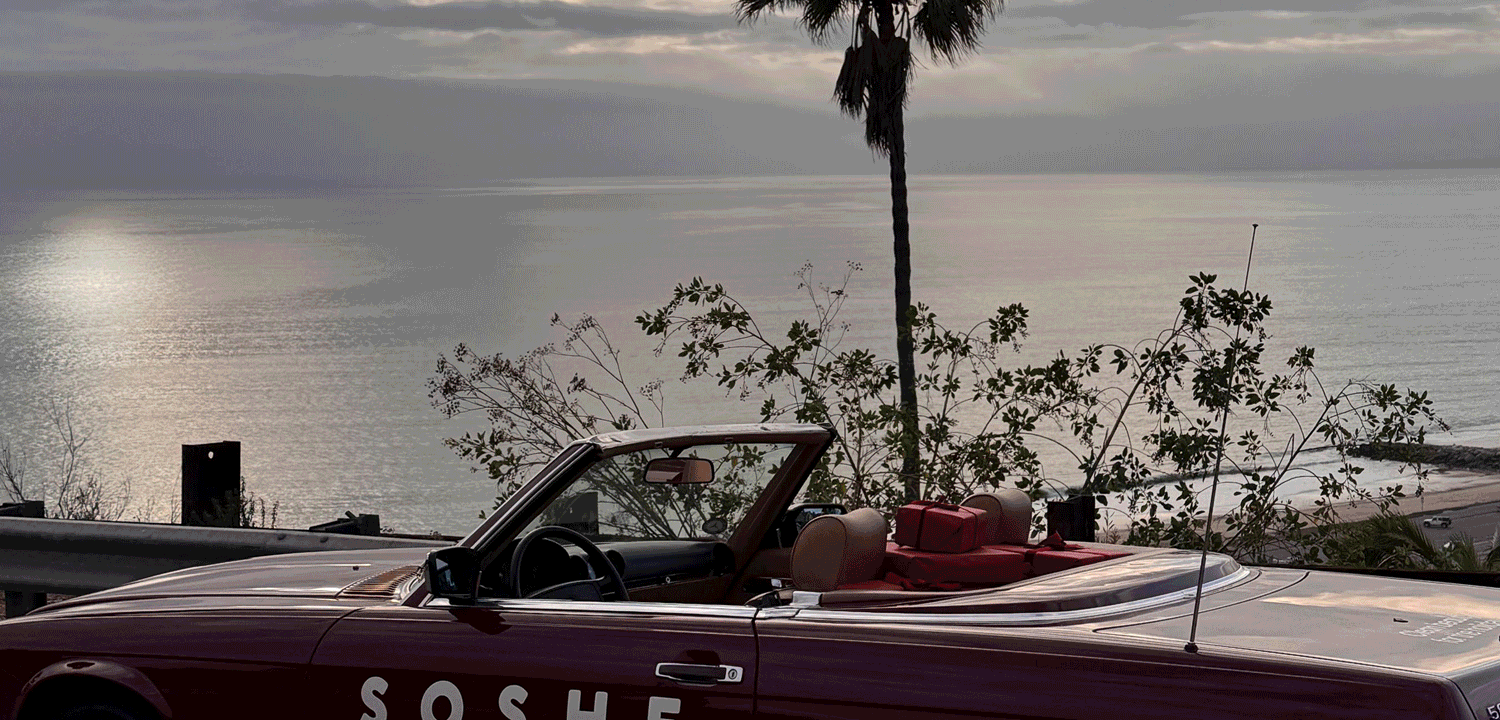
“There’s been a really fun shift in LA,” says Sahar Rohani, co-founder of refillable beauty brand Soshe Beauty. She started the brand in 2019 as a project at the University of Southern California and later grew it through Credo Beauty’s Credo for Change accelerator program in 2022. “A few years ago, events were mostly about specific product launches within the same influencer circles. Now, brands are embracing the idea that everyone in Los Angeles is an influencer in their own world, whether they intend to be or not.”
Nina Garduno, founder of LA basics brand Free City and a former chief men’s buyer for Ron Herman and Fred Segal, is optimistic about this new generation. She points to Madhappy, a brand she has collaborated with, as one of the promising newcomers. “It’s the next generation,” she says. “They’re old enough now, working and gaining creative experience here in LA. It’s a true story of watching a generation grow up and take over.”
By 2026, LA founders aim to raise the stakes by creating more physical spaces in a city where people are eager to engage with brands in person. Here, direct-to-consumer (DTC) is becoming more direct than ever. While LA may lack New York’s constant hustle, it makes up for it with consumers who are willing to invest their time—often more plentiful than in busier cities—and money into brands they connect with. Founders agree it’s a different kind of hustle culture.
The Lifestyle
LA wasn’t necessarily the planned first US stop for Kiko Kostadinov, who designs his namesake brand’s menswear, or for womenswear designers Laura and Deanna Fanning. Kostadinov says the choice wasn’t overly strategic but more a matter of circumstance. Their store, located in the Melrose Hill gallery district, is next to Morán Morán, a gallery the brand has long worked with. Additionally, the brand’s head of North American retail, Jenny Le, was already based in the city.
Represent followed a similar path. The team initially wanted to open their second store in their hometown of Manchester, UK (their first was in London), but couldn’t find the right location. In LA, they found the perfect space in West Hollywood, near brands like Jacquemus and Chrome Hearts. (A third store in Manchester opened later that year.)
The LA location is Represent’s top-performing store. Co-founder George Heaton credits this to customers buying more of its higher-end, fashion-focused items, unlike in Manchester or even London, where shoppers tend to purchase more logo-driven basics. “The LA consumer really comes to the store to browse for fashion and w…”I’ll leave with multiple pieces and full looks,” he says. LA customers want to buy into the Represent look—and the lifestyle that comes with it.
For Represent, LA’s active lifestyle is a natural fit. Its fitness sub-brand, 247, has grown thanks to the city’s climate and fitness culture. Heaton shoots content, hosts events, and partners with wellness spots to connect with the city’s fitness enthusiasts. When the brand launched in LA in 2024, it even teamed up with Erewhon on a green juice to celebrate. This showed early on that the founders understand what works in their new home: consumers support brands that fit into the lives they’re already living.
Represent’s new collection, EngLAnd, shows how the brand has blended its British roots with the LA lifestyle.
This is the approach Rohani is focused on for the year ahead. “We’re going to keep partnering with local stores, coffee shops, and restaurants in 2026. That’s what feels most like Soshe to me: showing up in places people already love and spending time with them there,” she says. Rohani adds that because LA is home to so many founders, consumers here are especially supportive of emerging brands. It’s an entrepreneurial city. “There are so many people here who’ve worked in CPG startups or know someone building something. So they get it.”
Community Matters
For Pia Mance, founder of the jewelry and accessories brand Heaven Mayhem, LA’s closeness to celebrities has been a big advantage. She credits this proximity to stars and their stylists for her brand’s many celebrity placements—being nearby means she can get products to them quickly. But looking ahead to 2026, many LA-based founders, including Mance, are shifting focus away from celebrities and toward the city’s interest-based communities.
Local consumers want to be part of a brand’s growth story, not just be marketed to, Mance explains. Lindsey Carter, founder of Set Active, agrees. “The more brands can build with community as their priority, the more successful they’ll be,” she says. Most brands I spoke with for this article talked about the importance of tapping into LA’s communities. Carter believes this focus is relatively new. When she founded Set in 2017, “community first” wasn’t a common priority for local brands, she says. Yet she credits Set’s early momentum to this very approach.
But LA is a sprawling city, which makes getting customers into stores a challenge. Kostadinov recently described the city’s retail scene to Vogue’s Luke Leitch as “a bit intense.” “It’s a massive city that requires a concentrated effort to pull clients into the store. It’s not a walking city,” he said. This means every client who visits wants to engage more deeply with the brand, he added. “There are very few casual shoppers. So every in-store interaction is with an educated and informed customer. That’s exciting for us as a brand, but it also requires a highly knowledgeable team on the ground.”
Brands need to know which community they’re speaking to and understand those consumers, founders agree. Because LA is so spread out, it’s made up of many micro-communities, defined by specific neighborhoods and interests. “If you know LA, you know it’s not one community—it’s a bunch of micro-communities stacked on top of each other,” Soshe’s Rohani says. “We’re not trying to make people drive an hour across town. We want to show up where they already are, partner with places they already love, and plug into their built-in community.”
For Represent, this has meant many sports collaborations. Earlier this year, the brand worked with ’47, the lifestyle brand that makes licensed sports headwear, on an MLB collection.In 2025, after releasing its second collaborative edition, Heaton noted that Represent sold thousands of units within a minute. With the Dodgers winning the World Series that November—a victory frequently mentioned by local sources in connection with the brand—this release was a clear way for Represent to weave itself into the local culture.
Meanwhile, Kiko Kostadinov partners with Rocky Xu’s Rocky’s Matcha to host monthly breakfasts, alongside events with NTS Radio. “There’s a strong yearning for community in LA, especially because everything is so spread out and you really have to make an effort to get from place to place,” Kostadinov says. He adds that these partnerships give the brand’s community something to feel excited about and be a part of.
Brands are focusing on building—and tapping into—a sense of community among their customers. But founders say the city also encourages connections between entrepreneurs more than more individualistic urban environments like New York or London. “I have so many founder friends who are just a text or call away,” says Mance of Heaven Mayhem. “Connecting with other founders and sharing information has helped us in so many ways.” Rohani describes this exchange as feeling “almost protective,” noting that conversations with fellow founders often lead to joint events, activations, or social gatherings. “LA can be competitive, but in beauty especially, it’s very collaborative.”
Carter agrees. When Set Active had its first challenging year in 2023, it was other founders she turned to for advice. Kira Mackenzie Jackson, who later joined Set as chief brand officer in 2024, and Maggie Sellers, founder of the podcast and newsletter “Hot Smart Rich,” were instrumental, Carter says. She met both at a founder dinner hosted by Siffat Haider and Nish Samantray of the supplement brand Arrae. “We ended up finishing Q4 really strong that year, and that saved us, giving us momentum going into 2024,” Carter explains.
Because LA is a hub for founders—especially in wellness—this spirit of collaboration crosses industries. Rohani says she’s grateful for access to founders in coffee, wellness, restaurants, and retail. “People here are open to testing and collaborating,” she says. “That energy is so fun, and it makes community activations possible even with a tighter budget.” (Kostadinov’s partnership with Rocky’s Matcha is one example.)
In LA, ultimately, you get what you give—especially at a time when consumers have so many brands to choose from.
“The main takeaway from this first year is that the city will give you what you give it,” Kostadinov says. “If you engage with the community, the community will support you. If you just unlock the doors and hope someone shows up, you’ll be very lonely by the end of the week. We’ve done a good job of being active in the city, and it’s paid off with a strong first year, financially and sustainably.”
More on this topic:
How LA Fashion Is Rebuilding Post-Fires
What’s Next for LA Manufacturing?
What Does the Hollywood Exodus Mean for Fashion?
Frequently Asked Questions
Frequently Asked Questions Building a Brand in Los Angeles in 2026
Beginner Foundational Questions
Q What does building a brand actually mean
A It means creating a unique identity reputation and story for your business or product so that people in LA recognize trust and choose you over competitors Its more than just a logoits the total experience you offer
Q Why is Los Angeles specifically challenging for new brands
A LA is a massive hypercompetitive market saturated with established brands and creative talent Its also incredibly diverse so a onesizefitsall approach wont work Standing out requires a clear authentic message and a smart strategy
Q What are the first steps to start building a brand in LA
A 1 Deeply research your specific LA audience 2 Define your unique valuewhat do you offer that no one else does 3 Create a consistent visual identity 4 Start building an online presence where your audience already is
Q Do I need a physical store or office in LA to build a brand here
A Not necessarily A strong digital brand can be very successful However for many industries having a local presence through popups collaborations with local businesses or attending events is crucial for community connection
Strategy Execution Questions
Q What marketing channels will be most important in LA in 2026
A While social media will remain critical expect a continued rise in hyperlocal digital marketing authentic influencer partnerships with microinfluencers and leveraging local experiential events to create buzz
Q How important will sustainability and social responsibility be for LA brands in 2026
A Extremely important LA consumers are increasingly valuesdriven Authentic commitments to environmental sustainability diversity equity and community support will be a major differentiator and expectation not just a bonus
Q Whats a common mistake new brands make when entering the LA market
A Trying to appeal to everyone in LA The city is a collection of niches The biggest mistake is not defining a specific target customer