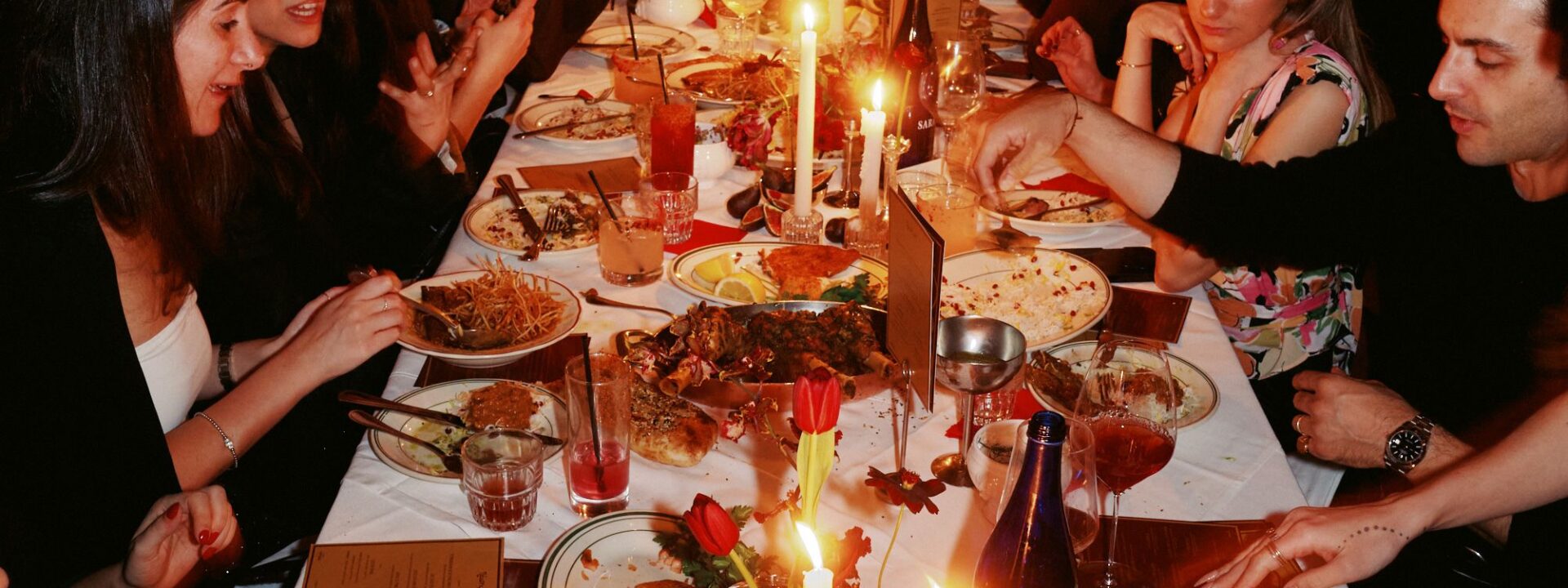
With its moody lighting, classic bistro chairs, and crisp white tablecloths, Jean’s is the kind of dining room that radiates old-world New York glamour. But on Wednesday night, as the restaurant and club closed for a private Nowruz dinner, it was transformed into something more transportive—a space reimagined to celebrate the Persian New Year and welcome the arrival of spring.
The evening began with a cocktail hour in the lobby, where I chatted with other guests eagerly guessing what might be on the menu. That excitement was understandable: the hosts—Celine Yousefzadeh Laz, Alexandra and Davitta Niakani, Savi Shahbazi-Downs, and Lailee Taghdisi—aren’t just friends brought together by their shared heritage; they’re also hospitality experts. These women are known for their work with New York institutions like the caviar and culinary brand CY Kitchen, restaurants such as Catch and Bartolo, and Jean’s itself, where Taghdisi heads operations.
As guests began to arrive and final touches were added to the dining room, Yousefzadeh Laz introduced herself. Her caviar brand, CYK Caviar, was featured during the cocktail hour, but she was quick to highlight everything else: the chef team from Nasrin’s Kitchen, wine from Azizam, and pastries from Bibi Bakery and Popilee—all with Persian roots. “These little sweets are a work of art,” she said, pointing to baklava sprinkled with pink rose petals and colorful almond treats that had already caught my eye.
Shahbazi-Downs, who handles strategy and business development at Catch Hospitality Group, casually mentioned how last-minute the planning felt. “If you had seen this room five hours ago, you’d think there’s no party happening,” she said. I believed her, yet it was one of the most beautifully executed events I’ve seen up close—especially the haft seen table, which took center stage. Beneath billowing spring flowers like hyacinths, cherry blossoms, and tulips lay the traditional seven elements, including garlic bulbs and piles of sumac, alongside candles, split pomegranates, and decorated eggs.
Translated from Persian, Nowruz means “new day.” It falls on the spring equinox, marking the new year on the Zoroastrian calendar. For Iranians in the diaspora, it’s a particularly important celebration. Nowruz has been observed for over three centuries, and today, with so many Iranians living around the world, choosing to celebrate it is a deliberate and meaningful way to preserve identity.
At dinner, I was seated across from Omid Afshar, founder of Club Joon, which hosts events celebrating Persian culture, music, and connection in cities like New York and London. (Naturally, Afshar was in charge of the dance party after dinner.) I told him I loved his name, and he proudly asked if I knew what it meant. I said yes—as a Pakistani, I know Urdu borrowed the word from Farsi, where it means “hope.”
As brown kids in America often do, we finWe found ourselves discussing the diaspora—how the label can be frustrating, and how easily its meaning is flattened. No one in any diaspora has a simple relationship to it; it’s always as beautiful as it is complicated. The topic felt especially timely with the ongoing conflict in Iran, something everyone in the room had surely thought about daily since it began. I have, too. But diasporas are never monoliths, and within the Persian diaspora, there are no easy answers about the best path forward for their community. That’s exactly why preserving traditions like Nowruz feels sacred.
And one of the richest traditions of Nowruz is, of course, the food. We started with crispy saffron rice bites topped with caviar, and Barbari bread from Jonny’s Pizza served with dips. Then came a breathtaking spread from Nasrin’s Kitchen: slow-cooked lamb, fish with crispy skin, and stewed greens and legumes. There was so much food it was hard at times to keep track of the courses—though no one could miss the giant tins of caviar being carried around the dining room and bar for impromptu servings.
After dinner, the staff at Jean’s performed a familiar magic trick: they cleared all the tables and chairs from the dining room and turned the space into a club. When I went to the bathroom, I noticed a line had already formed outside of people waiting to come in and dance. (In New York City, you take it for granted that this is just a Wednesday night.) The DJs for the evening were Shereen Cohen Kheradyar and DJ Lil Buddy, and soon the room was packed, everyone dancing to club mixes of Persian classics.
On my way out, I caught Shahbazi-Downs with her husband and a group of friends stepping out for a quick smoke. We huddled together under the scaffolding outside, and once the thin cigarettes burned down, we parted ways into the New York night.
Frequently Asked Questions
FAQs About the Nowruz Dinner Celebrating Persian Cuisine in NYC
Q What is Nowruz
A Nowruz is the Persian New Year marking the first day of spring and a time of renewal Its celebrated by millions worldwide with special traditions foods and gatherings
Q What was the main purpose of this dinner event
A The dinner was designed to showcase the artistry depth and authentic flavors of traditional and modern Persian cuisine bringing people together to celebrate Nowruz in New York City
Q What kind of food is typically served at a Nowruz dinner
A Youd find a mix of symbolic and delicious dishes Common items include Sabzi Polo Kuku Sabzi ashe reshteh dolma and a variety of kebabs Sweets like baklava and noghl are also essential
Q Im new to Persian food Whats a good beginner dish I should try
A Start with Chelo Kabob Its flavorful but approachable Also try the appetizer spread with fresh herbs feta cheese walnuts and flatbread
Q Are there vegetarian options in Persian cuisine
A Absolutely Persian cuisine has many celebrated vegetarian dishes such as various khoresh made with eggplant lentils or greens along with rice dishes salads and the herbheavy Kuku Sabzi
Q What makes Persian cuisine artistic
A The artistry lies in the balance of sweet sour and savory flavors the intricate use of herbs and spices like saffron dried limes and turmeric and the beautiful presentation of polos and mezze platters
Q Was this a formal multicourse dinner or a more casual gathering
A While specific events vary Nowruz dinners often blend formal tradition with warm hospitality They typically feature multiple coursesappetizers main dishes rice and dessertsserved in a communal celebratory atmosphere