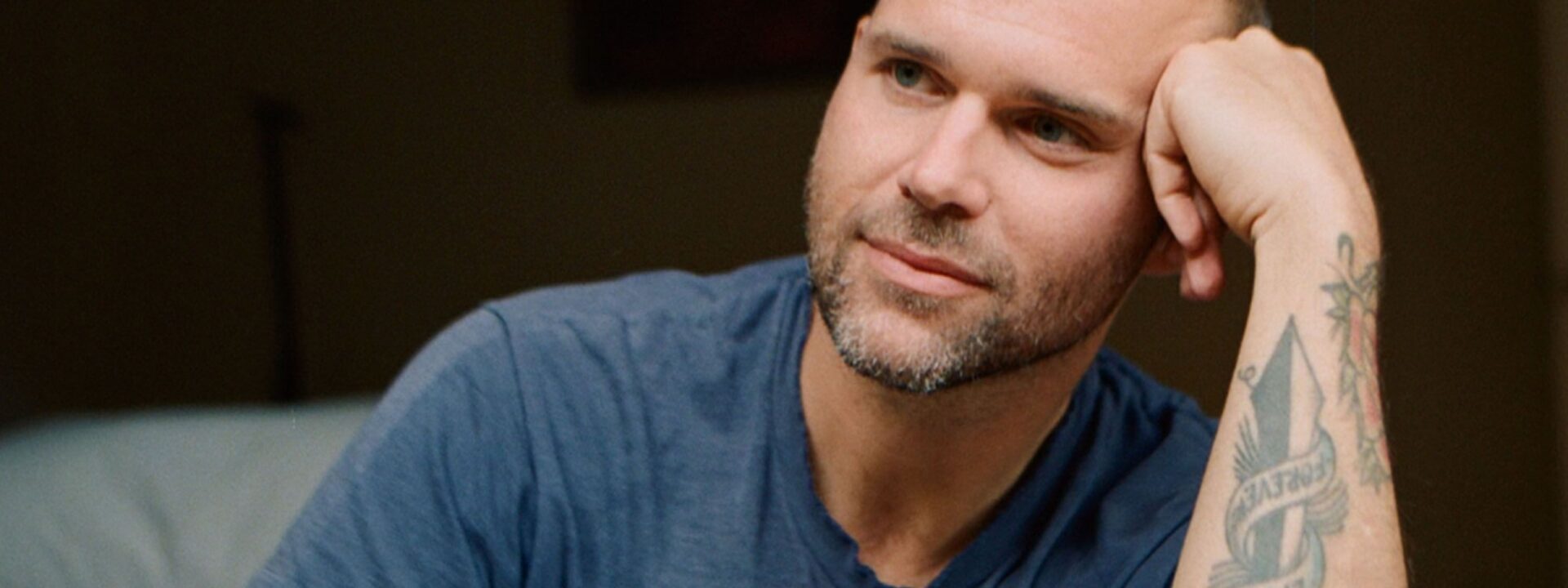
Have you noticed J.Crew’s undeniably cool evolution lately? Chris Black, founder of the consultancy Done to Death Projects, is partly responsible. Black is an ideas man. “All I’ve ever been able to offer in my career is a point of view,” he says. “I don’t have a lot of hard skills.” Alongside J.Crew, he has worked behind the scenes with brands from Thom Browne to New Balance to Balenciaga to connect with increasingly ambivalent customers.
Now, he’s applying his creative intuition to his own clothing brand, Hanover. It offers an all-American look, specializing in jeans, graphic tees, polos, and crewneck sweaters. Everything is made in the USA using cotton from manufacturers in Los Angeles. For now, it’s sold exclusively online, and most importantly, every item is $300 or less.
“As a consumer and as a consultant who works with many brands, the things that really hit the mark for me are rare—and price is part of the reason,” Black says.
After starting his career managing and touring with a band, Black moved into media and now operates at its intersection. He consults with brands through Done to Death, co-hosts a podcast by and for “bi-coastal elites” with DJ-turned-podcaster Jason Stewart, and has contributed to publications from GQ to New York Magazine. Having worked behind the scenes for so long, Black has the business acumen to support his creative instincts, which he believes attracted his business partners, Vinod Kasturi and Paul Shaked of the holding company Meissonier Group.
Hanover represents a return to quality American basics.
“I care about the bottom line. I care about domestic production. I care about margins, and I know that stuff is important,” Black says. “My past role has been helping truly creative minds come back down to earth and reminding them that we need to make money, or we can’t keep doing this.”
Knowing that starting and running a brand is expensive—especially launching with a full collection rather than just a few products—Black needed to raise funds for development, production, and marketing. With Kasturi and Shaked’s help, Hanover secured what Black calls a “tight round” of funding from “strategic people” in the founders’ network. The team declined to share specific numbers but emphasized their focus on building a profitable business long-term.
The Hanover look is classic American, inspired by how Black and many of his peers dress. It’s preppy, he says, influenced by his Southern upbringing, where his mother dressed him in boat shoes and polo shirts. It’s a specific style, but one Black believes has staying power. “This whole Dior thing bodes very well,” he notes, referencing Jonathan Anderson’s embrace of preppy style in his debut menswear collection. And it’s not just Anderson—luxury brands are diving deeper into American sportswear to attract consumers who simply want good clothes.
The brand is a response to what Black felt was missing in menswear, though it is unisex.
Black aims to provide everyday clothes for everyday dressing—a goal he feels many brands have lost sight of. “That’s what clothes are to me,” he says—jeans, tees, easy to throw on. Black isn’t convinced most people are all that interested in chasing far-fetched, fleeting trends that dominate social media, whether from avant-garde runway looks or influencer-driven styles. “We’ve strayed so far from everyday wear and pushed into zones dictated by this overall trend pressure we feel from living on our phones every day.”
There’s one key difference in Black’s approach compared to luxury brands: he wants people to afford the clothes. Here’s how he’s making that possible.
Made in America.Affordable and made in America were key priorities for Black. He first determined the ideal price point, then explored whether “Made in America” was feasible within that range. While passionate about local production, Black recognized that price matters more to most customers than origin. “I was around for the first wave of #menswear, when ‘Made in the USA’ was a huge selling point,” he recalls. Today, he doubts that label alone drives purchases.
However, once Black delved into production details, he became committed to making domestic manufacturing work—and soon realized it was possible without raising prices. Hanover’s relatively small scale helps make this viable: although wages are higher locally, producing in the U.S. avoids shipping and tariff expenses. The team can also communicate directly with production partners without overseas delays. Having everything based in Los Angeles is another advantage, as teams can quickly drive to pick up or drop off samples and materials.
As Hanover expands into new materials and products like cashmere and Harrington jackets, production may need to adapt, but Black aims to keep it stateside. Prices will inevitably rise with these additions, but the founder assures that the core collection will remain affordable. “Once you start using higher-end fabrics and creating more substantial pieces, prices increase a bit. But the heart of the business will always be approachable affordability,” he says.
Getting the Word Out
For Hanover, menswear circles in New York and LA—think GQ readers and How Long Gone listeners—could serve as a built-in fanbase. The challenge is reaching beyond these niche groups to a broader audience who may not be swayed by Black’s creative connections or collaborations.
“Obviously, I want the approval of my peers. I think everyone wants that, ego-wise,” Black admits. “But I care more about the guy in Chicago, Oklahoma City, Orange County, or Atlanta.” He believes these are the markets where he can truly succeed and where many brands are missing opportunities. “The world is vast now, and people everywhere have access to things. A lot of men are interested in clothes,” he says. “I want to reach men and women—I’m excited to connect with places that might be overlooked.”
The near-term strategy focuses on in-person engagement. Hanover is launching a pop-up at Tiwa Select gallery in Downtown Manhattan on December 6, with a party the night before. “I could do that in Nashville, Atlanta, Austin,” Black notes. While he acknowledges the importance of Instagram, email, and traditional advertising, he knows that isn’t enough. Like many brands rediscovering, Black sees value in physical gatherings. “If you don’t have stores yet, the next best thing is to throw a great party. Create something fun that people want to attend.” Draw people in with music and drinks, and Black believes they’ll return for the clothing.
Beyond direct-to-consumer sales and events, Black plans to expand into wholesale and physical retail. Wholesale can help reach customers across the U.S. and internationally, while brick-and-mortar stores offer full control over the brand experience. Looking ahead, he’s also interested in collaborations, starting with footwear.
The ultimate goal is to take Hanover global—with Stockholm’s Nitty Gritty as a dream wholesale partner. But for now, Black is focused on the U.S., including New York, and his target customer is broad and diverse.”A guy who works at JP Morgan, I want him buying these jeans just as much as the guy who works at the record store,” says Black. “I think good design should speak clearly to all kinds of people.” I mention that the finance crowd will probably buy more pairs. Black grins. “You said it, not me.”
More from this author:
Will Cloud Dancer — Pantone’s Color of the Year — Sell?
New York Fashion Week to Ban Fur on the Runway
Next Stop, the US: What Is a Destination Show in 2026?
Frequently Asked Questions
FAQs How Chris Black of Done to Death Makes 300 Clothes in America
Beginner Core Concept Questions
Q Who is Chris Black and what is Done to Death
A Chris Black is a wellknown writer consultant and style commentator Done to Death is his clothing brand that focuses on highquality Americanmade timeless wardrobe staples
Q Why are the clothes around 300 Isnt that expensive
A Yes its a premium price point The cost reflects the brands commitment to manufacturing in the USA using highquality fabrics and producing in smaller more ethical batches which is more expensive than mass overseas production
Q What kind of clothes does Done to Death actually sell
A The brand focuses on essential versatile items Think perfect heavyweight tshirts oxford buttondown shirts chore jackets and trousersall in classic colors and fits
Q Is Made in America the main reason for the price
A Its a major factor but not the only one Made in America means higher labor costs but it also allows for better quality control supports local industry and reduces the complex environmental footprint of global shipping
Advanced Industry Questions
Q How can he make clothes in America and still be profitable at this price
A By operating a directtoconsumer model selling primarily online This cuts out the wholesale markup The profit margin is built into the 300 price directly not after a retailer adds their cut
Q Whats the difference between Done to Death and a luxury brand charging 500 for a shirt
A Done to Death is about accessible luxury or everyday quality The value is in the materials and construction not in designer name prestige massive marketing budgets or runway fashion Its investment in the garment itself
Q Isnt small batch just a marketing buzzword Whats the real benefit
A For this brand its operational reality Small batches mean less waste extreme attention to detail and the ability to be nimble They arent producing thousands of units that might go unsold which is both financially and environmentally smarter