It’s the season for holiday entertaining, and we’ve asked some of the most stylish hosts we know to share their party tricks in a holiday hosting mini-series. Dress code is festive, and an RSVP is requested. À Table!
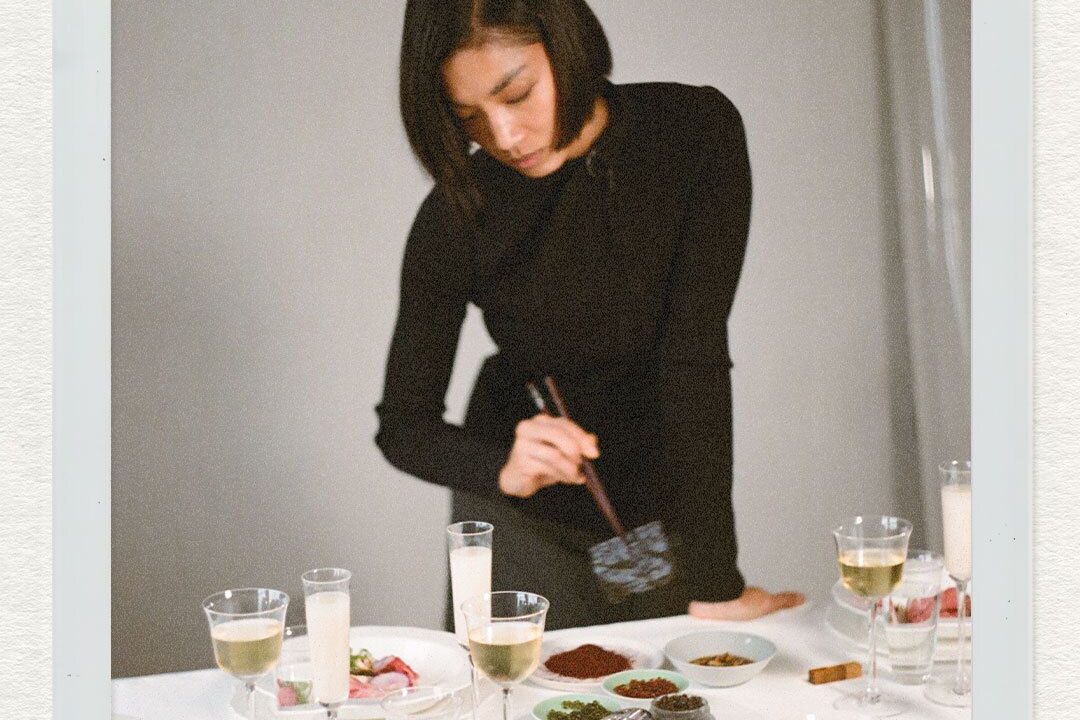
In the right hands, food can be art—and when Imogen Kwok is involved, it usually is. The chef and food stylist has a way of turning even the smallest details into visual gold: martinis topped with shards of sugar pressed with dried flowers, slices of saucisson arranged like dominoes, and verdant ravioli crescents shaped to look like pea pods. That’s not to say she’s too precious with food, though. In fact, for her end-of-season holiday party, her low-key approach involves shared plates and lots of interactive participation.
“Encouraging a tactile connection with food is an integral part of my cooking, both for work and at home,” she says. “I love creating a shared moment when people are making their own plates or passing dishes to one another.” She chose a classic Korean menu (with a few twists) as it’s both her go-to craving and the cuisine she grew up with around the holidays. The visual spark comes through in the thoughtful way she assembles everything: neon pink radicchio and purple radish arranged on plates to resemble miniature gardens, with tiny bowls heaping with colorful ingredients peppered throughout to fill the gaps on the clean white table.
The whole setting is a lesson in delicate balance. “The tableware pieces are elegant and refined, but it’s the type of holiday party where you’re using your hands and adding condiments to dishes, so it’s not stiff,” explains Kwok. “It’s very representative of how I cook at home.”
Ahead, Kwok shares the behind-the-scenes of her hosting philosophy, her dinner party outfit rules, and the unexpected hostess gift idea that will secure you a second invitation.
Set the Scene
“I am very sensitive to different materials and textures. This actually stems from both my Chinese and Korean sides, as both cuisines pay a lot of attention to food texture and a distinct ‘mouthfeel’ in their dishes. Growing up with those cuisines gives me quite an intimate, visceral understanding of our relationship with food. So I instinctively apply this understanding to the menu and ingredient choices—but it also translates to the way I carefully source tableware.
I prefer a clean, neutral-colored tablecloth. This one from Rose Uniacke is so soft and luxurious, it could be a bedspread. I choose ingredients in the same way that I choose tableware: high-quality ingredients and hand-crafted tableware pieces that share a sense of care.”
The Hosting Outfit
“On most days I typically wear variations of black, and hosting is the same. Definitely tight sleeves or no sleeves—I’m never going to wear something that balloons out, nothing voluminous as I’ll probably spill on it. Silk is a bit risky. I’m in my vintage Prada Sport phase from 100Percerti, and that fabric is perfect for cooking: sleek, minimal, not too precious. For shoes, I am very skilled at running around and cooking in heels even if it’s impractical—no crocs for me.”
Balancing Act
“I veer more towards neutral-toned ceramics without any pattern, because I like to let the food speak for itself and really have all the attention. For this meal in particular, there’s a lot of color going on; it’s quite vibrant. So I want…”I prefer to let the food have its moment. For a centerpiece, I like smaller arrangements so people don’t have to crane their necks to talk. You should adapt based on what you’re serving.
Tabletop Favorites
“For this table, I’m focusing on beautiful glassware from Ann Demeulemeester’s Serax collection and weighty crystal. Dior’s new homeware adds complexity with geometric cut patterns. The ceramics mix matte and gloss porcelain—from Serax’s Sergio Hermann line, vintage French trivets, and my own chopsticks.”
What’s on the Menu
“Today I’ve made pork Bo Ssam, a Korean dish of tender sliced pork belly traditionally served with cabbage and an array of sides and sauces. I’ve dressed it up for the holidays using pink radicchio instead of cabbage, and added a decadent touch of Volzhenka caviar, seaweed, and sesame oil pearls. Other sides include pickled daikon, purple radish, tiny red plums, soy-braised mushrooms, ssamjang (fermented chili paste sauce), slivered raw garlic, and rice. I love this dish—it’s nostalgic and reminds me of home. I cook for both the senses and the emotional experience, thinking about how food smells and looks, but also how it makes you feel.”
Cocktail Hour
“I like setting up a drinks station on the table with glassware laid out and bottles in an ice bucket. I’m a fan of pre-batched cocktails, but for this dinner we’re having Makgeolli, a traditional Korean rice wine. It’s low in alcohol and has an opaque, milky color—I love the contrast with white wine. When you come to my house, you should feel comfortable and welcomed, able to open the next bottle or serve yourself.”
Dinner Party Dos & Don’ts
The Faux Pas…
“Not bringing something. It doesn’t always have to be wine—I’ve brought odd ‘thank you’ gifts like a candle plus a beautiful heirloom tomato, or a big bunch of flowering cilantro that can go in a vase. I’ve also forgotten before, so I’ll send flowers or chocolates the next day!”
The Party Playlist…
“The most important thing is to read the room as the evening goes on. I change the playlist based on the mood and how late everyone stays. Either way, don’t start with the volume too loud—in restaurants or at home, overly loud music always bothers me.”
The Guest List…
“A seating plan is important unless it’s just close friends. It’s worth taking time to thoughtfully decide where people sit for their comfort and the conversations they might enjoy. Curating a good dinner party goes beyond the food—it’s about the whole scene and energy flow.”
The Stress-Reducing Secret…
“Always prep as much as you can in advance!”Do as much as you can in advance, whether that’s setting the table the day before or preparing all the tricky components ahead of time. I like to be present with my guests and don’t want to be stuck in the kitchen, which is also why I prefer low and slow braised dishes—like this pork belly, which is boiled ahead—so everything is ready at once.
Frequently Asked Questions
Of course Here is a list of FAQs about Table A Minimalist Communal Table by Imogen Kwok designed to sound like questions from real users
Beginner General Questions
What exactly is Table
Its a minimalist multifunctional furniture piece designed by Imogen Kwok Its a long simple table meant to be a central gathering spot in a home encouraging shared meals conversation and communal activity
What makes it communal
Its elongated benchlike design intentionally seats people closely together on the same side facing the same direction or each other across its narrow width This breaks the traditional head of the table dynamic and fosters a more collaborative intimate atmosphere
What are the main benefits of having a table like this
It saves space with its slim profile promotes connection by bringing people physically closer and serves as a versatile surface for dining working crafting or displaying objects Its minimalist design also helps reduce visual clutter
What materials is it typically made from
While specific editions vary Kwoks design philosophy emphasizes natural honest materials Youll often see versions in solid oak ash or walnut with a clear finish that highlights the wood grain
Practical Usage Questions
Isnt it awkward to sit sidebyside like a bench
It can be an adjustment The design intentionally creates a different social dynamic Its less about formal dining and more about casual shared momentslike enjoying a morning coffee working on a project together or having an intimate meal for two or three
How many people can it actually seat
It depends on the specific length but its narrow width means its best for 24 people seated comfortably Its not meant for large sprawling dinner parties but for smaller more focused gatherings
What if I need more table space
Table is about intentional minimalism If you regularly host big groups it might be a secondary table or used in a kitchen studio or entryway as a landing strip Its strength is in its focused purpose
How do I style or decorate it without cluttering it
Less is more A simple vase with a single branch a small stack of beautiful books or a functional tray for condiments aligns with its aesthetic The goal is to let the craftsmanship of the table itself be the star