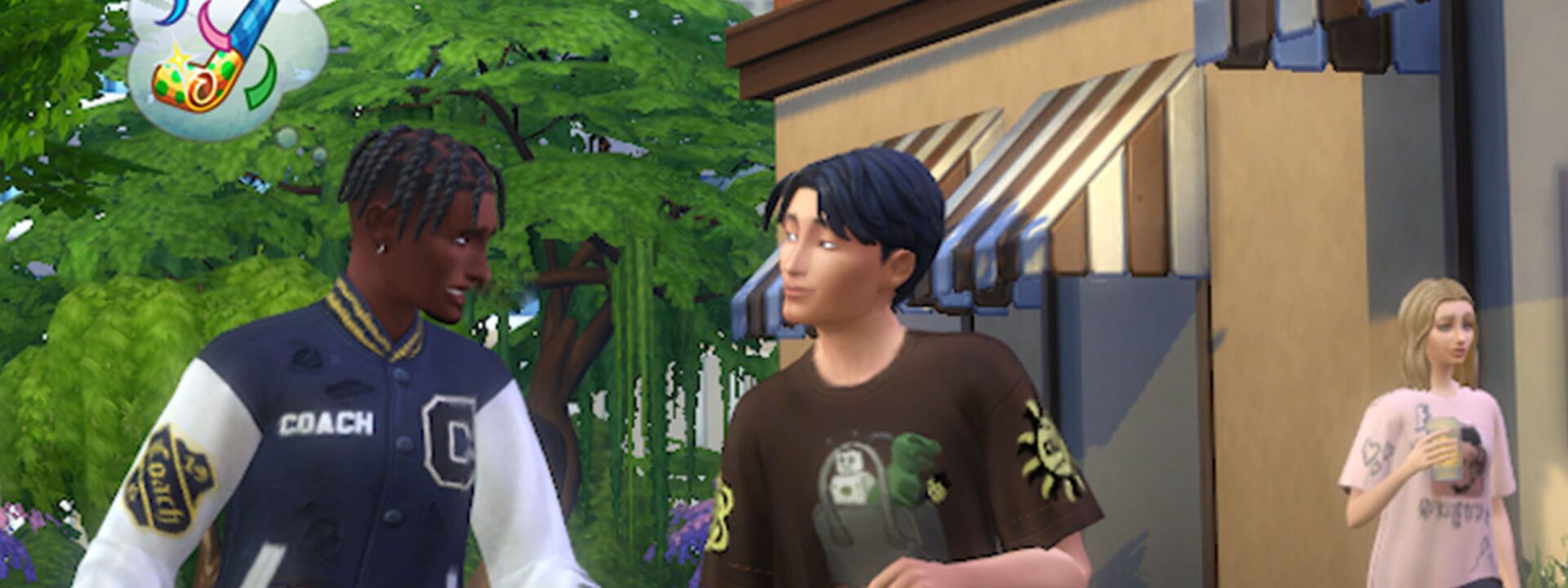
On Monday, Coach introduced a new collection in The Sims 4, marking the first fashion brand partnership with the game in five years. The collection is free for all players and includes customizable items from Coach’s ready-to-wear line, such as its Tabby and Brooklyn bags, along with decorative objects that let players design Coach-inspired interiors using the game’s build mode.
This is Coach’s fourth gaming collaboration in the last two years—a strategic move given the brand’s popularity with Gen Z. “Our goal is to attract new customers, especially Gen Z, and we want to meet them where they are,” says Kimberly Wallengren, Coach’s VP of North America marketing. She adds that The Sims 4 was chosen partly because of its largely female player base, compared to more male-dominated games like Roblox and Fortnite. “Our core customer spends a lot of time in gaming worlds, so it makes sense for us to be there too.”
Gaming has long been a way for luxury brands to reach engaged audiences through high-profile activations, like Roblox’s virtual Gucci Garden or Balenciaga’s Fortnite skins and digital hub. While interest cooled as metaverse and digital fashion efforts slowed, gaming is now making a comeback as a key channel for fashion brands targeting Gen Z.
“If you ask anyone under 20 where they hang out, it’s not Facebook or Instagram,” says Charles Hambro, CEO of gaming insights platform Geeiq. “They’re consuming content on TikTok and Snapchat, but they’re actually socializing in Roblox and Fortnite.”
Late last year, Balenciaga launched collaborations within PUBG, Fortnite, and Rematch, describing them as a “convergence between fashion, gaming, and esports,” united by “creativity, technology, and community.” In May 2025, Fenty Beauty debuted a digital world on Roblox through a Shopify integration that allowed in-game purchases of real products. In July, Puma partnered with DressX to launch the virtual styling game DressGo on Roblox, and in December, Skims founder Kim Kardashian released customizable skins in Fortnite.
As platforms like Instagram and TikTok shift from active social spaces to hubs for passive, short-form content, marketers in 2026 are focusing on where consumers are spending more of their time. For luxury brands hoping to engage Gen Z, experts say a presence in online games is essential. According to E-Marketer, nearly three in four Gen Z consumers identify as digital gamers—a trend that prompted Roblox to expand in-game brand activations with more immersive features and new homepage ad slots earlier this year.
Today’s gaming strategy has evolved from the metaverse-era experiments into a full-fledged marketing channel, with teams under growing pressure to show clear return on investment.
Does gaming fit your brand?
Experts advise brands to define their target customer and the story they want to tell before entering games. In the age of AI, many brands are emphasizing quality, craftsmanship, and value. For some, especially heritage-focused labels, this has led to a renewed marketing focus on connecting with millennial and Gen X customers through human-led visuals, films, and behind-the-scenes content.Traditional social media channels remain important, but Hambro advises brands to take a holistic approach, dividing their attention between established social media and the gaming world to connect with everyone from Gen Alpha to Gen X.
“The cultural influence of younger generations is crucial for many brands,” Hambro explains. “Older generations often start emulating younger styles, creating a continuous cycle. For instance, if you ask a Gen Z or Alpha user in Roblox about a handbag they recognize, many would name the Gucci Dionysus with the Bee. That limited Roblox item from 2020 became a major cultural moment for them.” As with many strategies targeting Gen Z, brands hope this cultural resonance with younger, aspirational consumers will lead to future sales as they grow older and gain more purchasing power.
For Coach, gaming aligns with its core values. “This is how we connect emotionally with Gen Z online,” says Giovanni Zaccariello, the brand’s SVP of global visual experience. “But we’re selective—we partner with games that genuinely allow for self-expression.” The Sims was a natural fit, Zaccariello notes, because players can create their own avatars, styles, and living spaces from scratch. This allows Gen Z to engage with Coach products in-game, especially when they might not be able to afford them in real life.
Kimberly Wallengren, Coach’s VP of North America marketing, emphasizes that gaming should be integral, not an afterthought. “You shouldn’t enter such a personal space without a clear vision to enhance the customer experience,” she says. “In fashion, gaming is evolving from a trendy one-off to a fully integrated ecosystem. It offers Gen Z a bridge between digital and physical worlds, creating a dual space for self-expression.”
Wallengren acknowledges her team is still experimenting with the gaming collaborations launched over the past 18 months. However, now that Coach has confirmed the community’s interest, it’s exploring deeper investments, like full brand worlds, which require more resources and a nuanced understanding of each game. “Gaming should be part of every holistic brand campaign, launch, or strategy—not just an add-on or PR stunt. It needs to be woven into everything we do,” she states.
Similarly, Balenciaga focused on self-expression in its late 2025 gaming activations, aligning with the brand’s core values of creativity and innovation. “Through our partnership with PUBG, we blend fashion artistry with the cultural impact of interactive gaming, redefining how style and self-expression can thrive in virtual worlds,” CEO Gianfranco Gianangeli told Vogue Business via email. Experts note that the most vibrant gaming communities are those where Gen Z users constantly create new in-game content. Therefore, brands should be open to relinquishing some control to foster user-generated content that builds on their visual identity.
Treat Gaming as Marketing, Not Just the Metaverse
Fashion’s earlier ventures into gaming were often lumped together with metaverse experiments, a period from 2019 to 2023 when many brands invested heavily in innovation teams and flashy virtual reality projects. Few of these initiatives generated significant revenue, leading to these teams being among the first cut during the subsequent slowdown.
“When the metaverse was trending, gaming was often a PR move driven by innovation teams that…”The metaverse angle may have initially drawn interest, but the focus has shifted to a marketing-driven strategy with clear goals: boosting engagement, user time, sales, and impressions. As a result, brands should treat gaming as a direct marketing channel, especially since cost-per-impression is often lower in virtual worlds than on traditional social media. This is partly due to the longer time users spend in social games like Roblox and Fortnite.
Data from Geeiq shows that Gen Z and Alpha users average 2.7 hours daily on Roblox, compared to two hours on TikTok, 1.3 hours on Instagram, and 1.2 hours on YouTube. Engagement also differs significantly: while an Instagram post might capture attention for just one to four seconds, a branded experience on Roblox averages 11 minutes.
At Coach, gaming collections are evaluated with the same KPIs as mainline products, including brand lift, consideration, try-ons, conversions, and purchases. The brand is developing its measurement framework for gaming as it learns and tests. So far, in-game buying patterns reflect real-world trends. Since launching its Bitmoji closet last summer, the Terry bag has consistently been the top seller each week, mirroring its physical sales.
Active co-creation is more effective than simply offering surface-level skins. Past experiments show that merely placing digital products in games isn’t enough to win over gamers. As Leanne Elliott-Young of the Institute of Digital Fashion notes, “Last time, brands built spaces that felt right for the real world, but gaming has its own specific language. People are there with a purpose, and that purpose isn’t shopping. Gamers are active participants—they might build next to a luxury pop-up and add features that outshine any digital luxury item. Brands need to consider the tangible value their items bring as gaming assets.”
Brands can engage with gaming at various levels, from launching free digital product collections to running timed ad campaigns like billboards or custom areas. The deepest level involves creating “own worlds,” similar to a brand’s Instagram profile, where they can establish interactive branded spaces and gameplay, as seen with Alo’s Sanctuary on Roblox or Tommy Hilfiger’s Tommy Play.
Coach is taking a step-by-step approach, starting with product collections that include co-creation features, allowing gamers to design Coach-inspired environments. The brand plans to expand into deeper integrations if these resonate. Experts recommend that marketing teams carefully consider what their collaborations add to the game and suggest partnering with developers or agencies who understand the gaming landscape.
As Emy Cies of the London College of Fashion and Women in Game ambassador points out, “Many fashion gaming collaborations struggle because they simply import a digital asset without integrating the social mechanics of the game.”“It’s not just about looks—clothing in a game needs to serve a purpose. It should represent skill or identity, or be earned through the game’s main story,” says Emy Cies, ambassador for Women in Games.
Cies highlights Moschino’s 2019 collaboration with The Sims 4 as a standout example. Instead of simply adding digital items, the brand created a fashion career path within the game, allowing players to unlock new levels of progress.
Elliot-Young advises brands to first listen to how gamers respond to their initial efforts. After that, they should focus on providing tools for co-creation and customizable looks that feel truly integrated into the game.
“Last time, fashion brands invested heavily in gaming collaborations but approached them through innovation teams without clear goals or an understanding of what success meant,” says Hambro. He emphasizes that today, a fashion brand entering platforms like Roblox or Fortnite isn’t just chasing innovation or hype—it’s aiming “to connect with Gen Z and meet marketing targets cost-effectively.”
“Brands always need to communicate, and they should now view games as essential communication channels, just like Instagram and TikTok,” he adds. “These gaming platforms are essentially the future of social media.”
Frequently Asked Questions
FAQs Luxury Brands in the Gaming World
Beginner General Questions
1 What does it mean that luxury brands are returning to gaming
It means highend fashion and lifestyle brands are creating digital items sponsoring events or building experiences inside video games and virtual worldsa trend that started years ago but has recently exploded in scale and creativity
2 Why are luxury brands getting into video games now
Theyre following their customers A new younger digitallynative generation that values gaming and digital identity is becoming a core luxury consumer Its a powerful way for brands to stay relevant tell new stories and create entirely new product categories
3 Isnt this just for rich gamers
Not at all While some digital items can be expensive many brand integrations are about accessible experiences like themed game modes free cosmetic items or interactive brand worlds that anyone can explore without a huge price tag
4 Can you give me a recent example
A great example is Balenciagas Afterworld The Age of Tomorrow a fully playable video game used to launch its Fall 2021 collection Players could navigate a dystopian city while viewing the new clothing on digital avatars
Advanced Practical Questions
5 Whats the real value of a digital luxury item I cant physically touch
The value lies in selfexpression status and community within digital spaces For many their online avatar is as important as their realworld appearance Owning a rare digital Gucci bag in a game like Roblox can confer the same social capital as the physical item does offline
6 How does this differ from simple ingame advertising
Its far more immersive Instead of just a billboard brands are creating native digital goods playable branded experiences and even collaborative game design The goal is to be a valuable part of the gameplay and culture not an interruption
7 What are the biggest challenges for luxury brands in gaming
Authenticity Gamers can spot a shallow cash grab Collaborations need to respect the games lore and community