In June, Loonen water appeared in Vogue’s cafeteria. The office’s front-of-house manager isn’t on TikTok, so he was curious when editors got excited about seeing the hard-to-find water available at One World Trade Center. “We just ordered it because it looked good,” he told me and my colleague.
That’s the idea — or at least part of it. Loonen is one of a new wave of brands that rely on attractive packaging and fashion-forward marketing to grab consumers’ attention. Once people are intrigued, these products often sell themselves by offering an added health or wellness benefit that justifies the higher price. You could call it the Erewhon-ification of consumer packaged goods (CPG), where the price is still much lower than anything labeled ‘luxury.’
“In this cost of living crisis, we’re seeing the rise of little treat culture and food as a status symbol. Food has always been political, reflecting class, status, and access, so making basic food items feel premium is very fitting right now,” says Seyi Oduwole, lead food and beverage analyst at The Future Laboratory. “The blend of fashion and beauty shows how this is crossing over into popular culture, the mainstream, and social media.”
As food becomes more connected than ever with fashion and beauty, the relationship benefits both sides: fashion and beauty brands can tap into food for its accessibility and sensory appeal, like Rhode does, while CPG brands look to them as models for creating desire. From Magnum’s paparazzi shot of Charli XCX in Cannes and an appearance at Rhode’s Lemontini Mallorca beach club pop-up, to Poppi’s big Coachella house moments, the past year set the stage for successfully weaving CPG brands into cultural conversations.
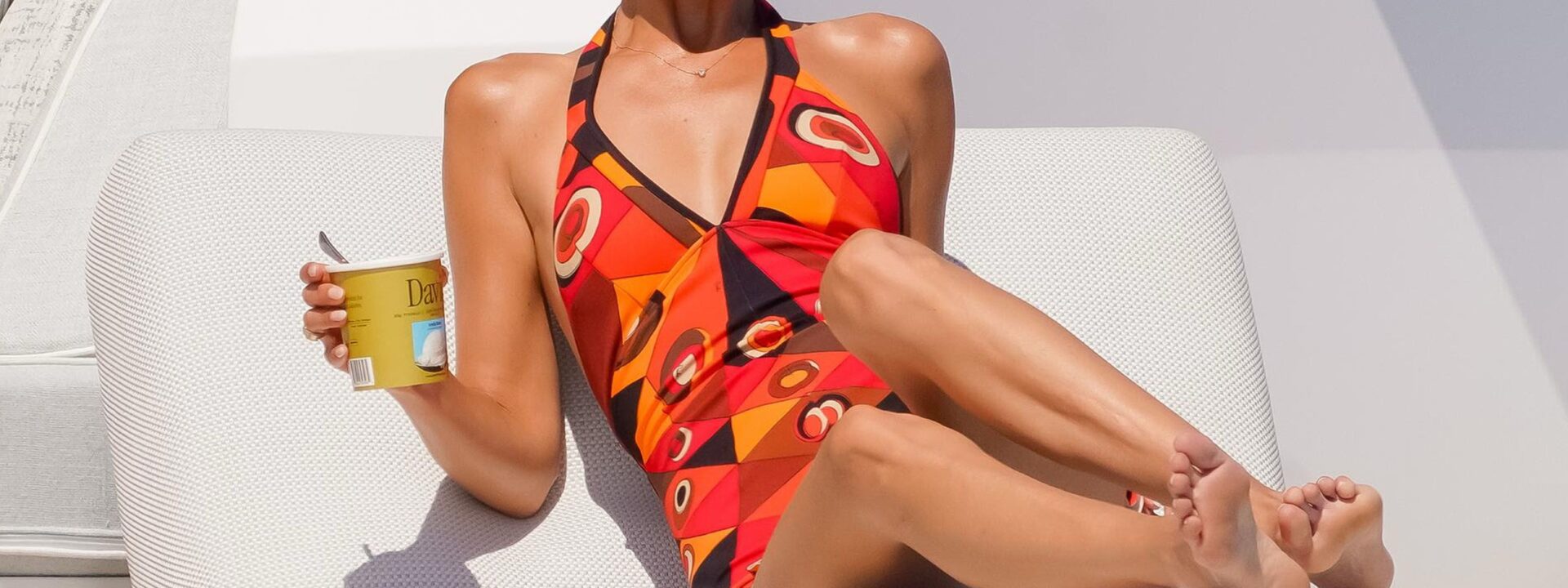
Now, food and drink features are becoming standard. Last month in Cannes, Bella Hadid was photographed daily on a yacht. But the item that likely got the most online buzz wasn’t the Pucci jumpsuit or vintage Prada skirt (styled as a dress) — it was the David Protein frozen dessert Hadid was eating, held at just the right angle for paparazzi shots. “Bella is a fan of the brand, as are a lot of people in fashion,” says David Protein founder Peter Rahal. “We saw a big jump in social media followers and broad media coverage. More importantly, it gave the brand momentum at the right time. The product sold out in 28 minutes.”
David isn’t the only brand generating buzz by showing up in spaces usually reserved for fashion and beauty. Brands like Loonen, Doctor Stolberg’s herbal tea, Rocky’s Matcha, and Ballerina Farm’s protein products are reaching consumers by positioning themselves as cool — and affordable — status symbols, just as likely to be found on an influencer’s feed as on a supermarket shelf.
As food and beverage brands continue to break the marketing mold, they’re blending chic, appealing aesthetics with wellness proof points to win over influencers, celebrities, and, most importantly, shoppers.
Flashy feeds
The ease of fitting CPG products into consumers’ daily routines — and onto their social media feeds — has been key to their rise, says Chloe Lee, co-founder of Selleb, a community receipt-sharing app that uses clustering to spot emerging patterns and trends. “Food and drinks are the easiest items to weave into daily content, so we’re seeing a huge trickle-down effect from GRWM and WIEIAD [what I eat in a day] TikToks and Instagram Reels.”
Both Doctor Stolberg and Loonen have heavily relied on gifting products to influencers. This ease of integration — into both an influencer’s daily life and content creation — has been central to the success of Doctor Stolberg’s herbal tea, says founder Natazia zu Stolberg. “One thing that’s been fascinating is watching consumers increasingly treat wellness products the way they once treated fashion accessories or beauty products,” she says. “We’reBuilding a wellness brand that people are proud to discover, want to display on their counter, carry in their bag, and share with friends. The Selleb sisters outline three levels of strategies for CPG brands to stand out.
Photos: Courtesy of brands/Infographic: Vogue Business
The tea contains just two ingredients—coriander and cumin—and is designed to reduce bloating. What really makes it stand out, though, isn’t the ingredients but the packaging: a bright yellow box with silver lettering that signals to consumers that they have ‘good taste’ in everyday products.
Loonen co-founder and CEO Clara Sieg believes the product’s success comes from its purity, but it didn’t earn the nickname “influencer water” for nothing. The blue and yellow label has become a staple in feeds from Tinx to Lisa Rinna, cementing its status as a desirable product that shows you’re ‘in the know’. “It’s an IYKYK item that shows you know your stuff and follow culture,” says Claire Lee, co-founder of Selleb, which partnered with Loonen in May for its latest tote bag release. She adds that it has a real insider appeal that makes people likely to post it online.
The wellness crutch
It’s not just about looks. Founders agree that the product needs to have an edge. Wellness has long been linked to beauty, but as it has grown from a passing trend into a full-fledged category, CPG brands—alongside traditional fashion and beauty—have started packaging and selling wellness as consumable products you can buy to support overall well-being.
Unlike prebiotic sodas and similar products, wellness appeal can come from how a product is positioned, not just its functional ingredients. “The brands that stand out right now understand that they’re selling more than a drink; they’re selling a lifestyle, a ritual, or a desired outcome,” Oduwole says. Stolberg sees her tea as a lifestyle product. “People aren’t just buying tea. They’re buying a routine, a result, and a wellness philosophy based on indulgence, not restriction,” she adds.
Photo: Courtesy of Loonen
Meanwhile, Selleb has noticed a rise in “simple delights” across wellness categories that are affordable. This easy sense of wellness is what Loonen is building its brand on. “The part of wellness that feels a bit exhausting to me is the constant optimizing and tracking of everything,” Sieg says. “I think there’s a shift back to focusing on eating good food, drinking clean water, moving your body, and living a happier life.” Instead of a 20-step skincare routine, just buy a bottle of water.
For Loonen, timing also played a role. “If we had launched when I first had the idea, it would have been like pushing an educational boulder uphill,” Sieg says. “But I think consumer awareness around issues like water contamination has grown dramatically over the past few years, largely because the research has caught up.”
Oduwole has seen a similar shift in awareness, noting that consumers are drawn to better-for-you brands as the food and drink industry becomes more health-focused. Yes, consumers care about the health benefits of these products, but showing off also matters. Consumers want to be seen using brands that improve their wellness, so Oduwole points out that it ultimately comes down to branding. “They’re not reinventing the wheel, but they’re reimagining everyday categories like food and drink through better branding and stronger storytelling,” she explains.
Photo: Courtesy of Doctor Stolberg
Photo: Courtesy of Doctor Stolberg
Building desire and heritage
If wellness is what these brands are selling, it’s a carefully planned approach that makes them stand out. “The product has to work first, but the brand also can’t just feel like a list of claims on a package,” says David Protein’s Rahal. “The product, packaging, imagery, retail, partners, and campaigns should all feel like they come from the same place.”To that end, many standout food and beverage companies are teaming up with branding agencies that have experience in fashion and beauty. Colony, which helped design Loonen’s branding, has also worked with the California-based womenswear brand Doên. Meanwhile, David works with the agency Day Job, which mainly handles CPG brands but has also worked with Nike and skincare brands.
This connection isn’t random, says Rahal. “Some of the strongest brands in the world are in fashion and beauty. If your goal is to build one of the strongest brands, you study the best brands—not just the best food brands,” he explains.
Stolberg sees her instantly recognizable yellow box of tea as Doctor Stolberg’s hero product. “We market our product the same way a fashion or beauty brand might market a hero product: through storytelling, community, and aspiration, rather than focusing only on functional benefits,” she says. “Although the tea does work exceptionally well, and that’s what drives our repeat customer rate and strong word-of-mouth growth.”
Photo: Courtesy of David Protein
Now, she’s taken it a step further by launching a bright yellow leather pouch to carry the tea bags. It sold out in under a month and marks a move into the categories that previously inspired her. “All the cool girls were bringing Rest + Digest with them to dinner or on trips, but always in a ziploc bag,” Stolberg says. “I just knew we could do better than that.”
Beyond branding, this new wave of companies is rethinking their advertising—and not just through strong influencer gifting programs. One TikTok comment compared Ballerina Farm’s ballet-focused ad for its protein powder to an A24 horror trailer (for better or worse). For David’s latest campaign, the brand went straight to the source, casting Inde Navarrette, the breakout star of Obsession, in its new ad. “Inde made sense because she brought performance, taste, and cultural momentum,” Rahal says. “With her, we could create something that felt more like a short film than an ad.”
This next generation of CPG brands isn’t just focused on getting from the shelf to the pantry. Instead, they’re building lasting brand worlds—a mission that, not long ago, was reserved for less practical, more creative-led categories. “I’ve been really focused on our design, on not feeling [exclusively] Gen Z or millennial,” says Loonen’s Sieg. “I want us to build a heritage American brand that stands for quality and makes you feel good.”
More from this author:
– The United States of Luxury
– Saks Global Exits Bankruptcy With a New Name
– The Brand Guide to Euro Summer 2026 Pop-Ups
Frequently Asked Questions
Here is a list of FAQs about the trendy makeover of CPG brands like Loonen and David covering beginner to advanced topics
BeginnerLevel Questions
1 What does CPG mean
CPG stands for Consumer Packaged Goods These are everyday products you buy often like snacks drinks shampoo and cleaning supplies
2 What is a cool trendy makeover for a brand
Its when a company completely changes how their product looks and feels to attract younger customers This usually means new minimalist packaging a modern logo and a fresh brand name or slogan
3 Why are brands like Loonen and David doing this
They want to stay relevant Older brands can seem boring or outdated A trendy makeover helps them compete with new hip startups on Instagram and in stores like Whole Foods
4 Whats the difference between a rebrand and a makeover
A rebrand is a full change A makeover is mostly about the look and feelnew packaging and a fresh vibe but the same product inside
5 Can you give a simple example
Think of an old plain box of crackers becoming a sleek minimalist pouch with a modern font and a catchy name Thats the makeover
IntermediateLevel Questions
6 What problems do these makeovers solve
They solve brand fatigue and help the brand get noticed on crowded shelves and on social media They also help justify a higher price
7 Do these makeovers change the actual product
Usually no The recipe or formula stays the same The makeover is about perception not the product itself However some brands do improve ingredients to match the clean or premium new look
8 How do brands like Loonen and David market this change
They use influencers on TikTok and Instagram create viral unboxing videos and redesign their website They often play up a backstory or a betterforyou angle
9 Is this just for food and drinks
No Its huge in cleaning products personal care and even pet food Any CPG brand that wants to look modern is doing it