My landline rang just before 9:00 in the morning on September 11, 2001. It was my fashion week colleague Mickey Boardman, and I figured he was calling to gossip about the Marc Jacobs show from the night before. I was wrong.
That Jacobs show—which would turn out to be the final event of the spring 2002 New York collections—took place on a West Side Pier. It was hot, started hours late, and I remember the frazzled PRs handing out bottles of water to an increasingly restless crowd. But whatever clothes finally came down the runway were completely forgotten the next morning.
If I stuck my head out my window, I could see one of the Twin Towers still standing, but with a huge burning slice out of it, like a jagged piece of pie. I called my best friend and fellow Village Voice writer Michael Musto and woke him up. “Mikey,” I said, “something terrible happened.” “The Voice folded?” he guessed. He was wrong.
Still, I ironed my outfit that day. The world may have been literally on fire, but I ironed. I believe I was wearing a Club Monaco skirt that was a faint nod to Dries Van Noten, and a saggy-baggy gray sweater—probably from the British brand Eskandar or Shirin Guild—over a lace camisole, my uniform 25 years ago. Dressed like that, I walked over to the Voice office on Cooper Union. I didn’t know what else to do.
I grabbed my transistor radio—no cellphone back then, at least not for me—and headed south toward Washington Square. A young man ran up to me. “What’s the news? My fiancée is down there.”
I met Musto at the Voice, and we went to the Manatus Diner on Bleecker Street, the kind of place that was always open. It was open that day.
Every light post would soon be covered with posters of photos of the missing. The streets would fill with oceans of paper, the debris of a thousand obliterated offices. A bad smell would linger in the air for months.
The fashion shows scheduled after Marc’s were immediately canceled. Some big houses, like Donna Karan and Ralph Lauren, would later show collections in scaled-down settings. Vogue and Style.com would organize a collective presentation called “An American View” for young designers whose slim hopes of a career in the industry now hung by a thread.
All these years later, I can still remember the realization that our collective sense of self, our deep seriousness about what we did for a living, had suddenly collapsed under the weight of contradictions. What we wrote about, what we claimed to care so passionately about, what we analyzed with such deep precision, now felt embarrassingly trivial, almost ridiculous. I was fairly new to fashion reporting back then, and still beyond excited to be covering New York Fashion Week, even if the typical Village Voice reader, in all honesty, probably wasn’t on the edge of their seat waiting for my thoughts on Miguel Adrover or Imitation of Christ. Now the fragility of life itself loomed; the certainty that we were safe and secure in the city had vanished.
Miguel Adrover, spring 2002
Photo: JB Villareal / Shoot Digital for Style.com
Imitation of Christ, spring 2002
JB Villareal
But then again—didn’t fashion also provide a bit of joy, a bit of comfort, a promise of better days sometime in the future? Who wanted to live in a world of total grimness? Why not rage in our own small ways against the dying of the light? I personally dealt with my feelings the same way I always did in times of crisis. I shopped. A few days after 9/11, I finally decided to buy the velvet Fendi bag, the one with the pattern of big brown F’s, that I had been eyeing at the Fifth Avenue Fendi store for months. I had looked at it so many times it was impossible to tell which salesperson had helped me. It didn’t matter anymore. Most of the staff was crying.
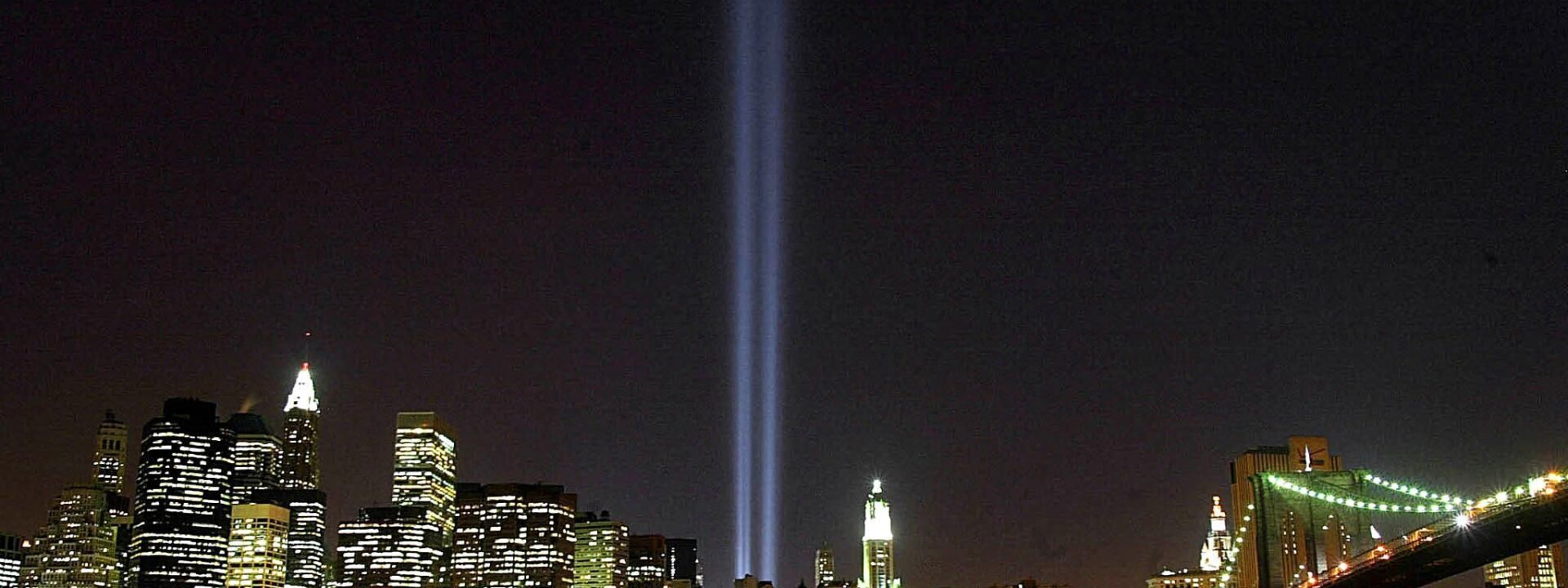
But tears and fears and even the deepest anguish will fade over time. Slowly, the world—the fashion world and the wider world beyond it—returned to a new normal. The crazy pace of fashion week in subsequent seasonsAs the shows resumed, September 11th was back on the schedule, and nobody thought twice about it. But after a long day at the New York shows this week, with your mind buzzing about sheer dresses, skinny models, and even skinnier high heels, you might glance out the taxi window and see the sky lit up—two bright beams of light rising where the Twin Towers used to be.
Frequently Asked Questions
Here is a list of FAQs about Lynn Yaegers firstperson account of covering New York Fashion Week during the September 11 2001 attacks
General Background Questions
Q What is Something Terrible Happened about
A Its a personal essay by fashion journalist Lynn Yaeger She recounts the surreal and heartbreaking experience of being in New York City for Fashion Week when the 911 attacks happened and how the industry had to decide whether to cancel shows or go on
Q Who is Lynn Yaeger
A She is a wellknown veteran fashion writer and editor famous for her distinctive personal style and her witty intelligent coverage of fashion for publications like The New York Times and Vogue
Q Was Fashion Week actually happening on 911
A Yes The shows for the SpringSummer 2002 collections were scheduled to start in New York on September 11 2001 The attacks happened on the very first morning of the scheduled shows
Q Why is this essay still relevant today
A It serves as a powerful time capsule It captures the raw confusion and grief of that day but also shows how a shallow industry was forced to confront profound tragedy which is a lesson in resilience and perspective that remains relevant
Content Specific Details
Q What was Lynn Yaeger doing when she found out about the attacks
A She was preparing to go to the shows She describes being in a bathroom putting on makeup when someone told her a plane had hit the World Trade Center She initially assumed it was a horrible accident
Q Did the fashion shows go on as planned
A No The shows for that day were immediately canceled There was a lot of confusion about whether they would resume later in the week but ultimately all shows were called off
Q How did the fashion community react to the tragedy
A The essay describes a mix of shock fear and absurdity Designers and editors wandered the streets in a daze Some tried to figure out if they could show their collections while others realized it was impossible There was a lot of crying and hugging among people who were usually rivals