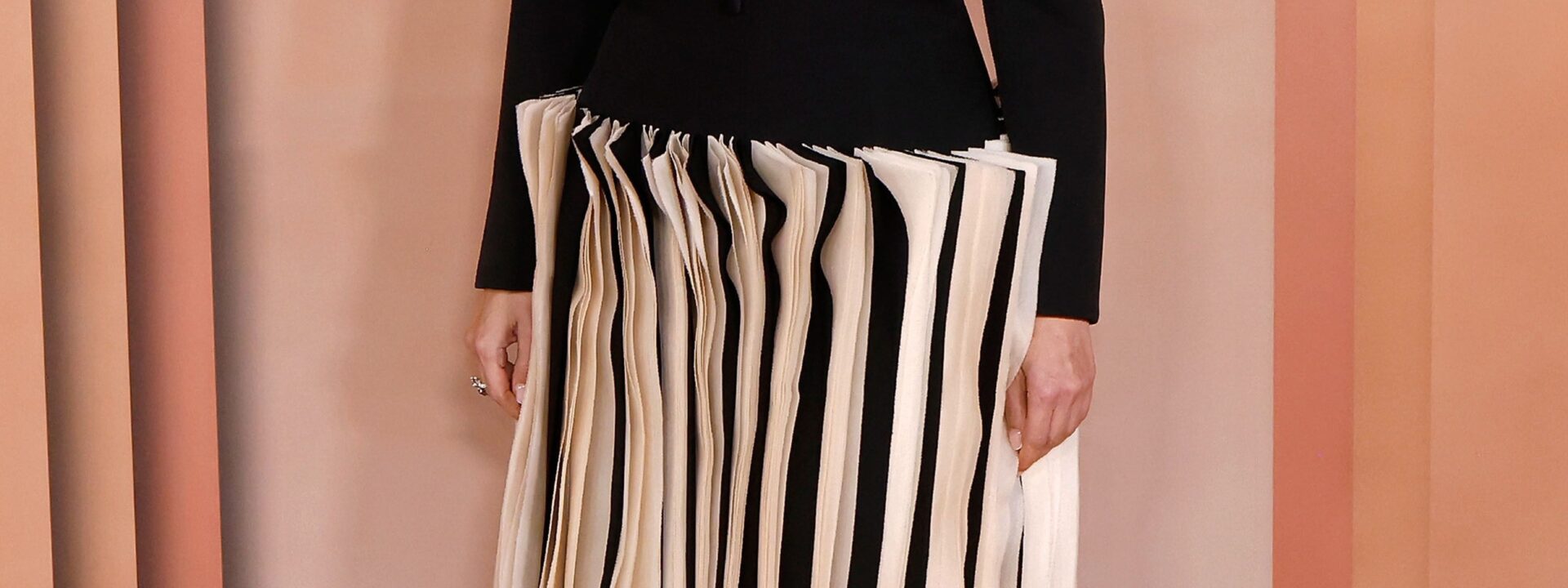
Before accepting a Special Recognition Award at The Fashion Awards, Tania Fares discusses her early internship with Pierre Cardin, the inspiration she drew from Lulu Kennedy, and how these experiences led her to establish one of fashion’s most significant non-profits. This story is part of ‘My First Job in Fashion,’ a series of interviews with industry insiders about the roles that shaped their careers.
I always wanted to work in fashion, but not as a designer—I was drawn to the behind-the-scenes work. My mother was a beautiful woman, both inside and out, with impeccable taste. She was fortunate enough to wear couture and often attended fashion shows in Paris, sometimes taking me along. That’s how my interest in fashion began.
My uncle was the renowned decorator Joseph Achkar, who, along with his partner Michel Charrière, refurbished the Hôtel de la Marine in France. He introduced me to art, taking me to places like Fontainebleau, Versailles, and the Louvre. After I finished my university studies in communication, he helped me secure an internship with Pierre Cardin.
At Pierre Cardin, I did a bit of everything, as most interns do—folding clothes, making coffee, and similar tasks. Six months later, he hired me to join his communications team. I feel incredibly fortunate to have worked with someone so passionate and creative. Every day with Pierre was different. He taught me the importance of being kind yet firm, and he often spoke about unisex style—the idea that you can be yourself and dress however you want. My time with him truly opened my eyes to the business side of fashion.
Through Pierre, I also learned how important it is for a designer to connect with their clients. He had a gift for making the women who shopped with him feel comfortable and confident, which gave him valuable insight into what his customers wanted.
This is the top piece of advice I give to any young designer I meet: make sure you engage with your customers. Through Fashion Trust—especially our Mentorship Program—we strive to build a community that appreciates and purchases their designs. Ultimately, they need to understand their customers to grow their business.
I’ve carried these lessons throughout my career. When Lulu Kennedy and I founded Lulu & Co in 2006, Vassi Chamberlain and Christina Goulandris hosted a trunk show for us. I’ll never forget that afternoon—the feedback from friends and the wider community about what they liked and didn’t like was invaluable in shaping the business.
My experience and relationship with Lulu Kennedy were foundational to the work I do with Fashion Trust. I met her through Judith Greer, and together we launched the Lulu & Co brand. We worked together for five or six years, with Lulu focusing on design and me handling the operational side.
I was deeply inspired by her work with young designers through Fashion East. Watching her collaborate with artists and manage our showrooms in Paris was an incredible learning experience, though it was also challenging—this industry is tough. You might make sales, but six months later, you have to cover production costs, and then you need to scale up. It’s a difficult structure for young designers to navigate.
Through Lulu, I met many people in the fashion industry, and I was also actively involved in the arts, supporting institutions like Tate and Serpentine. I noticed that while many individuals supported the art world, the same wasn’t true for fashion. I wondered, why can’t we do both? You can love art, but you can alsoI also love fashion and give back to both. It was a bit complicated for me to be involved with Fashion East since we were already working together on the brand. So, 14 years ago, I founded the BFC Fashion Trust together with Sian Westerman. Former British Vogue editor-in-chief Alex Shulman introduced me to the then-BFC CEO Caroline Rush, and I met her with Harold Tillman, who was chair of the British Fashion Council at the time. I said I wanted to create a platform to raise funds and support young designers. Caroline loved the idea and asked me to put together a proposal. I did, and during that process, I came up with the name Fashion Trust. I wanted to include the word ‘trust’—trust in fashion.
We presented the plan to Caroline, and she liked it. Then we had to find patrons. Coming from a culture where talking about money is awkward, my first few meetings didn’t even involve asking for support. We held a lunch for potential patrons one day, and when it ended, I still hadn’t asked for money. The same thing happened at another event. Eventually, I told myself, “Tanya, either you start asking people for money, or this isn’t going to happen.” Once I did, I realized it wasn’t that hard. Now, I love asking people for money!
The key is to be passionate about what you’re presenting and to be direct. Don’t play games—it’s not fair to people if they think you’ve asked for a meeting without knowing you’re going to ask them for something. My first patron was Megha Mittal, who is also a friend.
The Fashion Trust patrons are all incredible women who invest financially, give their time, or both to support young fashion talent. Some are lawyers, entrepreneurs, or have their own funds—they’re all very interesting. Right now in the UK, we have 53 patrons. We once had 120, but we streamlined, which is why the number has halved.
In 2019, I co-founded Fashion Trust Arabia, and in 2021, Fashion Trust US. In the US, we also have patrons, but in the Middle East, we work with sponsors. This time in Doha, we had support from Visit Qatar, Qatar Airways, Anastasia of Beverly Hills, and others.
The Middle East project came about in 2017 when I co-wrote a book with Vogue’s Sarah Mower about young designers in London. For the book launch, my aunt in Jordan invited me to a gathering. There, I met so many amazing designers, and many of them said to me that night, “Please do something here like what you’re doing in the UK. The region needs it.”
I’m from Lebanon, speak Arabic fluently, and understand the region deeply. The Middle East is incredible, with its diversity—the Levant, North Africa, the GCC. My parents worked in hospitality, so we always had clients from all over the region. I feel I can understand the Saudis, Kuwaitis, Qataris, Egyptians…
So, I went to meet Her Highness Sheikha Moza, someone I’ve always admired. She told me they were also looking into doing something similar in the region and introduced me to her daughter, Her Excellency Sheikha Al Mayassa Bint Hamad Al Thani. We began working on a project to bridge Western and Middle Eastern cultures. I’m so grateful for her support—she started as my co-chair and is now like a sister to me. I did a lot of research to understand what was needed and how we could improve, and I had the idea of bringing Western judges to the Middle East.
Here’s how it works: every year, we open an application season. We receive about 600 applications in the US, 1,000 in the UK, and 1,200 in the Middle East. We narrow it down to about 150–200 applications and send them to our advisory board, who then select the finalists.Our boards are large and include people from across the fashion industry because diverse voices are so valuable. We just held the Fashion Trust Arabia judging, and it was really fun to see how people got involved—everyone split into groups based on which designer they were rooting for. We had a very open conversation, moderated by an expert who asked everyone to explain why they supported certain designers. It all felt very genuine. Afterward, they voted, we counted the ballots, and announced the winner.
The Fashion Trust team is small—just three people in the U.S. and eight in the Middle East—so I’m incredibly proud of the impact we’ve created over the years. Since we launched Fashion Trust Arabia in 2019, the talent and quality of the garments have improved dramatically. I also feel interest in the region is really growing among consumers. What happened with Matches was very sad and left a big gap in the industry when it comes to discovery platforms. Of course, Fashion Trust isn’t a retailer, but maybe we can help shine a light on new, fresh talent.
As part of the latest Fashion Trust Arabia event, we held an exhibition called Threads of Impact, featuring pieces made by finalists and winners over the years. I’d love to see that exhibition travel in the future. I also want to grow our mentorship program. This year, we’re extending it to three days instead of two, with around 25 speakers from all kinds of backgrounds—e-commerce, merchandising, sustainability, and more. We organize it for all our designers, and everyone flies to London to take part.
It’s interesting—working with so many young designers, I can see the future is becoming much more tech-focused. They’re 3D printing, using AI, and exploring all sorts of new tools. But the skills they need most are inherently human. I always tell people to stay authentic, true to their brand’s identity, and to build real relationships with their communities. That only happens through human interaction and collaboration, which feels more important now than ever.
Frequently Asked Questions
Of course Here is a list of FAQs about Fashion Trust founder Tania Fares discussing her first job in the fashion industry
General Background
Q Who is Tania Fares
A Tania Fares is a fashion entrepreneur and philanthropist best known as the cofounder of the Fashion Trust a nonprofit that supports and funds emerging fashion designers
Q What is the Fashion Trust
A Its a global nonprofit organization that identifies and provides grants mentorship and business support to promising fashion designers at a crucial stage in their careers
Q Why is her first job in fashion a topic of interest
A Because her career path wasnt traditional Understanding her starting point shows how diverse backgrounds and early experiences can lead to influential roles in the industry
About Her First Job
Q What was Tania Fares first job in the fashion industry
A Her first official role was as an intern and later an assistant at Vogue magazine in London
Q Did she have a fashion degree or design background
A No she did not She studied political science at university Her entry into fashion was through passion networking and seizing an opportunity
Q What were her main responsibilities in that first role
A Typical entrylevel tasks like organizing samples assisting on photo shoots helping with administrative work and learning the editorial process from the ground up
Q How did she get that job at Vogue
A Through a combination of personal initiative and connections She has mentioned reaching out and expressing her passion for fashion which led to an introduction and the internship opportunity
Lessons Insights
Q What is the biggest lesson she learned from her first job
A The importance of observation humility and hard work She learned that even small tasks are essential to the larger machine and that understanding every level of the industry is invaluable
Q How did that first job influence her later work with Fashion Trust
A It gave her firsthand insight into the challenges young designers face when trying to get visibility and support Seeing the industry from an editorial and business angle helped her identify the specific gaps that Fashion Trust now fills
Q What advice does she give based on her first job experience
A To be proactive say