The first wedding I ever took part in was set to booming trombones and a parade of dancing maidens. The groom was a dashing prince, the bride a beautiful princess. I was 12, gliding across the stage with a platter of fake cake in the lavish wedding scene from Firebird—a Russian fairy-tale ballet full of moonlit forests and enchanted feathers. I wore an orange wig, layers of Covergirl foundation, bright red lipstick, and—thanks to harsh stage lights and my ballet teacher’s demands—a thick swipe of Maybelline blush.
Leaving ballet a few years later was bittersweet, but I felt nothing but relief when I tossed that pink powder compact. Offstage, blush has always made me look either like a Victorian consumptive or a clown.
I managed to avoid blush for the next twenty years. But as I planned my own wedding last year, I had to admit that rosy cheeks were practically required for bridal makeup—a leftover, perhaps, from its long link to romance and feminine virtue. In Victorian novels, a blush meant a woman was aware of sex, but properly embarrassed by it. Literary critic Ruth Bernard Yeazell writes that a blushing woman existed in “that period between innocence and erotic experience that marks the modest heroine’s entrance in the world.” She adds, “There was scarcely a tribute to the modest woman that did not mention blushing.”
In the months before my wedding, I dragged my friends to boutiques all over London as I tried on a series of similar ivory slip dresses. Then, just for fun, I slipped into an ornate gown covered in pearl buttons with a lacy bodice. The moment I saw myself in the mirror, I knew it was the one. Maybe ballet’s pageantry had shaped my idea of romantic beauty more than I’d realized.
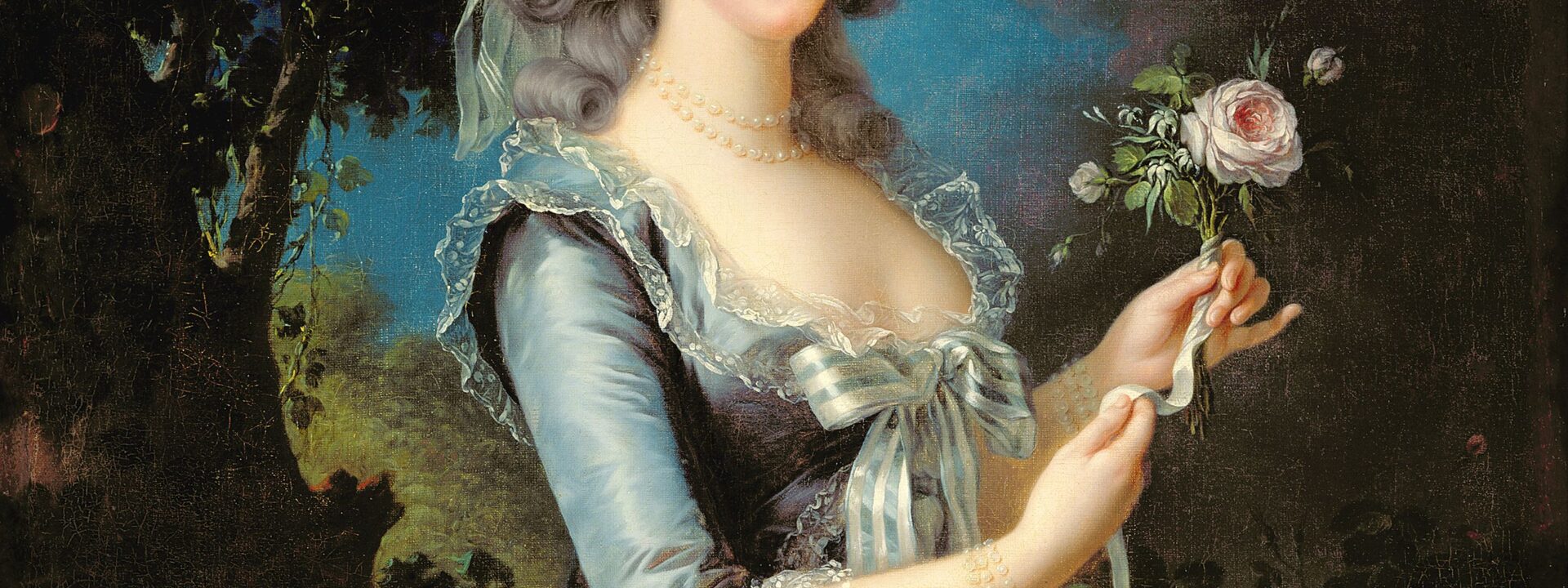
Maybe I was also swayed by the times: romantic beauty is back. Rom-coms, unpopular for much of the 2010s, are returning in force: Emily Henry’s People We Meet on Vacation was adapted by Netflix earlier this year; the escapist You, Me & Tuscany is set for April; and Lena Dunham’s next film, Good Sex, starring Natalie Portman as a couples therapist with a messy love life, arrives later this year. “Romantasy”—a mix of erotica and magic—has given the struggling publishing industry a boost. Romance-themed bookstores with names like The Ripped Bodice, Meet Cute, and Blush are thriving. Last fall, crowds of women packed into a Marie Antoinette exhibition at London’s V&A museum, admiring diamond bows, lace collars, and tiny slippers. As one woman in her 20s paused to look at the doomed queen’s delicate gardening props—a scythe and hoe she used in her private theater—I overheard her friend whisper about her new hobby: adult ballet. “The best part is sewing ribbons onto the slippers,” she said.
On the runways, designers are moving past beige minimalism and pandemic-era athleisure. Ulla Johnson’s spring 2026 collection featured flowing fabrics and feather trims; Bibhu Mohapatra’s included ivory opera gloves and thick pearl chokers; and Rabanne dressed models in flouncy skirts and floral prints. At Sandy Liang, demure bows appeared on skirt pockets and hemlines. Hairstylist Evanie Frausto used Velcro rollers to create a single loopy ringlet in front of models’ faces, and makeup artist Charlie Riddle applied berry pink cream blush all over. “Everything’s diffused,” Riddle explained. At Proenza Schouler, where new creative director Rachel Scott has brought a more feminine perspective, makeup artist Fara Homidi described the makeup as “gentle, like the sound of fuzz.””There’s a feeling that we’re moving toward more softness,” says Peter Philips, creative and image director for Christian Dior Makeup. He brought greater fluidity and subtlety to Jonathan Anderson’s debut show for Dior. The idea is “more blending, fewer harsh lines. It’s like reading a poem.” Philips found inspiration in the silhouette of the Eiffel Tower at dusk, racing through Paris in the early morning, and Michelle Pfeiffer’s face in Dangerous Liaisons. He translated that feeling into flushed cheeks, alabaster skin, and a glossy mouth—”like you’ve just eaten a peach.”
“Historically, when the world feels industrial, hard, or frightening, fashion often swings toward the soft, the historic, and the deeply sentimental,” says fashion historian Serena Dyer. Romantic beauty offers a retreat from a pervasive sense of catastrophe and global turmoil—a chance to indulge in a fantasy of innocence and untouched nature. After all, the Romanticism of the early 19th century “was partly based on glorifying nature,” says Colleen Hill, a curator at the Museum at FIT. “Being out in nature and having that healthy, flushed look is certainly part of that.”
Amid all this, I’m inspired to experiment and book a session with Jamie Coombes, a makeup artist for Dior. “‘Natural makeup’ is just as complicated as heavy makeup,” Coombes warns as he carries a suitcase of roughly 500 products up three flights of stairs to my apartment. He spends a full 30 minutes prepping my skin with micellar water, then patting on moisturizer and serum with an array of brushes—a process he says prevents overheating and also feels like ASMR on my face. Only then does he finally open a bottle of foundation. Next comes a wash of soft gold eyeshadow and a sweep of mascara. When he reaches for a tube of blush, I panic slightly, but he assures me placement is key: it should go above the cheekbones, near the eyes, not on the apples of my cheeks (where I’m already rosy). In the end, I look like myself, only…better, as if I’m using the Paris filter on Instagram or have been painted by Renoir. Without thinking, I sit up straighter. Coombes says I look like Cupid.
Wary of veering into Kewpie-doll cosplay, I balance the look with houndstooth trousers from Nanushka, black Maje boots, and a crop top from a Berlin shop where everything is unisex, then head out to meet college friends. Arriving at the bar, I feel briefly self-conscious: I’ve barely changed my makeup routine since we met 15 years ago. When I point out my meticulously crafted face, they have to squint to see the difference. Looking “natural” is hard work.
My makeup survives a drizzly walk across East London to my friend Nicole’s house. I make everyone admire my blush, then—after one of Nicole’s strong martinis—get lost in a passionate discussion about Lily Allen and forget all about my face (a departure from every other time I’ve had professional makeup, when I couldn’t wait to wash it off).
I’ll admit that after my tutorial, I didn’t start wearing blush every day. But a few products did earn a permanent spot in my makeup bag. One is the Victoria Beckham eyeshadow stick in a shimmery pink shade called Ballet; scribbling it across my eyelids reminds me of being a kid with a crayon. Romantic beauty isn’t just an escape from unease—it’s also a dose of nostalgia, a retreat from the ordinary stresses of adult life. Another keeper is Guerlain’s Bee Glow Oil, which comes in a smooth, organically curved container. There’s something comforting about it: a little messy, a little childish. I haven’t worn this kind of gloss since seventh grade. Just unscrewing the tube brings back buried memories of decorating my locker. It feels extravagant to swipe it on.Alone in my library booth, I work. This quiet time will last a few hours, unseen by anyone. It feels like an act of self-love.
Frequently Asked Questions
FAQs Can a Lifelong Skeptic of Blushes Learn to Appreciate Romantic Beauty
BeginnerLevel Questions
1 What does it mean to be a skeptic of blushes in this context
It means someone who is generally cynical analytical or dismissive of overtly romantic gestures idealized love stories or the concept of romantic beauty as something sappy unrealistic or trivial
2 Why would a skeptic even want to learn this
Common reasons include a desire for deeper emotional connection curiosity about a perspective theyve always dismissed a partners influence or a personal sense that their skepticism might be limiting their experiences
3 Isnt romantic beauty just about cheesy movies and grand gestures
Not necessarily While it can include those things romantic beauty is broader It can be found in quiet moments of understanding the vulnerability of genuine connection the aesthetic of a shared sunset or the profound comfort of deep companionship
4 Where do I even start if Ive spent my life rolling my eyes at this stuff
Start with curiosity not pressure Begin by simply observing romantic elements in art music or reallife interactions without immediate judgment Ask yourself why people find value in them rather than if they are correct
Common Problems Hesitations
5 Wont appreciating this make me weak or naive
No Appreciating romantic beauty is about adding a layer of emotional perception not replacing critical thinking Its about understanding a powerful human experience not abandoning skepticism Strength includes the capacity for nuanced feeling
6 I find most romantic expressions cringeworthy How do I get past that
Look for authenticity over cliché The cringe often comes from poorly executed or insincere tropes Seek out examples that feel genuineperhaps in literature independent films or observing longmarried couples Authenticity is harder to dismiss
7 What if I try and still feel nothing
Thats okay The goal isnt to force a specific feeling but to explore openly The appreciation might be intellectualunderstanding its importance to othersrather than a personal emotional shift Any expanded understanding is a form of learning
Practical Tips Shifting Perspective
8 Can I use my skeptical nature to my advantage here
Absolutely