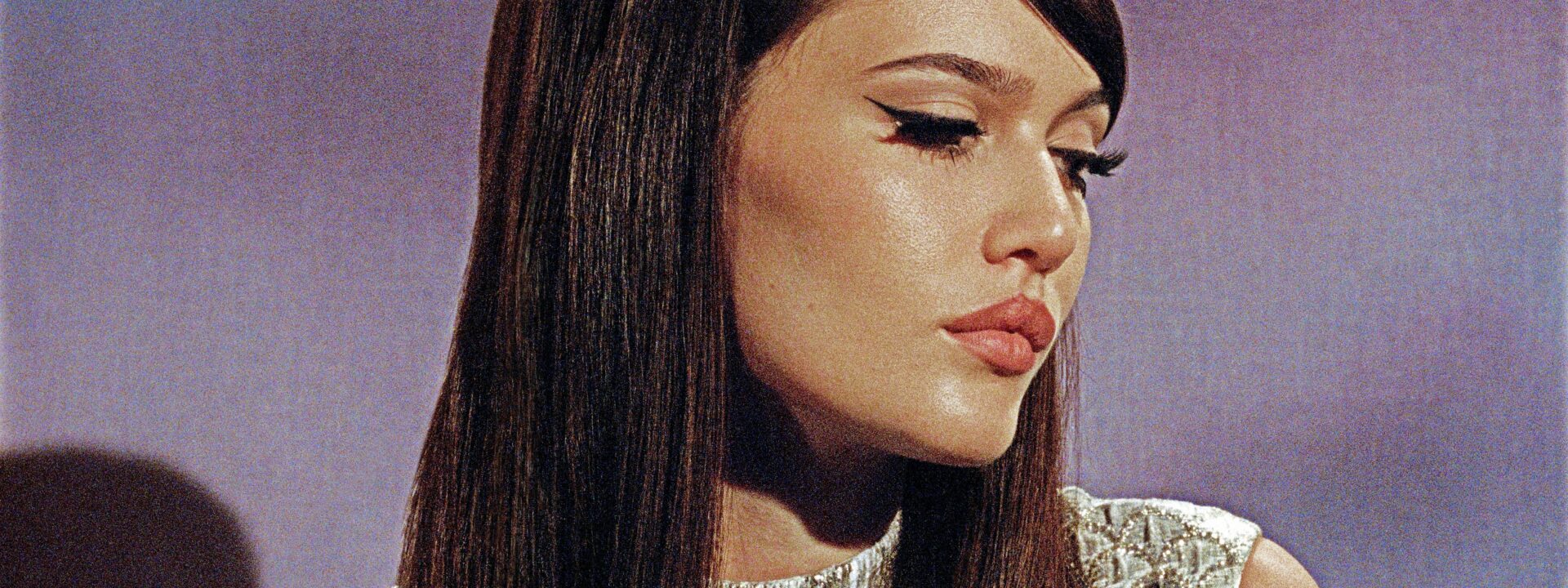
I meet Sienna Spiro in the lobby of the Ludlow Hotel on a chaotic day. She’s been kicked out of her room after staying way past checkout time (“I thought they’d let me stay, but they kicked me out!”), so she’s talking to me, then rushing off to a photo shoot, and finally flying home to London.
It’s no surprise she’s being pulled in so many directions—that’s what happens when you’re one of the most in-demand new names in music. Just four years ago, Spiro dropped out of school to focus on singing and songwriting full-time. Now, with 1.2 billion global streams under her belt, the 20-year-old has released her debut album, Visitor, on Capitol Records. The album follows the huge success of her lead single, “Die on This Hill,” a heartfelt, piano-driven ballad that showcases her raspy contralto. (When she performed it on The Tonight Show Starring Jimmy Fallon earlier this year, the audience interrupted with applause multiple times.)
Here, Spiro talks to Vogue about this magical moment.
Vogue: “Die on This Hill” is everywhere, your debut album is coming out, and you just sold out your world tour. What’s on your mind these days?
Sienna Spiro: All I can think about right now is a chicken sandwich. [Laughs.] Since I’m visiting New York, I’m craving Chick-fil-A. But seriously, I’m just very, very grateful. I’m trying to stay present and soak it all in, because I know this isn’t normal. I know this isn’t real life. It’s just really, really crazy.
Tell me about how “Die on This Hill” came together. I heard it was pretty much written by accident?
I was in LA, just scrolling through YouTube videos, and I saw someone playing “Bohemian Rhapsody.” I’m not great at the piano, but I felt this urge to learn it. I tried, but it just wasn’t working at all, so I kind of gave up. The chords I figured out were wrong, but then I rearranged them and played them over and over. Meanwhile, the phrase “die on this hill” was something I’d always wanted to write about, since it’s a common saying. So I just started writing lyrics over those chords. The next day, I went into the studio with producers Omar Fedi and Michael Pollack, who I’d just met, and we finished the song that day.
Borrowing from the chicken sandwich idea, did you know at the time that the song had that special something?
Honestly, the song was really different for a long time. It was originally on guitar and super fast—kind of like The Fugees or Lauryn Hill. I was desperate for an uptempo song. But Omar said, “This should be a ballad.” I’m pretty stubborn, as you can probably tell from the song. So I said, “No, it’s not.” I wanted something with drums so I could move around on stage. But I was forcing something that wasn’t right… he was correct, because it definitely felt right as a ballad. That taught me a lot about giving a song what it needs, not what you want. I think I made that mistake in my earlier music. I was a bit selfish—I’d think, “Oh, I want this in the song, so I’ll put it in,” without really considering what was best for the song.
There’s a Bob Dylan quote I love: “Songs are floating in the ether and you’ve got to catch them.” Do you agree?
Yeah, totally. It’s really strange. I honestly don’t know where songs come from. It baffles me every time I write a new one. So maybe all great songs are already written, because when you hear one, it feels so familiar. The sign of a truly great song is that it just feels right, you know?
You’ve said before that you have an innate sadness in you. Why do you think that is, and is it helpful to process that sadness through music?
I don’t mean this to sound sad or make me seem like a victim, but I just think some peoplePeople are naturally sad, and I definitely feel that way about myself. I think it runs in my family. My dad is like this, my grandma is like this, and I don’t think it’s a bad thing. I think it’s a very normal, human way to be. Some people just wake up and naturally feel pretty low, but they can still experience happy moments. And in a way, that’s lucky, because I think some people can’t feel happy at all. But I remember just feeling very sad, for no particular reason. It was just inside me, and that’s when I started writing songs. I began trying to understand why, and I think I’ve always felt very insecure because I tend to go deep into things. My friends would say, “You’re being so dramatic, you’re too much, you’re overwhelming us.” But I was just being myself.
At the same time, you have this natural talent. When did you realize you could sing like this?
I’ve always sung, honestly. I’ve been singing for as long as I can remember. I wasn’t always a great singer, but I love how it makes me feel more like myself than anything else. It makes me feel very confident and like I have a purpose. It’s truly the one thing that’s been constant in my life.
Photo: Courtesy Capitol Records
It was only four years ago that you dropped out of music college. Can you tell me about that time?
The school [East London Arts & Music] was actually amazing; it changed my life, and I’m so glad I went there. But I already had a manager, and I was doing sessions that I loved. I was making music every day. I felt like school was holding me back. To be honest, the reason I left was a bit silly, and I won’t get into it now, but it worked out for the best.
Obviously, your sound is very old-school, and your style is very ’60s. A lot of retro-style performers, like Olivia Dean and Raye, have been breaking through lately. Why do you think audiences are drawn to these classic sounds?
Personally, I’ve always loved those old-school artists. That’s been something I’ve listened to since I was younger. But I’d say people are really craving humanness and real, tangible things. That’s very clear. You know, I’m 20 years old. I’m very much Gen Z, and I crave live music. I crave things I can hold, see in person, and that’s what I try to bring into my music, because that’s what I love. It’s very hard to be present these days; it’s easy to feel disconnected and detached.
When I listened to your music, I couldn’t help but think of Frank Sinatra’s ’50s work, especially your big instrumental intros. Then I read he’s your favorite artist?
Yeah, he inspired my song “You Stole the Show.” It was one of the first songs we made for the album. I said, “I just need a Sinatra intro!” I wanted something grand, sweeping, and beautiful, so I sang this melody and we put it in. His song “I’m a Fool to Want You” was a big inspiration for that. He inspired a lot of songs, especially his album In the Wee Small Hours. My dad wanted to be Frank Sinatra—that was his idol. He always played his music at home, and that was my pop music for a long time.
Speaking of your throwback style, are you always hunting in thrift shops?
I love, love, love vintage shopping; it’s one of my favorite things. I put on my headphones and go by myself. I think it’s because of my dad again—he had a big influence on me, showing me ’60s-era films. I’m also a big fan of Barbra Streisand and ’60s girl groups like The Ronettes. I just love the way they move and look. And I love their hair, you know. I used to listen to music on CDs and see these artists with incredible eyeliner and beautiful hair, and I’d think, oh my God! I was so drawn to it. When I tried their styles, it made me feel so much like myself and confident, because I’m a very insecure person.I love the way I wear my hair now, and the way I do my makeup. Do you feel confident on stage when you’re singing and amazing the crowd? Audiences tend to really react to you.
When I’m on stage, I kind of black out. That’s a sign of a good performance—if you can’t remember it afterward. I think people don’t fully understand what singing feels like, how freeing and powerful it is. Melody can say more than words ever could. I also really struggled with my mental health growing up. I know a lot of kids did, but I really, really struggled. Singing was the only thing that kind of helped me get through it.
This conversation has been edited and condensed.
Frequently Asked Questions
Here is a list of FAQs about Sienna Spiro and the idea that her talent never goes out of style
BeginnerLevel Questions
1 Who is Sienna Spiro
Sienna Spiro is a singersongwriter and musician known for her soulful voice and blend of jazz pop and indie music She gained attention for her mature sound and classic style at a young age
2 What does talent that never goes out of style mean for her
It means her music and artistry feel timeless Instead of chasing trendy sounds she focuses on genuine emotion strong songwriting and classic musical elements that people enjoy no matter the decade
3 What kind of music does she make
Her music mixes jazz pop and RB Think of artists like Amy Winehouse Norah Jones or Laufeywarm acousticdriven songs with clever lyrics and a vintage feel
4 Is she a new artist
She started releasing music around 2020 and has been building a dedicated fanbase Shes still early in her career but her sound feels mature and established
5 Why do people say her talent is timeless
Because her songs focus on universal themes like love heartbreak and selfdiscovery delivered with a classic vocal style It doesnt rely on production gimmicks that age quickly
AdvancedLevel Questions
6 How does Sienna Spiros style differ from typical pop artists today
Most pop artists lean heavily on electronic beats autotune and fastpaced hooks Sienna uses live instrumentation breathy vocals and slower jazzinfluenced melodies Its more intimate and less produced
7 What are some specific examples of her timeless songs
Jack in the Box A sultry jazzinfused track with a classic show tune structure
Birthday A vulnerable pianodriven ballad about disappointment
Shoes A swinginfluenced song with clever wordplay reminiscent of 1940s cabaret
8 How does she maintain this timeless sound without sounding outdated
She blends vintage elements with modern lyrical themes