Haircare is entering its most scientific phase yet. Once focused on shine serums and smoothing sprays, the category is now shifting toward treating root causes, as consumers start to care for their scalp like facial skin. This is the ‘skinification’ of haircare.
Globally, sales of hair and scalp conditioners and treatments grew 4.2% in 2024, outpacing the overall haircare market growth of 3.7%. According to Connor Spicer, a consultant at Euromonitor, this trend is expected to continue through 2030. He explains that multi-step routines, ingredients, and product formats from skincare are now being mirrored in haircare.
“This shift is driving innovation, enabling more targeted solutions and premium experiences,” says Spicer. Premium products are moving away from one-size-fits-all formulas toward highly specific solutions tailored to age, hair texture, styling habits, color-treated hair, and even environmental factors. For example, the US brand Living Proof has introduced a Clarifying Detox shampoo with a naturally derived chelating agent to remove hard-water mineral buildup—a common but often overlooked cause of damage, frizz, and dullness.
This new generation includes scalp serums, AHA exfoliants, microbiome-supporting mists, and overnight treatments designed to repair hair fibers, much like retinoids and peptides target skin. Recent launches reflect this shift: Isima, a science-driven brand co-created with Shakira, has just entered the UK market at Selfridges; Aveda has expanded its Scalp Solutions line; and beauty-tech expert Currentbody has introduced an LED Hair Growth Helmet.
Growth is evident in both product variety and sales. According to Circana, haircare was the fastest-growing category in the UK beauty market, up 16% in the first half of 2025. Products addressing hair wellness, such as scalp care, thinning, and strengthening, are outpacing the market, with hair-loss and hair-wellness ranges seeing double-digit increases.
Yet, as more brands and products flood the shelves, a question arises: is the market becoming saturated, and what comes next in the skinification of haircare?
Cultural and Wellness Drivers
Demand for more targeted, high-performing hair and scalp care is coming from both younger and older consumers, says Millie Kendall, founder and CEO of the British Beauty Council. “Younger consumers are extremely ingredient-savvy and influenced by Asian rituals and TikTok routines, while older consumers in their 50s and 60s are dealing with menopause and stress-related hair thinning,” she explains.
Kendall notes that the ‘everything’ shower, a viral TikTok self-care trend featuring long, indulgent grooming sessions, has boosted awareness of Indian hair-oiling traditions. Amanda Le Roux, international SVP at Aveda, agrees. “Multi-step, skincare-inspired haircare rituals have been common in Eastern regions for centuries,” she says. “Now, the West is more aware of scalp health as the foundation for healthy hair and is adopting this philosophy.”
Hormones and health are further integrating scalp care into wellness conversations. Kendall describes today’s midlife cohort as “the first generation of women to work full-time while raising families. Stress is a major factor in hair loss,” she adds, noting that hair changes linked to perimenopause, menopause, and Ozempic-related hair loss are big topics. As haircare evolves into a broader wellness category, consumers are moving away from single hero products toward more prescriptive routines that support hair and scalp health from the surface and within, says Lucy Palmer, founder of the vegan haircare and supplement range Hair Gain, which she started after experiencing postpartum hair loss.
More consumers are now seeking products that treat the hair and scalp with the same level of care and consideration as their skin.Scalp care is becoming increasingly important as consumers adopt more holistic and personalized routines that treat the hair and scalp with the same level of care as the rest of their skin. They are seeking formulations that promote long-term hair health by creating an optimal scalp environment. This involves moving toward multi-step routines that include exfoliation, hydration, barrier support, and targeted restorative treatments. At the same time, brands are being judged more on the quality of their clinical studies, proven results, and ingredient transparency.
Customers are now more informed and are questioning what “clean” really means, demanding clarity, purpose, and proof. This scrutiny is driving innovation in formulations. Consumers want ingredients that work with the skin’s own biology, such as peptides, which are chains of amino acids that serve as building blocks for collagen, keratin, and elastin. There is also growing interest in biotech-powered ingredients like ectoin, which protects skin from environmental stressors, as they offer targeted, high-performance support without unnecessary additives. Additionally, there is rising demand for proven essentials like hyaluronic acid, niacinamide, and antioxidant-rich botanicals, with higher expectations for purity, stability, and clinical credibility.
Active ingredients have become a major factor in consumer purchasing decisions. Hyaluronic acid, ceramides, and AHAs, long familiar in skincare, are now being used in haircare to support moisture, strength, and overall scalp health. Niacinamide, in particular, has seen rapid growth since 2022, with online product listings containing the ingredient increasing more than twelvefold. This shift is evident in the surge of interest around brands like Nioxin, which has recently gained popularity on TikTok and Instagram.
Aveda’s Scalp Solutions range illustrates how closely haircare is borrowing from skincare. The line combines biotech naturals and adaptogens, such as lactobacillus ferment, ectoin, centella asiatica, and andrographis, to reinforce the scalp barrier, balance the microbiome, and protect against oxidative stress. Its latest product, the Hydrating Scalp and Hair Masque, uses skincare-grade hydrators like vegan squalane to restore the scalp’s lipid matrix while alleviating dryness and irritation.
Even the terminology mirrors skincare, with Aveda’s VP of research and development referring to “multi-benefit regimens that address the visible signs of premature scalp aging.” For Aveda, the challenge lies not in choosing between natural ingredients and efficacy but in combining them. Its R&D team screened over a thousand botanical actives to create the premium Follicle Vitality Complex for its Invati line, all while maintaining vegan and cruelty-free standards.
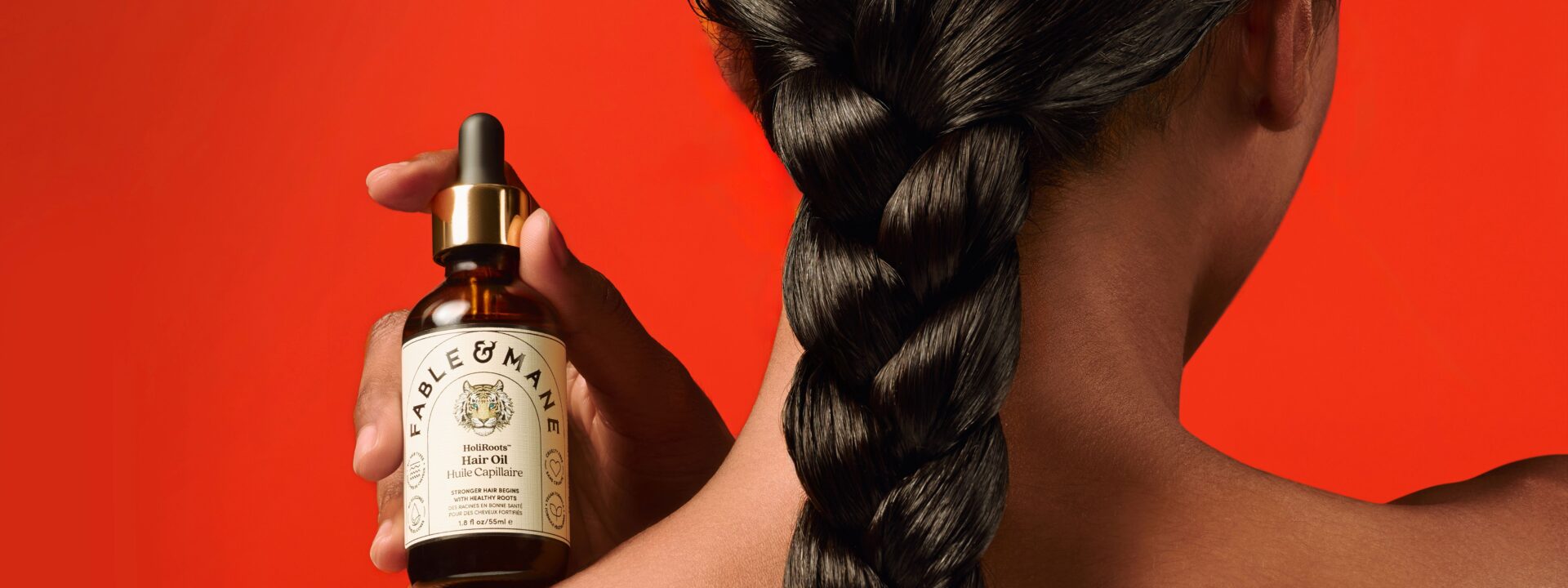
This blend of ancient rituals and clinical validation is also central to Fable & Mane, a brand inspired by Ayurvedic oils from co-founder Akash Mehta’s grandmother. Traditional oils can be too heavy for fine or color-treated hair, so the team collaborated with clinical experts to develop a lightweight blend suitable for all hair types, incorporating ingredients like amla, castor, ashwagandha, and dashmool. Mehta acknowledges that clinical testing was a significant investment but essential for credibility.The brand reinvested its early sales into lab trials to validate ingredients that had rarely been tested in that context. Akash Mehta, co-founder of Fable & Mane, has found that using skincare terminology helps consumers understand why more advanced formulas come with higher prices. The brand frames its routine in familiar skincare terms: shampoo as cleanser, treatment serum as leave-in or mask, and oil as pre-cleanse. Fable & Mane is built around Ayurvedic oils inspired by recipes from Mehta’s grandmother.
Brands like Isima, founded by Shakira, are positioning themselves as the next phase of haircare by offering personalized, prescriptive routines tailored to diverse needs rather than generic, one-size-fits-all formulas. “Haircare is where skincare was 30 years ago,” says Isima CEO Sid Katari. When developing the line with the singer, the core requirements were that it be science-driven, innovative, disruptive, and deliver real value to consumers.
Katari argues that conventional brands claiming to be “for all hair types” often fail those with more complex textures. Just as modern skincare now includes microbiome-balancing and exosome-based actives, he believes haircare must undergo a similar evolution. Isima uses a “tri-modal” approach targeting the scalp, cortex, and cuticle. In-house trichologist Iain Sallis emphasizes that “hair is dead tissue; the scalp is alive. It’s the incubator. Reducing inflammation yields huge benefits. Once the hair fiber is damaged, you can repair bonds, but the scalp comes first.”
Sallis notes that many people misdiagnose their own hair concerns—confusing frizz with diffuse thinning or assuming oily roots mean dry ends are not an issue. To provide prescriptive guidance, Isima is developing an algorithm with over 12,000 variants to recommend product combinations and frequency of use.
Beauty-tech tools like scalp and hair diagnostic scanners are also helping to educate consumers and drive adoption of clinically backed haircare. “The biggest trend I’m seeing right now is LED light therapy for hair,” says Kendall, referring to Currentbody’s recently launched LED Hair Growth Helmet, which has gained significant attention. She sees this as part of the shift into a more technological, clinical phase of hair “skinification.” “It’s fascinating to see how common treatments like hair transplants are becoming. Even tools have evolved: better brushes, heat-controlled devices, faster styling, smart cool-down features. Technology is advancing across every part of the category,” Kendall adds.
Laurence Newman, CEO and founder of Currentbody’s parent company Beauty Tech Group, agrees: “Consumers now accept that you can only go so far with topical solutions alone.” He observes, “Haircare is following the same path as skincare tech. People already knew LEDs were used in trichology clinics, so there’s a built-in acceptance. The difference now is accessibility.”
This professional and clinical shift is influencing more traditional beauty players as well. Dermatological haircare has long been part of L’Oréal’s strategy, with brands like Vichy leading in the space since 1994 with its Dercos line, and Cerave recently expanding into haircare. L’Oréal’s travel retail division has identified a unique opportunity linked to aesthetic tourism: with growing numbers of travelers seeking hair transplants, the company sees rising demand for Vichy Dercos Anti-Hair Loss products to complement these procedures. L’Oréal has been tapping into this trend—using airports to sAirports, as hubs for consumer education, are also perfect for highlighting diagnostic-driven innovation in haircare. For example, leading brand Kérastase’s K-Scan service provides travelers with personalized consultations and customized routines on the spot. “We see very direct results when consumers are presented with a science-based, ingredient-focused solution tailored to their specific scalp and hair concerns,” says Anne-Laure Lecerf, general travel retail manager for L’Oréal’s dermatological beauty and professional products division. She adds that diagnostic tools lead to significant conversion rates, reaching around 80% for beauty advisors in travel retail.
As Kendall notes, haircare is no longer just about appearance. “Hair health remains incredibly important,” she says. “We all know the emotional impact of a bad hair day.”
Frequently Asked Questions
Of course Here is a list of FAQs about adapting skincare principles to haircare designed to sound like questions from real people
Beginner Definition Questions
Q What does haircare like skincare even mean
A It means treating your scalp and hair with the same level of attention and strategy you use for your face This includes understanding your hairscalp type using targeted ingredients for specific concerns and following a consistent routine of cleansing treating and protecting
Q Whats the haircare equivalent of a skincare routine
A Think of it in similar steps
Cleanse Shampoo
Treat Conditioner hair masks or leavein treatments
Protect Heat protectant sprays or UVprotecting products
Q Is my scalp skin the same as my facial skin
A Essentially yes Its skin with pores and oil glands If you have an oily face you likely have an oily scalp if your face is dry or sensitive your scalp might be too
Benefits Core Concepts
Q Whats the biggest benefit of this approach
A Healthier hair starts at the scalp By focusing on scalp health firstjust like focusing on skin barrier healthyou create a better foundation for strong shiny problemfree hair growth
Q Do I really need to double cleanse my hair like in skincare
A Sometimes If you use a lot of heavy products or have a very oily scalp a first cleanse with a clarifying shampoo can remove buildup followed by a second wash with a gentler hydrating shampoo
Q Are there hair actives like vitamin C or retinol in skincare
A Absolutely Common haircare actives include
Salicylic AcidGlycolic Acid For exfoliating a flaky congested scalp
Niacinamide To help regulate scalp oil production and strengthen hair
Hyaluronic Acid For intense hydration without weight
Peptides To help support hair strength and thickness
Common Problems Solutions