Milan was buzzing with excitement this season, from Gucci’s rebuilt store to Prada’s 63 skirts, a clever debut at Moschino, and a much-discussed Vogue World. It was a week full of creativity, celebrity, and online debate. To many people’s surprise, Italian Prime Minister Giorgia Meloni attended a gala on Wednesday night celebrating the opening of Milan Fashion Week and the new Dalí e la Moda exhibition, hosted by Camera della Moda Italiana and Milan Mayor Giuseppe Sala at the Palazzo Reale. Her attendance marked the first time in 10 years that a sitting Italian prime minister had attended Milan Fashion Week (the last was Matteo Renzi in 2016). It also shows that the Italian fashion industry is at a crucial turning point, as Milan, its brands, and its manufacturing networks try to return to growth (Italy’s annual fashion revenues have fallen 8% since 2023, reaching €91.4 billion for 2026, according to CNMI).
Italian Prime Minister Giorgia Meloni attended a Milan Fashion Week gala. The last time a sitting prime minister attended a Milan Fashion Week dinner was in 2016.
Photo: Getty Images
“I am here to reaffirm the government’s support and commitment to one of the flagship sectors of Made in Italy,” Meloni wrote on Instagram about the event. Meloni’s government pledged €100 million to the fashion industry to encourage investment. “It gave us the opportunity to have a constructive dialogue on some of the sector’s key priorities, from supporting small and medium-sized enterprises to education, training and human capital,” Carlo Capasa, chairman of Camera della Moda Italiana, told Vogue Business after MFW. “At a time of profound economic and geopolitical transformation, this dialogue between institutions and industry is particularly important.”
Funding and political engagement is one way to turn things around. But designers also presented strong, directional collections for SS27 in the hope of stirring up demand and boosting the Italian fashion industry. Here are our key takeaways.
‘Refreshingly idiosyncratic’, but rooted in reality
When Demna rebuilt a Gucci store inside a convention center to preview his new store design, which will roll out over the coming months, it felt like a real picture of our industry today. Designers are under pressure, not just to create fashion that makes us dream, but also to build businesses and make clothes that we actually want to buy in real life.
Demna staged the Gucci SS27 show inside the setting of a Gucci store built in a convention center.
Photo: Alessandro Lucioni / Gorunway.com
“Gucci’s decision to stage the show within the setting of a Gucci store was particularly smart and immersive,” says Mytheresa chief buying and group fashion venture officer Tiffany Hsu. “It immediately communicated the focus of the season, inviting you into the world of the glamorous Gucci customer and making the retail experience part of the storytelling.”
For SS27, Milan collections were creative and bold in prints, colors, textures, and embellishments, but with a versatility and practicality of form that meant they could be worn on the street. “The collections are real but in a very interesting way. They’re not banal. They’re not overly commercial. Absolutely not,” Vogue Runway’s Tiziana Cardini says. “But there’s something reachable and understandable about them.”
After this season in Milan, it may be time to “officially, once and for all retire the tired term ‘quiet luxury’,” says Brooke Bobb, VP, fashion director at Nordstrom. “We are definitely entering a season where style feels much more alive and refreshingly idiosyncratic. The collections are bolder, more embellished, more experimental in proportion and silhouette, and there’s a call to be less formulaic (read: algorithmic) in the way we put our clothes together day-to-day.”
Prada, which opened the week, was a case in point. “We see a lot of reality in this collection. We love reality,” said co-creative director Raf Simons after the brand’s SS27 show, which focused entirely on a study of the skirt. From miniFrom pencil to pleated, the collection featured 63 skirts, each distinguished by removable Velcro panels in neon colors, embellishments, prints, and layers of crinoline. Prada’s exploration of the skirt presented 63 different variations, ranging from plain to entirely embellished.
Photo: Alessandro Lucioni / Gorunway.com
“We were fascinated by the idea of the skirt as an object,” Miuccia Prada said after the show. “Each skirt can also be entirely reinvented by every person who wears it, through its combinations and juxtapositions with other pieces. They can transform its meaning. The skirt is an object that is contemporary because it is flexible and adaptable. It invites contradiction.”
“The collection felt feminine, playful and intelligent, capturing exactly the sense of ease and optimism we want to see for summer,” says Mytheresa’s Hsu. “It is definitely a skirt season. The category feels particularly relevant now, offering endless possibilities to play with proportion, femininity and styling while bringing a fresh energy to the wardrobe.”
A bright spot of the week was Simone Rizzo and Loris Messina’s sun-drenched debut at Moschino. The innovative show concept, where scores of regular people in their own clothes walked in one direction, as if on a busy city street, while the Moschino models walked in the opposite direction, really contextualized their debut collection in real life.
Moschino SS27.
Photo: Acielle/StyleDuMonde
Industry insiders loved the idea. Vogue Italia head of editorial content Francesca Ragazzi saw some similarity between this “real-life” theme and the story of Vogue World, which took place in Galleria Vittorio Emanuele II on Tuesday 22 September. The show’s third act, Made in Italy, was followed by a sequence that imagined a typical day unfolding inside the historic shopping arcade, with characters you might encounter on an ordinary day in Milan: a mother pushing a pram, a woman talking on her phone, tourists wheeling suitcases, students meeting up and sciure — the stylish, older Milanese women known for their distinctive style. (Of course, these characters were played by Simone Ashley, Laura Harrier and Madelyn Cline). The robots, though divisive, were another stark reminder of the realities of 2026.
The dust settles on the debuts
This season was a season of consolidation in Milan, after a string of major debuts in recent seasons. It now feels like the city’s biggest creative directors are finding their feet, experts agree. “It took me a year to get to this collection and to really understand what Gucci is for me because Gucci is so many things,” Demna said backstage after Friday’s The Store Show.
The Gucci collection cycled through a few different styles, from twisted prep to spiky-shouldered tailoring, but post-show chatter signaled that people are better understanding where his Gucci will go. And while it’s not out of the woods yet, it’s worth noting that Gucci is recovering slowly under Demna. Sales fell 2% to €1.41 billion for Q2 2026, above consensus expectations of a 4.7% drop, marking a significant improvement for the house, which was down 8% last quarter. Kering chairman Francois-Henri Pinault and CEO Luca de Meo attended both the Gucci and Bottega Veneta shows.
“Demna’s Gucci feels like a defining moment, with a clear focus on making the house feel more relatable, commercial and relevant to a broad luxury customer, while giving menswear a particularly strong presence,” Hsu says. Milan may have its own men’s week in January and June, but menswear is increasingly prominent during the womenswear shows. Gucci, Bottega Veneta, Jil Sander, Ferragamo, Diesel, Tod’s and more now show co-ed.
At Fendi’s mirror show, which distorted the view and projected guests onto the runway, Bobb felt Maria Grazia took “a bigger swing” this season. “She went to her more playful, provocative side, which gave the collection a fantastic energy overall.”
Maria Grazia Chiuri’s sophomore show saw models walk inside a mirrored box, so the audience couldLouise Trotter is settling in well at Bottega Veneta, according to the general consensus. She is moving away from heavy fabrics toward lighter, easier fashion, while still maintaining a strong commitment to craft and looser lines. Jackets were made without padding, and fringe was shaped into skirts that let air flow as the wearer walked. Brand ambassador Jacob Elordi sat in the front row, while his girlfriend Kendall Jenner closed the show, marking her first runway appearance of the season. Other guests included Tyler, the Creator, Solange, Lauren Hutton, and Audrey Hobert, who drew crowds of press eager to interview them after the show.
At his third show for Jil Sander, Simone Bellotti continued to develop his own take on minimalism, offering interesting twists on wardrobe staples like the blazer and skirt. “He is a masterful designer who can cut the slickest suit in the freakiest way,” says Nordstrom’s Bobb. “I loved the off-kilter silhouettes, the surprising digital prints and bubble silhouettes, the inside-out, colorblocked bags, and pumps with the bendable leather panels at the front.” She wasn’t alone. The benches were packed, and editors struggled to film almost every look as it came down the runway. (At the re-see, however, one editor who loved the collection complained about the very high prices.) Following the appointment of CEO Marco Viganò, hopefully the relatively small OTB brand can achieve commercial success to match the buzz around Bellotti.
At Jil Sander, Simone Bellotti pushed past the minimalism the brand is known for to offer something new.
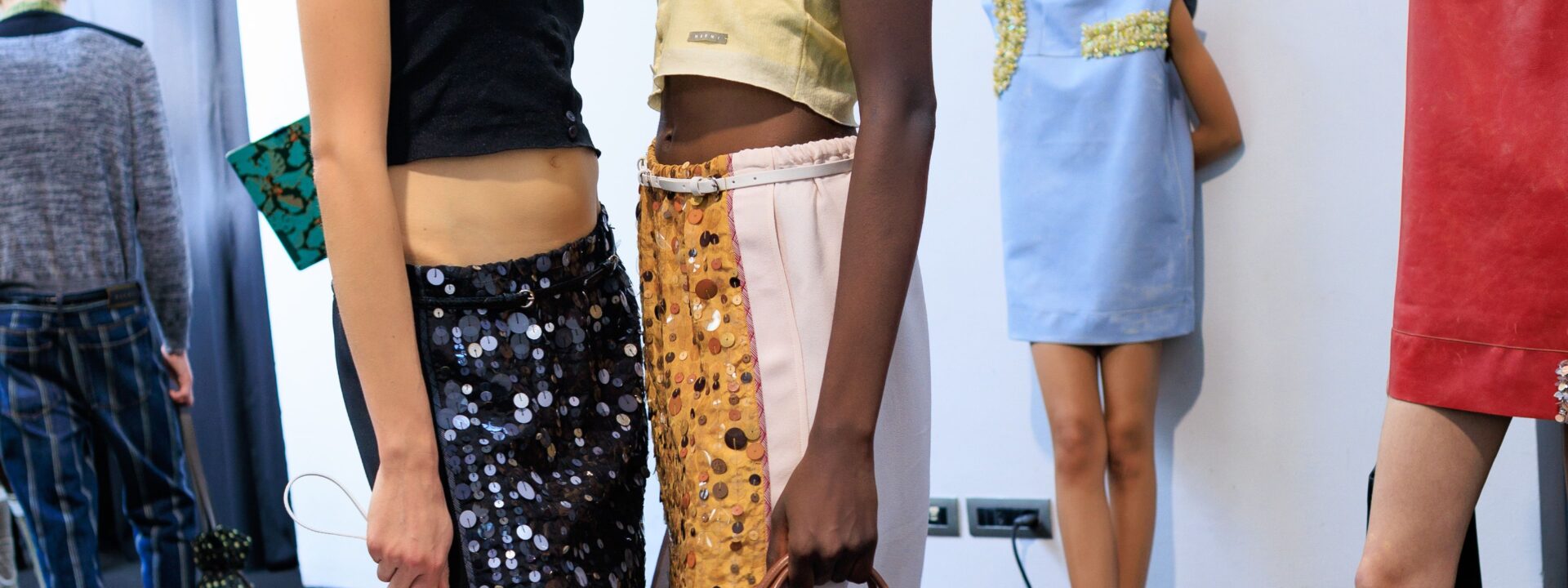
At OTB stablemate Marni, Meryll Rogge presented a well-received sophomore show for the house. “We had lots of conversations throughout the season about, when you enter a brand, what do you bring and what do you take away?” she said after the show. Bobb says it was “confident, wildly cool, and completely relevant for today’s Marni customer, someone who leans into adventurous dressing and has an artful affection for clothes.”
Meryll Rogge presented a well-received, youthful sophomore show at Marni.
At Diesel, this season marked Glenn Martens’s farewell. And what better way to say goodbye than to stage an orgy flash mob during the show, with actors planted among the guests who suddenly began kissing and canoodling? “This one was a bit more experimental than usual, let’s say it like that,” Martens said with a smile backstage after the show. Many of his team were emotional backstage. “Six years ago, I arrived at Diesel, and it was a company making T-shirts and five pockets. Now it’s a super experimental, fun, consistent company with the same team. I love them, and I hope they’re going to have a new direction, which is respecting them and celebrating them as much as they deserve.” OTB has yet to announce Martens’s successor.
New voices and new places for new talent to thrive
Beyond the shows, Milan saw a string of new creative space openings this season, designed to nurture the next generation of talent across all fields of design. Former Marni creative director and Gucci creative director Francesco Risso’s The Bureau of Imagination launched during MFW, with plans to invite external creatives and collaborators to work with him and his fiancé, Alex Sossah, in the space.
Across town, in the Nola district, designer Edward Buchanan opened The Situation, a new 500-square-meter space for Black creatives and others from underrepresented groups. Noting the coincidence of his and Risso’s projects, Buchanan reached out, and Risso will be one of the founding board members of The Situation, helping to choose the creatives to nurture.
Mexican-Ecuadorian designer Neithan Herbert Ruiz Pillajo of Neithan Herbert made his runway debut on Saturday morning, with the support of his community in San Miguel de Allende. Ilenia Durazzi, tapped to consult on menswear for Grace Wales Bonner’s Hermès, staged a well-received presentation and exhibition.
Read More: “My Community Made It Happen”: Inside Mexican BraNeithan Herbert’s Milan Debut
By Lucy Maguire
Institution by Galib Gassanoff, Act No.1, and Francesco Murano are also maturing, each presenting well-received shows. Meanwhile, Venerdì Pomeriggio helped my gardening-core prediction come true with a whimsical yet practical collection. The brand was added to Vogue Runway this season, and reviewer Giorgia Feroldi — while backstage for a preview — was drafted in at the last minute to walk the runway when a model didn’t show up. The brand will also move into selective wholesale distribution. “I don’t want to follow fashion’s pace or do huge productions,” the designer said. “I want the distribution to remain very curated.”
Institution by Galib Gassanoff SS27.
Photo: Umberto Fratini / Gorunway.com
Fondazione Sozzani launched its Sozzani Award on Saturday, naming Paris-based British-Nigerian designer Timisola Shasanya as its first winner. She will receive a €15,000 scholarship/grant to do a professional training course. “What particularly impressed us as the jury about Timisola was her ability to connect her Nigerian heritage with a contemporary approach to design, bringing together traditional craftsmanship and new technologies,” says Fondazione Sozzani’s Sara Sozzani Maino, who is also CNMI’s ambassador for new talent. “It is encouraging to see how Milan is opening up to new creative voices, and how the opportunities we have been building over the years are allowing more young designers to present their work and connect with the industry,” she says.
Capasa is confident that, with strong shows and a strong commitment to talent, Italian fashion can continue its recovery. “This edition has shown Milan at its best,” he says. “International and open to the world, while remaining deeply connected to the creativity, craftsmanship and know-how that define Italian fashion.”
Frequently Asked Questions
FAQs Rooted in Reality Key Takeaways From Milan Fashion Week SpringSummer 2027
1 What is Rooted in Reality in the context of Milan Fashion Week
Its the nickname given to the overall mood of the SpringSummer 2027 shows Instead of fantasy and spectacle designers focused on reallife clothes people can actually wear
2 What does SpringSummer 2027 mean if were seeing it now
Fashion weeks show collections about a year ahead of when they hit stores So whats shown as SpringSummer 2027 will arrive in shops in early 2027
3 What were the biggest trends from these shows
Relaxed tailoring earthy and neutral colors practical layering flat shoes and durable natural fabrics like linen cotton and lightweight wool
4 Why is this called rooted in reality
Because the clothes were designed for real life work travel errands rather than red carpets or social media moments
5 What does quiet luxury mean and did it show up here
Quiet luxury means expensivelooking but understated clothing without big logos Yes it was a major theme with a focus on fabric quality and fit over branding
6 What is seasonless dressing
It means buying clothes you can wear across seasons by layering them instead of buying separate wardrobes for spring and fall
7 Who are the key designers to watch from this season
Prada Giorgio Armani Max Mara Bottega Veneta and Ferragamo were among the most talkedabout shows
8 What colors dominated the runways
Earth tones olive clay sand stone and warm browns plus soft whites and muted blues
9 What fabrics were most common
Linen cotton poplin lightweight wool and washed silks Many were undyed or naturally pigmented
10 What silhouettes were popular
Loose but structured wideleg trousers longline jackets column dresses and oversized shirts
11 Why are flat shoes suddenly everywhere
Comfort drove the trend Designers paired ballet flats loafers and flat sandals with almost everything