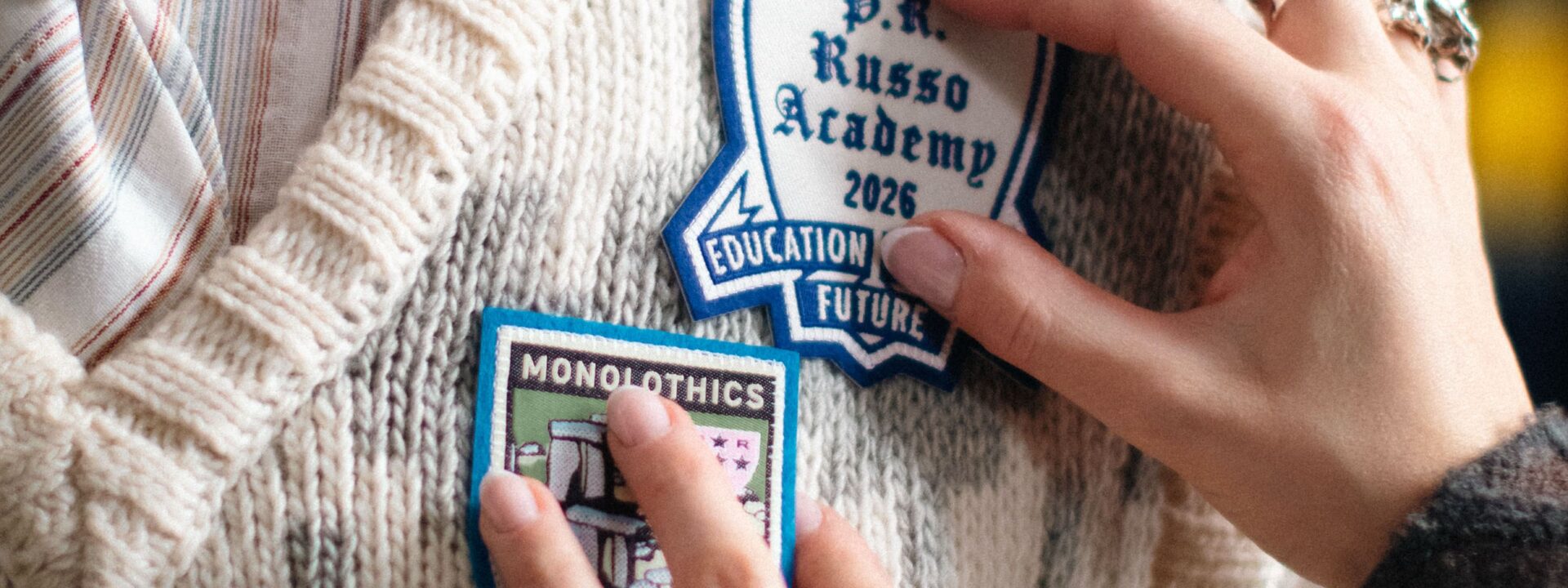
At the 20th Copenhagen Fashion Week, Paolina Russo and Lucile Guilmard—the designers behind the London-based brand Paolina Russo—returned to the city where they first debuted on the runway two years ago. They now feel the brand has matured.
“Last time we were here, the brand was very new. We hadn’t even launched our direct-to-consumer channel yet,” says Russo, speaking from their temporary Copenhagen studio as their London team of handknitters put the finishing touches on the collection. The brand is one day away from its Fall/Winter 2026 show. “Since then, we’ve started our DTC e-commerce, our Instagram community has grown, and more people are wearing the brand. We’ve learned a tremendous amount over the past two years.”
Russo and Guilmard say their biggest lesson has been how to build a viable business from a creative idea, which they attribute largely to raising consumer awareness early on. For their FW26 collection, the duo is focusing on expanding their DTC audience by integrating technology into the garments. They are embedding NFC (near-field communication) chips into their knitwear, developed in partnership with U.S.-based tech manufacturer Avery Dennison.
These chips are woven into what they call “community badges,” which resemble the Girl Scout-style badges that appear as a motif across all Paolina Russo collections. The aim is to bridge the physical and digital worlds. When scanned with a smartphone, the chips lead users to an interactive portal that directs them straight to the Paolina Russo e-commerce site to browse the collection. Each garment becomes a “living portal” designed to encourage sales.
Canadian-born Russo founded the brand in London in 2020 after graduating from Central Saint Martins. She was joined by her French co-founder Lucile Guilmard in 2022, also a Central Saint Martins graduate. In June 2023, they won the inaugural Zalando Visionary Award, which recognized their use of sustainable local crafts and materials. As part of the award, they received €50,000 and full funding and production support for their first show, held two months later during Copenhagen Fashion Week SS24.
The Zalando funding helped them invest in the chip technology. “It’s a really cool way to blend tech with ancient crafted elements—a fusion we’ve always been interested in—while connecting more people to the Paolina Russo universe, whether they’re already part of it or new to it,” says Russo.
Their ninth collection, presented at Copenhagen’s French Embassy on Thursday, draws inspiration from girlhood and the feeling of a first school trip abroad. It features knitwear from Peru and woolen jersey from Portugal, created in collaboration with local artisans.
“While we’re exploring this new technology, the collection still has strong handcrafted elements,” explains Guilmard. She describes how the brand works closely with French Peruvian creative studio Maison Anaychay, which connects designers with artisans in Peru. “The women there specialize in traditional Peruvian embroidery and crochet. This allows them to work from home, crochet and knit, earn a living wage, and care for their families. At the same time, we gain access to this ancient craft and help sustain it for the future.”
Russo and Guilmard hope that by incorporating forward-thinking NFC badges into these traditionally crafted designs, they can drive more direct-to-consumer sales. They aim to create a connection with potential customers that is more memorable than scrolling through social media and removes a point of friction.
“Whenever you’re wearing something and someone asks where you got it, you”You used to have to look it up separately, but now you can just tap and instantly find us here,” says Guilmard. “We’re really exploring our direct-to-consumer pathway; it’s a much more direct way to grow our community.”
This isn’t the first time the brand has tried to connect the digital and physical worlds to draw consumers into its universe. In 2023, they partnered with Dover Street Market on an exclusive Paolina Russo collection within Roblox, alongside a physical in-store installation, which they say went “really well.” The duo also notes that while they aren’t using AI for creative ideas, they are using the technology “an awful lot” on the operations side.
“Generationally, we grew up with The Sims and playing video games, so the fact that this kind of fantasy can now exist in reality feels nostalgic but also cool,” says Russo. “It feels really magical for us every time we can do something digital.”
The pair have been experimenting with technology to create garments since founding the brand, which Russo says stemmed partly from a degree project where she developed a programmable knitting technique. This approach also helps make the business more scalable. “We always start by being really inspired by something real, physical, and handmade, and then transforming that into something reproducible is amazing,” she says. The latest collection combines both, featuring digitally enabled knitting techniques like illusion knitting on heavy knitwear, alongside handmade friendship bracelets and hair braids.
“Since the beginning, we’ve always believed that technology isn’t going to replace craft. It’s actually going to sustain it and push it forward into the future,” says Guilmard. “We believe they should exist together.”
With sustainability as a core ethos, Russo and Guilmard are well aware that the EU’s digital product passport (DPP) deadline is fast approaching. Their NFC chips offer a handy testing ground for the kinds of post-purchase digital worlds that can be built through chips woven directly into garments. Unlike some regulations, the DPP requirements will apply to all brands at the product level starting in 2027, regardless of company size. So while developing them now may be a major investment—and current user adoption is typically low—early adopters will have an advantage when the deadline arrives, and brands will have no choice but to comply with the supply-chain-focused sustainability disclosures.
“These conversations around DPPs and garment traceability are really interesting when it comes to the post-purchase journey and truly understanding your clothes,” says Russo. “There are so many avenues and possibilities with this technology—this is just the first step. At the end of the day, DPPs are about education, and as this collection shows, education can be fun, school can be fun. And combining education and sustainability like that can be extra fun.”
Frequently Asked Questions
FAQs Paolina Russos FW26 Collection with Embedded Microchips
Q1 Wait there are microchips in the clothes What does that even mean
A Yes select pieces in the FW26 collection have tiny flexible microchips seamlessly embedded into the fabric or tags Theyre like discreet digital tags you cant see or feel
Q2 Why would a fashion brand put microchips in clothing
A Paolina Russo is using them primarily for digital authentication and proof of ownership Its a hightech way to combat counterfeits and create a verifiable digital record for each garment
Q3 How does the microchip work
A Its a type of NFC chip You can tap it with a compatible smartphone to read it This action might open a unique webpage verifying the items authenticity showing its origin or unlocking exclusive digital content
Q4 Is this for tracking wearers Is it a privacy risk
A No These are passive chips with no GPS or battery They dont track your location They only contain a unique digital identifier that activates when scanned by a phone very close by similar to tapping a credit card
Q5 What do I need to use this feature
A Just a modern smartphone with NFC capabilities You simply tap the designated area on the garment with your phone
Q6 What happens when I scan the chip
A Youll typically be directed to a secure digital certificate or profile for that exact item This proves its genuine may detail its materials and craftsmanship and could offer access to lookbook content designer notes or future brand experiences
Q7 What are the main benefits for me as a customer
A 1 Guaranteed Authenticity Be 100 sure your item is real not a fake
2 Proof of Ownership Have a digital record for insurance or resale
3 Enhanced Experience Connect directly with the story and world behind the piece
Q8 Can the chip be removed or damaged
A The chips are designed to be durable and survive normal wear cleaning and even dry cleaning They are