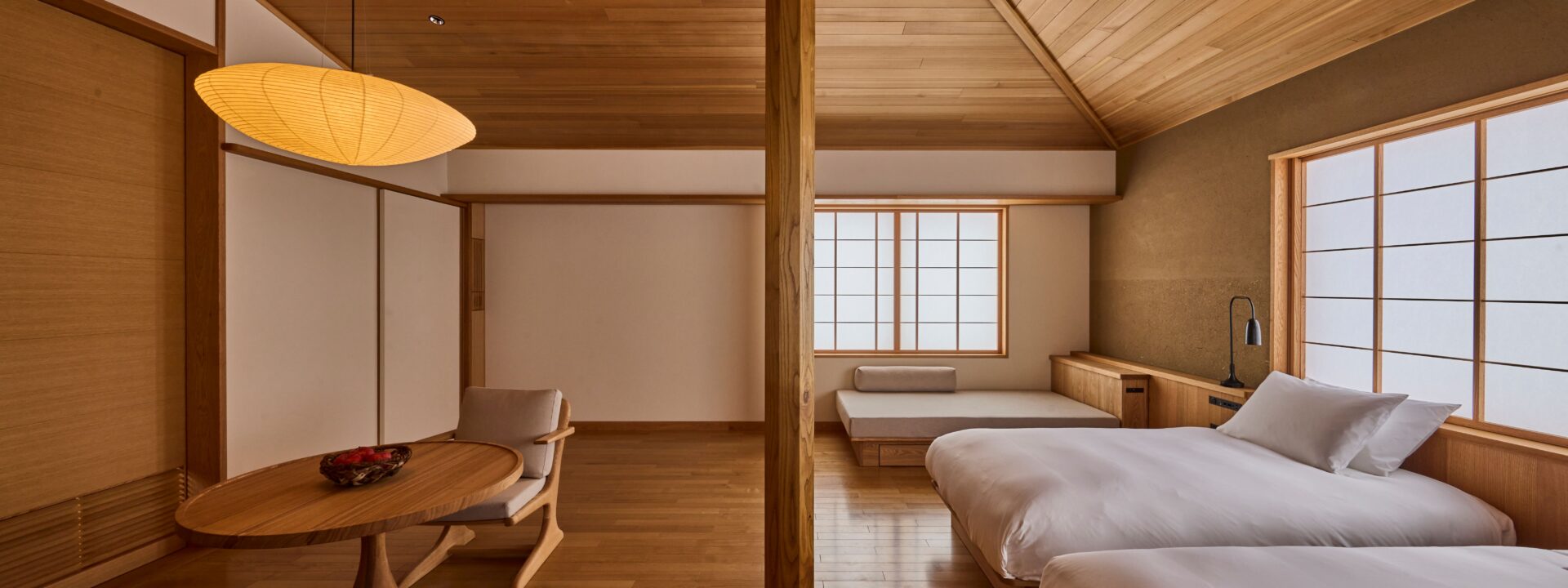
The first thing you notice at Azuma Farm Koiwai is the fresh, calming scent of hinoki wood. It fills the high ceilings of the resort and decorates the few cozy cabins scattered across the grounds. Surrounded by a ring of Japanese cedars and red pines, with colorful grasses swaying in the wide pastures, Azuma Farm offers a quieter side of Japan—a world away from the crowded tourist spots and over-photographed places found in much of the country. Located in the sleepy rural region of Iwate, a prefecture known for its picture-perfect landscapes, special soba noodles, and handmade iron kettles (more on those later), it’s just a couple of hours north of Tokyo by bullet train. Yet it feels like a deep breath away from the city’s hustle and bustle.
The resort sits on the grounds of Koiwai Farm, a century-old private farm (the largest in Japan) whose popular dairy products are sold in supermarkets nationwide. Azuma itself, set apart from the barns and stables, is refreshingly free of the smells and sounds of a real farm. No animals roam nearby (local bears live in the region, but guests will be relieved to know a fence around the forest keeps them out). There are plans to grow vegetables, but for now, this peaceful pocket of rural Japan is simply that—a quiet, idyllic escape.
The story of how it began goes like this: Adrian Zecha, the hotelier best known for founding Aman, visited the area and fell in love with its calm atmosphere. The 93-year-old thought that if there was a chance to offer a new kind of hospitality in Japan, this would be the place. Along with his trusted partner Fumitomo Hayase (who represented Aman in Japan for many years before starting his own hotel development company), they teamed up with the Eastern Japan Railway Company to bring Azuma Farm to life. Their hope is to “preserve Japan’s rich natural landscape for future generations,” while also setting a new standard for slow, luxury hospitality in this less-explored part of the country.
Iwate seems like the perfect spot for it. Located in Japan’s northern Tohoku region, the prefecture offers a refreshing change from the well-worn “golden route” through Tokyo, Hakone, Osaka, and Kyoto that many first-time visitors take. Life here is shaped by the area’s mountainous terrain and fertile farmlands. Right now, only 2% of visitors to Japan make it to Tohoku, but the team behind Azuma Farm hopes to change that.
What sets Azuma Farm apart from other luxury resorts (though it has little competition in the region so far) is its strong ties to local communities, giving guests access to unique excursions. Horseback riding takes you through pastoral landscapes that rival the Alps, while a windy hike up nearby Mount Hachimantai offers a view of the Dragon Eye—a natural ice formation surrounded by a ring of clear blue water near the summit. There are also scenic trips to the Sanriku coast, wasabi harvesting, temple visits, and historical tours of Iwate’s ancient towns.
Iwate is also famous for its Nanbu ironware, especially its kettles, which take two months to craft and are celebrated as luxury objects in the truest sense. Koizumi Nizaemon—an 11th-generation ironsmith whose ancestors’ skills were so valued that they were given special protection by the local samurai clan—doesn’t open his workshop to the public. But for guests of Azuma Farm, he makes an exception. During a morning visit to the workshop, we watched Nizaemon pull a glowing red-hot kettle from a bucket of embers and listened as he described the crafting process that has been passed down through generations.This tradition has been passed down to him for hundreds of years. Nizaemon can then guide you through the decorating process, allowing guests to create their own Nanbu kettle with a unique emblem.
Photo: Courtesy of Azuma Farm
Back at the farm, the simple private cabins that serve as accommodation are scattered across the grounds. They carry the same subtle scent of hinoki wood as the main building. Overlooking everything is Mount Iwate, a 2,038-meter-high peak whose snow-covered summit changes color with the seasons. That’s because the weather in this part of Japan is always shifting—not just through the extremes of bright white winters, russet autumns, and wildflower-filled springs, but even from hour to hour. One moment it might be gloomy and overcast, with cloud shadows drifting over the pastures, and the next, the skies turn perfectly sunny. Luckily, Azuma Farm is scenic enough to stay charming through it all, and the grounds take on a calm, meditative atmosphere even during a downpour as you listen to the rain patter on the grass.
Photo: Courtesy of Azuma Farm
Striking a balance between cozy and spacious, the hotel grounds cover 20 acres but are mostly easy to walk around. The friendly and attentive staff are also ready to drive you if needed. There are 24 rooms in total: 22 Forest Villa rooms with views of the vast greenery outside, and two Garden Villas that offer more space and an engawa (outdoor terrace)—a lovely spot for some solo yoga or meditation in the morning as you listen to the breeze rustling through the cedars.
Photo: Courtesy of Azuma Farm
Beyond the activities, it was these small moments of relaxation on the farm that made it feel truly special. This was best experienced at what the farm calls Forest Springs: three spa cabins lined up just away from the main building, with chimneys releasing thin trails of smoke that hint at the wood-fired saunas inside. These spacious lodges can be booked for two-hour sessions, and it was pure bliss spending a peaceful afternoon there—dipping in and out of hot and cold baths, sweating in the sauna, and reading a book on the reclining loungers. In winter, the frosty brilliance of the snowfall outside makes the experience even cozier; the Japanese tradition of yukigami—diving naked into the soft snow after heating up in the sauna—is nature’s more invigorating and fun version of a cold plunge.
Photo: Courtesy of Azuma Farm
Dozing off in those cabins felt like you could be anywhere in the world—until you step out into the soft evening light and remember you’re on a quiet farm in rural Japan. The only sound is the rustle of cedar trees, and just a short walk away, a kind chef has prepared a delicious dinner for you. It’s enough to bring a sleepy smile to anyone’s face.
Frequently Asked Questions
Here is a list of FAQs about the new farm retreat opened by the founder of Aman written in a natural conversational tone
General Questions
Q Who is the person behind this new farm retreat
A Its Adrian Zecha the founder of the luxury hotel brand Aman Hes known for creating quiet highend resorts in beautiful locations
Q Where is this farm retreat located
A Its in Japan specifically in the rural countryside near Kyoto in an area known for its natural beauty and traditional farming
Q What makes this different from a regular Aman hotel
A Its not a typical luxury hotel Its a working farm that also offers accommodation The focus is on handson farming food and a slower more rustic lifestylebut with Amans signature attention to design and detail
Q Is it just for rich people
A Its definitely a premium experience but the pricing is meant to reflect the immersive allinclusive nature of the stay Its more about the experience than just a room
Accommodation Amenities
Q What are the rooms like
A They are very minimalist and elegant built in a traditional Japanese farmhouse style Think natural wood tatami mats and sliding doors with modern comfortable bathrooms
Q Is there WiFi and air conditioning
A Yes there is WiFi For air conditioning the rooms are designed to be naturally cool in summer and warm in winter but some climate control is available
Q How many people can stay there
A Its very small and exclusive The retreat has only a handful of guest rooms and a few private villas so the total guest count is very low
Q Is there a spa or pool
A Theres no large swimming pool but there are natural hot spring baths and a spa offering treatments that use local ingredients
The Farm Activities
Q What kind of farming do they do
A They grow seasonal vegetables rice and herbs Its organic and traditional Japanese farming Guests can join in with planting weeding or harvesting
Q Do I have to work on the farm