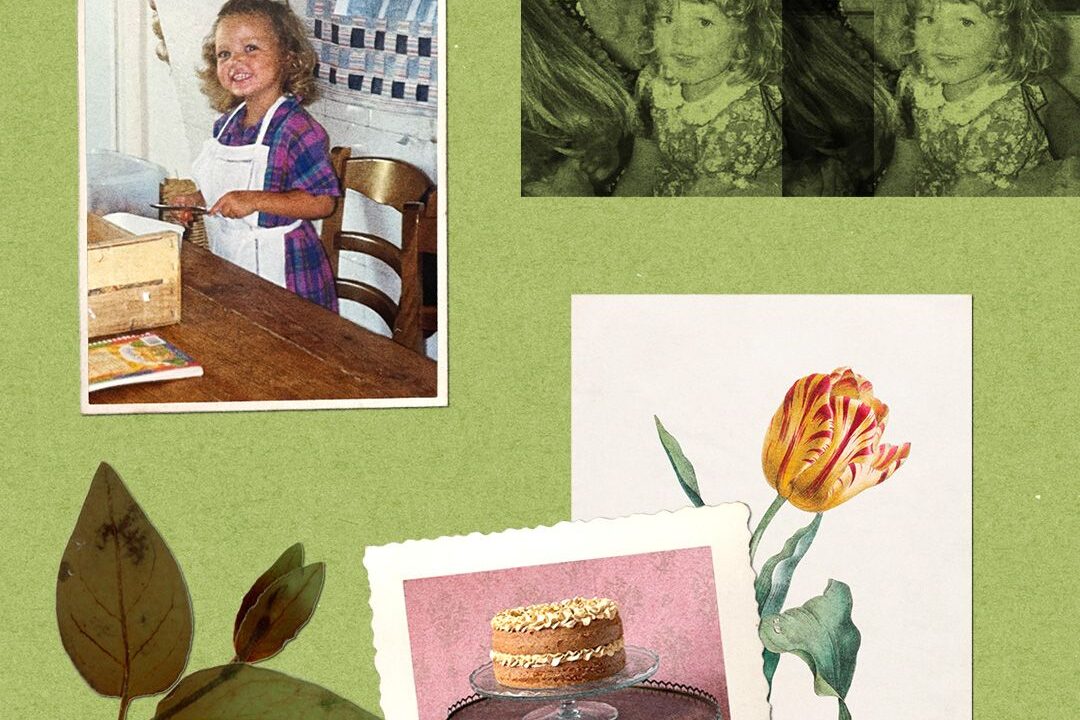
Sometimes a recipe is about more than just food. It’s about belonging, and the comfort that comes from a mother’s love. Now that I live far from the home I grew up in, I find myself making my mother’s coffee-and-walnut cake more often than I probably should. In fact, my whole bakery is inspired by the bond between mother and daughter that baking creates.
My mother left New Zealand because she fell in love with my French father. She turned our home into a bed-and-breakfast, sewing everything herself. We grew up eating with guests from all over the world, and cakes and baked goods were always the centerpiece—from Victoria sponges piled high with crème fraîche and raspberry jam, to rich dark chocolate cakes and scones at 4 p.m. Everything was baked fresh, using seasonal ingredients. Baking is my mother’s way of showing love and staying connected to her roots.
But more than anything else, her coffee-and-walnut cake was special to me. It taught me how to feel like I belong in a country that wasn’t originally mine. She got the recipe from her own mother back in New Zealand. Made with strong coffee and fresh walnuts, it’s a classic cake that New Zealanders bake at home. I’m not sure if it’s the type of walnuts, the care she puts into it, or just nostalgia, but mine never tastes quite as good as hers.
The region in southwestern France where I’m from is known for its walnuts. When I was growing up, my mother and I would go to our neighbors’ houses to pick them straight from the trees. She always put them in the same straw basket, and I would spend hours in the kitchen cracking the shells with an old nutcracker, often cutting my hands in the process. While I shelled the nuts, she would prepare the batter and stir in the cooled coffee. Then she poured the batter into two pans and spread it evenly. We would poke in the chopped walnuts—my favorite part—and bake them. The smell of coffee and walnuts filled the kitchen as we waited for the cakes to cool before topping them with coffee buttercream.
In those moments, baking felt like therapy. I would sit in the kitchen and watch the respect and love she brought to the process. It was a time to slow down, focus on just that one task, and enjoy being with her. The cake still reminds me of how strong she was to move to a foreign country with a different language, yet keep her roots alive through baking.
I followed a similar path, moving from France to New York. I fell in love not only with the city but also with my husband. What was supposed to be a one-year trip has now turned into eight—just like my mother. Missing home and my mom’s baking every day led me to open my bakery, From Lucie, in the East Village, with her recipes right there on the menu.
I remember standing in the kitchen, asking her if she ever regretted leaving New Zealand. I was having my own doubts at the time. She said something that still sticks with me. She told me that while she loved her mother and the life she left behind, she was driven to write her own story. Being far from home doesn’t mean losing yourself, she said. You can create a completely new place to belong, while keeping the place you came from at the very center of it all.
Now, when I make her coffee-and-walnut cake for customers or friends who come over, my apartment finally feels like my own home—like a warm hug from my mother, passed on to others through me. My customers often tell me that when they walk into the bakery, they feel like they’re coming into my home—just like people did with my mother’s bed-and-breakfast.
Photo courtesy Lucie Franc de Ferriere
Recipe
For the sponge:
– 225 g unsalted butter, at room temperature
– 250 g sugar
– 4 eggs
– 230 g flour
– 20 g fine instant coffee
– 2.5 tsp baking powder
– 50 ml cooled coffee
– 1 to 2 cups chopped walnuts
Cream the butter and sugar in a stand mixer with the paddle attachment on medium to high speed for about 5 minutes, until light and fluffy.Add the eggs one at a time, making sure each is fully mixed in before adding the next. Scrape down the sides of the bowl. Sift the flour, instant coffee, and baking powder together in a separate bowl. Add about a third of the flour mixture to the stand mixer bowl and beat on low speed until combined. Alternate with the coffee, then finish with the rest of the flour mixture. Scrape the bowl between each addition to make sure everything is well mixed. Divide the batter evenly between two lined 8-inch pans, and scatter the chopped walnuts throughout the batter. Bake at 320°F for 30 minutes. Let the cakes cool before removing them from the pans.
For the buttercream:
340 g unsalted butter, at room temperature
375 g confectioners’ sugar
120 g heavy cream
¼ cup fine instant coffee
In a stand mixer bowl fitted with the paddle attachment, beat the butter for a few minutes until it turns light in color. Sift the confectioners’ sugar and instant coffee into the bowl, then add the heavy cream. Start beating on low speed, gradually increase to high, and beat for 10 minutes until the mixture is fluffy and silky.
Place the first sponge cake on a plate, then top it with half the buttercream and spread it evenly. Add the second layer of cake and spread the remaining buttercream on top. Decorate with walnuts and flowers!
Hand Me Downs is a series, with a new essay appearing each day through Mother’s Day, celebrating the gifts—both tangible and intangible—that our mothers give us.
Frequently Asked Questions
Here is a list of FAQs about a cake that travels across oceans to bring a family together written in a natural helpful tone
Frequently Asked Questions The OceanCrossing Cake
1 What is the oceancrossing cake idea
Its a story about a specific family recipeusually a cake like a fruitcake or a rum cakethat is baked in one country and then shipped or carried across the ocean to reunite family members who live far apart The cake itself becomes a symbol of love connection and tradition
2 Why would someone send a cake across the ocean
Usually its for a special occasion like a wedding a birthday a holiday or a family reunion The cake represents a taste of home and a physical connection to loved ones when they cant be together in person
3 What kind of cake is best for a long ocean journey
Dense moist cakes that age well are ideal Classic examples include
Fruitcake
Pound cake
Rum cake
Carrot cake
Light fluffy cakes like angel food or sponge cake dont travel well
4 How do you pack a cake to survive a ship or plane trip
Wrap the cake tightly in plastic wrap then in aluminum foil Place it in a sturdy airtight container with padding to prevent movement For very long trips freeze the cake firstit thaws perfectly and stays fresh
5 Can the cake go bad during the journey
If its a dense alcoholsoaked or properly frozen cake it can last weeks or even months Fresh cream or custardfilled cakes will spoil quickly Always check customs rulessome countries ban homemade food items
6 What if the cake gets damaged in transit
It happens Pack it in a rigid box label it FRAGILE and consider using a courier with tracking and insurance If it arrives slightly crumbled you can call it rustic or serve it as a trifle or cake pops
7 How does the cake actually bring a family together
The act of baking