For a few minutes, I forgot where I was. I knew, technically, that this was Atlanta on a spring afternoon—sunny weather, hectic traffic. But having just arrived at the city’s Mercedes-Benz Stadium with a crowd of thousands, fans of all races, ages, and genders filling the sidewalks and the plaza outside, it felt just like a European capital on the eve of a big football match.
And it was a big match (let’s call it soccer from here on). The US Men’s National Team was facing Belgium in a pre–World Cup friendly, and would play Portugal three days later. “The World Cup will start… in March,” US coach Mauricio Pochettino had predicted earlier this year, referring to this spring window when international teams play final-stage friendlies and qualifiers before the tournament kicks off in June. The mood was electric. Could the World Cup co-hosts (the US shares that role with Mexico and Canada) hold their own against a strong Belgian side? Early signs were promising. The crowd of 66,000 cheered when Belgium goals were blocked, booed referee calls against the home team, gasped and sighed at US attacks, and sang to keep spirits high. I had never seen Americans so excited about soccer.
Then, 39 minutes in, American midfielder Weston McKennie scored from a corner kick, making it 1-0. The stadium erupted, with chants of “USA! USA!” roaring through the air. That joy faded minutes later when Belgium equalized, and the second half saw a flurry of Belgian goals. The final score was a 5-2 loss for the Americans. The team in red-and-white striped jerseys also lost to Portugal 2-0. Were these bad signs? Or was the US squad just finding its rhythm before the group stage?
“In the World Cup, teams reveal themselves,” said Roger Bennett, founder of Men in Blazers, a mini media empire that grew from the soccer podcast he co-launched in New York in 2010. Soccer has become the third most popular sport in the US, according to a new study by The Economist (even surpassing baseball), and Bennett has seen American fandom change across generations. “This young audience has become obsessed, just like the rest of the world,” Bennett said, adding that it was too early to know how the US team would perform. Despite soccer’s growing popularity, most American players aren’t yet household names—and they’ll be underdogs at a World Cup full of stars like Lamine Yamal (Spain), Vini Jr (Brazil), Kylian Mbappé (France), and Harry Kane (England), and the list goes on. Retired US player Jozy Altidore, who played in two World Cups (2010 and 2014), insists that Pochettino’s squad “is one of the most talented teams we’ve had in our history.” And before those two spring friendlies, the team had been on a winning streak, beating Uruguay, Paraguay, and Australia, and drawing 1-1 with Ecuador.
Plus, as I saw the next day when I met six team members at the Atlanta United FC training ground—with a Vogue photographer in tow—confidence and camaraderie were high. Chris Richards, a 26-year-old defender, plays for the Premier League’s Crystal Palace during the regular season, lives in London, and grew up two hours from here in Birmingham, Alabama. He quickly pointed out the team’s American diversity. “Our team is full of immigrants and people from all walks of life,” Richards said. “That’s what this country is—a melting pot. Our team really represents what our country looks like.”
“I don’t think people grasp what it means to play for the US team. You represent the country. It comes with a lot of pressure,” said former pro player Jozy Altidore.
Richards is a new dad—he and his girlfriend have a baby girl—and the topic of raising a daughter…RS highlights Antonee Robinson, 28, a naturalized American who was born in the UK, grew up in Liverpool, and now plays for Fulham in the Premier League. This will be his second World Cup, and he’s returning from a knee injury with high hopes. He has two daughters, ages four and two, who were at the Belgium match with his fiancée. “The older one is really, really good at sports—she loves playing football and tennis,” he says. “The younger one is starting to kick the ball around.”
Tim Weah, 26 and single, loves his teammates’ kids. “Watching them grow is our favorite pastime,” he says. “Grown-up stuff” talk is another pastime, he adds. “Advice about what we want to do in the future, whether it’s with investments or whatever. Taxes,” he says with a laugh. Weah carries himself like a leader, and the other players treat him that way. He grew up in New York with Liberian and Jamaican parents and currently plays for Marseille in France’s Ligue 1. He wishes the Belgium match had gone better, but he’s happy to be in training camp. “These are guys I’ve known since I was a kid,” he says.
If Weah is the team’s extrovert, striker Folarin Balogun, a bit younger at 24, has a more laid-back vibe. “I like my own company,” he tells me. He’s also a New Yorker, born in Brooklyn to Nigerian parents, but grew up in London, where he came through the Arsenal academy. Now he plays for Monaco in Ligue 1 and thrilled fans by scoring in three friendlies in 2025. “These guys have made me feel like I’m part of everything they’re doing,” he says.
Goalie Matt Freese towers over the others at six foot three. He’s a Philadelphia kid, a Harvard grad, and now a New Yorker—the star keeper for the MLS’s New York City Football Club. There’s been a lot of talk about whether coach Pochettino prefers him or the team’s other experienced goalkeeper, Matt Turner (but most expect Freese to start during the World Cup). He tells me patience is key in the sport. After college, he spent four long seasons as a backup keeper. “I found myself behind one of the best goalies in the league,” he says, “and it was obviously very hard to get playing time. From there, it was many years of hard work and patience paying off.”
The guys are constantly joking around as music plays from a Bluetooth speaker, a mix of genres suggested by the players, including Afrobeats. Midfielder Malik Tillman, 24, who grew up in Germany, has a shy, sweet demeanor and tells me he’s having fun on the field. “We always say we’re brothers, and you can see it on the pitch too,” he says. Freese adds, “After a few weeks apart, you start to miss each other.” Robinson kicks a soccer ball at Richards, barely missing him. “If you were born in America, you would have hit me,” Richards says.
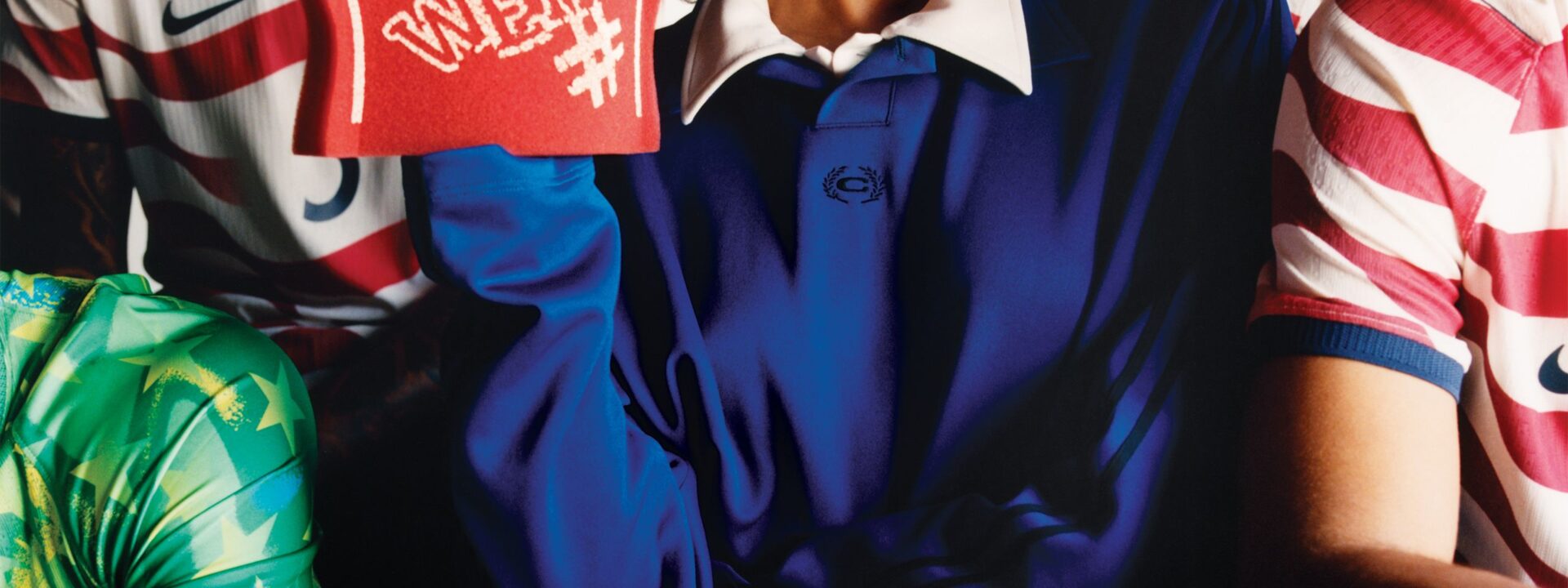
Vogue brought along model Imaan Hammam for the fashion photos that go with this story, but also because she’s obsessed with soccer and quickly impresses everyone with her skills. Hammam played in Amsterdam, where she grew up, from age seven, usually with boys, and “got hurt a lot,” she says, laughing and showing me old scars on her knees. For a while, she was the only woman on a recreational team in Brooklyn, where she lives. “Some of the new guys who joined were a bit scared because they didn’t want to hurt me,” she says. “So I was like, ‘Okay guys, you’re not trying to play the real game, so I’m going to leave.'” She’s been to World Cup and Africa Cup of Nations games. “I just have so much respect for these guys. They’re amazing athletes, and they work so hard,” she tells me.
This summer, the country’s eyes will be on them, win or lose, as people get to know their stories and watch them likely become stars. “I don’t think peopleAltidore says, “I really understand what it means to play for the U.S. team. You represent the country, for better or worse. It comes with a lot of pressure.” But the attention also helps: “Having a home World Cup, fan support, and so much pressure—that can be a huge advantage.”
In this story: For Hammam: hair by Tamás Tüzes; makeup by Emi Kaneko. Grooming by Latia Curtis and Jenny Lova; tailoring by Lindsey Long. Produced by Hyperion.
Frequently Asked Questions
Here is a list of frequently asked questions about the US Mens National Soccer Team being the stylish group of the summer written in a natural clear tone
BeginnerLevel Questions
Q What does it mean that the USMNT is the stylish group of the summer
A It means the team is being praised for its cool modern and confident lookboth in how they play soccer and in their offfield fashion Theyre seen as the trendiest team right now
Q Is this about their actual uniforms or their playing style
A Both Their new jerseys have gotten a lot of love for being sleek But the bigger style is their exciting aggressive playing style thats fun to watch
Q Why are people calling them stylish this summer specifically
A Because they have a young talented group of players who are playing with confidence in big tournaments like the Copa América They also have a strong social media game and a cool relaxed vibe that stands out
Q Does stylish mean theyre winning every game
A Not necessarily It means they look good doing what they do even when they dont win But their recent performances have been strong so the style is backed up by results
AdvancedLevel Questions
Q What specific tactical changes make the USMNT look more stylish this summer compared to past years
A Theyre pressing higher up the field playing faster through midfield and using more oneonone dribbling from players like Pulisic and Gio Reyna Instead of just defending and countering theyre trying to control the game and attack with flair
Q Is the stylish label mostly driven by their fashion partnerships