The new Los Angeles County Museum of Art building has floor-to-ceiling windows with sweeping views of Downtown LA, but they created a problem for light-sensitive artworks. Enter Reiko Sudō, the visionary Japanese textile artist. Her solution: a vast yet seemingly weightless expanse of semi-transparent curtains coated in a microscopic layer of chrome. These shimmer against the museum’s poured-concrete walls while protecting the art and softening the city views.
Since May, the curtains at the Peter Zumthor–designed building—beautiful, transformative, and profoundly useful—have been giving museumgoers an introduction to Sudō’s work. But a deeper look at her revolutionary practice comes to LACMA this fall, when “Textile Alchemy: The Art of Reiko Sudō and Nuno” opens on September 20. Nuno (which means “cloth” in Japanese) is the name of the 10-person, Tokyo-based textile atelier that Sudō has led for nearly 40 years. Their basement shop in the Roppongi neighborhood is where you can see the results of Sudō’s experiments, which marry centuries-old artisanal traditions with cutting-edge technologies.
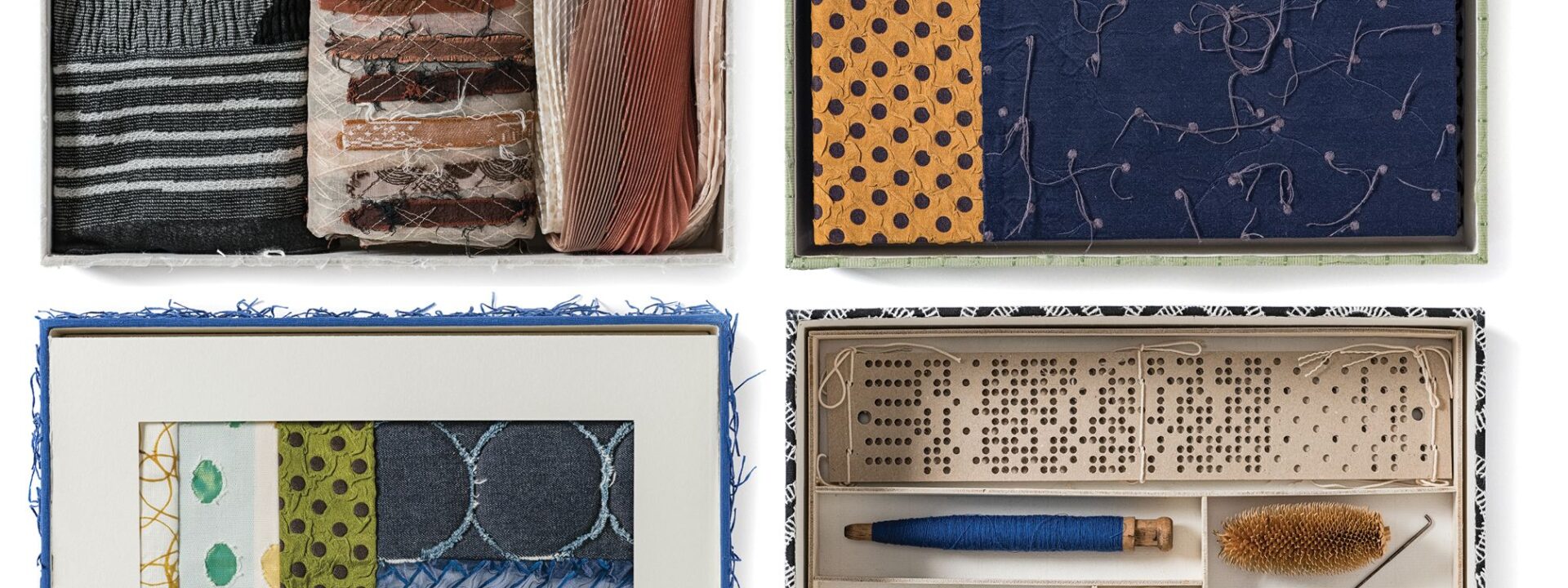
Sustainability—of materials but also of craftspeople and their specialized knowledge—has long been central to Sudō’s practice. Her works draw on both textile history and technical innovation. In Feather Organza, for example, pockets of gossamer-thin, multilayered silk organza hold individual guinea fowl feathers, floating like the memory of softness. The design recalls an Akita prefecture tradition of weaving swan feathers into men’s kimono-style jackets. Silk crepes (or chirimen), once shrunk with salt water, are treated with gels or pastes and oven-baked or steam-finished, creating dimensional organzas that resemble jellyfish or Bubble Wrap. Metals are woven into traditional fabrics using techniques borrowed from the automotive industry; spandex comes to resemble origami. Don’t discard the past, her work suggests; use it to shape a future of expanded possibilities and greater harmony with the natural world. “Everyone thinks she is obsessed with the past,” says her friend Gwenaël Nicolas, a French-born, Japan-based architect. “But in fact her mind is totally in the future.”
“Contradiction is my life!” Sudō says, laughing, on a recent call. She explains: “Running a business—which I was never meant to do—making textiles for Nuno and working with Japanese artisans, and, on the other hand, consulting for Muji on fabrics, clothing, furniture, and sustainability.” She has served on the retailer’s advisory board since 2016 and has published four volumes of an ongoing survey of Japanese textiles with them.
Born in 1953 in Ishioka, a rural hamlet in Ibaraki prefecture about an hour north of Tokyo, Sudō grew up as the eldest of three children in “a really, really old-style family,” she says. Her father, a haiku poet, could trace their roots in the village back 36 generations. They were landowners and the leading family in a tiny town where everyone was related and knew everybody’s business. “We were not poor, but in our minds we were not rich,” Sudō says. “Everything—dishes, furniture, houses—came from history.” The Japanese concept of mottainai—loosely translated as the sense of regret that accompanies waste—was drummed into her at an early age. “Never throw things away,” she explains. “Always take care with items, but also with relationships.”
STUDIO VISIT
Sudō has relationships with craft producers throughout Japan, including the Hyodo Orimono weaving workshop.
Photo by Tamura Kōsuke.
As a teenager, she dreamed of becoming an artist, hand-painting and resist-dyeing kimonos. Instead, she enrolled in a program for industrial, interior, and craft design at Tokyo’s Musashino Art University, graduating in 1975. A few years later,She met Jun’ichi Arai, a highly inventive textile designer who worked with fashion designers such as Issey Miyake and Rei Kawakubo. Together they founded Nuno in 1984, but Arai, who was a generation older than Sudō and struggling financially, left the company after only three years. “My mission at Nuno had been to help Jun’ichi Arai and promote his work,” Sudō says. “Then all of a sudden he left, and there I was, with the staff. Someone had to run it. So I pushed myself in a new direction.”
Around that time, two young curators from New York’s Museum of Modern Art, Matilda McQuaid and Cara McCarty, began asking Sudō to help them research Japanese fabric-making traditions. Their decade-long efforts led to the landmark 1998 MoMA exhibition “Structure and Surface: Contemporary Japanese Textiles.” The trips Sudō took with them, acting as a tour guide through remote parts of Japan, introduced her to many of the weavers and dyers—often working in small wooden studios attached to family homes—with whom Nuno still collaborates today.
“It’s very charming to watch her interact with these artisans, many of whom are in their 80s,” says Sharon Takeda, who organized Sudō’s current retrospective at LACMA. “It’s very personal. If they are struggling, she gives them ideas, and they work together, side by side.” Sudō also sometimes shares ideas with her husband, the architect Kazuyoshi Sudō. The couple live in a quiet residential neighborhood in Shinjuku City, Tokyo, and have one adult son.
For years, Sudō was reluctant to take credit for her own designs. A turning point in her career came when Kunihiko Moriguchi, whose mastery of kimono dyeing has made him a Japanese Living National Treasure, persuaded her to hold a solo exhibition of her work at the Kyoto Art Center in 2001. “I made two tearooms out of fabric,” Sudō explains. “One was rust-dyed fabric, because rust is ancient and represents the Iron Age. The other was a cutting-edge fabric made from biodegradable plastics derived from corn.” The exhibition brought her international attention.
The LACMA show will recreate the layout of the original 1984 Nuno shop in Tokyo, a gathering place for artists, architects, and designers, as well as literary translators and anyone who appreciates fine fabrics. (“To weave textiles is to weave relationships,” Sudō writes in the catalog.) Bolts of fabric will line the walls, and scarves and other goods will be available for visitors to handle—and purchase! The full textile experience, after all, is multisensory—visual, tactile, and sometimes auditory (think of taffeta’s distinctive rustle). Sudō’s preparatory drawings and tools will offer insight into her processes. A series of bold, colorful kimonos, designed by Nuno and woven in collaboration with artisans from Isesaki—a Japanese city whose silk has been celebrated since the Edo period for its interlocking ikat patterns—promises to be among the exhibition’s highlights.
For Takeda, Sudō’s retrospective arrives at a moment when the dialogue between fiber art and contemporary art feels particularly rich. “Quilt making, embroidery, and knitting are coming back, and people are seeing how textiles have influenced artists in other realms,” she says, citing the 2018–2019 Anni Albers exhibition at Tate Modern and the 2025 “Woven Histories” show at MoMA. Yet the status of her work as art remains complicated for Sudō. “I want to make textiles that move people, emotionally,” she explains. “But fundamentally, I really want my fabrics to be used.”
Frequently Asked Questions
Here is a list of frequently asked questions about the exhibition Textile Alchemy The Art of Reiko Sud and Nuno
General Beginner Questions
What is Textile Alchemy The Art of Reiko Sud and Nuno
It is a major retrospective exhibition celebrating 40 years of work by textile designer Reiko Sud and her innovative company Nuno It showcases how they transform traditional materials into modern fabrics
Who is Reiko Sud
She is a renowned Japanese textile designer and the founder of Nuno She is famous for pushing the boundaries of what fabric can be mixing traditional Japanese techniques with modern industrial technology
What is Nuno
Nuno is the Japanese word for cloth It is also the name of the company Reiko Sud founded in 1984 The company is known for creating unusual textiles that often look different from traditional woven fabric
Why is the exhibition called Textile Alchemy
Alchemy usually refers to turning base metals into gold Here it refers to Suds ability to turn ordinary materials into goldextraordinary valuable and beautiful textiles
Where is this exhibition usually held
Since it is a traveling retrospective it has appeared in major museums and design centers worldwide including the Museum of Modern Art in New York and the Victoria and Albert Museum in London
Do I need to know a lot about fashion to enjoy this
Not at all The exhibition focuses on the beauty of the materials and the creative process It is designed to be enjoyed by anyone interested in art design or innovation
The Art Materials
What kind of materials does Reiko Sud use
She uses a surprising mix of materials You will see traditional silk and cotton but also unexpected items like stainless steel aluminum paper and recycled polyester
What makes Nunos textiles different from regular fabric
Nuno textiles often challenge the rules of weaving They might be stretchy transparent or textured in ways that regular woven cloth is not They focus on the hand and visual impact
What is Nuno felting
This is a technique Nuno is famous for It involves bonding wool fibers into a lightweight fabric using friction and