“Ice cream kind of found me,” says Lokelani Alabanza, a pastry chef based in Nashville. Growing up on the West Coast, she remembers hearing the ice cream truck, gathering up her “couch money,” and running out to buy a Chaco Taco, a strawberry shortcake bar, or the occasional Fudgesicle. Even though she loved the treat, she never thought about how it was made: “I had no idea people made ice cream. I had no idea that there were ice cream makers.”
Decades later, Alabanza has become an expert not only in making ice cream but also in the role Black Americans played in shaping its history. All of that work comes together in her first cookbook, Ice Cream Queen: Flavors from Black America’s Past, Present, & Future, which is out now.
Lokelani Alabanza
Photo: Keren Treviño
Long before she became a cookbook author, Alabanza dreamed of being a chef and went to culinary school in Vermont. But the lack of Black representation in that world was hard to ignore: “I didn’t see a lot of Black women being chefs when I was coming up,” she says.
Her culinary education left out the work of Black culinary figures, so she started seeking them out and studying on her own. She built a collection of first-edition cookbooks by authors like Edna Lewis, Dori Sanders, and Wilfred Emmanuel-Jones. “Toni Tipton-Martin’s The Jemima Code was a really big inspiration for me,” Alabanza adds, noting that she learned about the book from an episode of The Southern Foodways Alliance’s Gravy podcast.
Chocolate malted crunch ice cream
Photo: Brittany Connerly
Nashville Hot Chicken ice cream
Photo: Brittany Connerly
After culinary school, Alabanza worked in the kitchens of Campanile and Grace, two influential Los Angeles restaurants, as well as in Japan and at Thomas Keller’s Bouchon in Las Vegas. Then, about 11 years ago, she moved to Nashville, where she became the culinary director of a creamery and fell in love with ice cream as a way to experiment with flavors.
In 2018, Alabanza learned about Sarah Estell, a free Black woman who ran a successful ice cream saloon in Nashville in the 1840s and became known as the “Ice Cream Queen.” She felt a connection to Estell, whose trailblazing legacy inspired Alabanza to keep exploring the history of Black America and ice cream. “Black hands have been touching this for centuries,” she says. “Ice cream became this perfect tool to tell a story about joy.”
In celebration of Juneteenth, Alabanza shares a recipe from her new book.
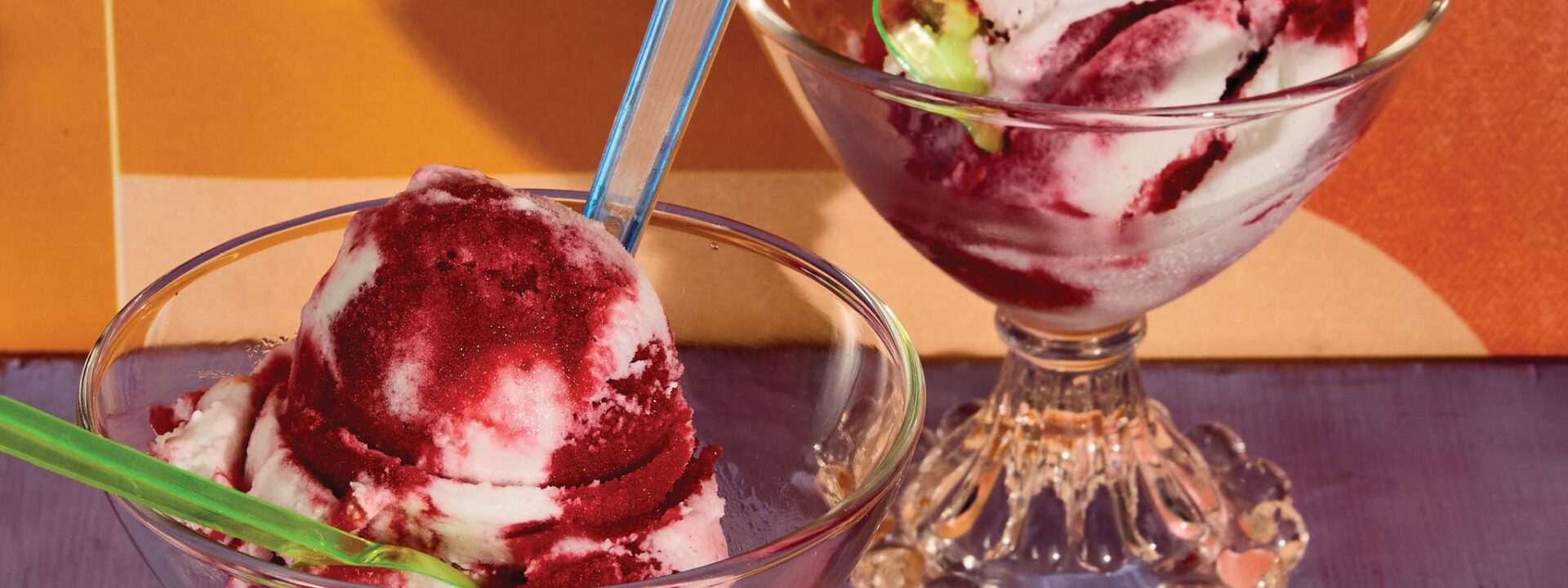
Juneteenth Sorbet
Photo: Brittany Connerly
Makes about 1 1/2 quarts
1 1/2 cups sugar
1 cup dried hibiscus flowers
1 1/2 pounds fresh or frozen raspberries
1 1/2 cups tapioca syrup or light corn syrup
1 1/4 cups fresh lime juice
1 teaspoon vanilla paste
1 teaspoon kosher salt
On June 19, 1865, two and a half years after President Abraham Lincoln signed the Emancipation Proclamation during the Civil War, Union army forces finally arrived in Galveston, Texas, to enforce it. Since then, Juneteenth has grown from a small celebration at Black Texan churches into a federal holiday. Among the many traditions tied to the holiday—like picnics, festivals, and even rodeos—the color red plays a very important role, symbolizing the blood shed by the millions who were enslaved. At a Juneteenth celebration, you’ll find many versions of red foods and drinks, from red velvet cake to red whiskey. You’ll also find hibiscus tea, which has roots in the food traditions of Western and Eastern Africa. Bissap, a common tea in Western Africa, uses boiled leaves of roselle, a type of hibiscus, and is both tangy and floral.
June is the peak month for berries, especially raspberries. Pureeing the tart, bright berries makes a perfect sorbet base that pairs well with hibiscus—flavors for our past, present, and future.
In a small saucepan, combine the sugar and 4 cups of water and bring to a boil over medium heat. Turn off the heat. Add the hibiscus flowers and steep for 15 minutes, then strain.
Working in batches as needed,Blend the raspberries with 1/4 cup of water in a blender until smooth. Strain the mixture into a medium bowl and discard the seeds. Add 1 cup of the hibiscus syrup, the tapioca syrup, lime juice, vanilla paste, and salt. Whisk until everything is combined.
Pour the mixture into an ice cream maker and follow the manufacturer’s instructions. Freeze until the mixture thickens, which should take about 20 to 30 minutes depending on your machine.
Scoop the sorbet into a freezer-safe container. Cover it with parchment paper or plastic wrap to prevent ice crystals from forming on top, then seal with an airtight lid. Freeze for 4 to 6 hours or overnight before serving.
Note: Leftover hibiscus syrup can be added to sparkling water or used to sweeten tea.
Excerpted from Ice Cream Queen: Flavors from Black America’s Past, Present, & Future. Copyright © 2026 by Lokelani Alabanza. Used with permission of the publisher, W. W. Norton & Company, Inc. All rights reserved.
Frequently Asked Questions
Here is a list of FAQs about a cookbook that explores the role of Black Americans in the history of ice cream
BeginnerLevel Questions
Q What is this cookbook about
A Its not just a recipe book It tells the hidden story of how Black Americansfrom enslaved cooks to modern entrepreneursinvented popularized and revolutionized ice cream in the United States
Q Who is this book for
A Anyone who loves ice cream history or food Its perfect for home cooks history buffs and people who want to learn about overlooked contributions to American culture
Q Does the book have actual ice cream recipes
A Yes It includes both historical recipes and modern twists such as banana pudding ice cream and bourboncaramel flavors
Q Im a beginner cook Are the recipes hard to follow
A No The book includes simple nochurn options for beginners as well as more advanced custardbased recipes for experienced cooks
Advanced HistoryFocused Questions
Q What specific historical figures are featured
A Youll learn about people like Augustus Jackson Alfred L Cralle and early Blackowned ice cream parlors in the late 1800s
Q How did enslaved Black Americans contribute to ice creams history
A Enslaved cooks in the White House and Southern plantations often created the first American ice creams using techniques from West Africa and local ingredients like vanilla and fruit
Q Does the book cover the role of Black women in this history
A Yes It highlights women like Mary Ellen Pleasant and the ice cream ladies who sold handchurned treats in Black communities after the Civil War
Q Are there any modern Blackowned ice cream brands mentioned
A Absolutely The book profiles brands like