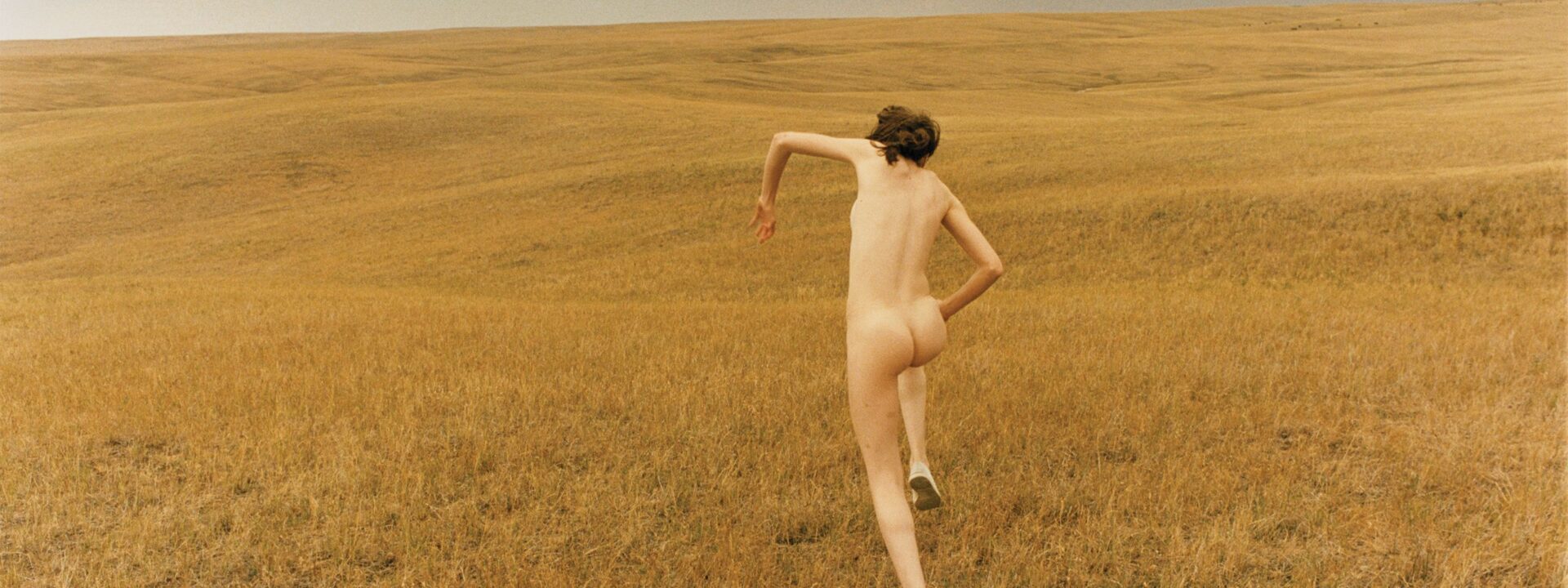
We were all freshmen, mostly, in the life-drawing class. First-year art majors. It’s strange to think about now—that the art department hired other college students as models. I’m sure they don’t do that anymore. But back then, it was true. Sometimes the model was the gray-haired man from the small Vermont town, who brought a walking stick as a prop and seemed a little too eager to undress for us. But other times, the model was another student, someone you might recognize from around the small campus, now slipping off their winter coat and disappearing behind a folding screen to change into a robe, while a space heater tried weakly to fight off the cold.
There was a wooden platform just a few inches off the ground. That was enough to separate us into the ones looking and the one being looked at. There was no ceremony when the model stepped onto the platform, and the room seemed to tighten around the sudden nudity. Everyone knew to be polite—even a little indifferent.
First came a series of 30-second poses. Before you could really think about the nakedness, your blank page needed to be filled. The teacher called time, and the model moved. It was too quick to capture anything but a scribble, the roughest shape of a body in space. Then came the longer poses. That’s when you started to notice the person—the real person, the real body. Like nudity in hot springs or communal baths, it wasn’t really sexual, though that wasn’t entirely absent. The nakedness was blunt and endlessly interesting, unless it started to get boring. And then came the curious realization that a naked person could be boring. I’d sometimes feel the shift—the moment when lines and forms would fall back into the simple fact of nakedness, the nude classmate zoning out on a folding chair draped in a towel, their muscles trembling slightly from holding the pose. When the timer went off, they stood up, the spell instantly broken, the skin on their back red and marked with the texture of terrycloth.
Three hours, with a few breaks. Sometimes during the break, the model would wander around the studio in their robe, glancing at the work on our drawing boards, becoming one of us again.
There was a popular drawing book we used for studio exercises, Drawing on the Right Side of the Brain. Whatever neuroscience it relied on was shaky and probably completely debunked by now, but the exercises were genuinely helpful. Draw the model’s face without looking down at your paper. Draw the shape of the empty space between their torso and their bent elbow. The exercises shook us out of our preconceived ideas about what we were trying to draw—our mental image of an apple, or what a human face should look like—and let us focus on raw visual information. There were certain things you had to learn: where features sit in relation to each other, how the line of the neck slopes where it meets the shoulders, the difference between the body in your imagination and the body in reality.
At the same time, I was taking an art history survey. The classroom would go dark, the slide projector would whir, and there, in front of us, the painting or photograph would appear. I loved how the images flickered on the screen, made of light. How we all looked together, with real reverence, at the work. There I learned how to talk about art—what a piece looks like, its material elements, but also its historical context and the artist’s biography. It was about gathering a kind of outside authority.
It was different in the life-drawing class. The goal was almost the opposite—how could we let go of all our inherited ideas or misconceptions about how a body should be drawn, and really see the truth of how this particular body existed, right there in that room with its stale air and big-paned windows, the bare winter trees outside? It didn’t need much explanation or context or authority—the body was the thing itself, and it resisted too much thinking.
Were the drawings any good? That wasn’t really the point. We tried hard, and if we got better,It was only because we got better at looking. We learned how to take the time to pay attention. The simple gift of another person standing in front of us made us want to rise to the moment with our own effort. What deserved our attention more than the body? What else had stayed so true to itself for so long?
Those hours had such a unique quality. Time seemed to stretch and intensify as we looked. Classical music played from a CD player, the same songs repeating. Sometimes class would end, and I’d sit up in surprise. Other times, I felt my ability to focus slip away, the minutes dragging on, and I’d flip my sketchbook to a new page and start over, trying and failing to regain my concentration.
I often thought back to those life-drawing sessions later: at an art school in San Francisco, in green Oregon—anytime I’d drop in on an evening figure-drawing group with my tin pencil box and pad of brown paper. I’m still encouraged by the persistence of this practice, its humanity, and the way it asserts something basic and essential about the body. So much has become unrecognizable to me, even in my own lifetime. It’s good to think about what remains.
Life class—how I wrote it in my little calendar. It’s a beautiful phrase, a beautiful idea. And wasn’t that pretty much what it was?
Frequently Asked Questions
Here is a list of FAQs about the concept Drawing the naked body taught me to see without judgment written in a natural helpful tone
BeginnerLevel Questions
Q What does drawing the naked body taught me to see without judgment actually mean
A It means that when you draw a nude model you stop focusing on whether the body is good or bad attractive or ugly Instead you focus purely on lines shadows shapes and angles You learn to see the body as a collection of forms not as an object to be judged
Q Im not an artist Can I still benefit from this idea
A Absolutely You dont need to be a skilled artist The act of simply looking and trying to copy what you seeeven with a basic stick figuretrains your brain to observe without labeling Its about changing your mindset not creating a masterpiece
Q Is this the same as life drawing class
A Yes its the core of a traditional life drawing class The goal isnt to make a pretty picture but to accurately capture the human form The nonjudgmental observation is a natural side effect of the practice
Q Will this help me feel less selfconscious about my own body
A Many people find it does By seeing all the different shapes sizes and proportions of real bodies without criticism you start to see your own body as just another variation of the human form not as a problem to be fixed
Intermediate Advanced Questions
Q How do you actually turn off your judgmental brain when you start drawing
A You dont force it off You redirect your focus Instead of thinking that thigh is too big you force yourself to think that thigh is a curved shape that connects to the knee at a 30degree angle You replace judgment with a measurement or a line
Q Whats the biggest hurdle people face when trying this