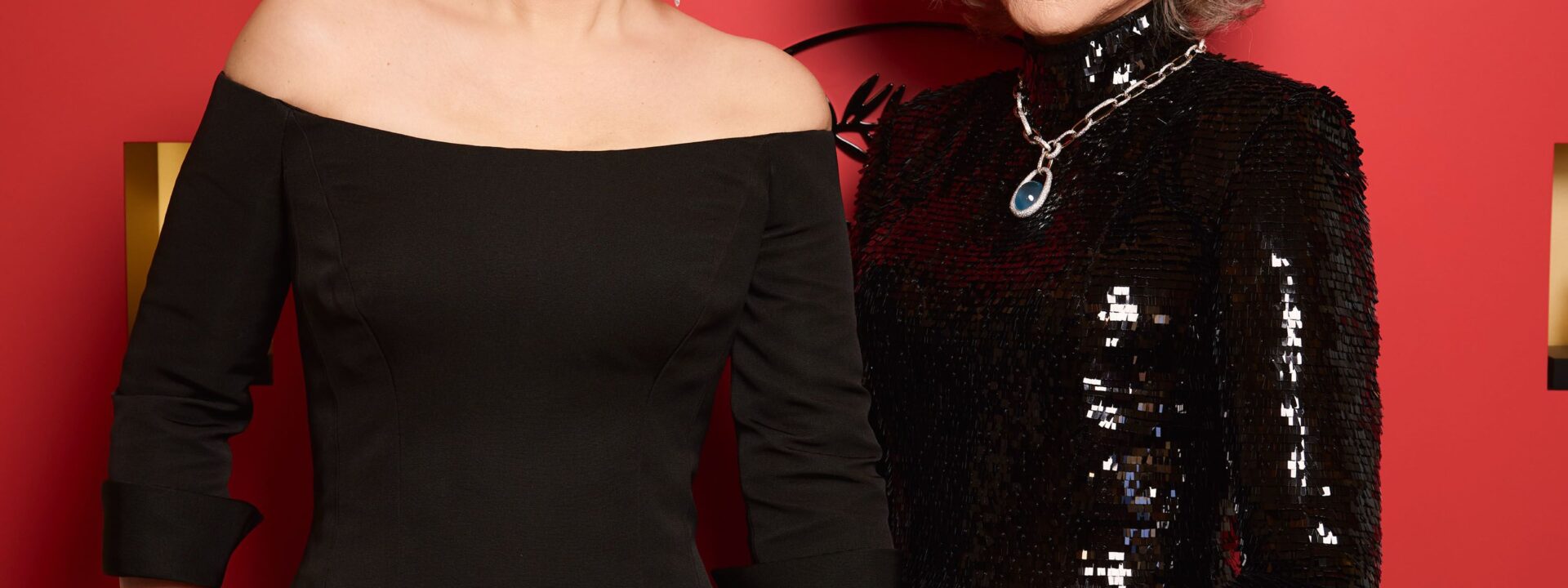
“We’re aiming for €10 billion,” says Laetitia Toupet, global brand president of L’Oréal Paris. “We’re confident. We’re the number one global brand. We’ll get there with a clear strategy, a strong brand mission, and powerful innovations.”
Toupet has spent 25 years at L’Oréal Group in various roles, so she knows how to guide brands to big milestones. Under her leadership as global brand president of La Roche-Posay from 2015 to 2022, the dermatological brand passed the €1 billion mark. But L’Oréal Paris is a different challenge.
L’Oréal Paris revenues were over €7 billion in 2023. (L’Oréal Group doesn’t break out sales for individual brands, but usually announces when they hit milestones.) As the world’s largest beauty brand within the world’s largest beauty company, L’Oréal Paris benefits from the group’s scale in innovation, marketing, and distribution. Its history also gives it an edge in the popular haircare category, while an impressive list of ambassadors keeps the brand culturally relevant.
But it’s competing in a tough market: indie brands are attracting young US shoppers, Chinese brands are emerging as alternatives to global players, and Korean skincare is still growing. In 2025, L’Oréal Paris saw mid-single-digit growth, boosted by haircare and makeup, according to Fabrice Megarbane, consumer products president, during the group’s annual earnings presentation. That’s a slowdown compared to 2024, when the brand grew 9%.
When Toupet joined L’Oréal Paris in July 2025, replacing Delphine Viguier-Hovasse, her job was to strengthen the brand’s role as a beauty leader. Given her background leading the group’s dermatological division, the move signaled a focus on the brand’s weakest category—skincare—along with making a mark at major events like the Cannes Film Festival and expanding into men’s beauty.
Jane Fonda, Laetitia Toupet, and Gong Li celebrating Jane Fonda and Gong Li’s 20th and 30th anniversaries as global ambassadors for L’Oréal Paris at the Hôtel Martinez in Cannes.
Photo: Getty Images
I spoke with Toupet before and during the film festival—her first Cannes in her new role—to understand how she plans to drive L’Oréal Paris toward its revenue goals.
Engaging with the cultural agenda
L’Oréal Paris aims to be part of the cultural conversation. Its partnerships with the entertainment industry include Emily in Paris and The Devil Wears Prada 2, it creates beauty looks for its brand ambassadors at the Met Gala, and even hosts a runway show during Paris Fashion Week.
The Cannes Film Festival, which the brand has been an official partner of for 29 years, is a key platform for L’Oréal Paris. This year, giant posters of its many brand ambassadors—from Jane Fonda and Eva Longoria to Gong Li and Viola Davis—cover the front of the Hôtel Martinez.
“The Cannes Film Festival reaches an audience with as much impact and visibility as major sporting events like the Super Bowl or the Olympics,” says Toupet. “For us, it’s an incredible opportunity to showcase the brand’s mission and celebrate the beauty of all women, at every age.”
The 2025 Cannes Film Festival generated a potential reach of 20 billion social media and press impressions, as well as an ad value worth €325 million, according to the brand. This year, L’Oréal Paris teams are producing a lot of content, especially behind-the-scenes videos like its “car glam cam” and “beauty hacks,” where the brand’s global makeup artist, Harold James, walks audiences through each look before it hits the red carpet. More than 200 interviews with L’Oréal Paris ambassadors are organized during the festival.
Harold James and Laetitia ToAt the L’Oréal Paris terrace.
Photo: Getty Images
During the official opening of this year’s festival, Fonda and Li—who are celebrating their 20th and 30th anniversaries as brand ambassadors, respectively—took the stage at the Palais des Festivals to declare the ceremony open. They were showcasing beauty looks created by the L’Oréal Paris team.
Fonda, 88, reflects on 20 years as a L’Oréal Paris ambassador. “It seemed strange. Why would they want me? I’m not a model,” she says. “But they stuck with me, and I learned a lot from the other brand ambassadors from around the world. That’s one of the things that’s so exciting. I mean, being able to open the festival last night with Gong Li… wow.”
The event is not just about image—it also drives business.
“Behind the looks, it’s about which products are used to create these amazing makeup styles. And so, it ultimately leads us to products,” says Toupet. Many of the brand’s Instagram posts during the festival include a “get the look” caption, listing each product used. These products then appear on the homepage of the brand’s e-commerce site.
Playing to its skincare strengths
Finding its place in a skincare market driven by innovation will be key for L’Oréal Paris’s growth.
“Mass beauty brands like L’Oréal Paris need to carve out a space in skincare between dermatological and luxury beauty brands, while also responding to the rise of K-beauty,” says Pierre Tegnér, equity analyst at Oddo BHF.
The K-beauty market is very fragmented, but L’Oréal Paris can use its strong R&D to create Korean-inspired products while relying on its global brand trust and recognition. The L’Oréal Group has 21 research centers worldwide, including one in Seoul that opened in 2018. “Being very strong in Asia is a huge advantage,” Toupet says. “It gives us a competitive edge by allowing us to innovate much faster, taking innovations that start in Asia and making them available worldwide.” (In 2024, the L’Oréal Group also acquired Korean skincare brand Dr.G.)
The executive notes that recent skincare innovations, like its Glass Skin range launched in January, have helped the brand regain momentum in countries such as China. (L’Oréal Paris returned to growth in China in 2026, after navigating a tough Chinese market the year before.) The range is inspired by Asian beauty formulas and includes a liquid care treatment and a mask that melts into the skin, replumping it in just 90 minutes. “We unpacked the science behind it and created a new range that can reproduce inside the skin what those aesthetic procedures do,” Toupet says.
“We need to strengthen and reposition ourselves around what we do best—using science to deliver visible beauty,” Toupet continues. “We’re here to visibly transform women’s skin, whether it’s giving it incredible radiance right away, restoring plumpness, and staying focused on our core business: preserving youthfulness and correcting signs of aging.”
Innovation is key across all categories. In makeup, the L’Oréal Paris Infallible 3-Second Makeup Setting Spray Mist, launched in 2024, quickly became the brand’s second bestselling makeup product in 2025. “We used to focus on mascaras and lipsticks—the core makeup staples everyone knows,” Toupet notes. “Today, beauty routines have become much more diverse.”
Because men are worth it, too
In April, L’Oréal Paris appointed Formula 1 driver Charles Leclerc as brand ambassador. Leclerc joined fellow racing driver Carlos Sainz, who became an ambassador in May 2025. The brand had no male brand ambassador for over two years before Spanish F1 star Sainz joined. The timing is no coincidence.
F1 star and L’Oréal ambassador Charles Leclerc attends the Cannes Film Festival.Photo: Courtesy of L’Oréal
“We’re stepping up our efforts in the men’s segment, whether through unisex products like our Elvive haircare lines, or our dedicated Men Expert range, which covers skincare and hygiene,” Toupet says. “We’re focused on attracting new customers: on one hand, the market is changing as men pay more attention to self-care, and on the other, we’re pushing harder in that direction.”
A new Men Expert skincare product is set to launch in mid-June, with Leclerc starring in the campaign—his first for the brand.
Toupet insists that partnering with Leclerc fits the brand’s mission. “We are committed to supporting women around the world,” she says. “And I believe that by standing together with men, and having men who also support this cause, we can make even greater progress.”
Frequently Asked Questions
Here is a list of FAQs about LOréal Pariss journey to reaching 10 billion written in a natural conversational tone with clear and direct answers
BeginnerLevel Questions
1 Wait LOréal Paris hit 10 billion Is that in sales
Yes exactly LOréal Paris became the first beauty brand in the world to reach 10 billion in annual retail sales Thats the total value of all the products sold in stores and online
2 How did they get so huge Is it just because of hair dye
No its way more than that They grew by owning every single beauty category you can think ofskincare haircare makeup and hair color Brands like Revitalift Elvive and True Match all helped push sales to that level
3 Did this happen overnight
Not at all It took decades of steady growth but the big jump happened in the last 510 years A huge boost came from their focus on mass prestigemaking highquality sciencebacked products that are still affordable for everyday people
4 What does 10 billion actually mean for a regular customer like me
It means youre buying from a brand that is incredibly trusted To reach that number millions of people have to buy their products again and again It also means LOréal can invest more money into research so your next moisturizer or shampoo will be even better than the last one
Intermediate Advanced Questions
5 What was the single biggest product or category that pushed them over the edge
Skincare was the absolute engine Specifically their Revitalift and Hyaluronic Acid serums became global bestsellers They also saw massive growth in dermocosmetics but for LOréal Paris specifically hightech antiaging serums were the rocket fuel
6 How did ecommerce help them reach this milestone
It was critical Before the pandemic LOréal Paris was mostly a drugstore brand They invested heavily in their own website and partnerships with Amazon Ulta and Sephora Online sales grew so fast that it basically doubled their storefront without having to build