“The Menswear Phenomenon,” by Kathleen Beckett, first appeared in the August 1984 issue of Vogue. For more highlights from Vogue’s archive, sign up for our Nostalgia newsletter here.
For several seasons, menswear has been one of the most widespread—and celebrated—trends on fashion runways worldwide. In the fall collections, Milan was practically flooded with tailored overcoats and trench coats, especially at Giorgio Armani, often called the “master of menswear.” In Paris, the menswear collections ranged from Jean Paul Gaultier’s quirky takes—baggy pants and charming little vests from his men’s line—to Yves Saint Laurent’s more classic jackets and trousers. Back in New York, designers from Anne Klein to Calvin Klein offered so many generously cut “boy” coats and pleated trousers in menswear fabrics that they could fill a football stadium this fall. Everywhere, shoes are flat and laced up, leaving no doubt about the menswear inspiration. Beneath it all, there are now other menswear staples: Jockey International’s undershirts, Calvin Klein’s briefs, and, at Tous les caleçons in Paris and SoHo, colorful boxer shorts that often double as sport shorts outdoors.
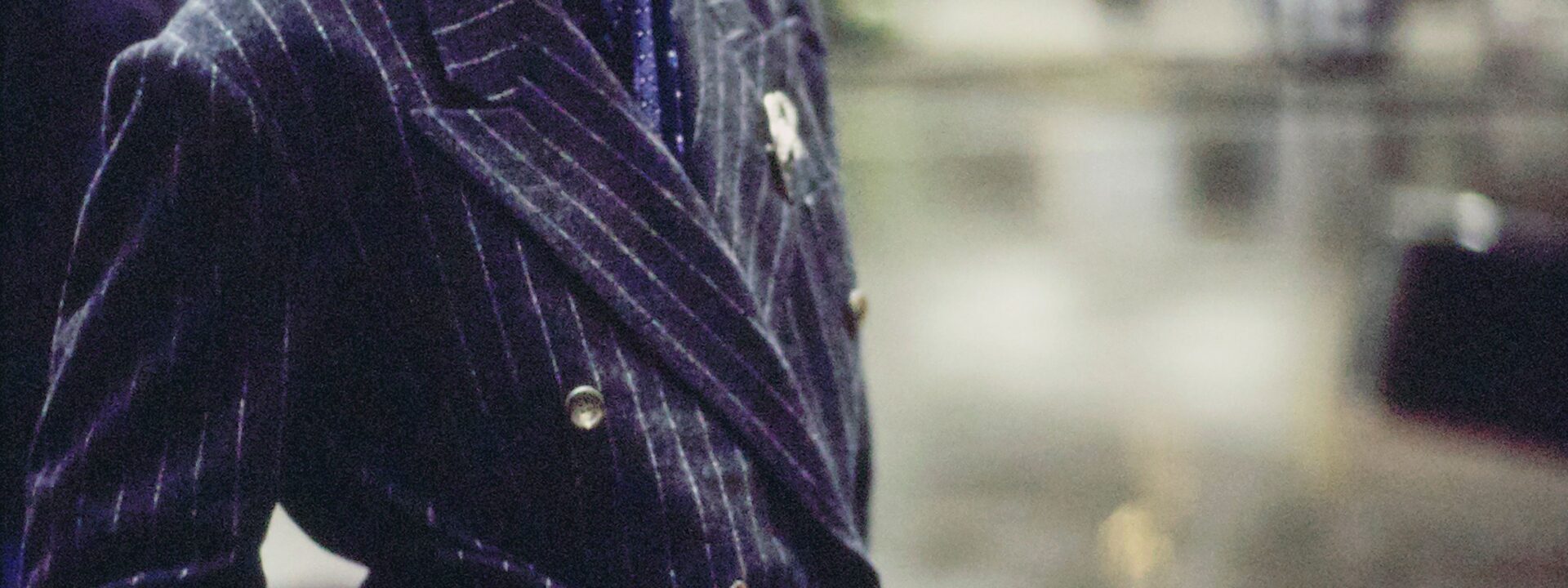
What’s especially notable and fascinating about menswear is how enthusiastically women have adopted it, how it confidently appears on both runways and city streets with equal ease, and how it has moved beyond a trend to become a fashion reality. Women across the country, from all backgrounds and economic levels, have embraced menswear in some form. A lunchtime walk through any city’s business district will show that a pinstripe suit with a skirt and a bow-tied foulard blouse is the go-to outfit for many working women. Outside the office, men’s departments and stores report that more and more of their customers are women—buying shirts and sweaters for themselves.
Menswear for women seems like an ’80s phenomenon, but a closer look shows it has been developing for years. Its prevalence in the workplace is rooted in a long-standing reality: men dominate the business world, and for women entering that sphere, the established dress code—tailored clothes with a jacket—has been the only model to follow. Today, as more women work, often out of necessity rather than choice, they are adapting their wardrobes and images accordingly. A decade ago, John Molloy’s book Dress for Success recommended the grey flannel suit—with a skirt—as proper attire for female executives. Since then, it has become the female “power suit,” the preferred, if not required, uniform. And despite potential boredom with wearing a “uniform”—or frustration with what it symbolizes—the look makes practical sense for most working women.
As Alison Lurie notes in The Language of Clothes, when having children was a woman’s primary aim, fashion helped her succeed. The bustled, bosomy dresses of the Victorian era and the tight skirts and pointed bras of the postwar years emphasized the female form and highlighted a woman’s sexuality, focusing on her ability to attract men.
Now, however, as more women join the workforce and run households, they want and need careers, not just babies. They seek clothes that help men focus on their intellect, not their bodies. The “armor” of a grey flannel suit, or the more stylish versions from Giorgio Armani or Ralph Lauren, serves that purpose.
As financial writer Jane Bryant Quinn remarked in a recent issue, “You want people to listen to what you say rather than look at…”What you wear matters. To excel at a job, focus should be on the work itself, not on fleeting fashion trends. As Lurie notes, a man who obsesses over the width of his ties, lapels, or pant legs may be seen by colleagues and bosses as unstable, or at least fickle and vain. Similarly, a woman who brings the latest runway styles to the office is sure to raise doubts about her professional seriousness.
Adopting a more traditionally masculine approach to dressing offers women another benefit: simplicity. As newspaper editor Nancy Newhouse recently remarked, “Men don’t need an innate fashion sense to look good—they can simply decide which color suit to wear today.” Mornings spent rushing to get children ready for school and yourself ready for work leave little time or energy for complex wardrobe decisions. Like a man, a woman who can put on a suit and be both attractively and appropriately dressed for the day is already ahead.
Beyond the workplace, menswear continues to be a major influence. An entire category of activewear—sweatsuits, track shorts, and T-shirts, borrowed from the men’s locker room and now considered unisex—has emerged, as staying fit has become a priority, even a lifestyle, for aging baby boomers.
Unisex dressing peaked in the 1960s, a time when the sexual revolution and political unrest broke down barriers, challenged authority, and overturned conventions—including dress codes. Many men and women began sharing wardrobes. As Michael and Ariane Batterberry explain in Mirror, Mirror: A Social History of Fashion, it was a liberating era for both sexes. Women traded confining skirts and unstable high heels for comfortable pants and sneakers. Men swapped sterile white shirts for colorful embroidered peasant blouses and accessorized with beads. Clothing became less about gender and more about personal expression—often borrowing from the past (like velvet knickers and billowy poet’s blouses) or imagining the future (such as Courrèges’s “space-age” jumpsuits and helmets), while T-shirts, jeans, and army-surplus jackets became staples for protests, classrooms, and rock concerts.
The music and musicians of the time, who powerfully captured a generation’s dreams, also embodied this new style. The Rolling Stones flaunted floral shirts and tight hip-huggers on album covers and onstage; the Beatles and their maharishi popularized meditation and the caftans of Eastern cultures. Today, unisex dressing is often called androgynous, reflecting an ongoing blurring of boundaries and norms. Once again, it appears most strikingly—sometimes outrageously—in music. The tank tops, slouchy sweatshirts, and dynamic dancing of Jennifer Beals in Flashdance could easily be swapped with Kevin Bacon’s in Footloose. Culture Club’s long-haired, heavily made-up Boy George adopted a hybrid ethnic style—part Hassidic Jew, part geisha (so convincingly that French customs once refused him entry, doubting he was a man). Slashed, rolled, or cropped T-shirts and black leather became universal. Even the “plaid suit,” listed by the Batterberrys as a ’60s unisex outfit, reappeared in bold black-and-white on Annie Lennox of the Eurythmics during their latest U.S. tour. The oversized silhouettes inspired by Japanese designers are sometimes embraced by Duran Duran—a group many predict could be the next Beatles—who carry cross-cultural flair.They complete the look with bold yet flattering makeup. On the streets, from New York’s East Village to London’s Kensington High Street, everyone—boys and girls, men and women—browses the same clothing racks in the city’s trendiest boutiques. They’re likely all wearing tweedy, single-breasted overcoats, paired with black berets, Ray-Ban sunglasses, neon anklets, and the oversized tasseled scarves of the Middle East, in patterns like the black-and-white of the P.L.O. or the red-and-white of the Bedouins.
In a more classic style, more women are turning to men’s departments for Shetland sweaters and polo shirts, or choosing from the many women’s versions inspired by them. The result is an androgynous look that feels all-American and well-bred. The timeless appeal of menswear is rooted in its superior quality.
Men’s clothing is praised for its expert tailoring, attention to detail, and durable design and fabrics, often at a lower price. It’s built to last, partly because men tend not to overhaul their wardrobes every season. In the 1970s, many menswear brands like Stanley Blacker and Arthur Richards launched women’s lines, aiming to offer women “good tailored clothes” and “better quality fabrics.” Since then, more menswear designers have followed suit as women demand greater value for their fashion spending. This led to what was once called “investment dressing”—clothes that withstand time and trends, a smart choice for women looking for lasting style.
Today’s economic concerns also drive the popularity of menswear. Historically, during tough times—like now, despite some improving indicators—clothing becomes more subdued, taking on the greyed, muted tones typical of traditional menswear. The 1930s Depression and 1940s wartime years popularized a simple, understated grey suit for both men and women, a style that has returned in the recession-prone 1980s.
Other historical connections help explain today’s trend. Since Amelia Bloomer and her fellow suffragettes wore bloused pants under knee-length skirts, menswear has symbolized a daring, even revolutionary spirit—echoed in the 1960s protest era with blue jeans, as Anne Hollander notes in Seeing Through Clothes.
Coco Chanel added a stylish twist in the 1920s by popularizing pants and her lover’s tweed jackets, creating the “garçonne” look: short hair, pleated trousers, tuxedo jackets, and bow ties. Initially seen as “amusingly perverse,” as photographer Jacques Henri Lartigue noted, it was worn only by the young and bold until Chanel softened it with layers of jewelry, broadening its appeal.
The great beauties of the next decade—Marlene Dietrich, Katharine Hepburn, Greta Garbo—brought glamour and sophistication to trousers and double-breasted jackets. Yves Saint Laurent, who often incorporates menswear into his collections, explained that some of his signature designs, like the “smoking” jacket and trouser suit, were inspired by a favorite photo of Marlene Dietrich in a man’s jacket and pants, with one leg up on a car running board and a beret tilted over one eye. Similar influences can be seen in Armani’s work on page 343.
In 1953, Vogue introduced women to shopping in men’s stores by featuring a model in a pink Brooks Brothers shirt. This endorsed the fashion value of menswear for women. One magazine even credited it with sparking Brooks Brothers’ move into women’s wear—and women’s move into Brooks Brothers and other menswear brands.Men’s stores still hold appeal today. The bold proportions and strong lines of men’s clothing give the wearer an air of confidence and authority, a sense of power and assurance. And as the population ages, a menswear cut offers another advantage: a way to remain stylish for a figure that can no longer—or should no longer—follow certain other fashion trends.
But an easy fit can be taken too far. When the jacket becomes too oversized, the sweater too big, it sends a different message. Alison Lurie describes it as the helpless cuteness of a little girl playing dress-up, captured by the Annie Hall look or by some of the more exaggerated oversized designs coming from Japan today. It’s a look with all the charm of a tomboy at play—not of a powerful executive at work or a confident woman at ease.
Wearing a man’s sweater or jacket might also remind us of earlier days, when we borrowed a brother’s or boyfriend’s out of admiration and affection. It might, as one psychiatrist has suggested, “re-create a closeness to the father”—often a woman’s first symbol of the authority she may hope to embody each time she chooses menswear-inspired dressing.
Looking ahead to the coming seasons, menswear for women shows no signs of fading. And knowing the reasons behind its steady rise in popularity, there’s no reason it should.
Frequently Asked Questions
Of course Here is a list of FAQs about the enduring Menswear Phenomenon in fashion inspired by its 1984 Vogue spotlight
Basics Definition
1 What exactly is the Menswear Phenomenon in fashion
Its the style of women adopting and adapting classic items from traditional menswearlike suits blazers trousers loafers and tiesinto their personal wardrobe as a powerful and chic fashion statement
2 Why is a 1984 Vogue article still talked about today
The article often referencing designers like Giorgio Armani captured a major cultural shift It highlighted how women were using menswear not as a costume but as a tool for empowerment authority and effortless style in the workplace and beyonda concept that became timeless
3 Is this just about women wearing suits
No its much broader While the tailored suit is the iconic symbol the phenomenon includes borrowing fit fabric and attitude from menswear Think of crisp oxford shirts oversized sweaters structured coats and brogues worn in a feminine context
Style Practicality
4 Whats the key to pulling off menswearinspired looks without looking like Im wearing my dads clothes
The secret is in the fit and styling Tailoring is crucial Pair a structured blazer with a delicate camisole or feminine jewelry Roll up the sleeves of an oversized shirt and wear it with sleek trousers Its about contrast and intention
5 What are the benefits of a menswearinspired wardrobe
It often offers timelessness versatility and a perception of confidence and authority The pieces are typically wellmade structured and can be mixed and matched to create many sophisticated outfits
6 Can this style work for casual settings or is it just for the office
Absolutely The aesthetic has evolved For a casual look try pairing boyfriend jeans with a tailored blazer and sneakers or an oversized mensstyle shirt worn as a dress with boots
Culture Evolution
7 How has the menswear phenomenon changed since the 80s
In the 80s it was about powerdressing and breaking into corporate spaces Today its more fluid relaxed and integrated Its less about mimicking men and more about a genderfluid appreciation