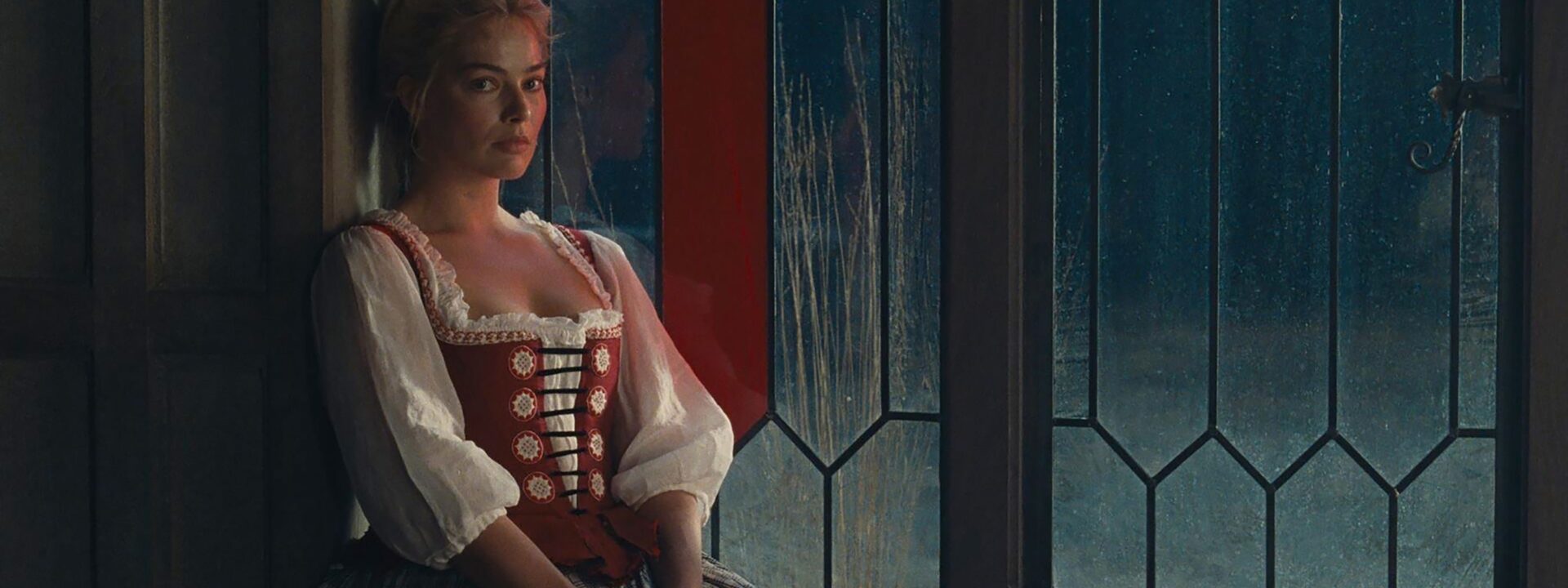
I can’t remember the last time a film’s costumes generated as much buzz or discussion as the extraordinary creations by two-time Oscar winner Jacqueline Durran for Emerald Fennell’s Wuthering Heights. Well, the last time was probably Greta Gerwig’s Barbie—Durran was also responsible for that cultural phenomenon’s brilliant wardrobe, as well as Kristen Stewart’s Chanel outfits in Spencer, the March sisters’ ballgowns in Little Women, and Keira Knightley’s unforgettable looks in Anna Karenina, Pride & Prejudice, and Atonement. (The green dress from the latter remains one of the most talked-about onscreen looks of all time.)
No wonder, then, that Fennell and Margot Robbie—our new Cathy, who is also a producer on the upcoming romance and previously worked with Durran on Barbie—recruited the supremely talented Brit for their sweeping new epic. Though they couldn’t have guessed how much attention her work would generate long before the film even hit screens. From the moment the first grainy paparazzi shots surfaced from the set, the internet was ablaze with hot takes on the costumes’ period inaccuracies and general outlandishness.
Fennell, Robbie, and Durran remain unfazed. Wuthering Heights was always envisioned as a kind of fantastical fever dream—a contemporary take on a ’50s soundstage melodrama that gleefully mixes historical references with glitzy modernity. As the film’s first trailers show, this Cathy is not a pared-back brunette drifting through the moors in muted, high-waisted frocks. Instead, she is an exuberant blonde living it up in German milkmaid-esque corsets, high-shine showstoppers, and Elton John sunglasses. Her co-stars—Jacob Elordi as a brooding Heathcliff, Alison Oliver as an angelic Isabella Linton, Hong Chau as a steely Nelly Dean, and Shazad Latif as a swaggering Edgar Linton—also subvert our expectations.
Ahead of the film’s release on February 13, just before Valentine’s Day, Durran gives Vogue an exclusive closer look at her incredible work and some images from her mood board, walking us through the most important looks. From Cathy’s translucent wedding-night ensemble to a giant furry Russian hat, and the “latex dress” that has everyone talking (correction: it’s not actually latex), there’s much to unpack.
Vogue: Firstly, how many costumes does Margot’s Cathy have in Wuthering Heights?
Jacqueline Durran: With overlaps and reuse, we created between 45 and 50 costumes just for Cathy.
Talk me through your mood boards.
So, Emerald had been working on Wuthering Heights for maybe a year, maybe longer, by the time we met to discuss it. She had this massive range of references, which included a bit of everything—the Tudor period, the 1950s, and contemporary elements sprinkled throughout. On our mood boards, there were images I’d received from Emerald, plus others we liked. There was some vintage Mugler and McQueen in there—nothing in the costumes is a direct homage to those designers, but they were definitely a big influence on my approach to the costume design.
Our references ranged from Elizabethan through Georgian and Victorian, and from paintings and historical dress to contemporary fashion and representations of period costume in 20th-century films. The challenge was to distill that into looks that told the story Emerald wanted to tell.
The German milkmaid-style dress has generated a lot of buzz. Can you tell us about that outfit, and Cathy’s earliest looks in the film?
This is the first time we see adult Cathy. As the film opens, we’re trying to lay out our intentions—this is a stylized version of Wuthering Heights. It was difficult to nail this look because it has a nod to the period, a nod to contemporary fashion, and also…A nod to Old Hollywood. It has all the visual themes we wanted for the film, so it was about blending everything together. It’s a costume, and you know it’s a costume—it’s not necessarily realistic or unrealistic.
What were the key inspirations behind Cathy’s wedding dress?
The wedding dress was a blend of Victorian and 1950s fashion, drawing from Franz Xaver Winterhalter to Charles James.
There’s also amazing vintage Chanel jewelry in the film, sewn into Margot’s hair and costumes. What was that collaboration like?
Chanel was incredible. We needed jewelry for Cathy that was exquisite and bold—pieces where you could see the historical inspiration, yet still feel exciting and modern. I contacted Elsa Heizmann, Chanel’s global director of cinematic relations, and she combed through their archives, uncovering the most wonderful vintage pieces. When the packages arrived, we were beyond thrilled.
Then, Cathy has an unforgettable wedding night look. What went into creating it?
Emerald showed me an amazing 1950s image of a woman wrapped in cellophane, like a gift with a bow around the middle. That was our starting point. We thought: how can we recreate this? It’s about Cathy presenting herself as a gift on her wedding night.
And what about the red latex dress?
It’s actually not latex—it’s an ultra-shiny, synthetic, plasticized contemporary fabric. Red is a key color for Cathy throughout the film, and she wears several high-shine pieces. That idea of shiny surfaces is central to her character and costumes. We used this look in a scene where the dress and the set combine in a very artificial, stylized way—the floor is a rubberized, high-shine red, so they seem to blend together. The library walls are white, like her blouse.
There’s also an extraordinary dress made of a blueish-black, high-shine fabric?
It takes you out of the period, but it was exciting to mix a Victorian silhouette with a completely modern fabric. This black dress was specifically designed to be worn in moonlight. When cinematographer Linus Sandgren lit the scene, the way it reflects light… it almost feels like she’s exuding moonlight herself.
Which costume are you most excited for viewers to see?
I’m excited to see all the costumes in the finished film—I haven’t seen it yet—but one look transformed beautifully on camera. When Cathy returns to Wuthering Heights to see her father, she wears a red velvet cape and a silver dress. I loved watching her walk through the snowy landscape in that bright red cape. Red capes like that are historically accurate for the era, though ours isn’t particularly accurate—it’s very much a costume, referencing both the past and 1950s melodramas. I was especially pleased with how the dress looked under Linus’s lighting for that scene. It has a fractured, icy overprint that looked incredible against the snow.
Cathy also wears a lot of bejeweled crosses.
This is an opulent, stylized Gothic story, and Gothic crosses were a big theme—so we loved using them everywhere.The spring 2017 collection was on Durran’s mood board.
Photo: Marcus Tondo / Indigital.tv
There’s also a dress with an armor-like quality. What’s the story behind that?
Interestingly, that look is very historically accurate. It’s based on a Swiss peasant costume from the mid-19th century, and there are many paintings depicting it. While not exactly right for Wuthering Heights, it’s more historically accurate than many other elements. I simply loved it. The version that inspired me was from a Winterhalter painting. I adore the combination of white fabric, velvet, and chains. It felt like it earned its place in our story.
What do the chains signify in this story?
Perhaps the idea of binding yourself, but we didn’t want to be too literal.
Can you tell me about Cathy’s extravagant hats?
There’s an oversized straw hat she wears in a picnic scene, decorated with shooting stars—a motif we liked. It plays with the idea of picnic attire, but bigger and more stylized. Then there’s a Russian hat she wears at Christmas with a white dress woven with silver thread. It’s glamorous, weather-appropriate, and adds an icy, brittle quality to the whole image.
Moving on to Jacob’s Heathcliff, what should we notice in his costumes?
He’s more Georgian and historically accurate. Our timeline is fluid—we’re not capturing a single moment, but choosing styles we like for each character. Heathcliff has always been a Georgian-era hero, and we felt that suited Jacob. We leaned into a turn-of-the-19th-century style for him. He wears dark colors—he’s very brooding. He has those classic romantic-hero white shirts and a long black coat. It’s a heroic, Byronic look established in film and theater over time.
Then there’s Alison’s Isabella Linton, who looks quite doll-like in candy-pink gowns and bows?
Cathy with Alison Oliver’s Isabella Linton.
Photo: Jaap Buitendijk
Our references for her were more grounded in the historical period—specifically the 1860s—compared to Margot’s. I especially love the skirt shape from the 1860s. We studied fashion manuals from that era to see how people trimmed dresses, added bows and lace, and how intricate and fussy their outfits could be. Isabella is a character who would spend all day making ribbons and bows, so we really embraced that idea, even potentially overdoing it. It’s childlike and naive—our own exaggeration of that historical period.
Finally, what about Hong’s Nelly Dean and Shazad’s Edgar Linton?
It was a challenge to bring Hong’s Nelly into the exaggerated world we created for the other characters, so they all felt part of the same film. We added textures and embroidery to give her individuality. For Shazad’s costumes, they were quite unusual—we aimed to reflect his character’s new wealth, visible in his home and his clothing. Everything was deliberately incorrect for the period: shiny, sparkly, and overdone. But the actual shapes and silhouettes are quite accurate. We just chose fabrics that would never normally be used for a Victorian gentleman’s clothes. We wanted to elevate his look to match his heightened environment.
This conversation has been edited and condensed.
Frequently Asked Questions
Of course Here is a list of FAQs about an exclusive first look at the costumes for a production of Wuthering Heights
General Beginner Questions
Q Why is a first look at the costumes such a big deal
A Costumes are a huge part of bringing a story to life A first look gives fans and audiences a sneak peek at the directors vision and sets the tone for the entire production before it opens
Q What time period are the costumes based on
A The novel is set in the late 1700s specifically from 1771 to 1802 The costumes will reflect the GeorgianRegency era fashion of that time in England
Q Who designs costumes for a production like this
A A professional costume designer in collaboration with the director creates the entire wardrobe They research the period develop character themes and oversee the creation or sourcing of every garment
Q Will Catherines famous white dress be in this production
A Most productions feature a version of it as its an iconic symbol of her character and social status The first look would likely reveal this key dress and how this particular designer has interpreted it
Advanced Detailed Questions
Q How do the costumes visually show the difference between Wuthering Heights and Thrushcross Grange
A This is a core concept Costumes for Wuthering Heights will likely be rougher darker and more practicalthink wool leather and earthy tones Thrushcross Grange will feature refined lighter fabrics like silk and lace with delicate colors and precise tailoring to emphasize wealth and civility
Q What specific design choices might symbolize Heathcliffs transformation
A Look for a progression starting in ragged illfitting clothes as an orphan adopting more gentlemanly attire when he returns wealthy and finally a neglect of his appearance in later years showing his internal decay
Q How do you balance historical accuracy with theatrical storytelling
A Designers often take creative liberties A costume might be