Fashion’s tariff challenges used to follow a fairly predictable path: reduce reliance on China, move production closer to home, and build more resilience. But the US government’s latest moves have made that strategy much harder to understand—and in some cases, harder to put into action.
Last month, the US Trade Representative (USTR) placed tariffs of 10% or 12.5% on imports from 60 countries, using Section 301 of the Trade Act of 1974. This targets trading partners the administration believes haven’t banned or properly enforced bans on goods made with forced labor. This action replaced the temporary Section 122 tariffs, which had allowed the federal government to keep collecting a 10% duty for 150 days after the US Supreme Court struck down earlier tariffs based on the International Emergency Economic Powers Act (IEEPA).
Read More: Fashion’s New Trade Reality
Friday’s Supreme Court ruling ended President Trump’s emergency tariffs, but within hours, the administration switched to new legal tools. For fashion, the method has changed, but the instability hasn’t.
By Jessica Binns
That’s just one part of the new tariff setup. Earlier in July, the USTR imposed a separate 25% tariff on certain goods from Brazil, following a Section 301 investigation into digital trade, electronic payment services, preferential tariffs, anti-corruption enforcement, intellectual property, ethanol market access, and illegal deforestation.
On July 20, President Donald Trump used Section 338 of the Tariff Act of 1930 to impose 50% tariffs on covered Canadian imports, starting August 19. This nearly century-old authority had never been used for tariffs before, adding more legal uncertainty to an already shaky trade environment. The White House also said these duties will apply even if goods qualify under the US-Mexico-Canada Agreement (USMCA). Another Section 301 investigation into structural excess capacity and production in manufacturing sectors, covering 16 economies, is still pending.
For fashion, this isn’t just one tariff shock—it’s an ongoing challenge of compliance and sourcing. Companies are being pushed to diversify away from China, source closer to home, strengthen forced labor compliance, and rebuild resilience. At the same time, the countries that could help with those goals—like Brazil, Canada, Mexico, CAFTA-DR suppliers, Vietnam, India, and others—are themselves facing new or threatened tariff actions.
Read More: North American Trade Pact Review Unsettles Fashion Sourcing Plans
By Jessica Binns
Julie Hughes, president of the United States Fashion Industry Association (USFIA), says most companies expected the administration to use forced labor-related Section 301 tariffs to keep the 10% or 12.5% duties after the temporary Section 122 tariffs expired. The real problem, she says, is the combined effect of tariffs on Brazil, Canada, and the expected ones tied to structural excess capacity. These duties target countries the US believes are keeping more manufacturing capacity than market demand supports, often through subsidies or other government-backed policies. The worry is that this extra production can flood export markets at artificially low prices, hurting US industries. “The onslaught of new tariffs increases the difficulty for companies to plan their business,” Hughes says.
Can Section 301 tariffs hold up?
Section 301 is a more familiar and possibly more tested trade tool than some of the authorities the administration has used before. It lets the US respond to foreign actions, policies, or practices seen as unreasonable, discriminatory, or burdensome to US commerce. But trade lawyers say the forced labor action could still face legal challenges, because Section 301 remedies are usually expected to be tied to specific findings and harms.
The Trump administration may be on firmer ground with Section 301 than with IEEPA, since Section 301 is an established tariff tool with a formal review process, including public notice of proposed duties and an opportunity to submit comments and rebuttals, says Angela Santos, a partner at Arentfox Schiff. Still, she sees potential vulnerability in the breadth and speed of the forced labor investigations. Under Section 301, USTR is required to make economy-specific findings and calibrate the remedy to the burden or restriction that the economy is placing on US commerce, Santos says. That could become a vulnerability for the forced labor tariffs; the administration conducted a simultaneous review across 60 economies and imposed broadly similar tariff rates, raising questions about how individualized the analysis was.
That matters because importers are not waiting for the courts to settle the question. Santos says companies should not assume the new tariffs will simply disappear, just because two lawsuits, including a class-action suit, have been filed with the Court of International Trade challenging the new duties. “Even if the Section 301 tariffs are invalidated, there will be another tariff regime to replace it,” she says. “Companies should not act as if it’s guaranteed Section 301 will be invalidated.”
How to plan
Many companies are managing the new duties by taking a conservative approach to planning. Some are using 10% or 12.5% as a baseline, while others are still modeling around IEEPA-level tariffs, because they assume the administration will continue trying to recreate that framework. Companies are also seeking refunds where available, reviewing tariff classifications, preserving records, adjusting product mix, and exploring legal mitigation tools such as first sale.
Read More
Fashion Confronts the Realities of Tariff Refunds
By Jessica Binns
Refunds are not necessarily relief. Steve Lamar, president and CEO of the American Apparel & Footwear Association (AAFA), says companies may use tariff refunds for delayed investments, hiring, or simply to pay the next tariff bill. “At the same time, the government is refunding these monies, they are also extending their arm to collect more tariffs,” Lamar says.
This is reshaping sourcing strategies, too. In USFIA’s 2026 Fashion Industry Benchmarking Study, released last month and led by University of Delaware professor Sheng Lu with Emilie Delaye, protectionist US trade policies and tariff uncertainty ranked as companies’ top business challenges. About 62% of respondents expressed optimism about the industry’s next five years, the lowest level recorded since the study began tracking that measure, Lu says.
The more important shift is qualitative. Fashion companies are not simply replacing one sourcing country with another. Lu says they are becoming more targeted and measured, consolidating around capable suppliers and prioritizing flexibility, agility, compliance capacity, and regional balance. “No country is effectively immune to new tariff threats from the Trump administration today, meaning that expanding into new sourcing [locales] won’t necessarily reduce sourcing risks,” he says. Onboarding a new supplier can take more than a year, she adds, because brands must approve quality, compliance and production standards.
Regional outlook
That dynamic is also making China harder to replace than the politics of pro-China decoupling might suggest. For most China-origin goods, the all-in tariff burden can now run from the high 20s into the 40%-plus range, once ordinary duties, legacy China tariffs and the new forced labor levy are combined. Lu says China’s sourcing cost competitiveness improved in this year’s survey, while it continued to lead on flexibility, agility, minimum order quantities and vertical integration. More than 70% of respondents sourced fabrics and textile accessories such as buttons, zippers, trims and labels from China, while 65% sourced yarns and threads there. The share of respondents planning to reduce China sourcing fell from more than 80% in 2024 and 2025 to 40% this year; about 20% planned to increase sourcing from China, up fromIn 2025, that figure is expected to be 6%. Lamar isn’t surprised by this. He explains, “When tariffs apply to everyone, you start asking: who’s a reliable partner at scale, someone predictable, someone we’ve done lots of business with over the years, and someone who can handle sudden cost changes? Sometimes, China is the answer.”
Matt Priest, president and CEO of the Footwear Distributors and Retailers of America (FDRA), says China could actually end up as the “surprise winner” in the current tariff situation—which is ironic, since the tariffs were meant to punish China. He notes that China’s share of US footwear volume and value is at a 35-year low, but companies are becoming more optimistic as tariffs spread to other countries. “China is faster and cheaper,” Priest says, which is why some retailers choose it for their private-label products.
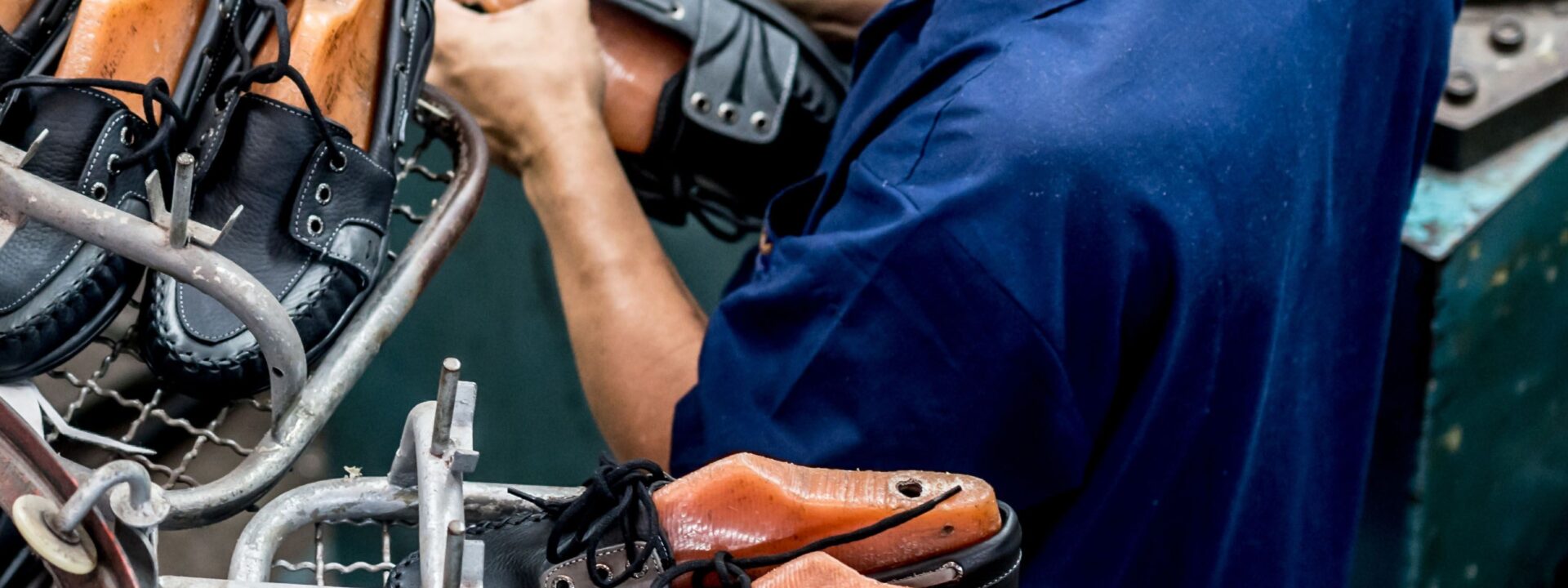
Brazil is a good example of why. Priest says Brazil is FDRA’s 11th largest supplier to the US market, especially for fashion footwear, and has been a long-time partner for American brands. But the new tariff rules make that relationship harder. For a women’s leather shoe, he explains, companies might face the standard footwear duty, plus a 25% Brazil Section 301 tariff and a 12.5% forced labor Section 301 duty. “When tariffs stack up to 40%, 50%, or 60%, it’s extremely regressive,” Priest says. “With all these combined, Brazil now has the highest tariff rate for footwear in the world.”
The irony, Priest points out, is that Brazil is exactly the kind of Western Hemisphere production market that policymakers have encouraged brands to use. “The administration has been clear about wanting to push production, if not to the US, at least back to the Western Hemisphere,” he says. “It’s a strange way to show that, by piling extra tariffs on one of our top producers in the region.”
Canada faces a similar contradiction. Bob Kirke, executive director of the Canadian Apparel Federation, says Canadian apparel makers have built their businesses around North American customers, logistics, and trade rules, so production can’t easily be shifted to Europe or Asia. Until recently, diversifying for Canadian fashion companies meant selling into the US.
The threat of new tariffs has quickly changed that. Kirke points to Peerless Clothing, a Montreal-based garment maker, as an example of Canadian production that could get caught in the middle. The company makes men’s tailored clothing and holds licenses for major US-facing brands like Tommy Hilfiger, Michael Kors, and Kenneth Cole, showing how deeply Canadian apparel production is tied to the US market. These aren’t exports that can be easily redirected, Kirke says. Like much of Canada’s apparel production, they’re designed around North American retailers, consumers, and sizing expectations.
“If you’re making goods in Canada, you’re using North American sizing,” he says. “You’re not necessarily sizing for the European market or another market.”
This undermines a key assumption of regionalization: that companies can reduce risk by sourcing closer to the US. If Canadian apparel and Brazilian footwear become less predictable, the Western Hemisphere becomes less of a safe option.
The USMCA still seems to offer some protection. Hughes says products that qualify under USMCA are exempt from the forced labor Section 301 tariffs, and textile and apparel provisions don’t appear to be under negotiation right now. That protection doesn’t address the separate Canada-specific Section 338 threat, but it does show that USMCA treatment still matters in parts of the tariff system. Still, that doesn’t mean the region is completely safe. “I don’t think we can call any place ‘safe’,” she says. USFIA is working with the AAFA and the National Council of Textile Organizations on a Western Hemisphere Initiative to support US textiles, CAFTA-DR, and other regional trade agreements.The USMCA apparel production and tariff relief for brands and retailers is a step forward, though not a complete solution. “It’s not a panacea,” Hughes adds, “but that is a start.”
The forced labor question
The forced labor rationale has raised another concern: whether tariffs are the right tool for enforcement. Lu argues that tariffs don’t help companies manage forced labor risks; instead, they can cut into the resources available for sustainability and compliance. In the USFIA survey, 53% of respondents said higher tariff burdens forced them to reduce spending on critical areas like sustainability.
Santos suggests more direct ways to tackle forced labor, such as technical assistance, engaging with countries, and supporting labor enforcement. She also questions how easily USTR can link weak forced labor laws abroad to a specific burden on domestic businesses. “There’s just a lot of connecting the dots to determine that an economy’s lack of forced labor laws or failure to enforce existing laws is unjustifiable, unreasonable, or discriminatory, and results in a burden or restriction on US commerce,” she says of the current tariff rationale.
The main disconnect, Lamar says, is that a tariff action framed around forced labor applies not only to bad actors, but also to companies already investing in compliance, traceability, and responsible sourcing. If forced labor were truly the driving force, he says, most people would expect penalties tied to forced labor-linked goods and relief for compliant companies. Instead, the tariffs apply broadly.
“If the goal is tariffs, maybe they have done what they set out to do,” Lamar says. “But if you’re trying to really stop forced labor and get allies to be partners in that, then part of it is you focus on where the problems are.”
His bigger worry is that higher tariffs could reward bad actors. Compliant companies pay for audits, traceability, customs documentation, and proper duties. Counterfeiters and other illicit players often operate with lower costs and may avoid duties entirely, letting them price just below legitimate products while boosting their margins. “Those higher tariffs really jack up the profit margin of the bad companies,” Lamar says.
For fashion companies, the immediate choices are all too familiar: speed up shipments, renegotiate with suppliers, revisit classifications, adjust prices, preserve refund claims, pause some sourcing decisions, or stay the course. None fully solves the deeper issue.
The industry was already under pressure to build more resilient supply chains after the pandemic, Red Sea disruption, inflation, and earlier tariff shocks, not to mention this year’s disruption in the Strait of Hormuz. But resilience assumes that alternatives exist. The new tariff regime is testing whether fashion can meaningfully reduce risk when nearly every alternative carries its own policy risk.
“Tariff burdens are not easing,” Lu says. Instead, US fashion companies are getting more used to tariff hikes and uncertainty, adopting medium to long-term strategies in response to the “new normal.”
What comes next
The next question is timing. The separate Section 301 investigation into structural excess capacity is still pending, leaving fashion exposed to another tariff layer that could arrive before the end of the year, even as retailers move through back-to-school, holiday inventory planning, and election-season consumer uncertainty.
Lamar says companies are already asking when those tariffs could arrive. The investigation still requires a report, hearings, and a final determination, he notes, meaning any new duties could stretch into late September, October, or beyond. That creates its own political and commercial calculus. “Consumers often vote with their wallets,” Lamar says, noting that the administration may have to weigh the optics of new consumer goods tariffs against affordability concerns heading into the critical midtElections and the holiday shopping season are approaching. Priest notes that footwear companies have already seen some shipments pulled forward, as earlier exemptions expired and the new Section 301 tariffs took effect. The key concern now is how aggressively retailers will need to manage their inventory as they head into the holiday selling period. “It feels like things are a bit ahead of schedule, given the tariff impacts expected in the coming months,” he says.
For fashion companies, this uncertainty is already built into their ordering decisions, pricing strategies, and sourcing talks. A tariff announced in the fall can affect goods that were ordered months earlier; a court ruling might come after costs have already been absorbed; and a refund could arrive only after companies have switched suppliers, products, or prices. Even when tariffs are legally overturned, the industry hasn’t returned to its pre-tariff state.
What’s more, the longer tariffs stay in place as a policy tool, the harder they become to remove. “Once tariffs are in place, it’s really tough to get rid of them,” Lamar says.
Frequently Asked Questions
Here is a list of FAQs about the new US tariffs written in a natural and accessible tone
General Basics
Q What exactly is a tariff
A A tariff is a tax that the US government charges on goods that are imported from other countries When a company brings those goods into the US they have to pay this tax to the government
Q Who actually pays for the tariffs
A The USbased company importing the goods pays the tax directly to the US government However they usually pass that extra cost onto you the consumer by raising the prices of their products
Q Why is the US government putting these new tariffs in place
A The stated goals are usually to protect American jobs and factories to encourage companies to manufacture more goods inside the US and to put pressure on other countries to change their trade policies
Q Which countries are affected by these new tariffs
A It depends on the specific policy but the most significant new tariffs have been placed on goods from China Mexico and Canada as well as on specific products like steel and aluminum from many other countries
Q What kinds of products are affected
A The list is very broad It includes electronics clothing toys cars and car parts machinery agricultural products and raw materials like steel and aluminum
Impact Costs
Q How will these tariffs affect me as a regular shopper
A You will likely see higher prices on a wide range of items from groceries and clothing to electronics and appliances Because the cost of importing goes up retailers often raise their prices to cover the difference
Q Will the price of a car go up
A Very likely yes Both the cars themselves and the parts used to build them are subject to tariffs This means both imported cars and cars assembled in the US with imported parts will become more expensive
Q Are there any products that are exempt from these tariffs
A Yes there are some exceptions Certain goods that are not made in the US and are considered critical might be exempt Also goods already in transit before the tariff deadline are usually exempt The exact list varies by policy
Q My business buys raw materials from overseas What can I do to deal with the higher costs