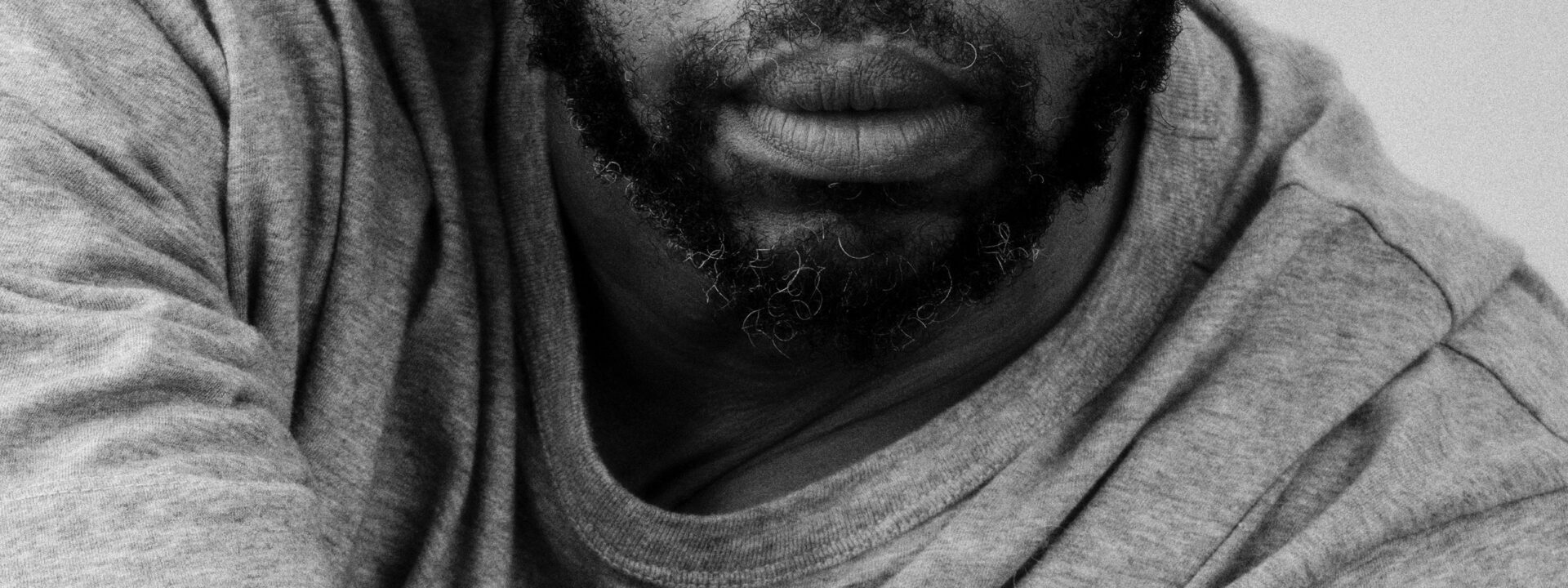
For Ohio-born designer Edward Buchanan, Black mentors in the industry changed his life. While he was finishing his studies at New York’s Parsons School of Design, designer Gordon Henderson recommended him for interviews at major fashion houses, and Rodney Patterson tipped him off about an opening at Bottega Veneta, where he became the first ready-to-wear design director. Now, more than thirty years later, the creative director and knitwear specialist has opened a self-funded foundation to carry that legacy forward.
The result is a 400-square-meter building in NoLo — a historically working-class, multicultural district of Milan — dedicated to nurturing and guiding creative talent from underrepresented communities, including people of color (POC), queer, and female cultural practitioners. Crucially, Buchanan will keep the non-profit financially independent, with no outside investment. He’s calling it The Situation, after the design consultancy he co-founded in 2012.
So far, Buchanan has put his money where his mouth is: €400,000 went into the interior construction and materials, a figure that doesn’t include the building’s purchase price. On the ground floor, a studio and gallery will host designers, artists, and all kinds of creative talent in residency programs. The creatives will work there while presenting exhibitions and showroom openings. On the top floor, Buchanan has set up an office for himself and his assistants, along with an archive of his design work spanning pieces from his days at Bottega Veneta (1995–2000) through to various consultancy jobs.
Currently, Buchanan is building an institutionally respected board to guide the recipient selection process. He plans to use his extensive network and industry prestige to advise the talents, connecting them with partners and resources.
Buchanan is currently the Milan fashion director for Perfect Magazine and works as Pucci’s knitwear designer, reporting to creative director Camille Miceli. He is also the designer behind Sansovino 6, a knitwear brand he founded in 2005 and continues to run. Between 2019 and 2023, he was Off-White’s design director for knitwear.
Despite a strong résumé, Buchanan has encountered various barriers to entry throughout his career. His hope for The Situation is to improve the experience of other disadvantaged creatives climbing the ranks today.
Ahead of the non-profit’s opening, Vogue video called Buchanan during a brief gap in his Milan Fashion Week schedule to discuss the project, his own rise, and the current playing field for POC creatives.
Vogue: Edward, how did The Situation develop from your consultancy into this project?
Well, this actually started developing five years ago. I’d closed my office [due to Covid] and moved everything into my home. As things moved along, I had to start looking for a new office. I found this space by chance; I was on my way to a furniture store. The space was just somehow very New York to me, and I fell in love.
The idea in the beginning was to move the office into the space, but the more I thought about this space, I thought, ‘Somehow, I’ve existed in this industry for almost 35 years, and the love I have for design and working in the editorial space is unparalleled. But there’s always a complaint. I always have criticism.’ I said to myself, ‘Fuck this, Edward. You can’t continue complaining if you’re not actively attempting to initiate change.’
I really wanted to create a space where we celebrate artists from disadvantaged communities, which I am one of. I know what it was like for me at the beginning, when I couldn’t find space and support. I wanted to support creatives, whether they be queer artists, Black and Brown artists, women artists. ‘Artist’ is a broad word —It could be a chef, a painter, or a fashion designer. DJ Honey Dijon and Edward Buchanan inside The Situation.
Photo: Marzio Villa
Vogue: Artists have creative practices, but they’re also businesses. How will you support the residencies and provide resources for them?
On Friday, September 25, we had a soft opening. I really wanted people to understand the vision and get a feel for the space, which is essentially empty. The top floor, which will be called “At Eddie’s” — the name my mom used to call me — is my design office, where my assistants and I will work. There’s also an archive I’ve built over many years, including work from Bottega and all my consultancies. I’m a knitwear specialist, so there’s a lot of research and textiles. It’s going to be a vast archive open for others to use.
I want to create a board that will start selecting candidates for the first residencies. I want these creatives to be able to create projects in this space at no cost — the funds will come from partners, from the people I’ve collaborated with, including very high-brow and institutional organizations. My job and the board’s job is to create synergy and funding so we can make these projects happen.
It could be a three-month project, a showroom for a designer, or a ceramic artist who wants to use the space for six months. What’s important to me is that we find creatives who need — and that’s a big word — support, whether financial, mentoring, or guidance. I’d like this space to be part of both the creation process and the presentation process: a place where we can create something, but then also have an opening to show the work.
Interestingly, [GU creative director] Francesco Risso just opened a similar operation in Milan that’s incredible. I went to see him yesterday, and I think he’ll probably be one of the first members on the board here.
Vogue: Great news. You mentioned that when working with partners, there needs to be synergy. Why do you think partners see value in working with you on this project?
To be perfectly honest, when I started putting this together, that wasn’t something I considered. The project manager is actually my boyfriend, Giovanni Pigliapochi, who is a doctor but has a background in architecture. He said, “Edward, you have to understand what your value and knowledge is in existing in this creative space.” I never think about who’s in my rolodex, who I’ve collaborated with, or the reach I might have.
Once we started putting this together and contacting people, it was so exciting and humbling to see the responses I got. Even the smallest thing: we needed soap for the space, so we reached out to Aqua Di Parma, and they were just like, “Fantastic.” So they’re supplying us. We reached out to an incredible artisan parquet company called Listone Giordano, and they supplied a wood floor.
These are companies that buy from the ground up and somehow share the same principles we want this space to deliver. We’re really focused on what sustainability means, both in the construction and the maintenance of this space. We have solar panels. It’s bricks-and-mortar. The interiors are made with wood and metal. Everything is sustainable, upcycled or recycled, and consciously considered.
Giovanni was so careful in selecting the partners. In the end, he sent out a presentation of what this project would be. We got the chairs from a company called Wilkhahn — these incredible sustainable work chairs. We’re working with a company called Acqua Chiarella, from Como, which supplies us with water. Tamu supplied us with wine. There are a lot of these Italian-based companies — and some outside Italy — that have aligned principles.
Edward Buchanan celebrating The Situation with industry guests.
Photo: Marzio Villa
Vogue: But it’s still self-funded?
One thousand percent. There are no funds that exist frThis was important to me because I wanted it to be based solely on the idea that we, as Black and Brown people, can economically and holistically support growing businesses that need to exist in the Italian space.
Vogue: Within the Italian space, are there nuances you will focus on in your guidance for Black and Brown creatives scaling their businesses?
I intend to push independence. In the beginning, I was privileged to enter a job [Bottega Veneta design director] that was larger than life as a Black American with a glossy blue passport—not knowing what would happen. When I later became independent, the opportunities just weren’t coming to me. I had to create it from the ground up.
A lot of creatives have dreams. Young creatives who work in this space dream of working for large companies or entering as an intern. It’s just not happening still. These disadvantaged communities are not being sifted into companies. I think that if I—and a lot of others who will collaborate with me on this—have that experience and knowledge to know what the system is like, we can show them how to protect yourself and build something that could potentially be your breadwinner.
It’s important to understand what independence is, as opposed to thinking you have to work within another structure.
Guests welcome the new Milanese hub for Black, Brown, and under-represented creative practitioners.
Photo: Marzio Villa
Vogue: Speaking of mentorship and guidance, your story starts with people like Gordon Henderson, the first Black designer to win a CFDA Award.
Absolutely. The interesting thing with Gordon is that I didn’t know the strength and the power of having a mentor that looked like me. It was the weirdest thing. I just knew I had this very talented designer in front of me that was really taking care of me. He was like, ‘No, Edward you have to go and find more beautiful buttons,’ or ‘You have to do it this way.’ When I started interviewing, he put me in front of Calvin Klein and Donna Karan. I could give him full trust because I saw a reflection of myself in him. The importance of seeing individuals in front of you that exist within a system is huge: Andre Walker, Byron Lars—there are many who came before me.
In the early stages of Parsons, there were very few Black and Brown designers working on Seventh Avenue. It was a real stretch for me. I’ve always known that eventually I wanted to be in the position to do the same thing.
Vogue: What’s your five-year metric of success for The Situation?
Well, the success of what I do depends on the success of the individuals. The metric for me is not a financial metric; it’s not an award that I want to receive. I just want to see these creatives be able to exist and have legs within the businesses and practices they want to create while being the exact individual that they are. I’m gassed about it. I really am. I’m ready.
Frequently Asked Questions
FAQs Behind Edward Buchanans Hub for Black Creatives
1 What is Behind Edward Buchanans Hub for Black Creatives
Its an online community and resource platform founded by fashion designer Edward Buchanan to support connect and promote Black creatives across fashion art design and related fields
2 Who is Edward Buchanan
Hes an American fashion designer known for his knitwear work with brands like Bottega Veneta and his own label Sansovino 6 Hes also a longtime advocate for Black talent in the fashion industry
3 Who can join the hub
Its aimed at Black creativesdesigners artists photographers stylists writers and studentsbut allies and supporters can often follow along or take part in public events
4 Is it free to join
Many resources and community spaces are free Some events workshops or mentorship programs may have fees or require applications so check each offering
5 What can I actually do inside the hub
You can network with other creatives find mentorship and job leads join workshops showcase your work and access industry advice and resources
6 Why was this hub created
To address the lack of access visibility and mentorship Black creatives often face in creative industries and to build a supportive community where they can grow
7 How is this different from other creative networks
It centers Black creatives specifically with a focus on fashion and design and its backed by an established industry figure who opens doors and shares realworld experience
8 How do I join
Visit the hubs official website or social media pages look for a signup or membership link and follow the instructions Some parts may just require creating a free account
9 Do I need professional experience to take part
No Beginners students and selftaught creatives are welcome There are resources for people at different career stages
10 What are the main benefits of joining
Access to a supportive network mentorship career opportunities visibility for your work and practical knowledge you might not get elsewhere
11 Can I promote my own work or business
Yes within the communitys guidelines Many hubs have dedicated spaces for sharing projects portfolios and opportunities
12 Are there mentorship opportunities
Yes The hub connects