It’s the last place you’d expect to find Venus Williams—a tiki bar shaded by palm trees on a Florida waterway in Palm Beach North, with plastic armchairs, seafood baskets on the menu, and Jimmy Buffett playing over the speakers. But Venus likes the food at this casual spot, she tells me plainly, and we grab a table on the sand with a view of the lighthouse. We’re in Jupiter, Florida, near Venus’s beachfront home, where she married Danish Italian model-actor-restaurateur Andrea Preti in December. The wedding was a multi-day celebration that the bride didn’t want to end. (There was also a small ceremony in Ischia, Italy, months earlier.) “There’s no more wedding to plan,” she says with a sigh. “That part’s really sad.”
She orders a veggie burger, fries, and, to my surprise, a Bloody Mary. It turns out she’s joking, though that’s almost impossible to tell, because her poker face—once described as “lapidary” for its perfect composure—has been finely honed over a 32-year career.
Incredibly, that career is still going strong. Unlike her younger sister, Serena, who announced in 2022 that she was “evolving away” from tennis, Venus, at 45, has never even hinted at retirement. “I get a lot of joy out of being different or unexpected or bucking the system,” she says. “I find that thrilling.” Venus is currently the oldest competitor on the women’s tour, and though she did step away two years ago to treat a debilitating, long-undiagnosed uterine fibroid condition called adenomyosis, the seven-time Grand Slam champion came charging back last year. She made it to the US Open doubles quarterfinals with 23-year-old Canadian Leylah Fernandez. “It was a lot of fun,” Fernandez says of their run. “Walking onto the court with Venus and seeing how much joy tennis has brought to her, it was one of those moments where I thought, Wow. It’s not just a job.”
Except for the bejeweled black Simone Rocha Crocs on her feet, Venus is dressed entirely in winter white this evening, a nod to her recently past bridal era. While she’s long dreamed of living abroad—Preti’s family is based in Rome—Venus and her husband have settled near here, enjoying being close to Serena and her family, and to their parents, who also live in the area. “They’re older now,” Venus says of her parents, “and I want every minute with them.” Family is everything to Venus, and while she froze her eggs in her 30s to keep her “options” open, she isn’t in any rush to start her own family. “I’m playing,” she reminds me. “So it would be very inconvenient.”
Sacrifice has been a recurring theme in Venus’s career, though she wouldn’t describe it that way. Venus and Serena were famously shaped into prodigies on the public tennis courts in Compton, California, by their father, Richard Williams, who worked as a security guard, and their mother, Oracene Price, then a registered nurse. “We were just laser-focused,” she says. “We missed out on things that we didn’t even know we were missing out on.” Skipping the junior circuit to stay in school was about the only thing she had in common with her teenage peers. “I remember one kid, I was kind of friends with him. He was like, ‘You think you’re better than us.’ Because I didn’t have time to hang out after school,” Venus says. “We immediately went to train for five hours.”
That dedication led to milestones. At 17, Venus became the first unseeded female player to reach a US Open final. Five years later, she claimed the number one ranking, the first African American woman to do so in the Open era—this after winning Wimbledon and the US Open with her exceptional combination of power and speed and her tireless court coverage. Her groundstrokes were unmatched; her missile-like first serve later set the women’s record at 129 miles per hour (and went unbroken for seven years).
Fernandez believes Venus elevated the game to an art form. “It’s so beautiful how she moves, how she kind of glides on grass, which is one of the hardest thingsShe’s not forcing it. It looks so easy. Everything flows.”
VOLUME UP
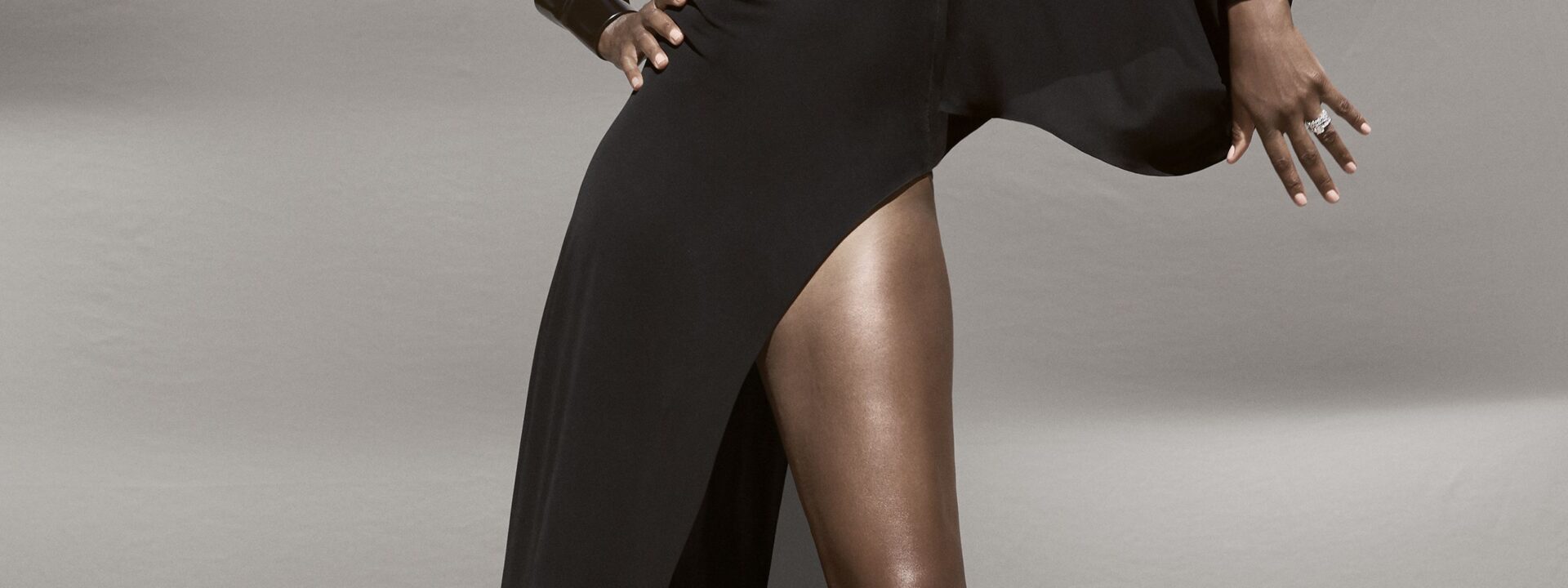
“I love the theme. It’s a perfect fit for me,” says Williams about the upcoming Metropolitan Museum of Art exhibition “Costume Art.” She wears a Balenciaga top and skirt, with Roger Vivier shoes.
There were also achievements off the court. In 2006, she successfully negotiated with Wimbledon and French Open officials to give female players equal prize money to men. She wrote a thoughtful op-ed for The Times, telling those in charge that they were on “the wrong side of history.” Venus capped off that campaign by winning Wimbledon the following year and earning the same prize money as her male co-champion.
Then Serena came along. In the 2021 film King Richard, their father—played by Will Smith in an Oscar-winning performance—predicts the dynamic. He tells a young Serena, “Your sister is gonna be number one in the whole world, no doubt about it. But you gonna be the best there ever was.” Serena would go on to take the number one spot from her older sister and beat her in four straight Grand Slam finals from 2002 to 2003. Venus’s story, extraordinary as it was, gradually became overshadowed by Serena’s.
The sisters played each other 31 times, nine of those in Grand Slam finals (Serena won seven). “I didn’t want to play her,” Venus says. “I was hoping someone else would take her out, do the hard work for me. Then I could play them, which would’ve been much easier.” She shakes her head and laughs, her relaxed attitude suggesting she doesn’t dwell on those memories. “But it was what it was. We got to play a lot of times. I wanted to win. I won as much as I could.”
Serena is more direct. “It was a nightmare,” she says, speaking from her Palm Beach home after a morning spent making slime with her two-year-old daughter, Adira. Playing Venus “was the most difficult thing in my career,” she says. “It’s something you don’t prepare for mentally, because it’s impossible.”
The complexity and strain of their on-court rivalry drew commentary—and not much of it was kind. Some even suggested there were hidden motives behind the wins and losses. America’s favorite tennis critic, John McEnroe, hinted that Richard Williams was deciding the outcomes. And when Venus withdrew from a 2001 semifinal against Serena at Indian Wells due to a knee injury, the crowd turned on the sisters. Serena was booed during her final, as were her father and Venus, who came to cheer her on. Richard reported hearing racial slurs. The Williamses boycotted the tournament for 14 years.
Doubles, of course, was a simpler story. The sisters simply dominated, winning 14 Grand Slam doubles titles and three Olympic gold medals. “Now I realize how magical that was,” Venus says of their doubles record. “I feel like I can find a word better than magical,” counters Serena, always the competitive sibling. “It was magical, but it was also once in a lifetime.”
Serena continues: “We grew up as singles players. Then one day my dad said, ‘You guys are going to play doubles. Serena, you stand on this side. Venus, you stand on that side.’ And we kept those positions our whole careers. We never grew up thinking, Oh, I’m going to win doubles Grand Slams or any of that. But we did. We won them all.”
Though there have been rumors of a Serena comeback—Novak Djokovic recently predicted that she and Venus would play doubles together at Wimbledon—the mother of two says she’s firmly in her “mom era.” The professional partnership Serena and Venus currently share is their podcast Stockton Street, which launched last September and has featured guests from Olympic sprinter Gabby Thomas to billionaire businessman Mark Cuban. Beyond that, Serena tells me her biggest ambition is to recreate those perfect bento box lunches she sees all over social media for her daughters.
Venus, meanwhile, is focused on workouts led by her coach Diego Ayala, who previously trained Jelena Janković and Robby Ginepri. “Three hours on the court every”Every day,” she reports. “I work like a dog.” Her work ethic is partly driven by the relief of playing without pain. For years, undiagnosed adenomyosis caused heavy bleeding, anemia, painful fibroids, and nausea. These symptoms were only successfully treated when Venus had a myomectomy—surgical removal of fibroids—in 2024. Venus has also dealt with the autoimmune disease Sjögren’s syndrome for the past two decades, which causes fatigue and shortness of breath and has led to more breaks from tennis. “I feel great,” Venus says simply now, though she doesn’t know how long this will last. “Hopefully the fibroids don’t grow back. It can happen. They don’t know why.”
“I’ve had a great life getting to do what I love and being able to do it well. It’s an honor… It’s all beyond what I could have imagined.”
Time away from tennis brought other rewards. In 2024, Venus met her husband at a Gucci runway show in Milan. Preti introduced himself, and they started talking. “She speaks Italian very, very well,” Preti says. When they began texting, “she asked for restaurant suggestions in Milan, and I said I want to see you,” he recalls. They connected in London, where Venus was co-hosting the Serpentine Summer Party. Venus, who had been single for six years, quickly recognized Preti, an old-school romantic, as the one.
“In the past, a guy would call you; he would tell you that you looked beautiful, that he loved your outfit. These days, that doesn’t really happen,” she laments. “But Andrea did all those things. The first time he called, I thought, ‘Is something wrong?'”
The close-knit Williams family welcomed Preti with open arms. “He is her biggest cheerleader,” Serena says. “It’s rare to find someone who loves you wholeheartedly for who you are, not what you represent.” Preti felt their warmth right away. “We were very close,” Preti says. “We could talk about everything—fashion, movies, lots of things. They didn’t make me feel like I was an outsider.”
Instead of a honeymoon, Venus and Preti have been traveling together. Venus secured wild card entries to the Australian Open, the ATX Open in Austin, Indian Wells, and the Miami Open. Preti cheers her on from her player’s box, with Venus’s 18-year-old Havanese dog, Harry, on his lap. On rare days off, the newlyweds like to stay close—as in, locked in a room together. “We love escape rooms,” Venus admits. “We work well together, but he definitely likes to ask for hints, and I’m like, ‘Let’s just hold on. I want to figure this out first.'”
In May, the couple will make their debut in grander settings at the Met Gala. Venus is serving as co-chair alongside Beyoncé and Nicole Kidman. This year’s exhibition, “Costume Art,” pairs fashion with the dressed form in fine art across centuries—and a range of body types. “I love the theme. It’s a perfect fit for me,” Venus says. “It’s even more important today because people feel so much pressure to look a certain way. But there’s so much beauty in difference.”
Venus herself reached five feet eleven inches tall at age 13. “I definitely had an awkward period, but I didn’t know I was in it,” she says with a laugh (she eventually grew to six feet one inch). “I didn’t go through a phase like, ‘Oh my God, I’m so tall. Guys are this tall.’ I was trying to figure out how to beat the people coming for me,” she says. “I was focused on being the best player in the world. I didn’t have time to think about whether I was winning some imaginary beauty contest.”
Venus is famously passionate about fashion. Last year at the US Open, she wore a series of New York designers on the court, including Khaite, Luar, and Who Decides War. Gabriela Hearst, who dressed her for the 2022 Met Gala in a black Chloé suit and sunglasses, loves working with her. “Venus looked so elegant,” Hearst recalls of the Met look, inspired by the film Men in Black. “As a superathlete, she is very aware of herShe knows exactly what she wants. Lately, Venus has been simplifying her wardrobe. The cream-colored wool jacket she wears to our interview is from Max Mara—she’s had it for a long time—and the matching quarter-zip sweater underneath was a purchase from “Bezos Atelier,” she jokes. “I had to recover from a shopping addiction,” she continues. “It was horrible. Too much excess.” Her solution has been to donate a lot of her fashion items, especially handbags. (“My dog is my best accessory,” she says proudly.) One piece she’s kept is the first thing she bought with prize money: a Dolce & Gabbana corset she got at 19.
When she needs a fashion fix, Venus turns on Sex and the City. “I was 17 when it came out, and I didn’t watch anything risqué,” she says. But she’s made up for lost time: “I’m a Miranda. I love her because she’s straightforward and logical. When she’s angry, she’s angry. And when she’s a jerk, she’s a jerk.” Fashion brings us closest to talking about retirement during our conversation. Venus muses that she’d like to spend more time sewing her own clothes when she stops playing—which feels like a full-circle moment, since her mother sewed her tennis skirt for her tour debut at 14.
But as long as she’s playing, “there’s no time to sew,” Venus says. A few weeks later, when she arrives at the ATX Open, flashes of top-form Venus are on display. Center Court is packed for her match against Croatian Australian Ajla Tomljanović, who is notable for being the last player to beat Serena on tour. Preti is there, settled in his wife’s player’s box with Harry, cheering her on in French (“allez”) and Italian (“va bene”). The crowd is openly pro-Venus, roaring after every winning shot. Her first serve is still a weapon, and when she nails a backhand down the line, the stadium erupts in “Let’s go, Venus” chants.
Tomljanović beats Venus in the end, but it doesn’t matter: Venus gets a standing ovation as she leaves Center Court, and she acknowledges the crowd with a smile and a grateful wave. This reminds me of something she said in Florida, about legacy and what it means to her: “I’ve had a great life getting to do what I love and doing it well,” she told me. “It’s an honor. Selfishly, I wanted to be a champ, I wanted to win. But by doing positive things for myself, it spread. Like, all of a sudden, all these people are playing”—she means players like Coco Gauff, Madison Keys, Naomi Osaka, and Hailey Baptiste, who have all cited Venus as their inspiration. “It’s all beyond what I could have imagined.”
In this story: hair by Felicia Burrows; makeup by Frankie Boyd; manicurist, Sherwin Hora; tailor, Kyle Kasabuske. Produced by Modem Creative Projects.
Frequently Asked Questions
Here is a list of FAQs based on Venus Williams cohosting the Met Gala building her legacy and defying expectations at 45
BeginnerLevel Questions
Q Who is cohosting the Met Gala with Venus Williams
A For the 2025 Met Gala Venus is a cochair alongside Pharrell Williams Lewis Hamilton Colman Domingo and AAP Rocky
Q What does it mean to cohost the Met Gala
A It means Venus helps plan the theme welcomes guests on the red carpet and uses her influence to draw attention to the event and its fundraising for the Costume Institute
Q Why is Venus Williams considered to be defying expectations at 45
A Because she is still competing professionally on the tennis tour launching new business ventures and taking on major cultural roles like the Met Galaall while many athletes retire much earlier
Q Is Venus still playing professional tennis
A Yes She has not officially retired and continues to play singles and doubles though she competes in a limited schedule due to injuries and her other commitments
IntermediateLevel Questions
Q How does Venus Williams build her legacy beyond tennis
A She builds it through her fashion brand her interior design firm her advocacy for equal prize money in tennis and her focus on wellness and healthy living
Q What specific expectations is Venus defying by cohosting the Met Gala
A She is defying the idea that older athletes should fade from the spotlight She is also breaking the stereotype that athletes cant be serious fashion icons or cultural tastemakers
Q What is the connection between Venuss tennis career and her role at the Met Gala
A Both require discipline creativity and a strong personal brand Her tennis success gave her the platform but her fashionforward sense made her a natural fit for the Met
Q How does Venus Williams handle the physical demands of tennis at age 45
A She focuses on a strict plantbased diet a personalized fitness regimen that prioritizes recovery and managing an autoimmune condition to keep her energy levels high