Fashion is often at its best when it draws from multiple disciplines, even though the industry has long been seen by the general public as existing in its own little bubble. But great designers frequently take inspiration from a wide range of mediums—film, music, and fine art, for example—and major fashion houses have produced countless collaborations with the art world. In an era of brainrot, blandness, and AI, taste has quickly become a form of currency in its own right. As a result, luxury designers are now making a more deliberate effort to highlight their artistic inspirations and deeper ties with cultural institutions. These public moves come at a time when fashion is rising as a major global force at the center of both pop culture and high culture. Last night’s Louis Vuitton resort 2027 runway show is a perfect example.
The event took place on the first floor of The Frick Collection, with the runway winding through a former Gilded Age mansion that now houses some of the world’s greatest works of fine art. While Nicolas Ghesquière is no stranger to impressive venues—last year’s spring 2026 show, held in the summer apartments of Anne d’Autriche in the Louvre, comes to mind—yesterday’s show also served as an official celebration of Louis Vuitton’s cultural sponsorship of the Upper East Side museum. The three-year partnership includes funding for three major special exhibitions, one year of free admission evenings (called Louis Vuitton First Fridays), and a two-year position for a Louis Vuitton Curatorial Research Associate.
Louis Vuitton’s resort 2027 runway show marks the start of a three-year partnership with The Frick Collection.
Photo: Getty Images
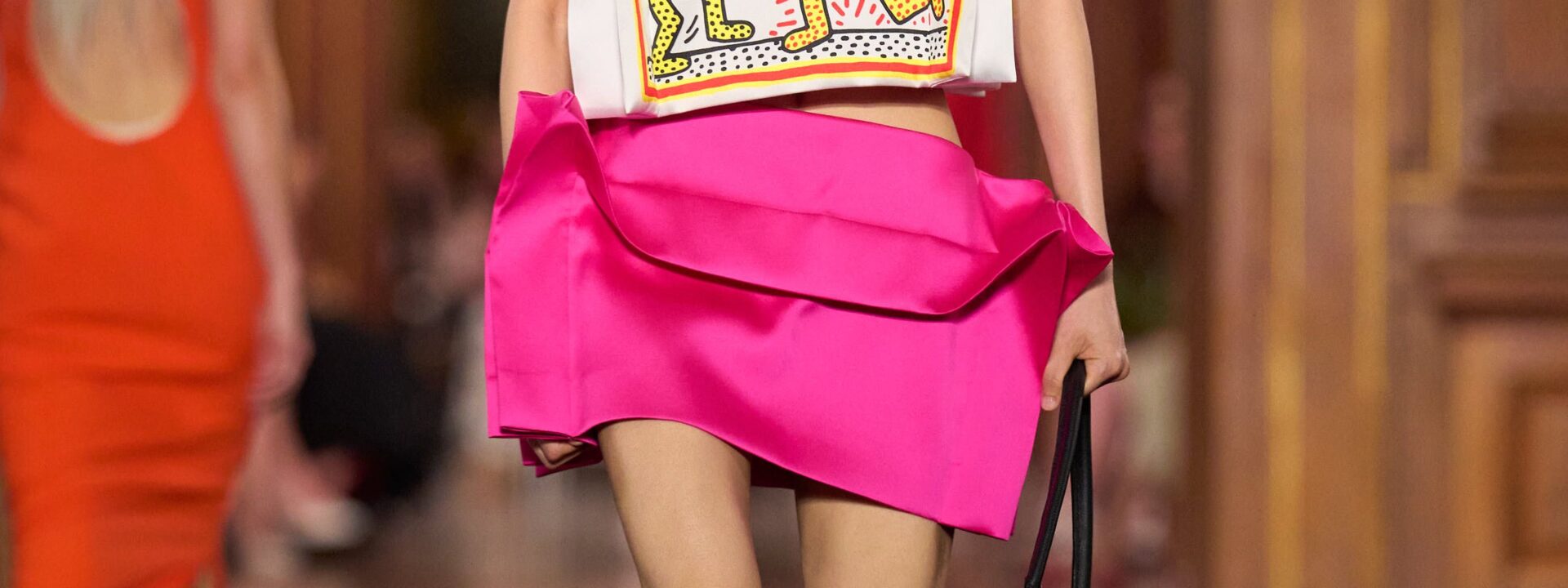
This isn’t the first time a luxury brand has partnered with a treasured institution. Chanel supports both the Paris Opera and the Tribeca Film Festival, and Louis Vuitton was the first luxury brand to become a patron of the Louvre, for example. But last night’s commitment to a prestigious New York museum feels like the start of a new global chapter. The collection’s official partnership with the Keith Haring Foundation only reinforces this idea. The invitation featured an antique leather Louis Vuitton briefcase that Haring himself graffitied in 1984. On the runway, pieces included Haring’s iconic New York apple and his 1982 “dogs with UFOs” motif, appearing on boxy shirts with origami-like folds.
Louis Vuitton, resort 2027
Photo: Filippo Fior / Gorunway.com
Louis Vuitton’s public embrace of the arts this resort season in the US isn’t happening in isolation either. The luxury house is the third to show in the US this month, with the most recent display of influence being Gucci’s full takeover of New York’s Times Square. Before the show, the brand shared its inspiration on Instagram: Robert Longo’s “Men in the Cities” series, a satirically ordinary project partly inspired by the jerky death scenes in Rainer Werner Fassbinder’s The American Soldier, which twisted the poses of New York strivers. It was a fitting reference for Demna, given that his last New York show (during his time at Balenciaga) had guests showering Balenciaga Bucks on the steps of the New York Stock Exchange.
“Guccicore” in Times Square.
Photo: Taylor Hill/Getty Images
With fashion becoming more accessible to everyone, moodboards are no longer kept secret—and a subtle reference isn’t just something your most cultured friend can spot and brag about at a dinner party. “Digital media has given us unprecedented access to and documentation of a designer’s process, and I think the public enjoys seeing these connections,” art historian Amelia Marran-Baden (also known as @Meelzonart) tells Vogue. “Fashion has become bigger than just clothing—it’s about building worlds. People like feeling like they’re part of the designer’s creative process. Maybe designers and brands are responding to that interest and inviting us in accordingly.”
This world-buildingThe show’s influence extends beyond the runway, too. (A show lasts only 15 minutes, leaving about 130,000 more minutes to fill the internet’s attention before the next one.) For Dior’s Jonathan Anderson, the timelessness of cinema offers a perfect solution, especially given his previous costume work with director Luca Guadagnino on Challengers and Queer. Last week, the French fashion house took over LACMA’s new David Geffen Galleries to reaffirm its love for Hollywood. A white bar jacket was inspired by one made for Marlene Dietrich, who once said on the set of Alfred Hitchcock’s Stage Fright, “No Dior, no Dietrich!” One Dior x Ed Ruscha shirt read “Says I, to Myself Says I,” referencing both the artist’s 2024 painting and his Gagosian exhibition of the same name.
Photo: Umberto Fratini / Gorunway.com
Anderson also worked with American pop artist Ed Ruscha, whose shadowy, distorted lettering appeared on a series of button-up shirts. Beyond film, Anderson’s Dior has been noticeably art-focused from the start. “He anchored the set of his first menswear show with two [Jean Simeon] Chardin still lifes, A Basket of Wild Strawberries and A Vase of Flowers,” notes Marran-Baden. “His first couture collection was inspired by the work of ceramicist Dame Magdalene Odundo. He turned the Bassin Octogonal into what was essentially Monet’s water lily garden at Giverny.” Much like this year’s Costume Institute exhibition, “Costume Art,” Anderson places fashion and fine art on equal footing, and at Dior, he is determined to keep doing so. With culture as currency, luxury fashion has never been more invested in showcasing its artistic side, and brands are using this US-focused resort season to go all in.
Frequently Asked Questions
Here is a list of FAQs about luxury fashion houses like Gucci Dior and Louis Vuitton turning to art for their resort collections
BeginnerLevel Questions
1 What does resort collection actually mean
A resort collection is a midseason line of clothes that bridges the gap between fallwinter and springsummer Its designed for people traveling to warm climates during the colder months
2 Why are Gucci Dior and Louis Vuitton suddenly using art for these collections
They arent suddenly doing itits a growing trend Using art adds cultural depth makes the clothes feel exclusive and helps the brand tell a unique story that stands out in a crowded market
3 Is the art just printed on the clothes
No it goes much deeper Designers often reference an artists entire body of work use specific color palettes recreate famous paintings as patterns or even collaborate with living artists to create custom prints and textures
4 Do these artinspired clothes cost more than regular collections
Yes usually The cost includes licensing fees to the artist or estate the complexity of reproducing art on fabric and the luxury markup that comes with limitededition culturally significant pieces
5 Can normal people actually wear these pieces
Absolutely While some runway looks are theatrical most brands release wearable items like silk scarves tshirts handbags and sneakers that feature the art in a subtle way
Advanced Questions
6 How do these brands legally use famous paintings or living artists work
They sign licensing agreements with the artist the artists estate or the museum that owns the rights For example Louis Vuitton pays royalties to the Yayoi Kusama foundation for her polka dots If the art is in the public domain they usually dont need permission but they often still pay for the exclusive use
7 Whats the difference between how Gucci Dior and Louis Vuitton approach art
Gucci often references historical paintings and surrealism to create a chaotic eclectic vibe