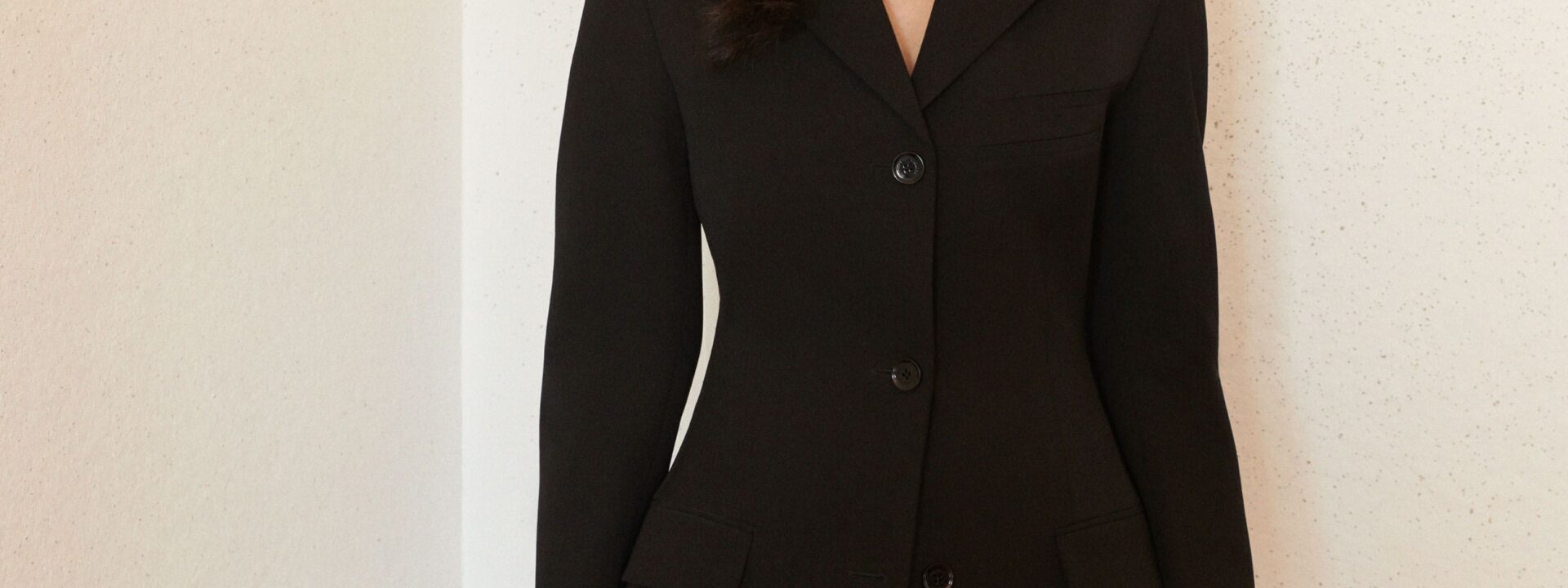
Shira Suveyke Snyder became CEO of Proenza Schouler in October 2024. Roughly six weeks later, aware that founders Jack McCollough and Lazaro Hernandez were set to move to Paris to lead Loewe (an announcement that wouldn’t be made until March), she began searching for their successor. “Jack and Lazaro were open about wanting a new chapter,” Suveyke Snyder says of her early days at the New York brand. “We talked about long-term transition planning and what the next phase of Proenza could look like without their day-to-day involvement.”
In the meantime, Suveyke Snyder brought on Diotima founder and creative director Rachel Scott to support the studio, believing consistent leadership was essential to keep the brand moving forward. “We had met before at the CFDA Awards, but when it came to finding the right person to support the studio temporarily, Rachel felt like a natural choice,” she says. “Her sense of craft and materiality felt deeply aligned with the house’s codes.”
This wasn’t intended to be permanent. However, Suveyke Snyder soon found her search influenced by Scott’s work at the brand. “I could see what was working so well in her leadership style, her entrepreneurial spirit, and her finesse with the brand’s codes,” the CEO explains. “We reached a point where I thought, surely we can find a solution that doesn’t compromise what Proenza needs day-to-day and also doesn’t compromise [Scott’s] thriving business.”
After all, many creative directors at European luxury houses manage dual roles. Jonathan Anderson has led JW Anderson and Loewe simultaneously for 11 years and will do the same at Dior. While at Tom Ford, Haider Ackermann is no longer fronting his own label but has kept his creative director role at Canada Goose. Grace Wales Bonner will continue her namesake brand alongside her position at Hermès. But this is rare in New York, where there are few legacy houses to juggle.
“It requires a lot of flexibility from everyone, but I don’t think any creative director role is nine to five. You’re always-on, to some degree. It’s the nature of the beast,” Suveyke Snyder says from Proenza Schouler’s SoHo office, which the company has occupied for over 20 years. They’re about to begin a renovation. “A 2026 facelift,” Suveyke Snyder smiles. It’s a fitting moment, as she and Scott usher in a new era for a label that was once one of New York’s most exciting young brands.
The SS26 collection was a collaboration between Scott and the Proenza studio team.
What’s most notable, however, isn’t just that Scott is leading both Proenza and Diotima, but the timing of her appointment. Last year’s series of announcements—McCollough and Hernandez’s departure, followed by Scott’s hiring—came amid a wave of creative director changes, resulting in 15 debuts last September. Yet this one was different: it marked the first time Proenza Schouler would be led by anyone other than its founders.
Proenza Schouler, which celebrated its 20th anniversary in 2023, has been a New York fashion staple since McCollough and Hernandez founded the brand fresh out of Parsons School of Design. Their first collection—fully bought by Barneys—originated as their senior thesis. Throughout the brand’s history, they’ve dressed New York’s It-girls, won accolades from the first-ever CFDA/Vogue Fashion Fund prize in 2004 to multiple CFDA Awards, all while navigating various ownership changes (the pair bought the brand back from Castanea Partners with a group of investors in 2018). Now, Scott is tasked with carrying McCollough and Hernandez’s American sportswear flair into 2026.
This passing of the torch meant the stakes were even higher.Suveyke Snyder explains that the search required a different approach. “We needed someone who could honor the creative legacy while steering it forward, but also a cultural fit—someone who understands not just the creative gap, but what it means when founders leave a business,” she says. “We were looking for a leader who leads with empathy and collaboration, with an entrepreneurial spirit. These qualities were crucial—not just about finding a new creative director, but about managing the founders’ transition.”
This cultural alignment was essential, and Scott met the criteria. “This company has a New York grit. It isn’t precious,” Suveyke Snyder notes. Having built her own business from the ground up, Scott appreciates the work that has brought Proenza to where it is today, the CEO adds. “That’s hard to find.”
After showcasing her collaborative studio work in a September presentation, Wednesday marks Scott’s official debut for Proenza Schouler. Ahead of the show, Suveyke Snyder spoke with Vogue Business about the brand’s evolution under Scott’s creative vision—and what it means for the business, where founders McCollough and Hernandez remain minority shareholders alongside private investors. (Sales figures were not disclosed.) “It’s so exciting because it feels authentically Proenza, yet different,” she says.
Here’s what’s next.
Proenza 2.0
Scott doesn’t plan to overhaul the Proenza Schouler brand. “It’s going to be an evolution—not a revolution,” she told Vogue last September. This philosophy is reflected in her first collection. “Proenza has always been a brand of craft. Our most innovative years were about materiality and fabric innovation, something Jack and Lazaro were deeply passionate about,” Suveyke Snyder says. “Rachel has tapped into that part of our DNA and reinterpreted it for today.”
The CEO is mindful of balancing evolution with the styles loyal customers love most. “Some pieces are so distinctly us that I can immediately see which will resonate with our existing customers—exactly what they look for in silhouette—and which feel evolved, allowing us to reach a broader audience.”
To attract that broader audience, Suveyke Snyder is leading a revamp of Proenza Schouler’s retail and marketing strategies. In 2025, the focus was on digital expansion, improving both backend efficiency and frontend aesthetics online and on social media. Now, following the move to a new Mercer Street store last year, physical retail expansion is underway. While she declines to specify locations, Suveyke Snyder says the brand is in multiple negotiations, with the first new store opening this summer. This is a significant step for a label that has never had more than two owned stores at once (currently only the Mercer Street location). It reflects her focus on conveying the brand’s ethos and craftsmanship under Scott’s direction. Through physical stores, Proenza Schouler can better express its aesthetics in purpose-built spaces, rather than relying solely on buyer selections and placements.
While the next chapter will emphasize owned channels, wholesale remains key, Suveyke Snyder notes. With experience at Net-a-Porter and Shopbop, she acknowledges the challenges of the past 18 months, emphasizing that retailer-brand relationships can no longer be purely transactional. “Brands have underst…“We’ve prioritized speaking directly to our customer,” she says. “Wholesale will remain important for us—as long as we can effectively tell our story through that channel.”
To reach both wholesale and direct customers, Proenza Schouler is investing heavily in content, the CEO explains. While the industry is aware and excited about Scott’s role, the broader consumer needs to understand what they’re investing in when they buy Proenza. “We have an opportunity to be clearer about what we stand for and who we are, through our content, messaging, and imagery,” she says.
The scheduling of the Proenza Schouler and Diotima runway shows illustrates how Scott will balance both brands. “We’ll open New York Fashion Week, and Diotima will close it,” says Suveyke Snyder. (Technically, NYFW ends the Monday after Diotima’s Sunday show, but the 16th is a much quieter day.)
The brand is proud to open NYFW this season—it’s a chance for Scott to present her vision to the community and customers. When asked whether Proenza will continue showing in New York in future seasons, the CEO is more reserved. (Recall that founders McCollough and Hernandez moved from New York to Paris in 2017, only to return the following year.) “The world is evolving,” she says, referring to how brands share their stories in 2026. “Runway shows give us an incredible way to express our vision, so this is a critically important moment, but things change.” Asked if this means Proenza might not show every season, Suveyke Snyder is firm: “Proenza is a runway brand.” So any evolution would likely involve location, not format.
Looking ahead, once her official Proenza debut is complete, Scott’s focus will shift to Sunday. Suveyke Snyder is squarely focused on the future. If 2026 is about perfecting brand storytelling, 2027 will be about expansion.
Next year’s roadmap centers on international growth and category expansion. The two are connected: while Proenza is best known in the U.S. for ready-to-wear, internationally it’s recognized for handbags. “We have a history and legacy as a leather goods brand—especially in the international market,” the CEO notes. Outside the U.S., revenue comes primarily from leather goods.
Leather goods take time from a manufacturing and development perspective. The Fall/Winter 2026 runway will preview what a Proenza Schouler bag by Rachel Scott might look like, but there’s much more in the works. “We’ll continue to build on that over the next couple of markets in June, and by September it will start to feel more complete,” Suveyke Snyder says.
Wednesday’s show, however, will offer a blueprint for this next chapter. “You really feel the codes of texture, materiality, strength of silhouette, and the balance of sharp and soft,” she says. “You’ll see it come through, and it will feel like a modern Proenza.”
Frequently Asked Questions
Of course Here is a list of FAQs about a Proenza Schouler CEO discussing the brands new chapter designed to be clear and conversational
General Beginner Questions
1 Who is the CEO of Proenza Schouler
The CEO is Judith Milgrom She is also the mother of the brands founders designers Jack McCollough and Lazaro Hernandez and has been a key strategic force behind the brand for years
2 What does a new chapter mean for a fashion brand
It typically signifies a major strategic shift This could include a new creative direction a change in business model targeting a new customer or restructuring the company for future growth
3 Why is the CEO giving this interview now
Its likely a planned communication to signal stability excitement and clarity about the brands future to customers the press and the fashion industry especially after any period of change or uncertainty
4 Are the founders Jack and Lazaro still involved
Yes absolutely A core part of this new chapter is reaffirming their roles as the sole creative directors The CEOs discussion is about building a stronger business structure to support their vision
Strategic Business Questions
5 What are the main goals for this new chapter
Based on CEO interviews the key goals are 1 Ensuring longterm financial stability and independence 2 Focusing on direct relationships with customers 3 Streamlining the product offering to highlight core strengths and 4 Growing the brand in a sustainable controlled way
6 Is Proenza Schouler moving away from wholesale
Not entirely but they are rebalancing The strategy is to become less dependent on wholesale and to prioritize their own retail channels to have more control over presentation pricing and customer data
7 How does having the CEO be the founders mother affect the business
It creates a unique dynamic of deep trust and longterm commitment Judith Milgrom is personally invested in the brands legacy and the designers wellbeing which can lead to more patient familyoriented business decisions rather than seeking quick returns for outside investors