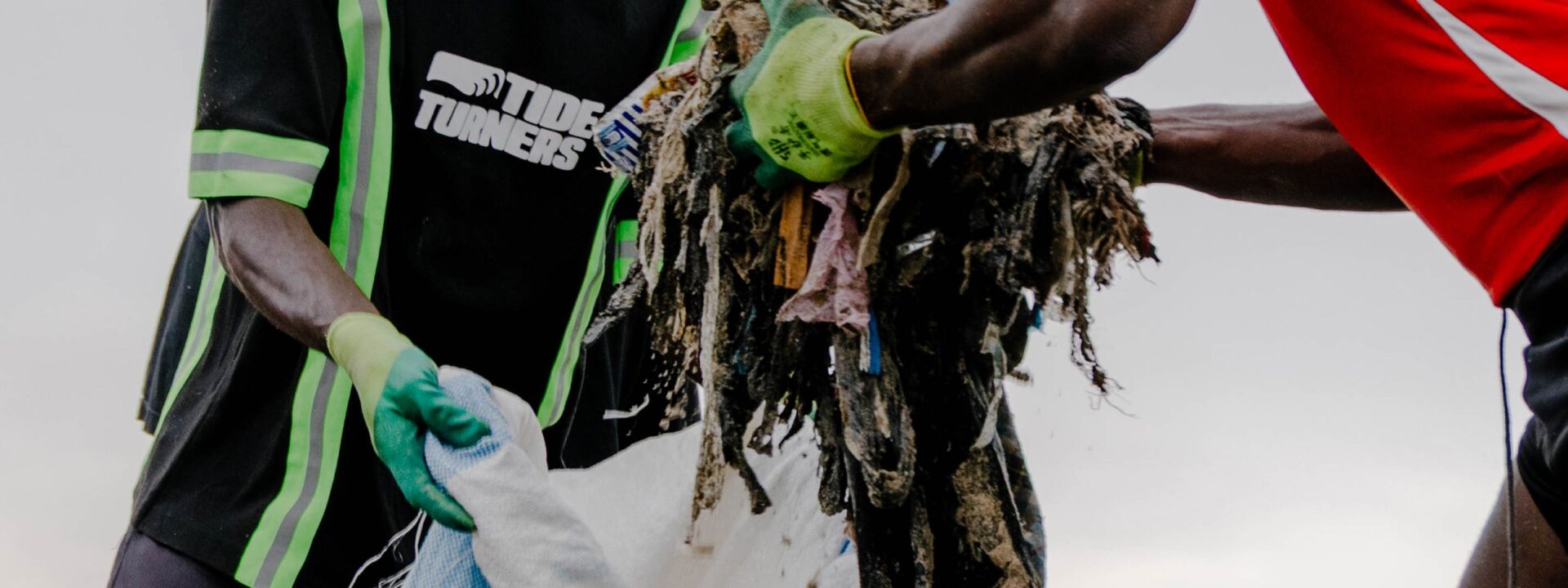
Last year, while reporting our (Re)Made in Ghana series, I stood on a beach in Accra, Ghana, and saw firsthand the destruction caused by used clothing exports. I walked over mountains of used clothing clogging the sand, wrestled with tangled waste to uncover individual items and record brand labels, and watched local volunteers use pickaxes to dig out garments buried deeper. The Tide Turners cooperative, supported by The Or Foundation, a US-Ghanaian non-profit, runs these weekly beach clean-ups. But their efforts to tackle a textile waste crisis they did nothing to create go unnoticed — and unpaid — even as the EU moves toward extended producer responsibility (EPR) regulations that would make polluters pay to clean up their own waste. The problem, says The Or Foundation co-founder and executive director Liz Ricketts, is that policymakers do not allow EPR fees to cross borders, even though used textiles do. That is why The Or Foundation has spent the last five years calling for “globally accountable EPR.” Today, it launched the Apparel Recovery Coalition (ARC), a coalition with Adidas, H&M Group, Inditex and Bestseller, to explore how that would work in practice. The program will channel voluntary funds from major European brands into the countries receiving the post-consumer textiles those brands created, providing a clear case study for EPR fees crossing borders. It will focus on upstream interventions, preventing waste from reaching the beach and other dumpsites in the first place by leveraging and expanding the thriving circular fashion ecosystem at Accra’s Kantamanto Market, one of the world’s largest resale and upcycling ecosystems. The Or Foundation estimates that upcyclers and resellers there already recirculate 25 million garments each month, but there is room for improvement — as the waste clogging the beaches shows — with support from brands. Kantamanto Market already has a robust reuse and upcycling ecosystem. The ARC pilot program will strengthen existing initiatives and invest in scaling others, creating a blueprint that can be applied in other countries too. Photo: Julius Tornyi/ Sylvester Darku “Instead of theorizing for another five years while communities like Kantamanto carry an unfair burden, ARC is testing how to make globally accountable EPR a reality,” says Ricketts. “Kantamanto isn’t a dumpsite and it isn’t a perfectly functioning circular economy, but it is a place of action, ingrained knowledge, skill and possibility. Launching here sends a signal that ambitious plans for circularity must be grounded in reality.” ARC will explore how EPR fees and other accountability mechanisms for brands could support circular fashion ecosystems around the world, focusing on reuse, upcycling, recycling and responsible waste management in countries that receive large volumes of exported secondhand apparel. Ghana will be the testbed, but the coalition will apply its blueprint to at least one other country in the next two years. During that time, its activities will be funded by voluntary contributions from Adidas, H&M Group, Inditex and Bestseller, but the hope is that other brands join too, and the blueprint is eventually embedded in EPR policies across the EU. “Studies show that a majority of post-consumer textiles collected and sorted in the EU are exported beyond its borders. Even when these garments are reused or upcycled — which isn’t always the case — they ultimately become waste in the countries receiving these exports,” says ARC spokesperson Hilde van Duijn, CEO of the Netherlands-based organization Circle Economy, which will act as the coalition’s secretariat. “We will explore how producer responsibility contributions could follow textiles until the end of life, wherever this happens. We hope, through ARC, we can show that this is possible.”
Frequently Asked Questions
FAQs HM Inditex Bestseller and Adidas Support the Coalition
Beginner Questions
1 What is this coalition that HM Inditex Bestseller and Adidas are supporting
Its a group of fashion brands working together on shared sustainability goals mainly to cut carbon emissions use more recycled materials and improve working conditions in their supply chains
2 Who are these four companies
HM and Bestseller are fastfashion retailers Inditex owns Zara and other brands and Adidas is a sportswear giant Together theyre some of the biggest clothing companies in the world
3 Why would competing brands team up like this
Because problems like climate change and poor factory conditions are too big for one company to fix alone Working together lets them share costs set common standards and push suppliers to change faster
4 What do they actually want to achieve
Cleaner energy in factories less waste more recycled or sustainable materials and better treatment of garment workers
5 Does this affect me as a customer
Yes you may see more sustainable labels in stores slightly different pricing and changes in how clothes are made and recycled
Practical Questions
6 What are the main benefits of joining a coalition like this
Shared costs stronger bargaining power with suppliers faster progress on climate goals and better public image
7 What problems do companies usually run into
Greenwashing accusations slow supplier compliance conflicting internal goals and difficulty tracking progress across thousands of factories
8 How do they make sure members actually follow through
Through public targets thirdparty audits annual reports and sometimes penalties or removal from the coalition
9 Can a small brand join too
Usually yes but requirements vary Some coalitions have minimum size or commitment thresholds
10 What can I do to support these efforts as a shopper
Buy less but choose better look for verified certifications check brand transparency reports and recycle or resell clothes instead of throwing them away
Advanced Questions
11 Whats the difference between this coalition and others like the Fashion Pact or UN Fashion Charter
The Fashion Pact focuses on CEOs committing to climate goals while the UN Charter is broader on social and environmental issues