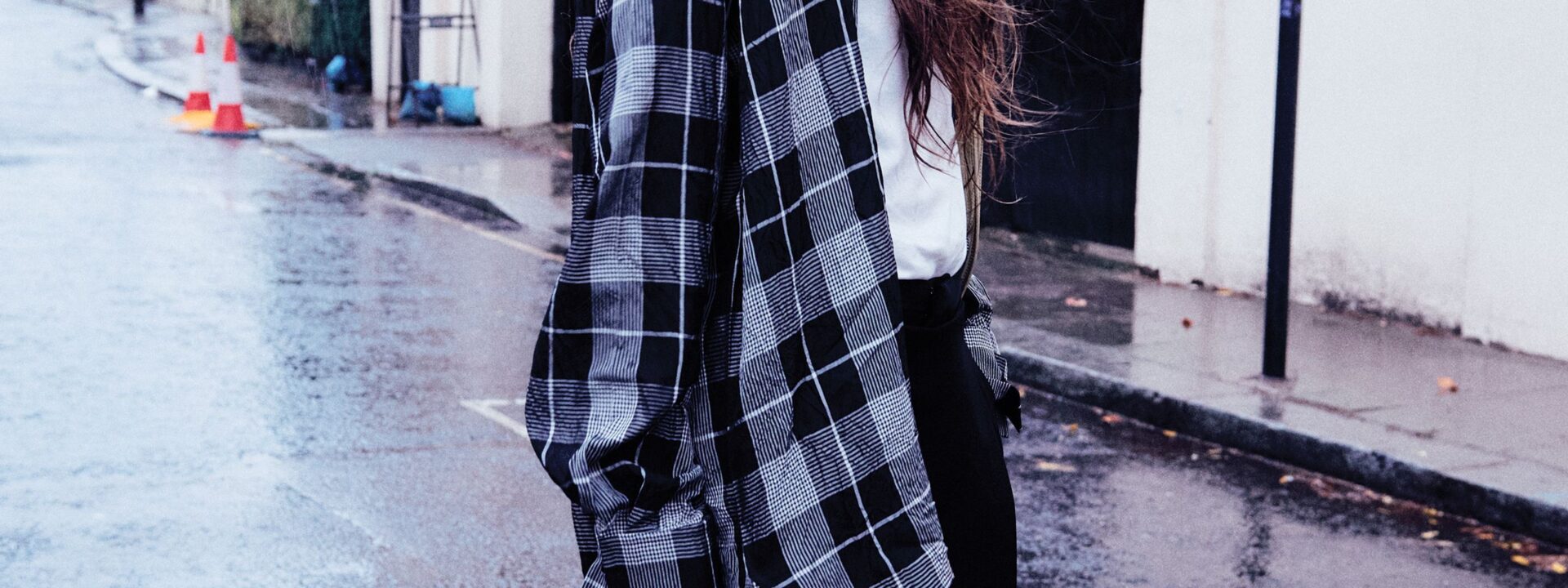
I’ve never hidden that early motherhood didn’t suit me—I even wrote a book about it. After a year of severe postpartum depression that made it nearly impossible to connect with my child or believe motherhood could be enjoyable, I slowly clawed my way back through therapy, medication, and the unglamorous work of changing myself.
Even at my lowest, one thing held: how I thought about what I wore. I clung to clothing desperately, as one of my few chances to feel like my old self. At my worst, I had elastic waistbands sewn into Miu Miu skirts I could no longer zip and squeezed my swollen body into vintage pieces I’d collected over the years—even though my still-distended abdomen strained the aging fabric, prompting strangers to ask, “When are you due?” I refused to give in, which is how I ended up drunk at a party in a Chanel gown with a busted zipper, the back fallen open to reveal my underwear—not in some intentional, Hailey Bieber naked-dressing way, but in the “Tuesday”-printed-across-the-butt style of my Indiana childhood.
After that year, something shifted: I’d fallen in love with my son. I felt a duty to love my children in a way that would teach them to love themselves. And selfishly, I wanted motherhood to be fun and fulfilling for me, since it was a permanent job. That part felt almost taboo to admit, but it mattered. So I began learning how to mother in ways that felt authentic, honoring who I was, not just who I thought I should become.
There was a time when clothes were pure fantasy—an ethereal version of who I might become. They filled magazines from New York City, and discussing them was a way to connect with other women, building electric, hopeful friendships. Clothes once promised possibility. I deserved more than monotony, even in sneakers.
I began to understand that to relate to my kids in a way that felt good for all of us, I had to tend to the 11-year-old version of myself—the knobby-kneed kid who dreamed of dressing like a professional ballerina who was also a cheerleader and, possibly at the same time, a popular girl in a rule-breaking mini-skirted uniform.
Getting dressed became one of the few ways I could hold onto myself. Kids are unapologetically themselves; one of the great lessons of having them is that I should be, too. So I shopped for vintage sweatshirts like the ones my middle school crushes wore, popped in hair bows like the ones that came with my Samantha American Girl Doll, and grabbed flannel shirts reminiscent of what upperclassmen sported in the ’90s. I paired baby-pink transparent skirts with leotards from dance supply stores. I let my hair grow long and braided it like an awkward teen whose limbs hadn’t evened out—and may never. I wore Sanrio pastels and let myself feel like that younger girl again, each outfit referencing a memory of who I once was—the little girl I needed to love so I could become the most loving adult version of myself.
A traditional diaper bag wasn’t in the cards for me. “If I were going to carry a ‘diaper bag,’ it might as well be a lacquered, cherry-red one that made me feel like a cartoon villainess on the school run,” she says. Hartzel wears Chanel; select Chanel boutiques.
Photographed by Oliver Hadlee Pearch. Vogue, Spring 2026.
Of course, life became infinitely more hectic the moment I had children. Time accelerated. I was thrown up on so regularly it began to feel personal. Once, on a flight, my son ate Cheetos during turbulence…The plane landed safely, but I was almost more grateful that I wasn’t wearing my favorite Chanel flats, given the sea of orange vomit that had my shoes squishing as we walked off. Constantly bending down to pick up little ones had also turned my beloved micro-minis into a liability. But with all the mess, did I really have to give in to the dreaded “uniform” of identical jeans and sweaters? Was that all I—the one holding everything together, remembering appointments, dinners, and teacher appreciation days—deserved?
Instead, I began to see clothes as equipment for my life, honoring who I’d always been. They weren’t just fantasy or armor, but tools. Like dusty-pink flats that could chase a toddler across a playground as she bolted for the most dangerous stairs. Or a loose Celine blazer with deep inside pockets for snacks and the occasional mini skateboard.
My diaper bag was a structured Marc Cross that looked like a tiny briefcase, always stocked with wipes, lip balm, and a crumpled emergency diaper. If I had to carry one, it might as well be a lacquered cherry-red bag that made me feel like a cartoon villainess on the school run. The strap was long enough to keep both hands free—essential when you’re hauling Hello Kitty, who, according to the Sanrio site, weighs “about three apples.” Coincidentally, that’s the exact number of snacks I need on hand to prevent a hungry meltdown on the way to an activity. My purses were sized accordingly.
I also started treating myself to little joys alongside the kids. A toy store trip meant grabbing a sparkly barrette at the register; an online order for a birthday gift became a chance to add a bedazzled chapstick holder I could wear as a necklace. That’s multitasking in the mommyverse.
Time still raced by brutally. Some mornings, I’d rush to be on time for Mommy and Me music—a deadly boring commitment I felt compelled to keep, since I didn’t know how to teach the ABCs alone. Even if I was late, I’d pull on ballet-inspired workout clothes with a tulle skirt and sweatshirt, my hair in a ribbon-wrapped bun. Those clothes turned the day from a slog into choreography. And that, at the very least, is something every mother deserves.
Frequently Asked Questions
FAQs Getting Dressed Up to Cope with Postpartum Depression
BeginnerLevel Questions
1 What does getting dressed up mean in this context
It means intentionally putting on clothes that make you feel good puttogether or more like yourself even on a regular day at home Its not about being fancy but about making a small deliberate choice for your own wellbeing
2 How can something as simple as getting dressed help with postpartum depression
PPD can make you feel disconnected from your identity The simple act of choosing an outfit is a small act of control and selfcare It can create a positive shift in your mindset boost your mood and serve as a gentle reminder of the person you are outside of being a mother
3 Do I need to wear fancy clothes or makeup every day
Absolutely not Dressed up is personal For some its clean jeans and a favorite tshirt For others it might be a comfortable dress or a swipe of lipstick The goal is to wear what makes you feel a bit more lifted not to meet anyone elses standard
4 Im exhausted How do I find the energy to even think about what to wear
Start very small The night before pick out one itemlike a cozy cardigan or a pair of socks you loveand leave it where you can see it The goal isnt a full outfit immediately but one decision that feels like a win
5 Can this really make me a better mother
Indirectly yes When you take a moment for a small act of selfcare you are modeling selfworth and filling your own cup A slightly brighter mood and a stronger sense of self can help you feel more patient present and engaged with your baby even on hard days
Advanced Practical Questions
6 This feels superficial Isnt it just masking the real problem
Its not a cure but a coping tool Think of it like physical therapy for your sense of self Its a practical actionable step that can improve your momenttomoment experience while you seek or undergo other treatments It addresses the feeling of losing yourself which is a very real part of PPD