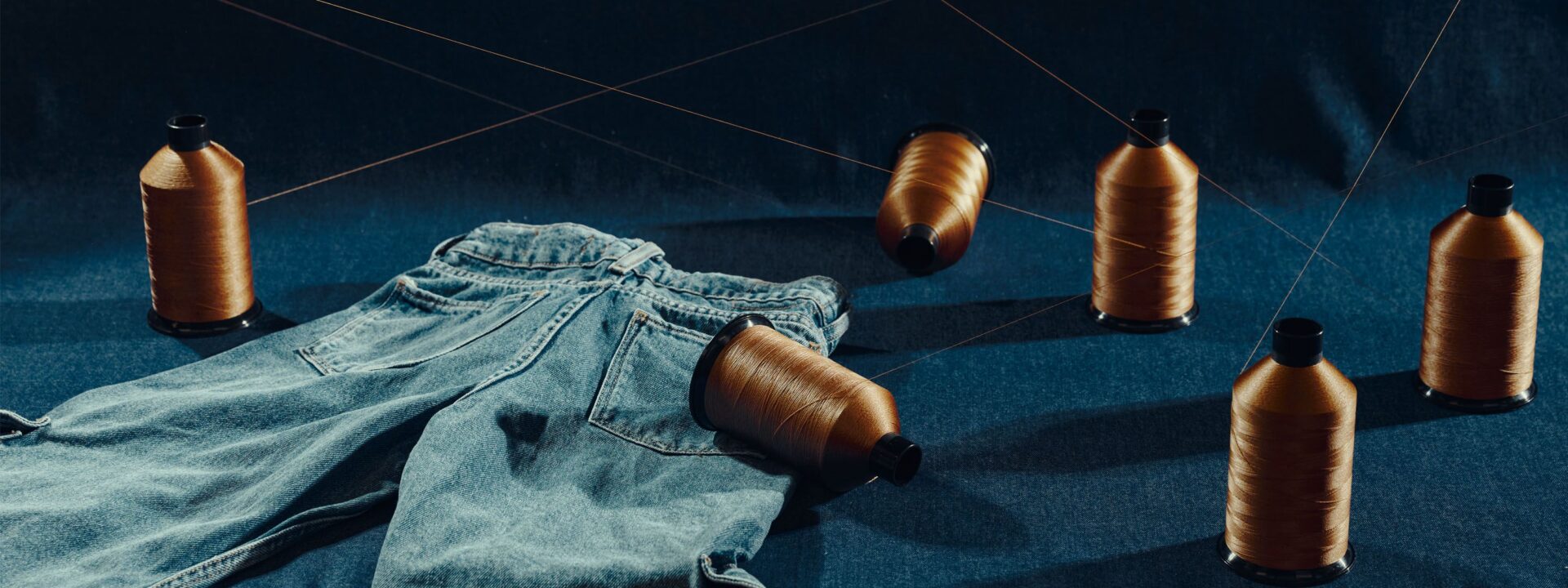
Before clothing can be recycled, it must be taken apart. This disassembly process is fast becoming a major obstacle in the effort to scale up textile-to-textile recycling.
“You cannot make a recycled yarn if there’s a button or a zipper in it,” explains Ellen Mensink, founder and CEO of the Amsterdam-based circular textile producer Brightfiber.
Fashion brands and recyclers now urgently need to solve this challenge. New regulations are on the way, including extended producer responsibility (EPR) mandates and eco-design rules. The availability of recyclable materials and the need for non-destructive disassembly are also becoming critical compliance issues.
“In the next couple of years, it’s going to be crucial for designers to have disassembly tools in their toolbox to make better products,” says Kristoffer Stokes, co-founder and CEO of D-Glue. D-Glue is a patented technology, incubated by the Boston-based plastics and textile consultancy Geisys Ventures, that can be added to existing adhesives to make them removable with heat.
Most clothing is designed without any thought for how it might be taken apart at the end of its life. Designers and product developers have traditionally focused on style, fit, functionality, or durability. Features like waterproof seam tape, pocket rivets, or decorative embroidery all make disassembly much harder. As a result, every company processing recycled clothing has to develop its own method, leaving the fashion industry far from a clear path to circularity.
Same Problem, Different Methods
The challenge of scaling disassembly is evident in how individual recyclers and producers are ramping up processing to meet growing demand.
Luxury fabric producer Manteco is based in Prato, an Italian region famous for textile recycling. There, skilled artisans known as cenciaioli sort clothes by color, quality, and composition. They can distinguish between types of yarn just by look and feel. Manteco often shares images of these workers sitting among piles of textiles, cutting up garments and tossing sections into color-coded baskets. According to the company’s latest sustainability report, over 1.3 million kilograms of textiles were processed this way in 2023.
Giuseppe Picerno, Manteco’s head of innovation and sustainability, believes AI could eventually automate sorting, but current technology isn’t reliable enough to guarantee only high-quality materials move to the recycling stage. “Technology is not sufficient to ensure good quality, and the quality of the input material is one of the pillars of our success. We need highly experienced operators,” Picerno says.
While Manteco started by recycling high-quality wool blankets, knits, and shirts, today’s cenciaioli must handle increasing volumes of low-quality garments. This complicates disassembly, as synthetic yarns, elastic components, and plastic decorations must be identified and removed, reducing the usable material from each piece before recycling.
“The efficiency of our operation depends mainly on how the garments are constructed,” Picerno notes. “A garment with a lot of embroidery is more difficult to recycle, whereas a wool sweater is very easy; it’s enough to cut the labels out of the seams.”
The Spanish textile-to-textile recycling company Coleo, which processes over 2.5 million kilograms of textile waste annually, uses a more segmented approach. It employs AI to sort collected textiles into different waste streams and material types. However, disassembly is still done manually, with workers using electric tools to cut around buttons or slice off zippers and labels—a slight efficiency improvement over traditional hand methods.Oli’s traditional hand-cutting method highlights the cost challenges in textile recycling. “The textile recycling business is very cost-sensitive, so we always have automation in mind. But for now, we are doing it manually,” says Nacho Bueno Fornés, marketing director of Coleo.
Coleo has turned manual disassembly into an opportunity for social impact by operating the Coleo Recycling Special Employment Centre, which supports people with disabilities—making up 87% of its staff—with permanent employment contracts. Brightfiber’s founder, Mensink, who has extensive experience in textile circularity, had previously collaborated with such social enterprises.
However, when founding Brightfiber in 2025, Mensink had to shift strategy. The 2015 Participation Act in the Netherlands led to the closure of many “sheltered workshops”—employment centers for people with disabilities that handled tasks like packing and disassembly—as the government encouraged integration into the broader job market. This reduced the available labor and infrastructure needed to meet demand. “We decided we needed to automate,” Mensink explains. While others plan for future automation, Brightfiber is already proving it can work at scale.
Brightfiber uses a three-stage automated process to sort, disassemble, and fiberize textiles. The solution involves a machine that removes buttons, zippers, and labels using metal detection and camera technology, processing three million kilograms of textile waste annually. This machine is part of a connected chain: “You need to know how one machine works with the other, because if you put rubbish in the first machine, you get rubbish out of the second and the third,” Mensink says.
The first machine uses near-infrared (NIR) technology to sort by color and composition. The next machine is calibrated for specific batches, like denim or jersey, to ensure high-quality output for the final stage, where textiles are turned into fibers for new yarns. Although the process requires minimal manual checks, Mensink notes that automated disassembly initially costs about the same as manual methods. In the long run, however, automation is more cost-efficient and increases processing capacity.
Brightfiber isn’t alone in advancing automation. In 2025, the Golisano Institute for Sustainability in the U.S. developed an automated system using AI and robotic laser cutters to remove non-recyclable elements at a rate of one garment every 10 seconds. Nike provided early guidance, while Ambercycle and Goodwill collaborated on testing. The technology is currently in its pilot phase.
Designing for Disassembly
As producers and recyclers seek efficient ways to handle fashion waste, some designers, manufacturers, and textile innovators are leading efforts to make future disassembly faster and simpler.
“Almost 100% of the garments we receive are not made to be recycled,” says Manteco CEO Matteo Mantellassi. “If you sew a wool sweater with polyester thread, you need to cut away 80% of the garment. But with just a few design changes, this could be transformed.”Since 2016, Manteco has trained students at its Manteco Academy in design for disassembly, using its own fabric waste to illustrate the challenge for the next generation of designers. “We have to advance this kind of thinking to find a new business model for the fashion industry,” says CEO Matteo Mantellassi.
A few brands and producers have begun focusing on design for disassembly and circularity in recent years. French trims manufacturer Dorlet created a screw-in, removable jeans button as an alternative to standard buttons, which are hammered in and must be cut off during recycling. Japanese fastening manufacturer YKK has developed a similar product, along with monomaterial fasteners—zips, buttons, and rivets that can be recycled together with products made from the same material.
Monomaterial design is a popular approach because it can avoid disassembly entirely. In April 2024, Swiss brand Freitag—known for making accessories from used truck tarps—launched its MonoPA6 collection. Every part, from the fabric to the clasps, is made from a single material, so the bags can be shredded and recycled whole without disassembly. In February 2025, The North Face released the Dryvent Mono, which can also be recycled as one piece, following a similar launch by Helly Hansen in 2021. However, such collections remain exceptions rather than the standard.
Another solution is dissolvable threads and adhesives, which allow garments to be taken apart without cutting, reducing fabric waste. Norwegian company Around Systems’ SeamLock dissolves when heated under pressure. Meanwhile, D-Glue was developed by founders Stokes and Philip Costanzo because, as Stokes explains, “adhesives play an important role in items like rainwear and outerwear, but it’s not easy to pull these things apart.” Belgian company Resortecs’ Smart Stitch thread also dissolves under heat and has been used by brands including Bershka and Decathlon.
These companies point out that threads and adhesives make up a small part of any product, making them a cost-effective option. D-Glue is currently working with several global adhesive companies to test cost, scalability, and market viability, though it cannot yet name industry partners.
Still, there are drawbacks. Some argue that monomaterial design limits creativity and has niche applications. The heat required for dissolvable threads and adhesives can damage certain materials and may increase carbon footprints due to the energy needed. Adoption also remains a challenge. Resortecs CEO Cédric Vanhoeck notes that it could take years for products with Smart Stitch to enter recycling systems, which makes recyclers hesitant to invest in the technology. “If most products don’t have thermal disassembly capability, why would you invest in disassembly equipment?” he says. For now, Resortecs is bridging that gap by handling disassembly in-house with its Smart Disassembly system.
A Systems Approach
While innovations may make future products easier to disassemble, they don’t address the existing mountains of textile waste. Recyclers must find the best ways to maximize reuse within their processes. This highlights the broader issue: as with any sustainability effort, no single solution is enough. Disassembly is just one step in a long chain of decisions and processes.
Like Resortecs, Around Systems offers its thread technology as part of a larger system.Ginning is a digital planning platform that helps designers map out end-of-life pathways based on their material and construction choices. During production, alongside SeamLock, a product ID system is used to guide the final phase: automated sorting and disassembly. This process relies on information linked to the product ID, like material types and garment trims.
“The challenge is organizational, not technical,” explains Brigitta Danka, chief product officer at Around Systems. “The main obstacles are the high labor and cost of manual disassembly, the permanent bonding of complex multi-material constructions, and a lack of information about how products were made and how they should be handled. These issues can’t be fixed just by inventing a new seam or thread. They require coordinated decisions across design, sourcing, product architecture, and end-of-life operations.”
Frequently Asked Questions
FAQs The Biggest Hurdle in Textile RecyclingTaking Clothes Apart
BeginnerLevel Questions
1 What does taking clothes apart mean in recycling
Its the process of manually or mechanically separating a garment into its individual components like removing zippers buttons seams and different fabric layers so the materials can be properly sorted and recycled
2 Why is taking clothes apart such a big problem for recycling
Most modern clothing isnt designed to be taken apart Items are made from blended fabrics and are held together with tough stitches glue and mixed hardware Disassembling them is extremely slow laborintensive and often more expensive than making new fabric
3 Cant we just shred old clothes whole
Shredding a whole garment mixes all the different materials into a lowquality fluff This mixed material is much harder to recycle into new strong yarn or fabric limiting what it can be used for
4 Whats an example of a garment thats really hard to take apart
A simple pair of jeans is a great example It has a main denim fabric a different fabric for the pocket lining a metal zipper metal rivets a leather patch polyester stitching thread and a plastic button Separating all these by hand takes a lot of time
5 What happens to clothes that cant be taken apart and recycled
Unfortunately a large portion ends up in landfills or is incinerated Some may be downcycled into lowervalue products like industrial rags or insulation but this is not a true circular recycling loop
Advanced Practical Questions
6 Are there any technologies that can automate disassembly
Emerging technologies like specialized lasers robotic grippers and chemical processes to dissolve stitches or blends are being developed However they are not yet fast scalable or costeffective enough to handle the billions of garments discarded yearly
7 How does design for disassembly help solve this hurdle
Its a proactive solution If clothes are designed from the start with recycling in mindusing monomaterials snap fasteners instead of stitches or easily removable labelsthey become dramatically easier and cheaper to