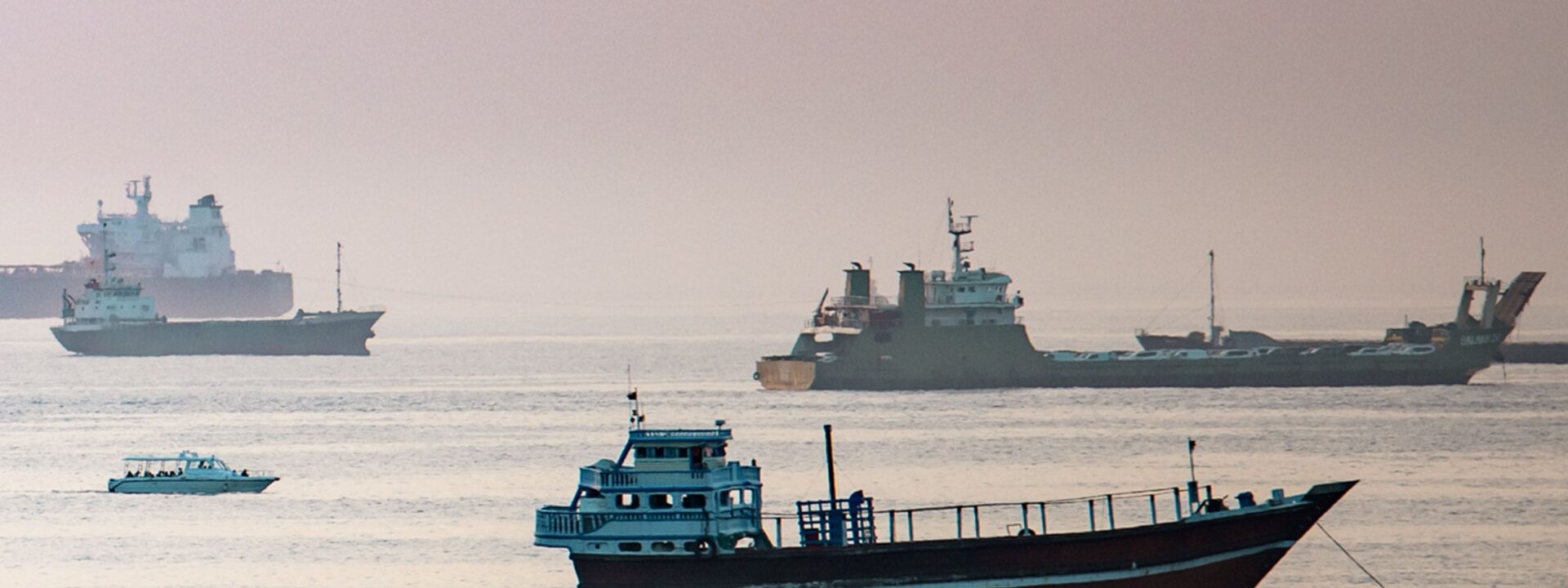
When US President Donald Trump and Iranian President Masoud Pezeshkian signed a 60-day ceasefire and de-escalation agreement on June 17, it gave fashion companies dealing with the months-long US-Iran conflict something close to certainty: a pause, a chance to plan, and maybe an opportunity to see how much of the damage from the geopolitical crisis could be undone.
So far, the answer is complicated. The US is still at war with Iran, the ceasefire is fragile, and renewed strikes have already threatened the détente as talks continue. For the fashion industry, the question isn’t so much whether things can go back to normal, but what “normal” even means after another global chokepoint crisis—this time involving the Strait of Hormuz and fresh disruptions around the Red Sea.
Read More: Understanding Fashion’s Latest Supply Chain Shock
By Jessica Binns
Across the industry, responses have varied from brand to brand, and the changes are revealing: a deeper reliance on trusted suppliers, longer lead-time assumptions, selective safety stock on core products, more attention to freight exposure, and a clearer understanding that resilience isn’t just about having more options—it’s about knowing which options will actually hold up under pressure.
Control becomes insurance
The disruption exposed both the strengths and limits of the vertically integrated model at Parker Clay, a California B Corp that makes sustainable leather bags, backpacks, and wallets in Ethiopia. The brand owns and runs its factory in Addis Ababa and sources full-grain leather from local Ethiopian suppliers, which protects its sourcing and production from much of the turmoil. However, the pressure came later, once finished goods had to be shipped out of the region.
As carriers stopped using the Red Sea and rerouted around the Cape of Good Hope, transit times to the US and Europe stretched by several weeks, while air freight costs went up. Parker Clay moved shipments forward, air-freighted priority items, built in longer lead-time buffers, and increased safety stock on core styles. But it didn’t need to reshore or expand to new sourcing locations, says Brittany Bentley, the company’s co-founder and chief creative officer. Its advantage was that the brand was already making products close to its raw materials.
“The biggest lesson is that where and how you make things is your best insurance,” Bentley says. “Being vertically integrated close to our raw materials meant a global shock hit us on one link—shipping—instead of every link.”
That distinction is key to how the fashion industry is experiencing the crisis. The Strait of Hormuz isn’t, in a simple lane-by-lane sense, a major apparel sourcing route for the US market—Asia dominates garment manufacturing, and many shipments don’t pass directly through the waterway. Yet the impact is still felt through the broader system: freight costs, fuel prices, insurance, shipping schedules, supplier pricing, synthetic textile inputs, and the cost of holding inventory at a time when tariffs, compliance pressures, and softer consumer demand are already squeezing margins.
Dr. Sheng Lu, director of fashion and apparel studies at the University of Delaware, analyzed earnings call transcripts from about 30 major US fashion companies from May onward. They suggest that the industry’s biggest players aren’t launching another wave of sourcing relocations in response to Hormuz, he says. Instead, they’re treating the geopolitical disruption as one of several external risks to manage alongside tariffs, inflation, freight costs, macroeconomic uncertainty, and changing consumer demand.
“The ongoing Hormuz crisis is accelerating existing diversification strategies rather than fundamentally changing fashion companies’ sourcing strategies,” Lu says. Most large American fashion companies have already spent the past several years reducing their reliance on any single sourcing country, giving them more operational flexibility when new disruptions arise.He notes that in recent reports to Wall Street investors and shareholders, companies focused more on inventory control, product receipts, delivery schedules, and assortment adjustments than on supplier changes directly linked to the conflict.
For some brands, the crisis hasn’t sparked a complete overhaul but rather a tightening of planning strategies that were already under pressure. Lawson Glidden, president of Minus33 Merino Wool—a fifth-generation, family-owned merino wool outfitter based in New Hampshire—says the company hasn’t made long-term supply chain changes because of the conflict. However, suppliers have raised prices and faced energy shortages that impacted deliveries, and the ceasefire hasn’t reversed those increases.
“I worry that inflation usually only goes one way, so the price hikes are probably here to stay,” Glidden says. The company is working to make its supply chain “robust and redundant” with enough backup plans in place, but he notes the overall mood is becoming more cautious. Every major disruption pushes companies to play it safe, making the industry less willing to take risks. “Each time, more people tighten their belts, leading to fewer jobs and less innovation than the year before,” he says.
Los Angeles-based Flex Suits, an online menswear retailer that sources from Turkey and China, has made more tactical adjustments. Founder Farnam Elyasof says the company has permanently diversified its shipping routes and now books cargo space across multiple carriers and ports. It’s also keeping slightly more safety stock of core fabrics, though emergency air freight—a critical lifeline during the worst weeks of disruption—has been dropped because it’s too expensive to maintain. Suppliers themselves are also becoming more cautious about locking in prices months ahead, Elyasof adds, creating another layer of uncertainty for buyers already trying to forecast freight, tariff, and inventory costs.
The company is relying more on Turkey as a nearshoring option for orders headed to Europe and spreading its China orders across more factories so that no single disruption can halt an entire season. But Elyasof says smaller importers remain especially vulnerable, as large companies are better equipped to absorb emergency freight costs that would wipe out an emerging brand’s profits.
When diversification means consolidation
The conflict between the value of diversification and the cost of maintaining it is one of the more surprising lessons from the ongoing crisis. Data from Katana, a cloud inventory platform used by over 1,500 small and medium-sized brands worldwide, suggests many fashion companies moved in the opposite direction from what conventional advice on resilience might suggest. According to Katana, 51% of its fashion brand customers reduced their number of suppliers during the conflict, while 34% increased it. A brief surge in new suppliers in March, after the conflict began on February 28, quickly reversed; by April and May, supplier counts had returned to earlier levels, with many new relationships replacing old ones rather than adding to them.
While the common assumption is that disruption reveals a single weak point—one factory goes down, and a backup steps in—systemic shocks aren’t that easy to solve, says Ben Hussey, co-CEO of Katana. In the company’s purchase order data, apparel brands placed 23% more orders with existing suppliers in the two weeks after the strait first closed.
“That’s consolidation behavior, not diversification,” Hussey says. “When you’re dealing with a real crisis, you call the supplier you trust, not the one you’ve been planning to bring on board.”
Having deep relationships can be a strategic advantage or hide risks. Hussey says the danger arises when brands mistake close ties for true resilience. “If all your trusted suppliers are sourcing from the same disrupted route, you don’t have resilience.””If all your trusted suppliers are sourcing from the same disrupted corridor, you don’t have resilience — you have a single point of failure with good relationships,” he says.
According to Hussey, the key difference came down to visibility. The brands that handled the disruption best knew exactly what inventory they had, what was in transit, where it was coming from, and what committed demand looked like over the next 90 days. For companies still juggling Shopify data, warehouse systems, and wholesale spreadsheets, the problem wasn’t just exposure — it was how long it took to understand it.
The pressure is also showing up in material availability. By May, Katana’s customer data showed that 2.8% of orders from fashion brands faced material shortages at the time of order — about 90 times higher than two years earlier. Hussey says the Hormuz situation made an existing problem worse: after the post-pandemic overstock cycle, many brands had already cut back on inventory buffers. Tariffs raised the cost of holding stock, while uncertainty made demand planning harder.
“Hormuz was an accelerant on a fire that was already burning,” he says.
The cost of being wrong
That fire isn’t limited to shipping. Paul Brinkman, president of strategic sourcing consultancy Trans-Solutions, says Hormuz is mainly an energy chokepoint, which means fashion’s exposure is more indirect but still significant. Polyester, nylon, and spandex are made from oil, and synthetics still make up a large part of fashion’s raw materials. So a disruption around Hormuz can raise the cost of making a garment, not just moving it.
That creates a margin problem that can last longer than the immediate shipping crisis. Brands might respond by over-ordering or holding more stock, but that also carries risks — from tying up capital to bloated inventory and markdowns months later. “Brands could get scarred twice,” Brinkman says, “once by the disruption, once by their own overcorrection to it.”
The emerging inventory strategy is therefore more measured than simply returning to a “just in case” approach. Brinkman says brands are holding buffer stock on core basics while keeping fast-moving trend items on a tighter just-in-time discipline. FlexSuits is taking a similar approach with core fabrics. Parker Clay has increased safety stock on core styles without tying up too much cash in inventory. In each case, the logic isn’t to carry more of everything, but to be more intentional about where the inventory gamble is worth the risk.
“Brands could get scarred twice: once by the disruption, once by their own overcorrection to it.”
That shift reflects a broader change in how sourcing decisions are made. Lu says US fashion companies are no longer just asking which country offers the best FOB (free on board) price. Instead, the question is which sourcing network offers the best balance of cost, speed, resilience, flexibility, compliance, and risk management.
The latest crisis has made that calculation more urgent because supply chain pressures are no longer coming one at a time. Tariffs, forced labor enforcement, freight volatility, geopolitical instability, and weak consumer demand are increasingly overlapping. What might have once been treated as separate operational issues has become a more permanent planning environment. The ceasefire may hold, shipping may continue to recover, and some emergency measures may be rolled back, but few companies are planning as if volatility itself will disappear.
That also has contractual and legal implications. Nathaniel J. Halvorson, a partner in Baker McKenzie’s International Trade practice, says companies should identify their first three calls before the next crisis hits, understand the cost threshold at which shifting production becomes viable, and revisit older contracts to build in more flexibility. “The new baseline is persistent geopolitical volatility,” he says.He says, “This isn’t a temporary disruption, and long-term trade stability isn’t coming back.”
This is where the crisis may have the most lasting impact. Instead of making a dramatic shift away from global sourcing or fully embracing redundancy, the industry has quietly reassessed its risks: which suppliers are most important, which products need buffers, which costs are temporary and which are here to stay, and how quickly a company can spot and respond to changes.
In that sense, the latest disruption isn’t a one-time break—it’s another stress test for fashion’s supply chain assumptions. It exposed the limits of having broad reach without clear visibility, efficiency without flexibility, and low-cost sourcing that doesn’t fully account for the cost of being wrong. For brands, the lesson isn’t just to add more suppliers, hold more inventory, or reroute faster. It’s to understand where the business is vulnerable before the next disruption reveals it.
“The real weakness isn’t a single chokepoint like the Strait of Hormuz,” says Glidden. “It’s that many apparel brands have built their businesses around everything going right, all the time.”
Frequently Asked Questions
Here is a list of FAQs about the stress test facing the fashion supply chain written in a natural tone with clear answers
BeginnerLevel Questions
1 What does it mean that the fashion supply chain is under a stress test
It means the entire system that makes and delivers clothesfrom growing cotton to shipping jeans to a storeis facing huge simultaneous problems These problems are pushing the system to its breaking point
2 Why is this happening right now
A few big reasons the pandemic shattered normal production schedules shipping costs soared there are major raw material shortages and labor is hard to find in factories and ports Plus extreme weather is hurting crop yields
3 How does this affect the clothes I buy
Youll likely see higher prices less variety on the shelves and longer wait times for online orders Your favorite items might sell out faster and new collections may arrive later than usual
4 Is this just a problem for luxury brands
No it hits everyone Fastfashion brands struggle because they rely on quick turnarounds Luxury brands struggle because they need specific highquality materials Budget brands struggle because their profit margins are already razorthin
IntermediateLevel Questions
5 Why cant fashion brands just switch to a different factory or country
Its not that simple Factories are often specialized Switching takes months of auditing for ethical standards quality control and logistics Plus many countries are all facing the same labor and shipping bottlenecks
6 What is fast fashion doing to cope with the stress test
Theyre doing a few things ordering smaller batches more frequently using more preorder models and reducing discounts to protect their margins Some are even shipping clothes by air instead of sea which is faster but costs much more
7 How does the raw material shortage actually happen
Cotton is a cropdroughts or floods can wipe out harvests Polyester is made from oilwhen oil prices spike polyester gets expensive Both are also hit by logistics even if the material exists