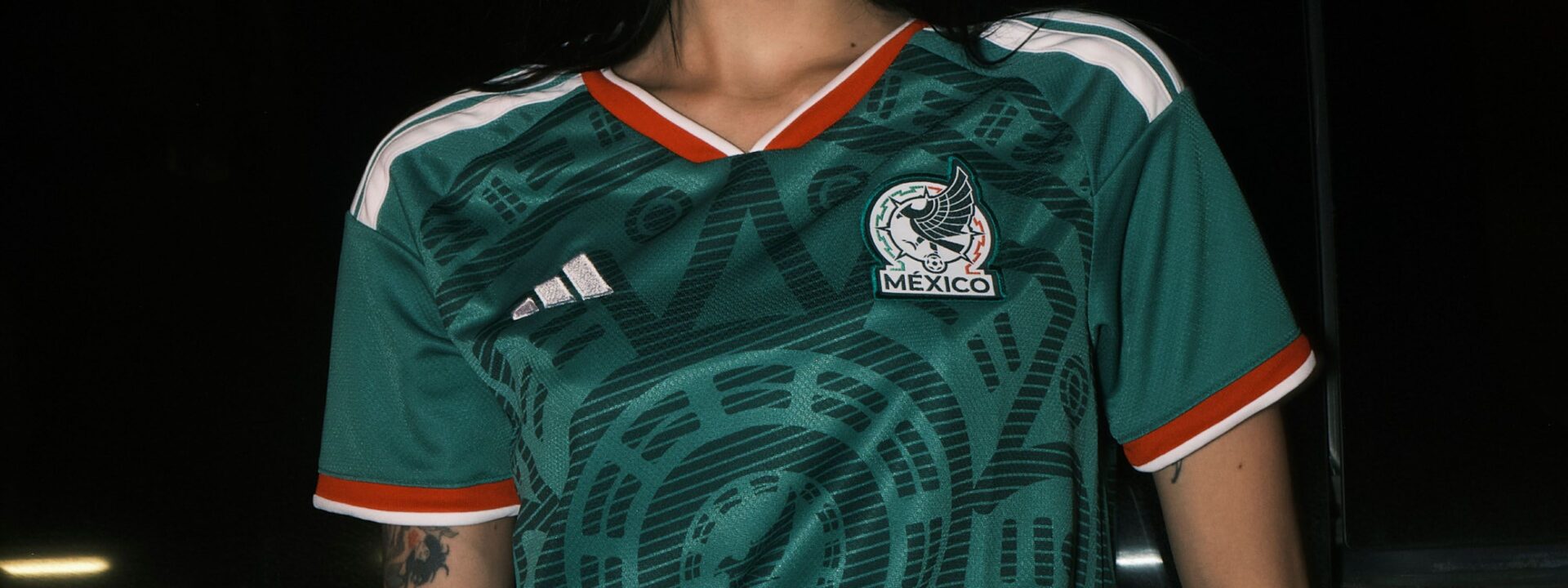
Over the next two months, brands will be competing fiercely for attention in a market even more intense than fashion week. The World Cup, featuring 48 national teams and broadcast from the US, Canada, and Mexico, will span different time zones, languages, and communities. It offers a valuable cultural stage for brands to make the most of. This comes right after a busy international marathon season, where major sports brands like Nike and Hoka fought for campaign attention, and a historic Premier League win by Arsenal FC—wearing Adidas kits—for the first time in 22 years. The stakes are high, but the opportunities are promising.
In the past, brands like Urban Outfitters and Martine Rose have used the World Cup by teaming up with artists, musicians, and athletes to tell their stories and, in turn, get a good return on their investment. Adidas reportedly spent about $67 million on its main World Cup campaign film, Backyard Legends, released in early May. In its first two weeks, the film got 5.4 million views on TikTok, 2.4 million likes on Instagram, and 4.7 million views on YouTube. “We start planning for the tournament years ahead,” says Alasdhair Willis, Adidas’s chief creative officer. “The response to the Trionda [the official match ball, designed by Adidas] and the home kit launches last year gave us a lot of confidence for 2026.”
Big-budget campaigns and product collaborations aren’t the only ways to get involved. As more players show off their personal style off the field, there are plenty of opportunities during the “tunnel walk.” “When a luxury brand matches a ‘clutch’ [washbag or accessory] with a player’s pre-game outfit, it’s a perfect example of staying relevant,” says Keenan Thomas, national account manager at youth culture agency Archrival. “It’s about showing luxury in a high-energy, real-world setting.” Thomas points to French star Kylian Mbappé, who led Jonathan Anderson’s Dior summer 2026 campaign, and England player Jude Bellingham, who has been a Louis Vuitton ambassador since 2024.
By betting on or investing in athletes, brands gain visibility through influence and sheer exposure. According to FIFA, the 2022 World Cup final between Argentina and France, held in Qatar, had about 3.5 billion viewers. That’s up from the 1.12 billion—more than half the world’s population at the time—who watched the final between France and Croatia in Russia. That same year, five billion fans out of a global population of eight billion engaged with the 2022 tournament across all media (digital or social media, satellite and cable TV, or FIFA’s platforms). In fact, according to Peter Kalmbach, senior analyst at Archrival, World Cup viewership has been steadily rising since 2006, when online viewing surpassed all other media.
This year is especially good for brands looking to tap into strong sports fan bases, says Chris Beer, senior data journalist at GWI. “Mexico is a mature soccer market, with eight out of ten consumers there following the sport,” he says, noting that Canada and the US offer fresher growth opportunities, since “less than half of people in each country currently engage with it.”
The insights platform also reports that 32% of all consumers are interested in luxury collaborations with sportswear brands. Nike has already followed this trend, launching collaborations like Palace x England x Football Beyond Borders, Jacquemus x France x Sport Dans La Ville, and Patta x Netherlands x Favela Street. Similarly, Adidas debuted its Willy Chavarria Fall/Winter 2026 collaboration during Paris Fashion Week, using the event to highlight its Trionda ball and the Copa Mundial Megaride sneaker.
So far, things look good on social media. “On Pinterest, we’re seeing early signs that the 2026 World Cup is shaping up to be as much about style as it is about sports,” says Sophie Marlow, Pinterest’s fashion and luxury lead. According to the platform’s March data, searches for “World Cup shirts” were up 840% year-over-year.Year over year, fashion-related searches also grew, including “shirt with heels outfit” (+81%), “shirt on skirt” (+33%), and “Brazil shirt outfit women” (+302%). “Together, these trends point to a new consumer mindset, where football shirts are being reimagined through a more elevated, style-first lens.”
TikTok has been named a “preferred platform” by FIFA for this edition, which makes sense. Experts agree that sports fans of all ages now expect—if not prefer—short-form video content alongside live game broadcasts, both as a supplement and complement to the main event.
“It’s not just a ‘nice to have’ anymore,” says Annie Corser, senior trends editor for pop culture and media at Stylus. She points to a 2025 survey by Morning Consult, which found that in the US, Canada, the UK, France, Germany, Italy, Spain, India, the UAE, Saudi Arabia, Mexico, and Brazil, 90% of sports fans consume additional sports content beyond the games themselves. In this era of “sportstainment,” that content includes highlight reels, sports documentaries, behind-the-scenes footage, podcasts, athlete profiles, fantasy sports, fan festivals, and more. “This is how fans want brands to show up for this World Cup—especially those without sponsor status, who need to not just react to World Cup conversations, but help shape them.”
Momentum before and after the event also matters, which is why brands have already started showing up. Levi’s has launched international team denim collections with fan-focused campaigns that tap into local culture. The rollout began in April, but it fits neatly with the brand’s established role as an official host for six matches (announced in 2022), which will take place at Levi’s Stadium in the San Francisco Bay Area. For Mexico’s collection, Levi’s worked with Mexico City-born label Tony Delfino on a campaign influenced by street culture and graphics. For the US, the lookbook was shot on an American football field and in locker rooms, featuring Kids of Immigrants co-founders Daniel Buezo and Weleh Dennis as models. For England, it was filmed as a café-style skit with talent from London-based vintage specialist 194 Local.
“The Levi’s collections with the Mexico, England, US, and France federations are about celebrating fandom in the lead-up to this global sports moment,” says Les Green, Levi’s senior director for collaborations, sports, and music partnerships. “While the product is always key—and we hope the collections become sought-after collectibles—we want this to be a moment that delights existing fans and introduces the brand to new, lifelong fans.”
Levi’s Mexico campaign.
Photo: Courtesy of Levi’s
On this point, Kalmbach highlights Asian markets, especially India and China, which have seen huge growth in soccer viewership over the last decade. The Chinese Super League has invested heavily in global talent to raise the stakes. Famously, Hulk, then a 29-year-old Brazil international, was signed by Shanghai SIPG manager Sven-Goran Eriksson in a £46 million deal in 2016. Capturing Eastern audiences will be harder than reaching the wealthier, more familiar markets of the West, but it’s still worth the effort.
Historically, World Cup activations were a staple of menswear, but recent data points to a major shift: soccer is no longer a “blokes-only” game. According to TikTok, 46% of global sports views in the first half of 2025 came from its female users. This aligns with investments seen over the years. In 2022, Lioness Leah Williamson landed a deal with Gucci, while teammate Alessia Russo followed suit, fronting the SS23 Gucci x Adidas campaign. Similarly, Calvin Klein’s 2023 campaign, Calvins or Nothing, featured women like former US pro Alex Morgan and former Japanese midfielder Mana Iwabuchi.
The mission statement
Despite its enormous reach, the World Cup isn’t easy to navigate. Ticket prices are extremely high this year; the cheapest final ticket was over $4,030, prompting New York Mayor Zohran Mamdani to push for affordable $50 tickets.New Yorkers are especially sensitive to the tournament right now because of economic uncertainty in North America. “As we saw with the recent Met Gala, many people on social media felt disconnected from these displays of wealth, unlike earlier generations who might have seen them as something to aspire to,” explains Kalmbach.
To succeed in this market, brands need to run marketing campaigns across multiple platforms, delivering a clear and consistent message. The quiet rivalry between Nike (outfitting 16 countries this year) and Adidas (outfitting 22) is a perfect example.
So far, Nike has relied on its history of competitive slogans. In a pre-launch briefing, the press saw skits featuring former soccer players Zlatan Ibrahimović and Eric Cantona. In each clip, these cult figures play up their unique personalities: Ibrahimović leans into his self-worship—he once called himself “God” in interviews—while Cantona shows the fiery spirit that made him an icon. Both act as borderline arrogant hype men, getting viewers pumped with a winner’s mindset. Nike’s 12-week campaign will also feature rising stars like Kylian Mbappé, Ronaldinho, Francesco Totti, Cristiano Ronaldo, rapper Central Cee, and even Kim Kardashian, whom VP of brand marketing Helena Thornton calls the “ultimate soccer mom.”
Kylian Mbappé for Nike.
Photo: Courtesy of Nike
On the other hand, Adidas’s film Backyard Legends—starring Timothée Chalamet, Trinity Rodman, Lionel Messi, Bellingham, Bad Bunny, David Beckham, and a group of street-footballing kids—takes a different approach. “Backyard Legends is a powerful way to show our mission of reducing negative pressure in sports,” says Willis. “It reminds every athlete of the pure joy and freedom they felt when they played without expectations, echoing our core message of ‘You Got This.'”
In these storytelling moments, both Nike and Adidas rely heavily on nostalgia. Nike recalls its Y2K campaign series with Cantona, called Joga Bonito, while Adidas draws on Beckham’s many films, like Impossible Field.
Even if younger audiences don’t recognize the references, this reflective storytelling still matters, says Corser. “For Gen Z, who connect with sports less through inherited loyalty—like team allegiance passed down by parents—and more through the social and cultural opportunities it offers, nostalgia needs to be slightly made up. It leans more toward anemoia [nostalgia for a time or place they’ve never known] than real memories,” she explains. “Adidas has been smart about this, using a snapshot of Y2K nostalgia that Gen Z likes, presented in a way that doesn’t require having lived through it.”
Similarly, Nike sticks with its mix of modern appeal and retro touches. “We balance nostalgia and innovation by creating a Nike soccer world that blends today’s athletes and youth culture with iconic stories from our history in the sport,” says Thornton. “Our job is to tell stories that reflect the principles and values that have built Nike soccer from the start, while using new creative mediums and marketing strategies that fit the world we live in now.”
The ultimate goal is to tap into romantic ideas, like heroism, courage, legacy, and resilience, or more specific themes like local pride and national identity. Burberry’s recent A Good Sport campaign is a good example, keeping the brand’s strong focus on Britishness while also appealing to soccer’s global audience. The talent choices—Lioness Williamson, South Korean soccer player Son Heung-Min, and Lucy Punch, the lead in the very British sitcom Amandaland, among others—reflect this. “A Good Sport celebrates football culture through a distinctly British lens, from the atmosphere in the stands to local playing fields and the rituals around the game,” says Burb.Erry’s chief marketing officer, Jonathan Kiman, said, “We wanted to capture the humor, energy, and atmosphere around the game in a way that feels truly British but still connects with people worldwide.”
Lioness Leah Williamson for Burberry.
Photo: Courtesy of Burberry
Always-on soccer
To successfully pull off these big cinematic campaign moments, brands need to think about digital clips and real-world versions of the message that match how Gen Z and millennials engage online, as well as their desire for culturally rich experiences.
“With 85% of fans using TikTok as a second screen during live events, and fans 42% more likely to watch live matches after seeing sports content on TikTok, the platform is helping grow fandom and bring audiences back to live experiences,” says Kristina Karassoulis, head of luxury at TikTok UK. So brands have a chance to grab attention across a cultural mix of team kits, fashion, and music, tapping into real-time reactions and creator-driven storytelling during the competition. “The World Cup conversation is already happening on TikTok, months before kick-off,” Karassoulis confirms, noting that #FifaWorldCup views in the UK have jumped over 3,000% in the last two months, while searches for “England World Cup kit” are up more than 2,300%.
In the physical world, Corser and the Stylus team have been especially interested in “fan fests” — festival-style ‘sportstainment’ experiences with a wider range of entertainment options, like fine dining, shopping, or live music. The rise of brand-hosted watch parties is a good example, as are the pub-style lock-ins that have dominated activations tied to sporting events over the past few years. For the women’s Euros last summer, Urban Outfitters took over the London pub the Old Nun’s Head, bringing in musician Romy to perform for guests. Similarly, for the 2024 Euros, Adidas teamed up with East London community radio NTS and global sneaker and streetwear retailer Size? to take over an old-school North London pub, complete with a live screening, DJ sets, a collection launch, and branded beer mats. Brands and retailers entering North America should build on ideas like these, adjusting the formats to fit the local culture.
If that raises concerns for brands worried about this year’s time zone issues — for example, many matches will air in the middle of the night in Europe — don’t worry. It’s about adapting to the specific game and balancing digital and physical approaches. “Meet fans where they are,” says Thomas. “Think ‘sunrise activations’ or high-end breakfast experiences, rather than a late-night bar vibe. A [luxury brand] watch party might feel forced in the middle of the night, so the focus should be on digital-first content that’s ready for the morning commute.”
Glocalization
Part of this thoughtful approach requires a shift toward a hyper-local — and at the same time global — strategy. Adidas’s Willis agrees. “While reaching people is important, it’s key to have cultural relevance, whether that’s a Stan Smith-curated dinner for Paris Fashion Week, our partnership with Someone Somewhere [a B-Corp social enterprise that employs rural artisans] for our Mexico third jersey, or the World Cup activity program we have planned for those in Brooklyn,” he says. “For us, it’s not about choosing between local or global; it’s about blending the two.” To that end, along with these examples, Adidas ran a big activation in March in World Cup host city LA, called the Roadblock Party. For this, the away kits were launched during a fake traffic jam (very LA), with rapper Baby Keem and producer Kaytranada performing, plus ambassador Gabbriette, Kendall Jenner, Barry Keoghan, and others showing off the looks in action.
Rapper Baby Keem and producer Kaytranada performed at the Adidas activation in March in World Cup host city, LA.
Photo: Courtesy of Adidas
Kalmbach also stresses the value of ‘glocality’, pointing to German beer as an example.Gardens and US soccer bars are among the top venues, though it’s noted that marketing opportunities in South America and Asia are still underdeveloped. “By speaking to each audience through local cultural customs, brands show they truly understand the people they’re engaging with,” he says. Third or even fourth spaces—where real-world experiences bring online interests into physical settings—are certainly important. So are the subtle details in marketing materials. For example, Nike’s video campaign for the Dutch national team focuses on diasporic identity, especially Surinamese culture, featuring legendary former player Edgar Davars in a traditional drumming performance.
For brands targeting big spenders, this blend of global and local appeal makes the World Cup especially attractive to wealthy jet-setters and luxury hospitality fans. “The World Cup is expected to attract 1.2 million visitors, who could spend around $6 billion on travel-related expenses,” says Marguerite Le Rolland, head of footwear and apparel at Euromonitor. In fact, sports events are a major driver of travel spending because attendees are passionate about the event. The tourism dollars benefit a wide range of businesses, from hotels to shops. “Many visitors will also extend their stays beyond the event to explore the destination, further boosting tourism spending in host countries,” Le Rolland adds.
One thing is clear: those who can strike a balance between appearing worldly while being deeply connected to the most international sport of all time will succeed. If they can do this across multiple platforms with clear messaging, they’ll earn serious brand loyalty, positive buzz, and hopefully strong sales. The game is on.
Frequently Asked Questions
Here is a list of FAQs about Which brand will win the World Cup based on the context of brand sponsorship visibility and marketing success during the tournament
BeginnerLevel FAQs
1 What does a brand winning the World Cup actually mean
It doesnt mean a brand plays soccer It means a brand gets the most positive attention sales or recognition from its sponsorship or advertising during the tournament
2 Which brands usually sponsor the World Cup
The biggest global sponsors include Adidas CocaCola Visa McDonalds HyundaiKia and Budweiser National teams also have their own sponsors like Nike or Puma
3 Does the winning teams jersey brand automatically win
Often yes If a team like Argentina or France wins their kit manufacturer gets a huge boost in sales and brand image Its a very strong indicator
4 How do brands benefit from the World Cup
They get massive global TV exposure social media buzz and emotional connection with fans People buy jerseys drink sponsors sodas and remember their logos for years
5 Can a brand lose the World Cup
Yes If a sponsor is linked to a team that loses in a scandal or if their ad campaign is widely disliked their reputation can take a hit
Intermediate Advanced FAQs
6 Is it better to sponsor the tournament itself or a specific team
Sponsoring the tournament gives broad safe exposure Sponsoring a specific team is riskier but can lead to a massive emotional win if that team goes all the way
7 How do brands measure success during the World Cup
They look at media value social media engagement web traffic and actual sales of World Cuprelated products
8 Why do some brands like Adidas and Nike compete so fiercely
They are the two biggest sportswear companies Adidas has a long history with FIFA while Nike sponsors many top national teams Winning the kit war drives millions in jersey sales and global prestige