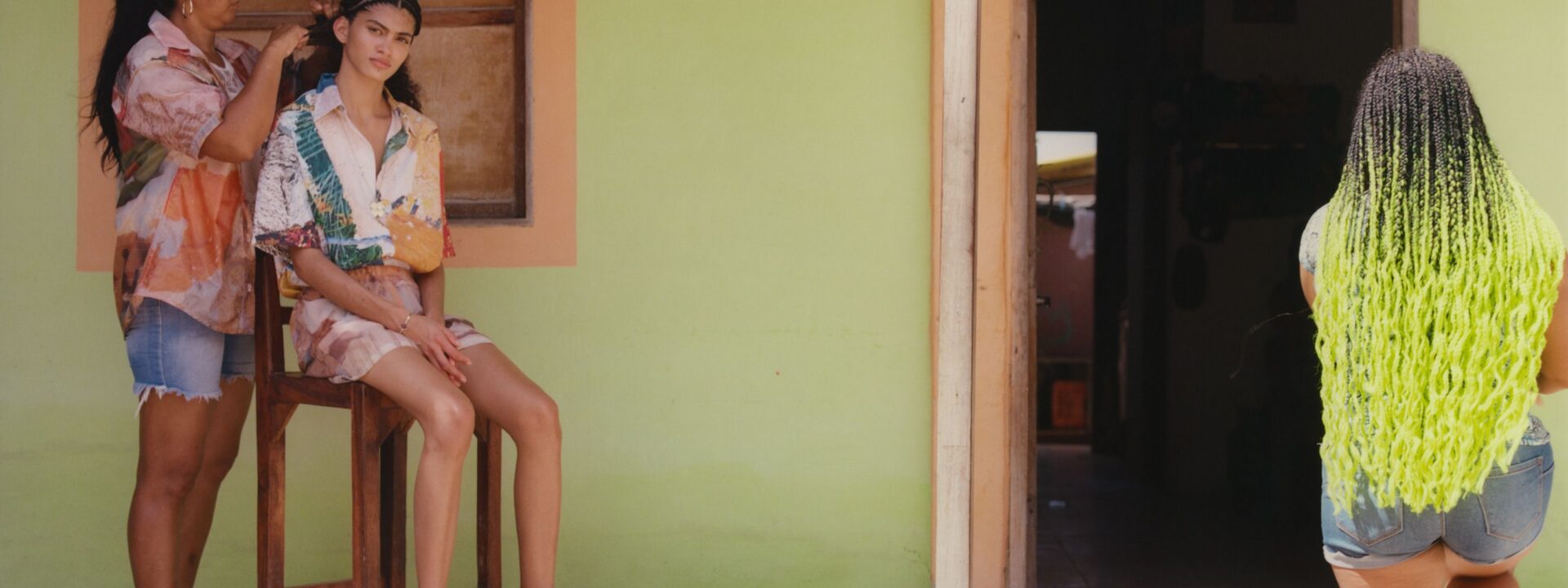
Published by Guest Editions, Venezuelan Youth is a collection of photographs taken by Silvana Trevale between 2016 and 2025. It offers a portrait of a complex country, seen through the honest and direct perspective of its children and teenagers.
Trevale left Venezuela when she was young, and she sees this project as both a tribute and a way to understand her homeland beyond the common stories of hardship. Over the years, she spent time with her subjects, building trust and lasting relationships. Facing severe conditions like extreme shortages of food and medicine, which have caused many deaths around them, Venezuelan youth move from innocence to a sharp awareness. This often leads to a stoic attitude more commonly associated with adults.
Although driven by Trevale’s nostalgia for her homeland and her sadness about the difficulties her people face, the project transforms these feelings into a strength. This allows her to interpret reality with hope, understanding, and joy.
A key member of the PhotoVogue community, Silvana Trevale discusses her project and the process behind it.
How do you find balance in portraying youth between lightness and the harshness of the conditions they’re exposed to from an early age?
Hopefulness and faith in a better future for themselves and for Venezuela shaped much of the narrative. I approached this project through the eyes of the youth—a mix of innocence, the hope that everything will be better, and their strength in remaining hopeful despite their reality. Their lives are often very complex, but when I spoke to them, you could still sense that alive innocence and joy, even though they face really harsh times.
That is what shaped and drove the project. I wanted to capture that innocence and keep the lightness of being a kid alive through the images. I feel I was able to do that through the care, hopefulness, and tenderness I approached the project with, because I carry so much love for them and for Venezuela.
What aspects of Venezuela became clearer to you after you left, things you couldn’t notice while you were living there?
Working on this project with people in Venezuela, one of the main things that became clear is how much I missed my country. Being far away and having left at 17, this heartbreak felt raw. I started to miss very small things—the streets, my family and friends, but also the smells of the country and its light. These little details became more important and vivid in my mind, shaping what I longed for. The young Venezuelans I met each time I returned, our time together became a way to reconnect with what I had forgotten or missed.
Another thing that became very clear is the widespread international misinformation about Venezuela and the situation we are facing. I remember speaking to many people about Venezuela, and the information they were getting from news channels felt very different from the reality my family and the people I met were living. This contrast motivated me to push the project further, to share the experiences of the people and the country I witnessed.
It also became apparent that our traditions are not spoken of or celebrated as much as they should be. This is why, in the later years, the project developed into a way to document and preserve our traditions, celebrations, music, and dance—honoring the culture, the people who keep it alive, and the joy it brings.
How did you avoid falling…Do you feel nostalgia for the country your parents lived in?
Because I never lived it myself, that nostalgia is very faint—it exists only through my parents’ memories. Their recollections of Venezuela often feel distant from my own experiences and from what I see each time I return. I try not to get lost in that nostalgia by staying present when I’m back home, immersing myself in places where I meet the people I photograph and listen to their stories.
Even though the realities I encounter are harsh and shape this project, the hopefulness that young people carry to move forward—and the admiration I feel for them—drives and overshadows any feelings I might have for a Venezuela that no longer exists. Still, there is always a faint nostalgia for what was, what could have been, and what isn’t.
Respiro, 2019 © Silvana Trevale. Courtesy Guest Editions
© Silvana Trevale 2025
Could you share the story behind one of the pictures in the book?
One image that holds a special memory is the photo of Roberta with her trumpet. It was taken during a photoshoot for Vogue Latam—the first time Vogue returned to Venezuela in many years. Toward the end of the day, we heard a trumpet melody in the distance.
The sound was coming from Roberta, playing barefoot on her porch. She lives in what I consider one of the most beautiful buildings in Caracas, on Avenida Libertador. The scene was hypnotizing; she played so beautifully. As her father told us, Roberta was part of “El Sistema,” Venezuela’s emblematic social-action orchestra program, and struggled with stage fright. He encouraged her to play then and there as a way of facing it, surrounded by the scene we were creating. We immediately fell in love with her. I took her portrait knowing it would be part of this long-term project—it embodied the soul of it perfectly.
You can preorder the book here.
Venezuelan Youth will launch on 7 May 2026 and be displayed at Guest Editions’ East London project space from 7–30 May 2026.
Frequently Asked Questions
Of course Here is a list of FAQs about Venezuelan Youth A Portrait of Resilience and Hope designed to sound like questions from a curious reader
Beginner General Questions
1 What does a portrait of resilience and hope actually mean
It means focusing on the strength creativity and determination of young Venezuelans who are building their futures despite the immense economic political and social challenges in their country Its a story of overcoming adversity
2 Arent most stories about Venezuela just about crisis and people leaving
While the crisis and migration are major realities this perspective highlights the millions of young people who stay They are actively creating solutions sustaining their communities and redefining what it means to be Venezuelan
3 What are the biggest challenges facing Venezuelan youth today
The main challenges include limited access to quality education and jobs hyperinflation making basic goods unaffordable public service failures and the emotional toll of family separation due to migration
4 Can you give a simple example of this resilience in action
Yes Many young people have turned to entrepreneurshipstarting small businesses like baking digital freelancing or repair servicesto generate income where formal jobs are scarce Others volunteer in their neighborhoods to address local problems
Intermediate Deeper Questions
5 How has the mass migration of friends and family affected the youth who remain
It creates a phenomenon called collective grief Young people often experience loneliness increased responsibility for aging relatives and a sense of uncertainty about their own futureto stay or to leave Yet many forge stronger local support networks
6 Is there a specific cultural movement driven by the youth
Absolutely Theres a vibrant explosion of independent music art and digital content Genres like trap criollo address social issues while young filmmakers and visual artists use their work to document reality and express hope often sharing it globally online
7 What role does technology and the internet play for them
Its a lifeline and a tool They use it to access online education find freelance work for international clients stay connected with diaspora family and mobilize for social causes Digital literacy is a key skill for survival and opportunity