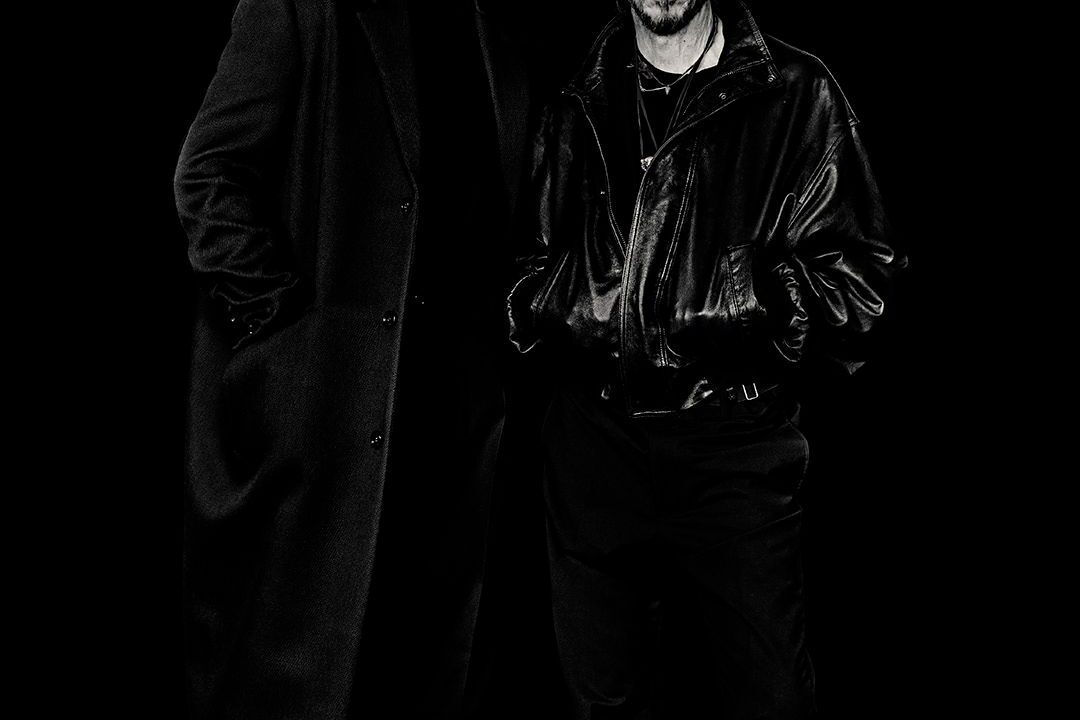
And… roll credits! Earlier tonight, Pierpaolo Piccioli presented his second women’s ready-to-wear collection for Balenciaga. Titled “ClairObscur,” it aimed to illuminate character by exploring shadows, partly inspired by the dramatic tenebrism of Caravaggio. To bring contemporary drama into his “fresco of humanity,” Piccioli partnered with Sam Levinson, the creator of the TV series Euphoria, to frame the show.
The two friends have been working on this Balenciaga project for several months. At the same time, Levinson has been preparing for the third season of his magnum opus, which returns to HBO on April 12 and is set five years after the last season ended. We’ve already seen a trailer for the series, featuring the return of characters played by stars like Zendaya, Sydney Sweeney, Jacob Elordi, Hunter Schafer, and Colman Domingo to Levinson’s world and a “cascade of trouble.”
Shortly before the show, Piccioli and Levinson hopped on a call to shed light on how the filmmaker came to direct the environment for the fashion designer’s new-season story. They also discussed how that story involved “merging” their sensibilities by incorporating sounds and imagery from Euphoria into the world of Balenciaga. The lightly edited script below tells that tale.
Every story starts somewhere. Where did yours begin?
Sam Levinson: Pierpaolo has been part of my life since before we even met. When my wife and I got married, she wore a dress he designed, so he was there for the most memorable moment of my life. We officially met during season two of Euphoria when he visited us on set. We hit it off immediately. Pierpaolo is this easygoing, warm, curious person. We started talking about cinema, photography, art, life, and human beings—all the good stuff.
Pierpaolo Piccioli: It was a very natural connection, I have to say. I was kind of obsessed with Euphoria and everything Sam had done and was doing. This collaboration wasn’t planned; it just happened naturally.
And what story are you telling through the collaboration?
Piccioli: With this collection, I wanted to capture a picture of this generation. I feel that what Sam does with all his shows, especially Euphoria, is find the light in darkness from a unique angle—one that’s human and very emotional. It’s not about judging, criticizing, or celebrating; it’s about the humanity of the characters and their parts. That’s the perspective I want to take my own picture from. It’s like a fresco of humanity. What I want to do with fashion is what Sam does with cinema: offer a human take on this moment, which I think is important. We’ve been talking about finding light in darkness, trying to be resilient, persevere, and seize new opportunities.
Levinson: I think that’s how we communicate. If we can speak to the light, hope, aspiration, and joys within all of us, and people are able to listen, they can open up and receive. That’s what connects us. What I really admire about Pierpaolo is his ability to take an idea like that and distill it into something practical. It goes from the emotional to the practical, the personal to the universal. Watching that process has been amazing.
Piccioli: So we’ve been talking about the general atmosphere and how we could capture this big picture of the generation.
Levinson: Pierpaolo was one of the first people I shared the new episodes of Euphoria with. I wanted to hear his thoughts and start exchanging ideas about music, imagery, color, and character. So I sent them to him very early on.
No spoilers, please!
Piccioli: Sam’s perspective is that you never have complete darkness or complete light; you always have these shad…Sam’s perspective is that you never have complete darkness or complete light; there are always shades in between where you can find a human connection. You connect through emotion. So something deeply personal in the characters and their roles can become universal because the connection lies in the emotions they evoke, not just the stories themselves. We’ve been discussing that moment at sunset, when you’re between light and dark, as day ends and night begins. While the sun remains constant, the moon is always changing—that’s where the interest lies: in the opportunities.
“Sam’s view is that you never have total darkness or total light; you always have these shades in between where you can find a human connection,” explains Pierpaolo Piccioli.
Practically, how did the collaboration work? What was the scope and process?
Levinson: There’s the design of the show itself, in the imagery before and after. We have a few original music cues from the show by Hans Zimmer, Labrinth, and Rosalía. Pierpaolo has been taking these ideas and running with them, and I’ve been doing the same by going out and shooting footage. Then we map it all together so we experience it as one, seeing everything merge.
Piccioli: At the start, you see frames from Euphoria in an installation that feels very emotional and cinematic. At the end, Sam is filming the faces from the show. So in a way, the frames from Euphoria will collide with the people walking in the show, merging the two perspectives.
Pierpaolo, how did you translate these ideas and themes into the collection itself, and when did you start developing it?
Piccioli: Right after the October show. I created a new framework for the Balenciaga woman in October because I felt we needed to redefine her. Right after that show, I felt I had to redefine the world around Balenciaga—to create a sense of community, a point of view, a more human perspective. And I immediately thought of Sam.
So even in that first show, you were acting like a showrunner, storyboarding your main character.
Piccioli: I feel an urgency to depict not just a portrait of the woman, but also a perspective on Balenciaga and the environment of this moment. I always remember that my job is to deliver a vision of beauty connected to our time. So for me, it was really urgent to offer a point of view about this moment.
Sam, Pierpaolo uses character to shape his fashion. Do you use fashion to shape your characters?
Levinson: When I’m building a character, I always imagine what they wear, how they move, how they sound. Fashion reveals a lot about a person, and it’s also a way to tap into a character’s inner desires. So it’s embedded in everything I write. Then it’s about how the fashion fits within the world—that juxtaposition. If someone is dressed up in a casual space, for example, there’s humor in it.
Watching Pierpaolo work, I’m struck by the elegance of his mind and how he distills these ideas. He looks at a world of clothing and materials and says it’s about the tension between light and dark and how that reflects within the individual. That way of seeing is inspiring. I tend to focus on the individual details—I’m in the weeds with a character—while he has this more objective perspective that reflects emotion.
Piccioli: It’s about language and technique. Having a narrative, a point of view, and a perspective is always important. Then you dive deeper into your own work and find your way. Of course, the more talent you have, the better: you have to hide your technique to achieve that simplicity, that magic. Sam has that. I’ve been on set and seen them working 12 hours a day. It’s a huge amount of technique. It’s also about having the talent and the…The execution must be as strong as the idea. Sam, do you see potential for creating more stories set in the world of fashion?
Levinson: I believe if we can better connect these worlds and build more of a story and universe from our respective work, then reaching more people becomes infinitely possible. What’s been beautiful for me in this experience is serving Pierpaolo’s vision. That’s been truly exciting and liberating, and it brings me immense joy. I have such deep admiration for Pierpaolo’s work, and collaborating has given me something profoundly emotional and thrilling.
Piccioli: I feel the same! I hope we can offer this portrait of humanity for our time.
Frequently Asked Questions
Of course Here is a list of FAQs about the collaboration between Pierpaolo Piccioli and Sam Levinson merging Euphoria with Balenciaga
General Beginner Questions
1 Who are Pierpaolo Piccioli and Sam Levinson
Pierpaolo Piccioli is the former Creative Director of the Italian luxury fashion house Valentino known for his romantic colorful and inclusive designs Sam Levinson is the creator writer and director of the HBO teen drama series Euphoria known for its raw stylized and often dark portrayal of adolescence
2 Did they actually collaborate on a project
No there has not been an official direct collaboration or joint project between Pierpaolo Piccioli and Sam Levinson The idea of merging their worlds is a popular topic of discussion among fashion and pop culture fans speculating on what a creative fusion of Euphorias aesthetic with high fashion would look like
3 What does merging Euphoria with Balenciaga even mean
It refers to the conceptual blending of two distinct aesthetics the chaotic emotional hyperstylized and characterdriven wardrobe of Euphoria with the avantgarde sculptural and often subversive design philosophy of Balenciaga Its about imagining the shows characters in highfashion contexts or how the shows vibe could influence a luxury collection
4 Why do people link Balenciaga to Euphoria
Balenciagas current era led by Demna is famous for its dystopian oversized and memeworthy style This resonates with Euphorias own exaggerated trendsetting and sometimes unsettling approach to fashion as a form of armor and selfexpression for its characters Both are seen as defining the visual language of their respective fields in the 2020s
Advanced Conceptual Questions
5 How would Picciolis style fit into this mix since he was at Valentino not Balenciaga
Thats the interesting part of the hypothetical Piccioli represents a contrasting vision one of poetic beauty couture craftsmanship and vibrant Pink PP romance The discussion imagines what would happen if