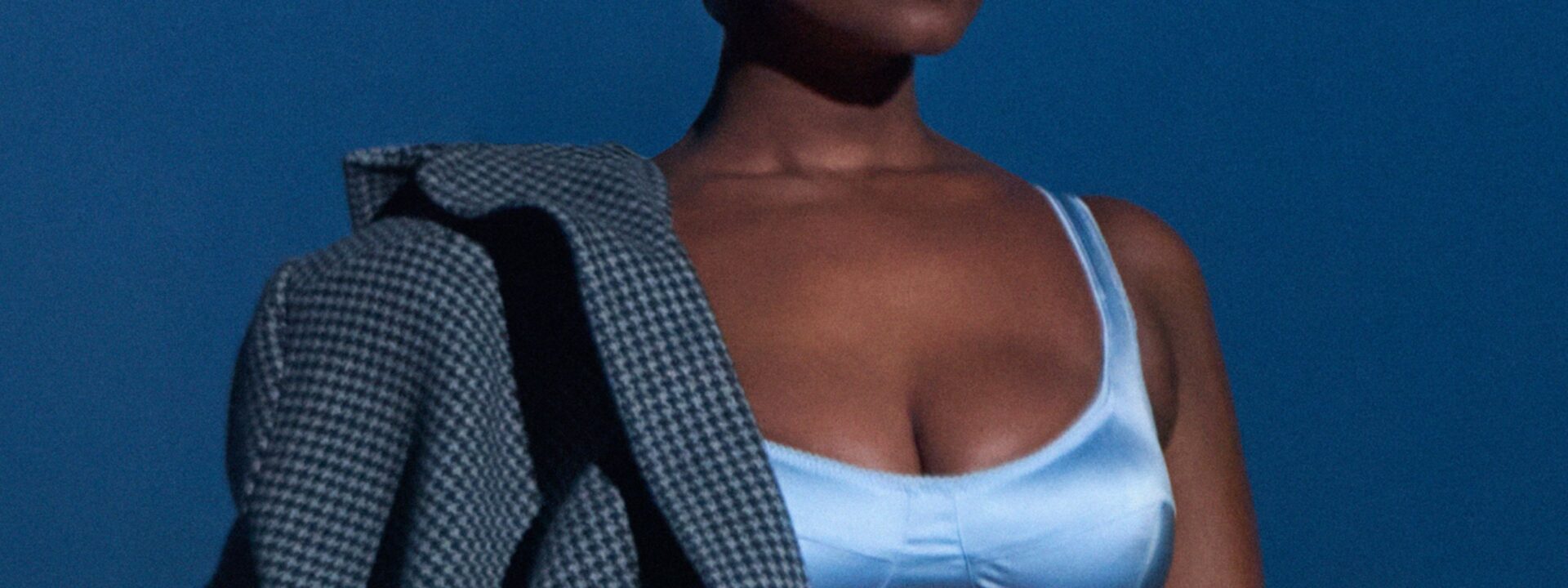
When Kelela released “idea 1,” the first single from her latest album New Avatar, it was clear she was stepping into a new musical phase. Her fans—known as Kelelians—have come to know her for sultry R&B vocals paired with experimental electronic production. But “idea 1,” with its guitar-driven sound and visuals of Kelela sporting icy white hair and bleached eyebrows, feels less like a departure and more like a return to her roots. Long before Cut 4 Me or Take Me Apart, Kelela started out in an indie band called Dizzy Spells, whose music has nearly vanished from the internet (only a broken Myspace page remains). One of the songs on New Avatar was co-written with her longtime collaborator A.K. Paul over a decade ago. Originally meant for Take Me Apart, the track was set aside after creative differences with a producer led Kelela to take that album in a different direction.
In a conversation with Vogue, Kelela talks about why now felt like the right time to embrace her indie-rock roots, working with Fousheé and PinkPantheress, and how her evolving sound is shaping her approach to fashion.
Vogue: If your last album, Raven, was about setting boundaries, what is New Avatar about?
Kelela: I’d say Raven was about setting boundaries. This one is also about boundaries. I’m not saying anything wildly different on this record. I’d just say maybe I’m saying it with more confidence. It’s like, “Listen. I’m not going to play games anymore. I’m not trying to lure you into this, okay?” I’m not being like, “Come on.” It’s not that. It’s more like, “Get over here! You’re getting on my nerves!”
You wrote “outta time” with A.K. Paul 10 years ago. What was it like holding onto that song for so long?
I’d say it feels like it built my stamina. I feel like my patience is strong. I’m much more comfortable taking my time. There’s a right moment for everything. I’m glad I waited until now because it feels like the right album for it, and the timing feels right. For me as an artist, the foundation I’ve built up to this point makes the song land differently than it might have before. But also, I think people are more ready for that song now in certain ways. It references things that happened a long time ago. It’s true that there’s a lot more music right now that wants to go there, maybe more than there was 10 years ago.
Besides A.K. Paul, you have some fun features on this album. I was thrilled to see you collaborate with PinkPantheress again, and it was great to see Fousheé. What was it like working together?
With PinkPantheress and Fousheé, I’m trying to pick people I respect and trust from the start—their perspective, their vision for themselves, their range. I trust their taste. I played Fousheé a few other songs, more guitar-driven ones, and I thought she might want one of those. I also played her the song she’s on, which is more dance-oriented. She said, “Oh, I want to be on this.” And I thought, “I love that you chose that.” Then she sent her part in about 20 minutes.
I noticed a sneaky La Chat sample in “idea 1,” which made me curious: Is there any other “ear candy” on the album you want to share with fans?
The clue is: “You know what?”
What were you listening to while preparing to make the album?
I was revisiting a lot of music I listened to during a more formative time for me. I made a playlist called “White Bag,” because I thought, I’m about to get into my white bag. It’s not about all guitar music being a white thing, but socially, there’s an implication. There’s just a way that white people also rate you more.When you pick up a guitar. Like Metric, Morning View by Incubus, this band called Buke and Gase, and the Fiery Furnaces—I used to be really obsessed with them. Laura Marling was on there too. It’s an important playlist. As soon as I told my friends, they were like, “Um, excuse me, Kelela. I’m making my own ‘white bag’ playlist.”
I want to quickly talk about fashion. Since this album reflects a shift in sound, will that also show up in what you wear on stage?
I worked with Yasser Abubeker on the creative direction for this record, and I told him I really wanted it to feel like it was set in New York. For me, I just wanted to say something about the place I actually live in and the context of my real, everyday life. And there are several moods I’m in during any given week, you know? There’s the sweatpants moment, just going around the corner to the coffee shop. But it’s still a “stomp.” There’s also a lunch moment. I’d say there’s a little SoHo shop or stomp moment. There’s a Chinatown walk. There’s a runway happening pretty much all the time in New York. They’re just different runways.
I still think about some of your looks with Maximillian Davis, like the hooded orange outfit you wore a few years ago at your BRIC concert in Prospect Park.
That Ferragamo look—he killed it. He’s so talented. He has so many brilliant ideas. And it’s stuff I actually want to wear. He just knows how the girls want to feel. I’m down for a suit, and I love clothes that are structured and make me feel that way. But he does such a great job of making us feel comfortable, like physically comfortable. Some of the silhouettes, like even what I’m wearing on the cover of In the Blue Light, it’s another one of those moments that feels like, damn, that looks so easy. I think that’s really cool—to do something like that at a heritage brand like Ferragamo. He absolutely nailed it.
You always release a remix album. Do you already have remixes lined up for New Avatar? I’ve heard DJs playing remixes of “linknb” in Brooklyn clubs!
Not yet. We make a long list of all the people we might want to do a remix. The purpose of the remix project is to highlight people who are incredible but might be in the underground and aren’t as visible as I think they should be. And especially to introduce young Black people to other young Black producers and artists. So we’ll see!
This conversation has been edited and condensed.
Frequently Asked Questions
Here is a list of FAQs about Kelelas discussions on boundaries collaboration and her album New Avatar
General Background
1 What is New Avatar about
Its Kelelas vision of a new evolved self The album explores themes of selfprotection reclaiming power and finding clarity after pain wrapped in her signature blend of RB electronic and club music
2 Why is Kelela talking so much about boundaries right now
Shes been very open about how the music industryespecially as a Black woman in electronic musicoften demands constant giving New Avatar is her way of saying that setting limits is necessary for survival and creativity
3 How is this album different from her previous work
Raven was about healing and release New Avatar is about the next step actively building a new identity with clear rules for how she wants to be treated and how she wants to work
Boundaries SelfProtection
4 What does setting boundaries mean in Kelelas context
It means saying no to unpaid labor emotional exhaustion and creative exploitation For her its about deciding who gets access to her energy time and musicand for what price
5 Is she saying she doesnt want to collaborate anymore
No Shes saying she wants to collaborate differently She wants partnerships that are mutual respectful and transparentnot onesided where she gives everything and gets little in return
6 Whats a practical example of a boundary shes set
Shes stopped doing free or lowpay festival appearances just for exposure She also requires clear contracts and credit agreements before any collaboration begins
Collaboration Creative Process
7 Who did she collaborate with on New Avatar
She worked with a tight circle of longtime collaborators and new producers who understood her vision including Asmara Bambii and others from the underground club scene
8 How does she choose collaborators now
She looks for people who respect her creative control communicate clearly and are willing to be vulnerable without taking advantage of her She avoids genius types who want to dominate the room