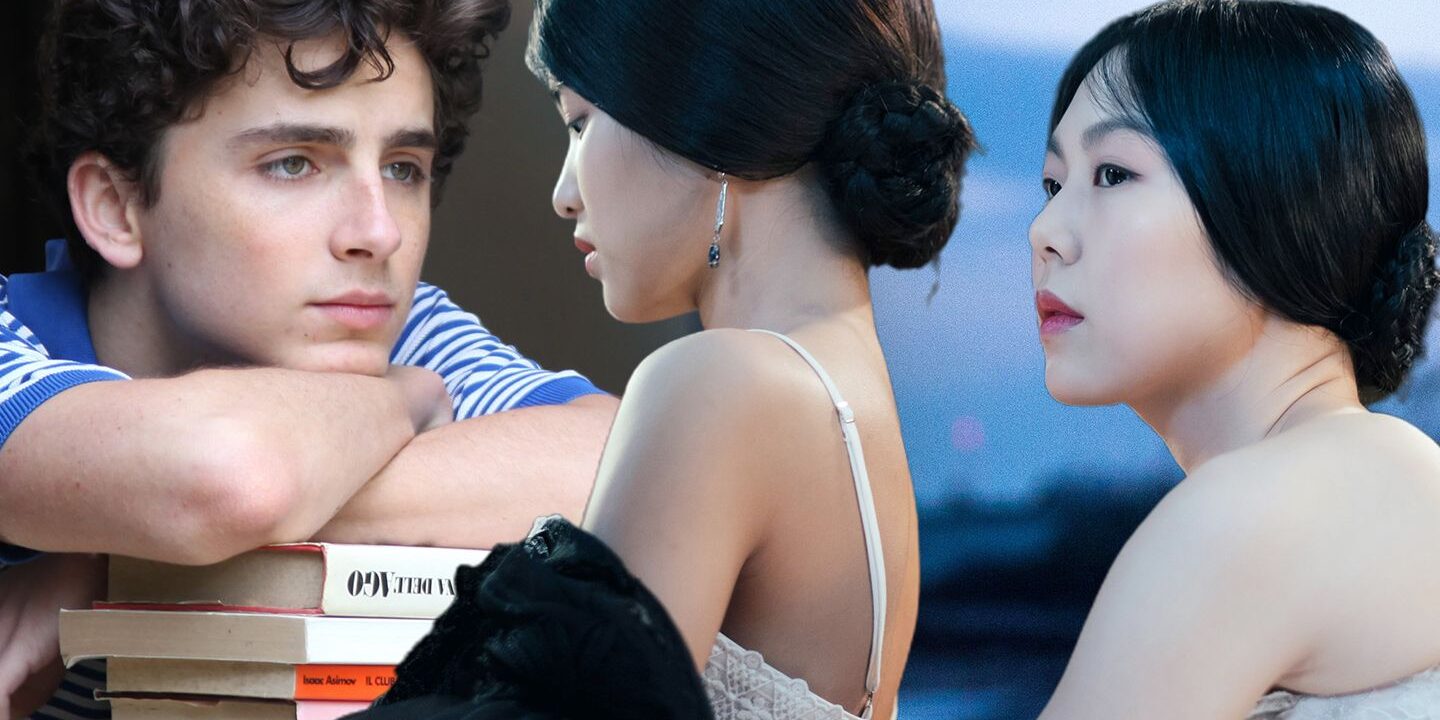
Is queer cinema a meditation on forbidden love, like the kind explored in films such as Tea and Sympathy or Maurice? Is it defined by the scrappy, DIY spirit of Derek Jarman in the 1980s, or the New Queer Cinema movement of the 1990s, led by directors like Gregg Araki and Gus Van Sant? Or are the best examples found in the new age of queer cinema we’re seeing in the 21st century, as major studios finally start backing LGBTQ+ stories on screen, and films like Barry Jenkins’s Moonlight win the Best Picture Oscar?
At the end of the day, the magic of queer film is its ability to change and adapt. It can be a heartfelt story about two trans sex workers shot on an iPhone, like Sean Baker’s Tangerine; a gripping documentary that sheds light on a forgotten part of queer history, like Jennie Livingston’s deep dive into ballroom culture in Paris is Burning; or a lavish studio film with a star-studded Hollywood cast, like Tom Ford’s A Single Man. Here, we’ve gathered all our favorite LGBTQ+ films, from overlooked underground gems to flashy, big-budget spectacles.
Pillion (2025)
Harry Melling and Alexander Skarsgård in Pillion.
Courtesy Everett Collection
Fast-paced and unapologetically kinky, Harry Lighton’s Pillion follows Colin (Harry Melling), a shy gay man living with his parents in the London suburbs, who suddenly finds himself in a sub-dom relationship with Ray (Alexander Skarsgård), the moody and somewhat mysterious member of a local gay biker gang. The result is a strikingly original and surprisingly moving story of self-discovery. —Marley Marius
Love Lies Bleeding (2024)
Katy O’Brian and Kristen Stewart in Love Lies Bleeding.
Photo: Courtesy Everett Collection
Kristen Stewart and Katy O’Brian shine in this queer crime thriller about a bodybuilder on her way to a convention in Los Angeles who falls for a gym owner. Soon, her family’s criminal past comes back to haunt them both. More movies about extremely muscular lesbians, please! —Emma Specter
I Saw the TV Glow (2024)
Justice Smith and Brigette Lundy-Paine in I Saw the TV Glow.
Photo: Courtesy of A24
Jane Schoenbrun’s A24 debut centers on two lonely high school kids who become obsessed with a late-night TV show that works (brilliantly, I might add) as an allegory for trans identity and belonging. In his review, Vogue deputy editor Taylor Antrim praised the film as a prime example of “eerie, yearning, piercingly nostalgic indie filmmaking.” Hopefully, we’ll have many more queer and trans films from Schoenbrun to compare it to in the future. —ES
Bottoms (2023)
Ayo Edebiri and Rachel Sennott in Bottoms.
Photo: Courtesy Everett Collection
Two unpopular queer high schoolers start a fight club to get closer to their cheerleader crushes in this foul-mouthed, slightly ridiculous, and delightfully fast-paced comedy from Shiva Baby director Emma Seligman. The whole cast is perfect, but Ayo Edebiri might be the standout when she lands a right hook. —ES
Fire Island (2022)
Matt Rogers, Zane Phillips, Tomas Matos, Joel Kim Booster, Torian Miller, and Bowen Yang in Fire Island.
Photo: Courtesy Everett Collection
This (very loose) adaptation of Jane Austen’s Pride and Prejudice, from director Andrew Ahn and writer and star Joel Kim Booster, follows a group of gay friends on their yearly summer trip to the iconic queer vacation spot Fire Island. They soon realize their sunny days might be numbered. There’s plenty of romance in Fire Island, but the film truly shines in its portrayal of the ups and downs of queer friendship. —ES
Tár (2022)
Cate Blanchett in Tár.
Photo: Courtesy of Focus Features
It’s hard to think of a recent queer film that has sparked more discussion than Tár, Todd Field’s psychological drama about a world-famous conductor facing allegations of misconduct. Cate Blanchett brings so much range and depth to Lydia Tár that the character never feels like a simple villain. The film’s exploration of queerness and gender (“I’m Petra’s father,” anyone?) is also thought-provoking.It’s important to remember that members of the LGBTQ+ community are fully capable of causing harm. —ES
Benediction (2021)
Jeremy Irvine and Jack Lowden in Benediction.
Photo: Courtesy of Everett Collection
Jack Lowden gives another powerful performance as Siegfried Sassoon, a decorated WWI soldier turned government critic and celebrated poet, in Terence Davies’s Benediction. The film shifts between sharp wit and deep sadness, following Sassoon (and his love affairs) as he moves through England’s postwar aristocratic, literary, and theater circles, searching for some kind of redemption. —Lisa Wong Macabasco
The Power of the Dog (2021)
Kodi Smit-McPhee and Benedict Cumberbatch in The Power of the Dog.
Photo: Courtesy of Netflix
Set in 1920s Montana, The Power of the Dog explores the tensions and secrets that arise when a wealthy rancher (Jesse Plemons) brings his new wife (Kirsten Dunst) and her son (Kodi Smit-McPhee) to live with his gruff cowboy brother (Benedict Cumberbatch). This slow-burning look at toxic masculinity earned 12 Oscar nominations. Jane Campion’s film sparked debate about whether it had a “beautiful, indefinable queerness” or “a queer problem,” as well as discussions about straight actors playing queer characters. —LWM
Disclosure (2020)
Laverne Cox in Disclosure.
Photo: Courtesy Everett Collection
Laverne Cox narrates this documentary about the history of trans representation on screen. It features trans celebrities like Alexandra Billings, Trace Lysette, Michaela Jaé Rodriguez, Zackary Drucker, Lilly Wachowski, and Ser Anzoategui, who discuss how—and whether—the experiences of trans and gender-nonconforming people in Hollywood have changed over the last few decades. —ES
Shiva Baby (2020)
Molly Gordon and Rachel Sennott in Shiva Baby.
Photo: Courtesy Brigade Publicity
Who died? Does it matter? From Emma Seligman, Shiva Baby is a comedy known for its unique story, clever dialogue, and outstanding performances—especially from Molly Gordon, Dianna Agron, and star Rachel Sennott. Sennott plays Danielle, a bisexual college senior who sits shiva with her family after sleeping with her sugar daddy. But her sugar daddy is also at the shiva, along with his “Malibu Barbie” wife and screaming child, and so is Danielle’s ex-girlfriend. Smart and darkly funny, Shiva Baby already feels like a classic. —Gia Yetikyel
Portrait of a Lady on Fire (2019)
Noémie Merlant and Adèle Haenel in Portrait of a Lady on Fire.
Photo: Courtesy Everett Collection
Already skilled at capturing budding queer desire on screen—check out 2007’s Water Lilies and 2011’s Tomboy if you haven’t—Céline Sciamma made her most sweeping romantic film yet with Portrait of a Lady on Fire. This period drama draws extraordinary emotion from perfect restraint. Noémie Merlant plays Marianne, an artist hired to paint the portrait of a young woman (Adèle Haenel) who is being married off to an Italian nobleman. As the two women slowly become friends, that friendship turns into a brief but passionate love affair—and some of the most stunning filmmaking of the decade. —MM
Rafiki (2018)
Sheila Munyiva and Samantha Mugatsia in Rafiki.
Photo: Courtesy Everett Collection
Named after the Swahili word for “friend,” this Kenyan drama from Wanuri Kahiu follows two young women in Nairobi as they flirt and eventually build a romance in a community with strict anti-gay laws. (Sadly, these laws are all too real—Rafiki is banned in Kenya.) The film is bright, intoxicating, intimate, and full of color. Once you’ve watched it, the relationship between Kena and Ziki is hard to forget. —ES
The Miseducation of Cameron Post (2018)
Forrest Goodluck, Sasha Lane, and Chloe Grace Moretz in The Miseducation of Cameron Post.
Photo: Courtesy Everett Collection
Desiree Akhavan is known for vividly portraying contemporary queer life in her TV series The Bisexual, but in this film, she tackles the dark subject of conversion therapy….to devastating effect. Chloë Grace Moretz plays a young woman sent to a Christian conversion therapy camp called God’s Promise after she’s caught having sex with a girl at homecoming. Watching her move through trauma toward the healing power of queer community feels deeply resonant. —ES
Duck Butter (2018)
The poster for Duck Butter.
Photo: Courtesy Everett Collection
The chemistry between Alia Shawkat and Laia Costa practically jumps off the screen in this lighthearted but thoughtful film. It follows two women who decide to spend 24 hours together to see if it can bring them closer. (It does, but not in the way you might expect.) —ES
120 BPM (2017)
Nahuel Perez Biscayart in 120 BPM.
Photo: Courtesy of Everett Collection
Set among a passionate but conflicted group of HIV/AIDS activists in early-’90s France, 120 BPM captures a key turning point in LGBTQ+ history, as ACT UP’s radical, direct action pushed the cause into the mainstream. But beyond that, it’s a joyful, high-energy ride through the music (and, yes, the sex) that fueled the movement, led by stunning performances from Nahuel Pérez Biscayart, Arnaud Valois, and Adèle Haenel. The film is as heartbreaking as it is ultimately inspiring. —Liam Hess
Call Me By Your Name (2017)
Timothée Chalamet in Call Me by Your Name.
Photo: Courtesy Everett Collection
Set in northern Italy in 1983, Call Me by Your Name tells the story of the romance between teenager Elio (Timothée Chalamet) and a handsome young American grad student (Armie Hammer) who works with Elio’s archaeologist father. Bathed in golden light, leisurely outdoor meals, and stolen sensual moments, the film earned four Oscar nominations (including best picture and best actor for Chalamet, the third youngest in that category at age 22) and made millions fall for Chalamet. —LWM
God’s Own Country (2017)
Josh O’Connor, Francis Lee, and Alec Secăreanu.
Photo: Getty Images
Johnny (Josh O’Connor, in an early breakout role) works hard to keep his family’s sheep farm in Yorkshire running. Gheorghe (Alec Secăreanu), a Romanian migrant worker, is hired to help him during lambing season. Though they have some rough moments as they get to know each other, their working relationship slowly turns into sexual tension and loving intimacy. The film won the world cinema directing award at the 2017 Sundance Film Festival, with the New York Times describing its story as “as much about rediscovering place as finding love.” —GY
Princess Cyd (2017)
Jessie Pinnick in Princess Cyd.
Photo: Courtesy Everett Collection
Sent away from South Carolina to Chicago for the summer, a young woman (Jessie Pinnick) gets to know her long-estranged aunt (Rebecca Spence) better—and begins to explore her emerging queerness—in this sweet but deeply moving film that gets to the heart of what we can learn from family and romantic relationships. —ES
The Handmaiden (2016)
Kim Tae-ri and Kim Min-hee in The Handmaiden.
Photo: Courtesy Everett Collection
Park Chan-wook’s deliciously dark reimagining of Fingersmith by Sarah Waters moves the story from Victorian England to early 20th-century Korea under Japanese occupation—with gripping, stunning results. Following the forbidden romance between a peasant girl who works as a maid for a wealthy heiress through a series of conflicting, Rashomon-style perspectives, The Handmaiden is a carefully crafted erotic thriller for the ages. —LH
Moonlight (2016)
Alex R. Hibbert in Moonlight.
Photo: Courtesy Everett Collection
Though a mix-up at the 2016 Oscars gave Moonlight a different kind of fame, the film is still widely seen as the year’s clear best picture winner. Directed by Barry Jenkins and adapted from a play by Tarell Alvin McCraney, Moonlight is a powerful coming-of-age story told in three chapters about a gay Black man growing up in a poor part of Miami. The film’s climactic scene, where the two romantic leads…A group of old friends reunites at a diner after years apart, and it becomes one of the most moving explorations of the unbreakable bonds of queer love in recent memory. —LH
Carol (2015)
Rooney Mara and Cate Blanchett in Carol.
Photo: Courtesy Everett Collection
Todd Haynes, a master of modern melodrama (see: 2002’s Far from Heaven), brought an early Patricia Highsmith novel to thrilling, swooning life with the 1950s-set Carol. Working from a script that had been in development for nearly 20 years—screenwriter Phyllis Nagy wrote her first draft in the late 1990s—Haynes cast Cate Blanchett and Rooney Mara as the story’s central lesbian lovers. The pair face threats and blackmail from their current partners just to keep seeing each other. Already with a strong cult following, the film earned six Oscar nominations in 2016, including Best Actress, Best Supporting Actress, and Best Adapted Screenplay. —MM
Tangerine (2015)
Kitana Kiki Rodriguez and Mickey O’Hagan in Tangerine.
Photo: Courtesy Everett Collection
Sean Baker’s breakout film Tangerine—famous for being shot entirely on an iPhone, though you’d never guess from its hazy, pink-and-purple Los Angeles sunsets—is a wild, brilliantly funny, and surprisingly touching look at a day in the lives of two trans sex workers. They seek revenge on a boyfriend who cheated while one of them was in jail. A dazzling portrait of an unbreakable friendship forged on the margins of society, the film’s two endlessly charismatic stars—Mya Taylor and Kitana Kiki Rodriguez—bring boundless energy and a wicked sense of humor to every scene. —LH
Blue Is the Warmest Colour (2013)
Adèle Exarchopoulos and Lea Seydoux in Blue Is The Warmest Colour.
Photo: Courtesy Everett Collection
First premiering at the 2013 Cannes Film Festival to a divided critical response—both for its graphic depictions of gay sex and allegations of mistreatment by director Abdellatif Kechiche on set—Blue Is the Warmest Colour still stands as a powerful testament to the tumultuous love between its two main characters, Emma and Adèle, as they drift in and out of each other’s lives over many years. The real highlights, though, are the star-making performances by Léa Seydoux and Adèle Exarchopoulos. Their extraordinary, raw explorations of sensuality and heartbreak earned them a joint (and well-deserved) Palme d’Or alongside the film’s director. —LH
Weekend (2011)
Tom Cullen and Chris New in Weekend.
Photo: Courtesy Everett Collection
Andrew Haigh’s sensual, tender, and utterly charming portrait follows two young British men (Tom Cullen and Chris New) as they meet and fall in love over 48 hours. The film is honest in its depiction of both sexuality and emotion, touching on the specifics of gay life today as well as the universal experience of an electric, immediate connection. With long, observational shots and plenty of revealing details and dialogue, it’s an extended one-night stand you hope never ends. —LWM
The Kids Are All Right (2010)
Annette Bening, Julianne Moore, and Mia Wasikowska in The Kids Are All Right.
Photo: Courtesy Everett Collection
Annette Bening and Julianne Moore play wives and parents to two teenagers in this achingly beautiful coming-of-age film set in Los Angeles. Watching their relationship fall apart—especially when their sperm donor, a charming, motorcycle-riding restaurant owner played by Mark Ruffalo, enters the picture—is a tear-jerking experience, as is the film’s final scene. —ES
A Single Man (2009)
Colin Firth and Julianne Moore in A Single Man.
Photo: Courtesy Everett Collection
When Tom Ford first announced he would adapt Christopher Isherwood’s 1964 novel A Single Man for the screen, some worried the fashion designer’s film might be all style and no substance. Not so: While the film is indeed sumptuously stylish, with its mid-century architecture and stunning 1960s costumes, it has a powerful, beating heart at its core.Ford’s story follows a grieving professor (Colin Firth), his female best friend who secretly loves him (Julianne Moore), and a sexually ambiguous student who offers the chance of a forbidden romance (Nicholas Hoult). It’s a moving look at grief and desire, and it fully deserves all the praise it received. —LH
Brokeback Mountain (2005)
Jake Gyllenhaal and Heath Ledger in Brokeback Mountain.
Photo: Courtesy Everett Collection
“I wish I knew how to quit you.” You’ve heard the line, I’ve heard it, and I’ve cried hearing Jake Gyllenhaal’s Jack say it to Heath Ledger’s Ennis. Brokeback Mountain is a neo-Western romantic drama that starts in the 1960s and spans over 30 years. The romance is both heartfelt and heartbreaking as Jack and Ennis navigate their sexual and emotional relationship through personal fears, societal pressure, and homophobia. The 2005 film was nominated for Best Picture and won Best Director, Best Adapted Screenplay, and Best Original Score at the 78th Academy Awards. —GY
Mysterious Skin (2004)
Joseph Gordon-Levitt, Jeffrey Licon, and Michelle Trachtenberg in Mysterious Skin.
Photo: Tartan Releasing / Courtesy Everett Collection
There are plenty of Gregg Araki films that could have made this list, but the director—a pioneer of the New Queer Cinema movement in the 1990s—arguably reached his peak with the devastating coming-of-age drama Mysterious Skin. Starring an incredible Joseph Gordon-Levitt as a rent boy coming to terms with the abuse he suffered from a childhood baseball coach, the film made headlines for its unflinching look at sexual abuse. But it also carries a quiet, unexpected sense of hope, gently showing that the traumas of our youth don’t have to define us into adulthood. —LH
Saving Face (2004)
Lynn Chen and Michelle Krusiec in Saving Face.
Photo: Alamy
Director Alice Wu’s first feature film follows Wilhelmina (Michelle Krusiec), a successful young Chinese-American surgeon, as she deals with her mother’s out-of-wedlock pregnancy and her own secret relationship with her dancer girlfriend (Lynn Chen). This intergenerational film was made in 2004, but it’s well worth rewatching (or more than once, if you’re a fan of romantic comedies). —ES
Angels in America (2003)
Emma Thompson in Angels in America.
Photo: Courtesy of HBO
It’s not technically a film, but with its legendary director and star-studded cast, HBO’s version of Angels in America feels just as cinematic as anything else on this list. Adapted for the screen by Mike Nichols, Tony Kushner’s sprawling “gay fantasia”—a Pulitzer, Tony, and Drama Desk-winning story about the AIDS epidemic in 1980s New York—became a brilliantly devastating miniseries. It stars Al Pacino, Emma Thompson, Mary-Louise Parker, Patrick Wilson, Jeffrey Wright, and a brilliant, shape-shifting Meryl Streep. —MM
All About My Mother (1999)
Director Pedro Almodóvar and Cecilia Smith on the set of All About My Mother.
Photo: Courtesy of Everett Collection
While almost any of Pedro Almodóvar’s campy, colorful melodramas from the 1980s and 1990s could be on this list, few had the same heart—or global impact, after winning an Oscar for Best Foreign Language Film—as 1999’s All About My Mother. It tells the story of Manuela, a single mother whose son’s recent death sends her on a journey to reconnect with the boy’s father, now a transgender woman. The film’s sensitive, human portrayal of the trans community and its deep questions about motherhood and chosen families make it one of Almodóvar’s greatest achievements. —LH
Beau Travail (1999)
A scene from Beau Travail.
Photo: Courtesy of Janus Films
Loosely based on Herman Melville’s novella Billy Budd, Claire Denis’s beautiful (and brutal) Beau Travail explores jealousy, masculinity, and hidden desire in the markets, nightclubs, and deserts of Djibouti. Denis Lavant stars.As Galoup, an adjutant-chef in the French Foreign Legion, he develops a tense and ultimately dangerous relationship with one of his soldiers—the handsome and capable Commandant Bruno Forestier (Michel Subor). Come for the subtle performances and Agnès Godard’s masterful cinematography; stay for one of the greatest endings in movie history. (You’ll never hear Corona’s “The Rhythm of the Night” the same way again.) —MM
But I’m a Cheerleader (1999)
Natasha Lyonne and Clea DuVall in But I’m a Cheerleader.
Photo: Courtesy Everett Collection
Jamie Babbit’s feature directorial debut was inspired by an article she read about conversion therapy, as well as memories of her mother running a rehabilitation center in Ohio. The movie follows Megan (Natasha Lyonne), a high school senior whose parents suspect she is a lesbian. Their reasoning? A mix of Megan’s interest in vegetarianism and Melissa Etheridge, and her wandering eye toward fellow cheerleaders. So, Megan is sent to a two-month conversion therapy camp—where she meets fellow attendees played by Clea DuVall, Melanie Lynskey, and Dante Basco—and ultimately finds community (and love) in the brightly colored surroundings. —GY
Velvet Goldmine (1998)
Toni Collette and Jonathan Rhys-Meyers in Velvet Goldmine.
Photo: Courtesy Everett Collection
When it comes to naming the most stylish queer films ever made, few can beat Todd Haynes’s kaleidoscopic tribute to the spirit of glam rock, Velvet Goldmine. Starring Jonathan Rhys Meyers as the wild British musician Brian Slade, loosely based on David Bowie, and Ewan McGregor as his American counterpart Curt Wild, loosely based on Iggy Pop, the story follows Arthur (Christian Bale), a gay journalist trying to track down the now-reclusive Slade for a magazine story. The heady days of Slade’s global fame are revisited through flashbacks. When Bowie himself was asked about this apparent tribute to his life and legacy, he said, “When I saw the film, I thought the best thing about it was the gay scenes. They were the only successful part of the film, frankly.” What are you waiting for? —LH
All Over Me (1997)
Tara Subkoff and Alison Folland in All Over Me.
Photo: Courtesy Everett Collection
Alison Folland, Tara Subkoff, and a young Leisha Hailey (aka Alice from The L Word!) star in this vintage riot-grrrl classic from Alex and Sylvia Sichel. In the film, a young woman’s love for her best friend threatens to lead her down some truly dark roads, set against the backdrop of ’90s-era Hell’s Kitchen. Despite the film’s intensity, watching Folland and Hailey fall for each other over ice cream and guitar riffs is absolutely adorable. —ES
Happy Together (1997)
Leslie Cheung and Tony Leung in Happy Together.
Photo: Courtesy Everett Collection
Wong Kar-wai’s Happy Together stars Tony Leung and Leslie Cheung as Lai Yiu-Fai and Ho Po-Wing, a quarrelsome couple from Hong Kong who plan a trip to Argentina, only to run out of money and be forced to stay there. An important entry in the New Queer Cinema canon, Kar-wai’s drama is passionate, moody, and deeply evocative, tracing the jagged edges of an on-again, off-again romance in seedy 1990s Buenos Aires. —MM
The Birdcage (1996)
Nathan Lane and Robin Williams in The Birdcage.
Photo: Courtesy Everett Collection
A remake of Édouard Molinaro’s La Cage aux Folles (1978)—itself adapted from the 1973 French farce of the same name—The Birdcage stars Robin Williams as Armand, the owner of a drag club in South Beach, and Nathan Lane as his partner, Albert, better known to club regulars as Starina. When Val (Dan Futterman), Armand’s son from a long-ago fling (Christine Baranski), announces his plans to marry the daughter (Calista Flockhart) of a conservative senator and his wife (Gene Hackman, Dianne Wiest), Armand and Albert try to pass as the perfect future in-laws. Wonderful high jinks ensue. —MM
Bound (1996)
Before the Wachowski sisters became the acclaimed directors of the Matrix series, they made their 1996 directorial debut with an often-overlookedHere’s the rewritten text in fluent, natural English:
Overlooked Classic: Bound
This film is the cinematic version of “be gay, do crime.” One of the first of its kind, this lesbian gangster heist thriller is full of suspense and humor. The story follows Violet (Jennifer Tilly), who plans a violent escape from her abusive mobster boyfriend with the help of her secret lover, Corky (Gina Gershon). The crime plot is obviously a highlight, but I was blown away by Tilly and Gershon’s amazing chemistry and how the film avoids typical noir clichés. —Chelsea Daniel
The Watermelon Woman (1996)
Written, directed, and starring Cheryl Dunye, this film follows a young Black lesbian who works at a video store and fights to get her dream project made. The Watermelon Woman is notable for being the first feature film ever made by an openly Black lesbian filmmaker. Vanity Fair’s Yohana Desta recently called it a “wry, deeply stylish comedy that is a must-watch for ’90s essentialists.” —ES
The Incredibly True Adventure of Two Girls in Love (1995)
After finishing The L Word, I wanted more from the cast—so it was exciting to find The Incredibly True Adventure of Two Girls in Love, which stars Laurel Holloman as Randy, a sweet butch teen (a total change from Tina!). Randy and Evie (Nicole Ari Parker) are opposites-attract lovers dealing with the usual confusion and miscommunication that all young people go through. I recommend this to anyone who has ever felt like a “baby gay”…or who loves a random Mozart score moment! —CD
To Wong Foo, Thanks for Everything! Julie Newmar (1995)
First of all, who could resist watching 115 minutes of Patrick Swayze, Wesley Snipes, and John Leguizamo (mostly) in drag? This hilarious—and somewhat awkwardly titled—film is a pure joy from start to finish. It follows three New York drag queens on a road trip to California for a national drag pageant, with plenty of bumps along the way as they travel through small-town America. Come for the raunchy humor, and stay for the cameos from icons like RuPaul, Quentin Crisp, Robin Williams, and of course, the legendary Julie Newmar. —LH
Heavenly Creatures (1994)
Featuring breakout performances from Kate Winslet and Melanie Lynskey, Peter Jackson’s dark psychological drama explores the intense, almost sexual relationship between two girls that turns violent. Based on the Parker-Hulme murder case that shocked New Zealand in the 1950s, the film has a dreamy, fantastical feel as it looks at the imaginary worlds queer youth create to escape their dull realities—and how those worlds can go too far. —LH
Orlando (1992)
In Sally Potter’s 1992 masterpiece Orlando, Virginia Woolf’s classic novel about a British aristocrat born in the Elizabethan era who lives for hundreds of years—and changes gender around age 30—is brought to vivid and brilliant life on screen. Starring Tilda Swinton (which makes full use of her striking, androgynous looks), this lavishly costumed epic has become a queer classic that continues to inspire artists and fashion designers generation after generation. —LH
Edward II (1991)
Another director with many queer masterpieces in his work, Derek Jarman’s radical take on Christopher Marlowe’s history play Edward II saw the…The director uses his signature time-hopping style to draw connections between the life of a controversial medieval king and the lively spirit of gay culture in 1990s London. The film includes members of a contemporary gay rights organization playing Edward’s army, and features a cameo by Annie Lennox singing a Cole Porter song to the film’s central lovers. —LH
My Own Private Idaho (1991)
River Phoenix and Keanu Reeves in My Own Private Idaho.
Photo: Courtesy Everett Collection
Another classic of the New Queer Cinema movement, Gus Van Sant’s My Own Private Idaho has become a cult favorite, partly because of the charm, sensitivity, and striking beauty of its two leads, River Phoenix and Keanu Reeves. They play two best friends and hustlers on a wandering journey through the Pacific Northwest (and eventually all the way to Italy and back), as Phoenix’s character Mikey falls in unrequited love with Reeves’s Scott. But Van Sant’s imaginative and deeply moving retelling of Shakespeare’s Henry IV is a joy on its own, blending sweetness with gentle surrealism to create a heartbreaking tribute to young love. —LH
Paris Is Burning (1990)
Octavia St. Laurent in Paris Is Burning.
Photo: Courtesy Everett Collection
A rare and groundbreaking look into the (then mostly hidden) world of ballroom culture, Jennie Livingston’s classic documentary balances the funny, fabulous spirit of its diverse cast—many of them Black, Latinx, or trans—with deeper insights into the struggles faced by this marginalized but fiercely defiant community. The film touches on race, class, poverty, violence, and the devastation of the AIDS crisis in a moving tribute to those society has overlooked. But the thrilling voguing scenes and stunning runway walks also make it a celebration of queer joy. —LH
Looking for Langston (1989)
Akim Mogaji and John Wilson in Looking for Langston.
Photo: Alamy
Directed by British art filmmaker Isaac Julien, Looking for Langston is a powerful, multi-faceted celebration of the unstoppable creative spirit of the Harlem Renaissance. It also offers a window into the lives and work of several queer Black pioneers in American literary history—most notably Langston Hughes, but also James Baldwin, Essex Hemphill, and Richard Bruce Nugent. This dreamlike and exquisitely beautiful portrait of desire and artistic drive provides an unprecedented look at key figures in queer history who are still often overlooked today. —LH
Torch Song Trilogy (1988)
Matthew Broderick and Harvey Fierstein in Torch Song Trilogy.
Photo: Courtesy Everett Collection
Harvey Fierstein adapted his own Tony-winning play into a fiercely affecting comedy-drama with Torch Song Trilogy. It follows a drag queen named Arnold (Fierstein) as he navigates three very different phases of his life between 1971 and 1980. The film features a strong supporting cast, including Brian Kerwin as Arnold’s bisexual lover Ed, Matthew Broderick as Alan—the great love of Arnold’s life, a role Broderick first played off-Broadway in 1981—and Anne Bancroft as Arnold’s grumpy mother. —MM
Maurice (1987)
James Wilby and Hugh Grant in Maurice.
Photo: Courtesy Everett Collection
Ismail Merchant and James Ivory were the perfect team to adapt E.M. Forster’s Maurice, an epic gay love story written in the 1910s but not published until after Forster’s death, nearly 60 years later. In their stunning film, a fair-haired James Wilby plays Maurice Hall, an Oxford student who falls in love with his best friend, Clive Durham (Hugh Grant, in an early breakout role). The attraction is mutual, but Clive has a social reputation to protect. Eventually, he ends their (chaste) romantic relationship—only to unintentionally push Maurice into the arms of Alec Scudder (Rupert Graves), the under-gamekeeper at Clive’s family estate. —MM
Desert Hearts (1985)
Patricia Charbonneau and Helen Shaver in Desert Hearts.
Photo: Courtesy Everett Collection
An English professor in the middle ofIf she divorces her husband and starts a steamy, intense affair with a young female sculptor, you’ve got an absolute classic of lesbian cinema. Pro tip: if you have a sapphic crush you’re hoping to take things further with, invite them over to watch this movie, and things are almost guaranteed to get flirtatious. —ES
The Rocky Horror Picture Show (1975)
Nell Campbell, Tim Curry, and Patricia Quinn in Rocky Horror Picture Show.
Photo: Courtesy Everett Collection
Is there any queer cinematic icon more legendary than Dr. Frank-N-Furter? In this film, a newly engaged straight couple gets stranded in the wilderness and has to spend the night at Frank-N-Furter’s mansion. The musical’s very gay undertones and catchy lyrics have (rightly) made it an eternally popular piece of camp LGBTQ+ cinema. —ES
A Bigger Splash (1973)
The 1974 poster of A Bigger Splash.
Photo: Getty Images
Art meets life in A Bigger Splash, Jack Hazan’s fascinating portrait of the late David Hockney and his social circle in 1970s London. The film follows Hockney’s painful breakup with model Peter Schlesinger—who appears in several of his dreamy pool paintings—and his later work on Portrait of an Artist (Pool with Two Figures), for which he asked Schlesinger to pose one last time. Mixing documentary elements with a few racy fantasy sequences (including a sex scene between Schlesinger and another man that earned the film an X rating in Britain), A Bigger Splash gave rare filmic visibility to London’s real-life queer community, while also anticipating the craze for somewhat staged reality TV decades later. —MM
Pink Narcissus (1971)
Bobby Kendall in Pink Narcissus.
Photo: Courtesy Everett Collection
You don’t really watch James Bidgood’s influential 1971 arthouse film Pink Narcissus for the plot—it mostly consists of the whimsical, hallucinogenic sexual fantasies of its main character, a male prostitute, featuring everything from matadors to male harems to leather bikers. Instead, you watch for its outrageously kitschy visuals. (Think pink satin, peacock feathers, golden swans, and lavish floral bouquets.) The film’s creator remained unknown for decades, with some speculating it was directed by Andy Warhol, but in 1999, Bidgood’s true identity was discovered—and the underground classic has been steadily rediscovered ever since. —LH
Sunday Bloody Sunday (1971)
Peter Finch, Glenda Jackson, and Murray Head in Sunday Bloody Sunday.
Photo: Courtesy Everett Collection
Director John Schlesinger followed up his darkly compelling drama Midnight Cowboy (1969) with Sunday Bloody Sunday, a rather bold look at the loosened sexual mores of early 1970s London. It follows a gay doctor, Daniel (Peter Finch), and a divorcee, Alex (Glenda Jackson), who are both in open relationships with a handsome young artist, Bob Elkin (Murray Head), and both afraid of losing him. Developed with some difficulty due to the material—which financiers and some actors found too risqué—Sunday Bloody Sunday was eventually released to considerable acclaim, earning four nominations at the 1972 Academy Awards. —MM
Women in Love (1969)
Oliver Reed, Glenda Jackson, Alan Bates, Jennie Linden, and Eleanor Bron in Women in Love.
Photo: Courtesy Everett Collection
Perhaps best remembered for a scene where Alan Bates and Oliver Reed wrestle naked in front of a roaring fire, Ken Russell’s Women in Love—adapted by Larry Kramer (yes, that Larry Kramer) from D. H. Lawrence’s 1920 novel—is mainly about the courtships of two sisters, Ursula (Jennie Linden) and Gudrun (Glenda Jackson, in an Oscar-winning role). Ursula loves the dashing Rupert (Bates), a school inspector, and Gudrun loves Gerald (Reed), a local industrialist and Rupert’s close friend. But as both relationships deepen and, in Gudrun and Gerald’s case, begin to warp, Rupert realizes he wants more than just a casual friendship from Gerald. “We ought to swear to love each other, you and I—implicitly, perfectly, finally, without any possibility of ever going back.”After their wrestling match, he says, “Should we make a promise to each other someday?” Even though Women in Love was banned in Turkey for its obvious homoerotic themes, it’s now widely seen as Russell’s most powerful work. —MM
The Group (1966)
Candice Bergen and Lidia Prochnicka in The Group.
Photo: Courtesy Everett Collection
Based on Mary McCarthy’s bestselling 1963 novel of the same name, this film’s big moment comes when the glamorous leader of the group, Lakey, returns to New York to meet her old Vassar friends—and she brings her new girlfriend along. (In the book, she’s called a “Lesbian”… yes, with a capital L!) It’s one of the earliest movies to show queerness between women, and it’s definitely worth watching during Pride—or any other time of year. —ES
Tea and Sympathy (1956)
John Kerr and Tom Laughlin in Tea & Sympathy.
Photo: Courtesy Everett Collection
Director Vincente Minnelli (Meet Me in St. Louis, An American in Paris, Gigi) sensitively tells the story of a young man on the outside—and the woman who meets him there—in this quietly bold drama, based on Robert Anderson’s 1953 play. John Kerr plays Tom, a shy high school senior who prefers classical music and theater to typical boyish activities, and Deborah Kerr (no relation!) plays Laura Reynolds, the school coach’s wife, who becomes friends with Tom—and more—over afternoon tea. At its best, the film challenges the standard 1950s ideas about gender and sexuality, validating queerness at a time when the Motion Picture Production Code banned any direct mention of it. —MM
Frequently Asked Questions
Here is a list of FAQs about the 57 best queer movies of all time written in a natural tone with clear concise answers
BeginnerLevel Questions
1 What does queer movie mean in this context
It generally means a film with LGBTQ themes characters or storiescovering lesbian gay bisexual transgender and nonbinary experiences Queer is used as an inclusive umbrella term
2 Why are there exactly 57 movies Why not 50 or 100
The list is likely a curated selection from a specific critic publication or poll that landed on 57 as their perfect number of essential films Its not a fixed rulejust a great starting point
3 Are these movies all recent or are there older ones
Both The list usually spans decades from early classics like Paris Is Burning and The Adventures of Priscilla Queen of the Desert to modern hits like Portrait of a Lady on Fire and Moonlight
4 Do I need to be queer to enjoy these movies
Not at all These are simply excellent films with universal themes of love identity and struggle Anyone can enjoy a welltold story
5 Are these movies all sad or serious
No many are joyful funny or romantic Youll find comedies like But Im a Cheerleader and campy classics like The Rocky Horror Picture Show alongside more dramatic films
6 Where can I watch these movies
Most are available on streaming platforms like Netflix Hulu HBO Max Criterion Channel or for rent on Amazon Prime and Apple TV It varies by film
Intermediate Questions
7 Is this list ranked or just a collection
Most best of lists are ranked but some are presented alphabetically or chronologically Youd need to check the specific article
8 How are these movies chosen What makes one the best
Criteria usually include cultural impact storytelling quality historical importance representation and critical acclaim A movie like