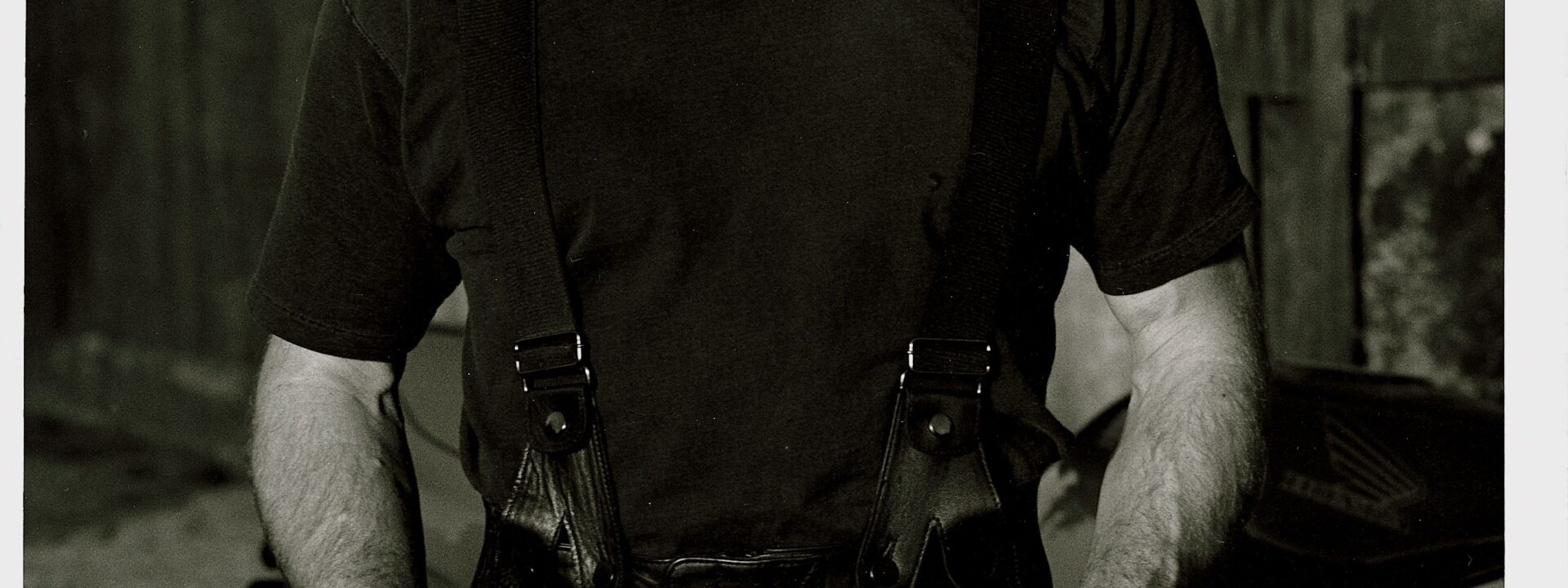
Harrison Ford strides toward me in a $3,000 Cerruti suit across a crowded Los Angeles soundstage. His walk is quick and purposeful, his eyes bright. He’s splattered with blood, his hair matted with sweat and dirt, a graze on his cheekbone and a gash over one eyebrow. He’s not the only one covered in gore this morning—there are extras in flak jackets and business suits, all blood-spattered, and a pilot casually eating a doughnut with half his chest missing. The overall effect—part recent riot, part designer suit, part the seasoned authority of a longtime star with a $20 million paycheck—is undeniably thrilling.
He wears the suit with an easy grace, lean and athletic, and at nearly six feet tall, he has the height a hero should. His face shows a mix of candor, stubborn determination, and controlled impatience—partly the character he was just playing, partly, I suspect, a reaction to the sight of a Vogue writer tottering around the set in impractical heels. Heroes, especially the reluctant kind, don’t usually enjoy deep introspection at a journalist’s request. They’re doers: modest, wary, sparing with words. Ford’s press coverage is sparse, and I could only find one reverent film biography in stores. But a man’s got to do what a man’s got to do, and right now, that means publicity.
Still moving, he shakes my hand, spins me toward the exit before I can catch my breath, and ushers me into a white golf cart. He immediately reverses, then swings it one-handed around a corner. Carrie Fisher once said he looks like he’s carrying a gun even when he isn’t. He isn’t—though there are bullet holes in his sleeve—but he is carrying a neat PowerBook, which he hands to me. I hold on tight as we zip through narrow studio lanes, nearly grazing a location truck. In a voice like waves dragging over gravel, he says, “We’re going to my trailer.” Without looking at me, he adds, “That OK?”
I can’t think of a woman who would mind clinging to a runaway golf cart driven by Harrison Ford in a bloodied $3,000 suit. You’d follow him anywhere—to the Temple of Doom, onto a failing plane. I open my mouth to say so, but only a faint squeak comes out as a group of technicians in hard hats leap aside. Ford slides the cart into a six-inch space beside his trailer, and suddenly a Spanish man jumps out, waving a thick stick and shouting, “For you, Mr. President!” I feel another little gasp rising—this is Los Angeles, after all—but Ford stays cool, alert, ready for anything. Big sticks, nervous women—whatever. He takes the stick, sniffs it, rolls it between his fingers, and says, “Nice cigar. Thanks. I’ll smoke it later.” Boom—go the strings of my heart.
They keep booming all day. We repeat this golf-cart dash over and over, speeding from the set to his trailer and back. Sometimes he hands me his PowerBook to hold, sometimes his corn chowder or some other spillable thing. Filming is the craziest…The job is repetitive: intense 28-second bursts of action, then hours of downtime spent yawning and flipping through last week’s Variety. He carries a two-way radio that suddenly crackles to life: “COWBOY!” a female voice calls out. “COWBOY!” Harrison Ford picks it up and growls back, “Cowboy!” She says, “Five-minute warning!” He replies, “Walkin’,” and hurries me back into the golf cart for the race to the set. (Don’t laugh—it was so cool!)
Harrison Ford is the Star of the Century, the only actor to appear in more than one of the top-ten highest-grossing films of all time. His roles as Han Solo and Indiana Jones made him our generation’s Gary Cooper, Jimmy Stewart, and John Wayne, with a touch of Bogart. I’ve also loved his Cary Grant–style turns in Witness and Working Girl. He’s had a quieter stretch lately—nobody I know really liked Regarding Henry, or Sabrina at all—but 1997 looks like a comeback year. Star Wars is back. Around the world, a whole generation of girls fell in love with Han Solo, even though they knew that if they ever got to tell him “I love you,” he’d just reply, “I know.” Those fans are twenty years older now, flocking to theaters to relive Star Wars with its expensive digital enhancements and enduring magic.
This year also brings The Devil’s Own, which took Ford and Brad Pitt a very long time to film and director Alan J. Pakula even longer to edit (it opens at month’s end). And Air Force One, where I’m visiting the set, is due this summer. Ford says he likes to alternate “rolling around in the mud” roles with “suit-and-tie jobs.” Though for him, rolling around in the mud comes easily even in a suit and tie—even now, in his fifties.
I asked if he still does his own stunts, and he bristled. “I never do stunts,” he says in that deep bass voice. “Stuntmen do stunts. I do acting. Hard, physical acting, taken as far as you can before it becomes a stunt. I don’t do my own stunts. I do my own acting. And I do my own hair.”
His trailer smells like air freshener, like a cheap taxi. He spends our time telling me things I already know—how he chooses scripts (“story”) and how he approaches his roles (“Help to tell the story”). He doesn’t elaborate. He doesn’t gossip. He doesn’t explain why The Devil’s Own—with young Brad Pitt as an IRA operative on the run and Ford as the New York Irish cop who befriends him—was so difficult to shoot. Movies about the IRA don’t fit neatly into the simple good-guys-win, bad-guys-lose formula. Their moral ground is slippery: as bodies fall, is it heroism or terrorism? Rumors swirled about rewrites, walkouts, bruised egos, and tantrums on set. (People from Air Force One kept asking, “Are you getting all the dirt on Devil’s Own?” Me: “No. What’s the dirt?” Cue a bright Hollywood laugh: “Ha! You won’t get that from me!”)
I didn’t get it from Ford, either. In his slow, rumbling, gravelly voice, he said he was very interested in working with Brad Pitt, that he thought their pairing would be dynamic, and that the story intrigued him. “But I thought if I were to play this part, it would have to go through a certain transformation.” He adds, “We had, uh, some delays pulling the script together. They were resolved. Midstream.” Then, somewhat obliquely: “Most movies take 50 days to shoot. Fifty working days. This movie we’re doing here will take 40. The Devil’s Own took over one… hundred… days.”
So it was a wearisome process? A wry smile. “Your words.”
So, is Brad Pitt a bad guy or a good guy? A savage grin. “I think you’d best ask Brad that.”
After a pause, while I consider the difference between an actor and a role, I clarify, “I mean, in the movie.” Harrison Ford gives a big—He laughs, a genuine laugh, and his eyes glitter. But then he smoothly—and at length—returns to the only topic he’s prepared to discuss: character, motivation, and story.
The story of Air Force One seems tailor-made for Harrison Ford, with a clear and straightforward premise. It follows the hijacking of the president’s jet by a group of Kazakhstani terrorists. Most of the action unfolds inside the aircraft, which has been reconstructed along one side of a vast soundstage. You climb metal steps to enter. One side is a passenger lounge; the other is the lower deck, where space is tight—especially now, with all the surviving hostages crammed into the nose cone. “For the first week, we could stroll around the lounge, which is quite roomy,” says Wendy Crewson, who plays the First Lady. “But the nose cone is only this wide. And I’m in a cashmere sweater! Under these lights!” “Well, at least it’s real cashmere,” a dialogue coach remarks. “Yep. You know you’re in a good movie when the costumes are cashmere.”
The director is Wolfgang Petersen, who enjoys big action—he previously directed In the Line of Fire. He also seems drawn to tight, claustrophobic sets lined with bulkheads. “Wolfgang made Das Boot,” someone notes. “This is Das Plane.”
Petersen is an immensely jovial man, trading heavy German humor in a double act with his cinematographer, Michael Ballhaus. When Harrison Ford introduces me, Petersen says, “Put in your article that this film is brilliantly directed. Forget the acting! The direction is fabulously good—that’s all you need to write.” Ballhaus chimes in: “Ja, forget the eckting.” Harrison Ford, who reportedly earned $20 million for his “eckting” in The Devil’s Own and a similar sum for this film, smiles.
Petersen had been watching a take of Ford on a tiny black-and-white video monitor—a long shot of him edging around a bulkhead, fed directly from the on-set camera. “Now we are going to shoot the close-up,” Petersen announces, “and that means very good acting. Harrison!” Ford looks at him steadily. “You hear me, uh? Very good acting, this bit.” Harrison Ford replies, “Well, I’ll give it my best shot,” and the two clank across a metal walkway to crowd into the lower deck.
I watch the monitor with Michael Ballhaus. On screen, in black and white, Harrison Ford edges into view—back to the wall, wary, heroic, nerves screaming. He mutters to himself in a low growl: “Gotta get the plane… on the ground.” His eyes glitter.
His eyes glitter because a special small spotlight is aimed into each one, set up specifically for that purpose at Michael Ballhaus’s direction. Part of Ford’s job is to hit that spotlight again and again, while also scanning the room for traps, worrying about the First Lady, keeping his balance in a shaking plane, and muttering, “Gotta get the plane… on the ground.” Time after time, his eyes glitter right on cue, even as he trims the scene from 28 seconds to 24, then to 18. “Ach! That’s eckting!” shouts Ballhaus, pointing at the glittering eyes and slapping his thigh. “See that twinkle? Every single time, he hits.”
Just then, the passenger lounge fills with more people. Among them is a slight young man with a goatee, looking sharp in a fancy vest and combat pants. He speaks in a flat London accent and greets people with friendly hand-slaps. After about five minutes, I realize it’s Gary Oldman, the second lead—and his fancy vest is actually a flak jacket. As the Englishman in the cast, Oldman naturally plays the villain, Korshunov, even though the character is from Kazakhstan. He has two voice coaches: one for his Russian and one for his heavily accented English. He delivers both with great flair, at one point letting out a pretty lurid laugh as well. “Where does that laugh come from?” someone asks.Gary Oldman considers his answer. “It’s my laugh,” he explains, then corrects himself: “Actually, it’s Korshunov’s laugh. It’s the laugh I always use.” By now, the entire room is listening, faces carefully blank. With a sassy snap, he adds, “It worked in Dracula,” which earns a chuckle. Oldman is a younger star, though not as young as Brad Pitt, and I watch closely for any signs of tension or ego clashes between him and Harrison Ford—not to mention any potential hissy fits.
Next comes a particularly intense scene. It features not only the excited shouts of “Action… Action!… Rolling!” but also loud warnings of “Fire in the hole!” from a second assistant director, signaling everyone to put in earplugs against the gunfire. I’m glued to the video monitor. On screen, Gary Oldman has the First Lady in a vigorous stranglehold, his arm over her mouth and a gun to her temple. She struggles fiercely. Off-camera, Harrison Ford booms, “Let her go!” The First Lady, muffled by Oldman’s sleeve, shouts, “Mmmmergh! Jim! Oof! Eargh!” Oldman yells back, “Not onteel Radek eez safely away!” They repeat the take again and again, then file back to watch the playback. “Now was that maybe very, very good and brilliant?” asks director Wolfgang Petersen. It is, so he asks them to do it once more, this time from the opposite angle.
“Come on, people! Let’s go!” he urges. “We’re ready!” they shout in reply. “We’re coming through!” “Already there!” calls Gary Oldman. “Already acting!” adds Harrison Ford. This time, Harrison is on-camera, leaping around and dodging bullets (“Fire in the hole!”), his eyes glittering on cue, while Gary Oldman and the First Lady are off-camera but still acting their hearts out. “Let her go!” Harrison thunders. Oldman seizes the moment to lay on the Kazakhstani accent thickly, especially around the L and R sounds, shouting, “Not onteel RRRRRRRadek eez safely away!” His two voice coaches exchange glances and scribble furiously in their scripts. When the actors gather again to watch the replay, there’s a quiet moment of assessment—broken by Harrison Ford, who growls, “Great R.” Oldman smirks. “Yeah, well, I fought so,” he says. “Best R in the scene, I fought.” “The R of the movie,” Harrison growls back, then throws me a look that sends me scurrying off for my next nerve-wracking trip to his trailer.
Even though, after a day with Harrison Ford, my tape recorder holds little more than disappointingly formal and controlled talk (mostly about The Actor as Storyteller), I thought he was really cool. He’s constantly witty—but his humor is so dry and deadpan that you have to look into those glittering eyes to see if he’s trying to get a rise out of you. He usually is. I mentioned that it’s tough being English in Hollywood these days because the English always end up playing the villains. He replied, “It was always difficult to be English.” (I’m English myself.) He told me he lives in Teton County. I misheard and said, “Peeton?” He spelled it out: “T-E-T-O-N,” watched me jot it down, then added, “I’m sure your French is up to it.” (The Tetons are famously shaped like breasts.) I said I’d heard that Air Force One was a really happy set: great director, happy actors, everything running smoothly, nice lunches. He asked, “The publicist told you that?”
He excuses himself at lunch—he has some notes to write on his PowerBook—so I join a large, mixed table with cast and crew. (“This is a nice movie,” a makeup girl remarked. “They give great lunch.”) Across from me, Wendy Crewson is finishing a plate of fried scallops. She’s hungry after a morning spent with Gary Oldman’s elbow pressed to her throat, saying, “Jim! Ergh! Ugh!” through a mouthful of sleeve. She’s thoroughly enjoying herself and her meal: “It’s easier fighting off Kazakhstani terrorists than the crowds in Toys ‘R’ Us.” She says that Harrison Ford’s great strength as an actor is…He makes everything easy because he sweeps you up in his energy. As an actor, Harrison Ford has no inhibitions whatsoever. None. He just throws himself completely into the action—flat on the floor, slammed against a wall—whatever it takes. Action! Zap! Zap! Zap!” Whirling a fork like a weapon, imitating Ford, she punches out three terrorists and shoots a couple more with her other hand—“Peeyoww! Peeyoww!”—before collapsing, dead, onto her plate. It’s a bravura performance. She adds, “Exactly like my four-year-old, really.”
Harrison Ford runs his own life, and it’s a great life to run. He’s never wanted to be a director (“I’ve got the best job in the world”), and he says he doesn’t waste time thinking about roles he might have had or movies he might have made. “The minute somebody else decides to do it, it becomes something else. No regrets.” Does he ever hate acting? “Only when it isn’t great.” I asked him which of his movies was his favorite. “That’s a bit like asking, ‘Who’s your favorite kid?’” Well, excuse me, I said, but it wasn’t anything like asking who his favorite kid was. He insisted it was. He is punctiliously polite and shows no starry airs or Hollywood grandeur. He isn’t surrounded by legions of PR managers and handlers. You call his number, and he answers. But he knows what he’s doing: nobody ever gets anything private on Harrison Ford, not even the English tabloids—so it isn’t just me.
Great dad. Long-standing husband. Expert carpenter. Perfect professional actor. Team player. Friend of the earth. Friend of the elk. Nice guy. You might wonder what his life is really like behind closed doors. Could he be a savage-tempered, alcohol-fueled, sex-addicted egomaniac whose marriage is permanently on the rocks? I suppose he could be, but he isn’t telling.
Frequently Asked Questions
FAQs From the Archives Harrison Ford a Man of Few Words and a Lot of Action
General Beginner Questions
Q What is this From the Archives piece about
A Its a curated collection of past interviews articles and behindthescenes stories that explore Harrison Fords iconic career and his famously reserved nononsense personality contrasting it with the highenergy action roles hes known for
Q Why is Harrison Ford often called a man of few words
A He has a welldocumented reputation in interviews for being direct private and sometimes tersely humorous often giving short pragmatic answers rather than lengthy introspective ones
Q What are some of his most famous action roles
A His most legendary action characters are Han Solo in Star Wars and Indiana Jones in the adventure film series He also played action heroes in films like Blade Runner The Fugitive and Air Force One
Q Is this a new interview with him
A No the From the Archives tag means its a feature compiling and reflecting on existing historical material not presenting new interviews
Deeper Dive Career Questions
Q How did his reallife personality shape his onscreen characters
A His natural gruffness quiet competence and relatable everyman quality became key ingredients for his heroes They often feel like regular sometimes reluctant people thrust into extraordinary situations which made them deeply believable
Q Did his reluctance to do press or talk about himself ever hurt his career
A Quite the opposite It enhanced his mystique and made his public appearances more impactful It also reinforced the publics perception of him as genuine and not a Hollywood phony which aligned perfectly with his characters
Q Whats a classic example of his few words interview style
A When asked about the massive cultural impact of Star Wars he famously replied Its a movie I made when I was very young Its not a religion This showcases his practical downplaying approach
Q Besides acting what are his other wellknown passions
A He is a highly skilled and licensed pilot for both airplanes and helicopters and is a dedicated environmental conservationist serving as Vice Chair of Conservation International for decades