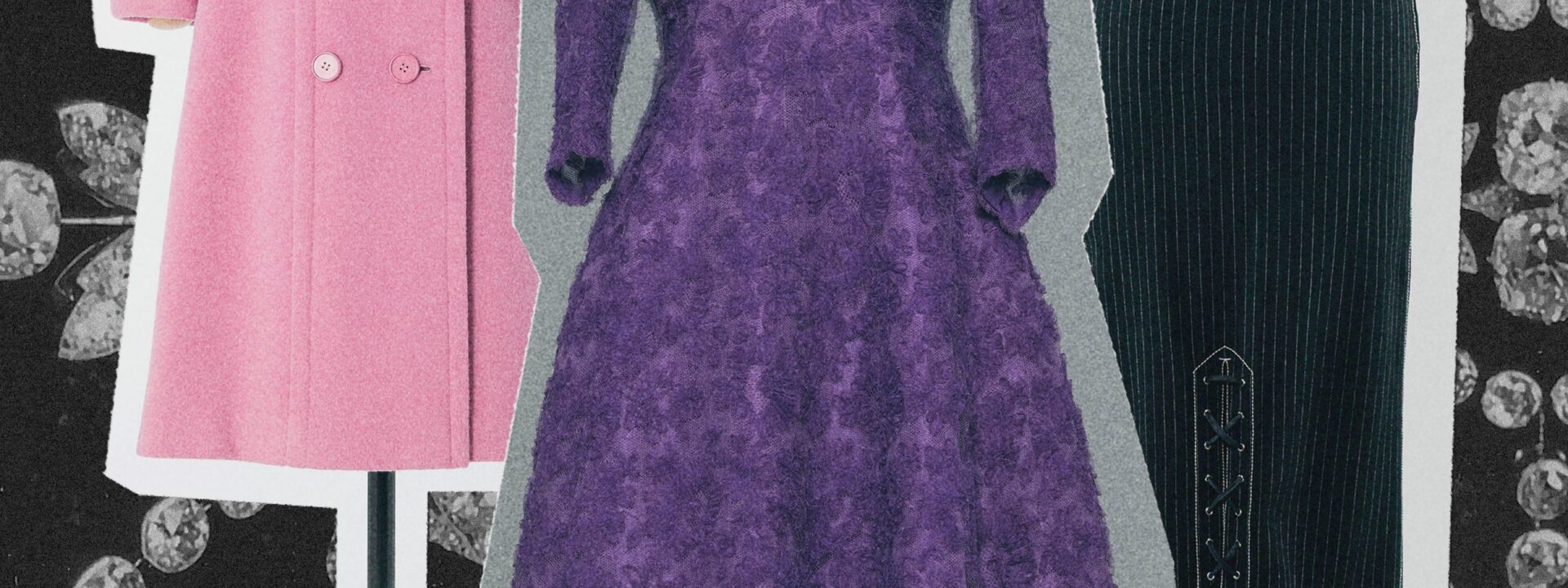
It might feel like a season full of US-based shows just wrapped up, but several French fashion houses have already returned to American soil. Brands like Dior and Louis Vuitton are back in New York—this time, not for a runway show, but for a new exhibition.
“Hidden Treasures, 250 Years of Franco-American Luxury Stories” brings together 65 French luxury brands and cultural institutions, organized by the luxury association Comité Colbert. It opens Tuesday at The Shed in New York’s Hudson Yards and runs until May 31. The exhibition is part of a larger program created by both countries to celebrate 250 years of friendship, dating back to the alliance formed during the American Revolution. The French association expects between 10,000 and 15,000 visitors over the six-day event.
“Sixty-five exhibitors is truly a record number for a Comité Colbert event,” says Bénédicte Épinay, CEO of Comité Colbert, in an interview with Vogue Business. “And it shows one thing: America is the leading market for most of our houses. It’s a market where they want to communicate both individually and together, to promote French luxury and the French art of living, along with the shared history between France and the US.” The trade association, which has 115 members, works to promote French luxury worldwide, preserve traditional craftsmanship, and coordinate industry collaboration and advocacy on topics like sustainability, counterfeits, intellectual property, AI, and more.
The Chanel tweed design from Matthieu Blazy’s Métiers d’Art 2026 collection will be on display.
Photo: Courtesy of Comité Colbert
The timing of the exhibition is good: the US continues to drive growth in the luxury market, especially as China’s recovery is slower than expected, Europe’s spending remains subdued, and the Middle East faces conflict. In the first quarter of 2026, LVMH saw US revenues grow by 3%, Kering by 9%, Hermès by 17.2%, and Richemont by 18%. “The US remains a resilient and attractive market, with a K-shaped economy—where the top end grows, but the lower end faces more pressure,” TD Cowen analyst Oliver Chen told Vogue Business earlier this month.
Hélène Poulit-Duquesne, CEO of Boucheron and recently elected chair of Comité Colbert, doesn’t expect the exhibition to boost sales further. “That’s not its purpose; it’s about bringing people together,” she says. “Gathering all these houses is amazing, and the fact that they all come together under one roof tells a beautiful story of French luxury.”
Renders of the Comité Colbert exhibition.
Photo: Courtesy of Comité Colbert
“It’s also about placing our houses in a broader context—as houses of culture,” she adds. “We’re not just luxury products. It’s about looking at luxury through the art of living, so we tell stories of art and craftsmanship. In that sense, the initiative is much more cultural than commercial. And I feel strongly about that.”
While Épinay agrees the exhibition isn’t focused on driving business, it does offer strong clienteling opportunities for brands. “The show will be privatized every morning by the houses, so they can invite their very important clients. They’re also planning side events in their stores, dinners, and more,” he says. “So they’ll use this exhibition to reaffirm their presence and offer their clients an exceptional experience. Seeing all these artifacts from all these houses will be quite extraordinary.”
The exhibition will include American socialite Mona von Bismarck’s evening gown by Cristóbal Balenciaga.
Photo: Courtesy of Comité Colbert
Jacqueline Kennedy’s pink Hubert de Givenchy coat, worn in 1961, will also be on display.
Photo: Courtesy of Comité Colbert
Designed by Museum Studio, an agency that helps institutions and brands create cultural experiences, the exhibition will showcase a variety of “hidden treasures” from each participating house. Highlights include: American socialite Mona von Bismarck’s evening gown by Cristóbal Balenciaga (1958); a replica of Marie-Louise Ma…ckay’s 621-diamond Boucheron Belle Époque necklace from 1899; a Chanel tweed design from Matthieu Blazy’s Métiers d’Art 2026 collection, inspired by the 1931 film Tonight or Never, which featured costumes by Gabrielle Chanel; the Christian Dior Athena silk satin evening gown from the New York FW51 collection; and Jacqueline Kennedy’s pink Hubert de Givenchy coat, worn during the first official state visit of the Kennedy presidency to France in 1961. Also included is the Jean Paul Gaultier pinstripe dress with an invisible bra, worn by Madonna in 1992.
The Jean Paul Gaultier pinstripe dress with invisible bra, worn by Madonna in 1992.
Photo: Courtesy of Comité Colbert
Cartier went into its vaults to bring out three golden replicas of the Lunar Excursion Modules (LEM), which were given to the Apollo 11 astronauts when they visited Paris in 1969. “This shows several sides of Cartier’s heritage and culture,” says Cyrille Vigneron, Cartier’s chair of culture and philanthropy. “First, the art of being unique. Second, it reminds us that Cartier has a very long history in New York—over 100 years of presence with rich interactions, special orders, and stories. The Love and Juste un Clou bracelets were designed in New York, also at the end of the 1960s. New York isn’t just a market; it’s part of the house. It feels like home.”
Meanwhile, Van Cleef & Arpels is bringing a selection of its historic and contemporary Dancer clips, honoring Claude Arpels’s meeting with choreographer George Balanchine, co-founder of the New York City Ballet, in the late 1940s. “Since the 1920s, when we opened our first shop-in-shop in New York, Van Cleef & Arpels has called the US home,” says CEO Catherine Rénier. The house has recently opened stores in Dallas and Houston.
After opening its first US store in 2023, Boucheron now has boutiques in Las Vegas and on Los Angeles’s Rodeo Drive, with plans to open another in Miami before the end of the year. “We’ll probably open one store per year, depending on retail opportunities,” explains Poulit-Duquesne. “We’re really focused on targeted expansion, because the US is so big. Each city is its own market—you have to succeed in becoming part of local communities.”
Boucheron Mrs. Mackay dog collar necklace from 1899.
Photo: Courtesy of Comité Colbert
While the US market has been tough to navigate in recent years—due to tariff tensions, department store struggles, and negative currency effects—consumers’ love for French brands remains strong, says Comité Colbert.
Between August 2025 and January 2026, Comité Colbert conducted a survey to gauge consumer interest in “Frenchness” in the US. The research polled 600 US consumers aged 18 to 60 who had bought French products in the past year. According to the survey, France is the top country whose products still feel “worth buying,” with 61% of respondents agreeing (followed by Italy at 57%).
“If you look at 250 years—the span of this year’s celebration—this long history hasn’t always been easy,” notes Vigneron. “The recent years are less challenging than other periods.”
Frequently Asked Questions
Here is a list of FAQs about the French luxury exhibition in New York ranging from beginner to advanced
BeginnerLevel Questions
1 What is this exhibition all about
Its a new show in New York that highlights how French luxury brands use their style and influence to promote Frances cultural powerwhat experts call soft power
2 Where is the exhibition happening
It is being held in New York City often at a major museum or cultural institution
3 Why is France showing off luxury in New York
New York is a global hub for fashion art and money By exhibiting there France reminds the world that its luxury goods represent not just wealth but also French artistry history and diplomacy
4 Do I need to know a lot about fashion to enjoy it
Not at all The exhibition is designed for everyone You can appreciate the craftsmanship history and beauty even if youve never bought a designer handbag
5 How is this different from a regular fashion show
A fashion show sells clothes This exhibition sells an idea that French luxury is a form of national influence It includes artifacts videos and stories about how these brands shape global taste
IntermediateLevel Questions
6 What exactly is soft power in this context
Soft power is the ability to attract and persuade others without force Here French luxury brands act as cultural ambassadors making people around the world admire French lifestyle creativity and valueswhich can help France in trade and diplomacy
7 Can you give an example of a French luxury brands soft power
Sure When a celebrity wears a Dior gown to the Oscars or when a tourist buys a bottle of Chanel No 5 they are choosing a piece of French identity This builds a positive image of France globally which can influence everything from tourism to international negotiations
8 What kinds of items are on display
Youll see iconic products but also historical documents sketches and behindthescenes videos showing how these items are made by hand