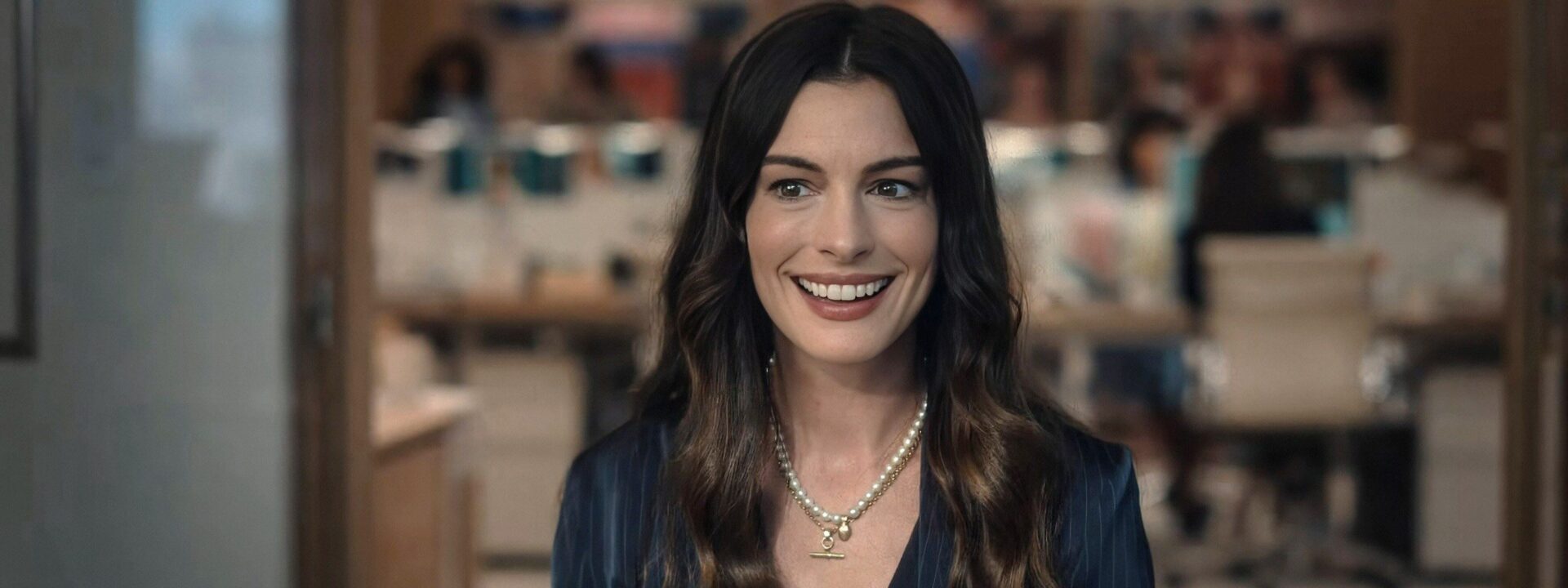
It started about a month ago. “Are you going to see the movie?” a mom asked me after morning drop-off. Was she talking about Hoppers? Or a playdate tied to a Mandalorian & Grogu screening? I just stared at her blankly. Then she added, “You know, the one about where you work…”
Let’s get this out of the way: The Devil Wears Prada is entertainment. Very little of what you see in the original—or the sequel—has anything to do with reality. Still, after a screening that many Vogue staff attended this week, a colleague turned to me with a slightly pale face. “Did they bug our offices?” she whispered.
There were, let’s say, a few moments that hit a little too close to home—kind of like the original book, as stylist Leslie Fremar pointed out in a revealing recent interview on our podcast.
The sequel follows Andy Sachs as she returns to Runway—this time as the features editor. After the magazine’s parent company faces a PR crisis, Andy, who has spent the years since working on serious journalism like three-part investigations of the Federal Reserve, is brought in to polish the magazine’s image with apology blog posts and capital-S serious journalism—or so she hopes.
I’ve spent most of my time at Vogue telling people that The Devil Wears Prada doesn’t reflect my work life at all. That’s easier to argue because, while knowing something about fashion is a requirement here, my job is firmly outside the fashion trenches. I dodge the rolling racks that zoom around the floor—I’m not pushing them. In almost a decade here, I’ve been to maybe half a dozen photo shoots, which was enough to convince me my presence wasn’t really wanted. I have stacks of books on my desk and a single pair of shoes underneath.
But the sequel seemed to offer something different—a features editor (the star of the film, no less) stepping in to save the day? That called for a fact-check.
Andy’s Friends
Film: A quirky group of seasoned journalists—the kind who go to awards dinners at Midtown hotels with round tables and no centerpieces. One of them (Tracie Thoms, playing Andy’s critical friend Lily) seems to have done well for herself, judging by the size of her apartment.
Reality: I also have friends who own art galleries and keep multiple boxes of Maldon salt on their open kitchen shelves. But the similarities probably end with pantry props. The only people I know with Manhattan lofts like Lily’s have lived in them since the 1970s. I started my career in Washington, D.C., so I have a soft spot for policy nerds. They dress better than these caricatures, but they’d genuinely love a three-part investigation of the Federal Reserve.
Andy’s Apartment
Film: Andy’s promotion lets her move from a charming prewar apartment with penny-tiled bathroom, Mrs. Meyer’s soap on the sink, bad plumbing, and New Yorker totes on the hooks, to a fancy but soulless condo in a gutted historic building.
Reality: I don’t think even the least fashion-focused features editor would happily live in the cookie-cutter white box Andy moves into. The real dream is living within walking distance of your kids’ school!
Andy’s Clothes
Film: A wardrobe of sensible but stylish blazers, jeans, and blouses is swapped for outfits that my fashion colleagues will have to explain to you—the references are beyond me. When Andy is invited to the Hamptons, she goes through the fashion closet with Nigel to fill her rolling bag with borrowed items.
Reality: Aside from a throwaway line or two about buying something secondhand, and the fact that she sometimes wears jeans to the office, there was nothing familiar about how Andy dresses. It took me years to work up the courage to even step into the fashion closet. I wouldI wouldn’t dream of touching anything in there, let alone think of it as mine to take, even just for a weekend. Strangely, I found the movie version of the closet messier and less organized than the real one—a rare case where reality is more impressive than fiction.
How It Works in the Office
Film: Andy hovers outside Miranda’s office, constantly seeks approval, and speaks up in meetings with vague, self-congratulatory comments that don’t fit. She also promises a story she hasn’t even started working on.
Reality: None of that. You visit any colleague with a clear, short question. (You quickly learn that being on time and efficient are key ways to show respect.) You share an idea you’ve thought through and believe in; it would take a brave (and foolish) person to pitch a story they have no clue how to deliver. One thing the film got right: while many people read on screens, it’s still common to print pieces to “take home” and then have to figure out handwritten notes when they’re returned.
How It Works More Broadly
Film: Andy travels with Miranda, gets taken along like an accessory to calm upset advertisers, and is invited to Miranda’s house in the Hamptons.
Reality: No, no, and no.
How It Looks in the Office
Film: The office has light wood, creamy boucle furniture, glass-walled offices like Scandinavian fishbowls, and views of the New York skyline. Vases hold single-color dahlias. Light boxes display rows of images.
Reality: Not totally wrong—though most of us sit at open-plan desks, and you’d be hard-pressed to find any boucle. But single-color flower arrangements do show up on many desks pretty often, there are lots of glass walls and doors, and we have some nice river views. No light boxes, though.
What You’ll Gain Working at Vogue
Film: Your work might eat into your weekends, but it can also be a lot of fun. More importantly, you’ll build friendships that last beyond your time there.
Reality: No notes!
Frequently Asked Questions
Here is a list of FAQs based on the premise of a reallife features editor factchecking The Devil Wears Prada 2
BeginnerLevel Questions
Q What is a features editor and why would one factcheck a movie
A A features editor is a senior journalist who oversees longform articles in a magazine They factcheck the movie to see if the sequels portrayal of the fashion magazine world is realistic or just Hollywood fantasy
Q Is The Devil Wears Prada 2 a real movie
A Yes it was officially announced The sequel is expected to follow Miranda Priestly as she navigates the modern media landscape which is a big change from the printfocused world of the first film
Q Whats the biggest thing a features editor would factcheck in the sequel
A The biggest check would be the shift from print to digital In the first movie Runway was a print magazine A real editor would check if the sequel accurately shows how magazines now run websites social media and video content and how that changes a boss like Miranda
Q Would a real features editor dress like the characters in the movie
A Probably not in the extreme highfashion way Real editors dress well but theyre often more practical and less costumey The movie exaggerates the glamour for entertainment
IntermediateLevel Questions
Q What specific plot points from the first movie would an editor factcheck in the sequel
A Key points include
The unobtainable Harry Potter manuscript Editors would note that in real life an assistant would never be allowed to handle a single unreleased manuscript without strict security
The Paris trip An editor would check if a junior assistant would realistically be sent to Paris Fashion Week Usually its the senior editors
The firing of Emily The way Miranda fires her assistant is dramatic but real firings involve HR and paperwork
Q How would a features editor factcheck the digital transformation of Runway magazine in the sequel