A few years ago, during the pandemic, I was sitting in my childhood home and posted a video of myself on social media with a full face of glam makeup. A stranger commented, “So you’re Persian, you’re non-binary, and you’re queer. At what age did your dad leave you?”
I found the comment oddly funny—not just because my dad has always been my biggest supporter, but because he had actually filmed that video for me since I didn’t have a tripod. In response, I made a TikTok joking that I was “trying to bond” with my straight dad. It was clearly tongue-in-cheek, since anyone who knew me knew my dad and I were already very close. I posted the video without thinking much about it and went to bed. When I woke up, it had 10 million views.
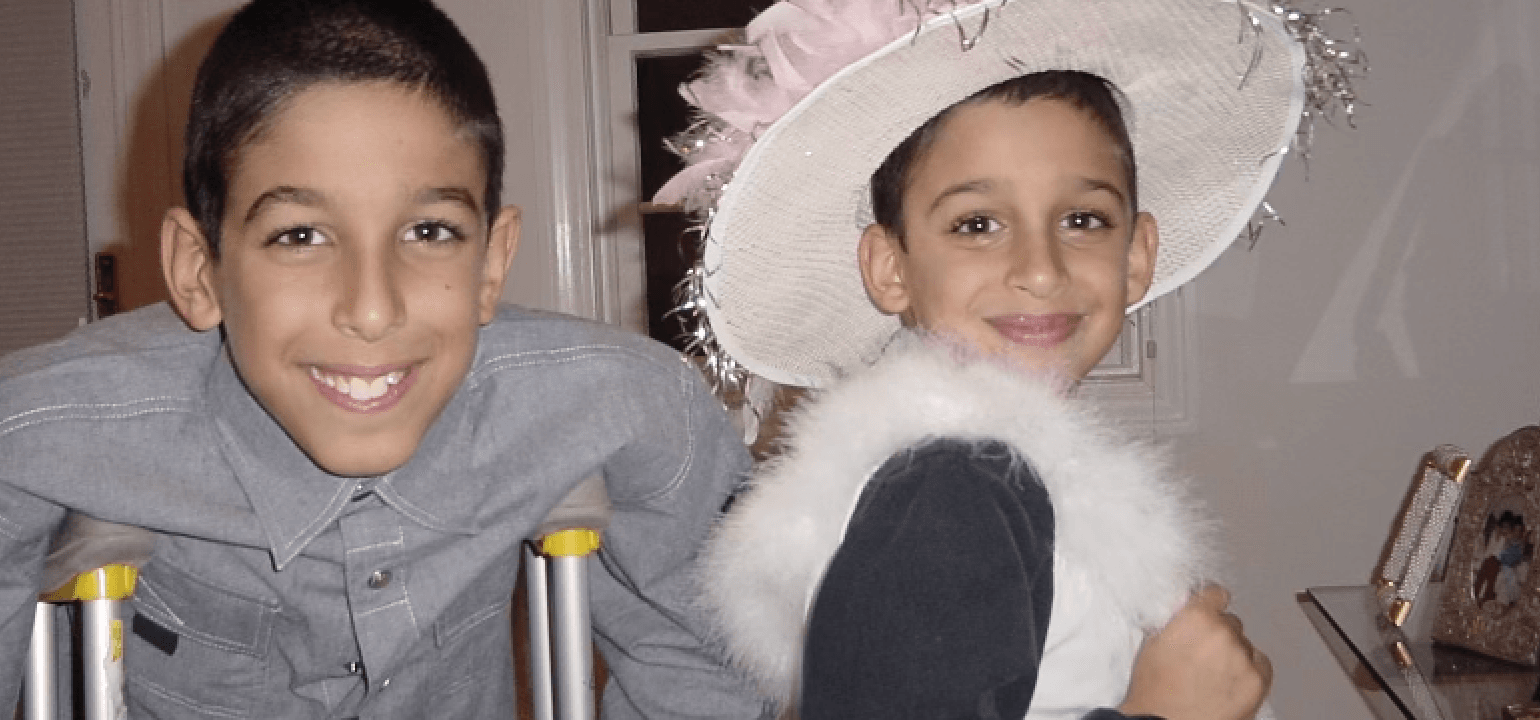
Here’s our family story: My parents left Iran after the revolution, met in France, and moved to the United States for work. In our home, creativity and love were always at the center. I actually came out as gay to my parents when I was around 11. At the time, their only concern was how school would be for me. Like many people, the challenges I faced made me tougher and gave me a strong backbone. I also discovered that laughter was a powerful tool—one I never imagined would become such a big part of what I do every day. To quote my friend (Queer Eye’s Jonathan van Ness), “Can you believe?”
I eventually came out as non-binary too. Gender fluidity became my freedom. As I navigated my sexuality and gender into adulthood, I had many conversations with my dad about the double-edged sword of being Iranian-American with these overlapping, marginalized identities. It’s complicated to see Western ideals of beauty and femininity shape gender while homophobia and transphobia rise across the US, and at the same time recognize the privilege of not being in Iran, where deviating from sexual and gender norms is often punishable by death.
As I reflect on my own identity, thousands of miles away, the Iranian people are doing the same under growing political tension. They’re also doing it in the dark—both literally, with electricity often cut off, and figuratively, in a closet. There are so many debates about what’s right for Iran or its people, and as someone from the diaspora, I feel torn between wanting to support every Iranian while also giving space to those living in Iran right now. But it seems the common thread that binds us all as Iranians is the desire for a free Iran—one where people, especially women, have their own agency.
This has made me think a lot about my role as a comedian and creator of Iranian origin. How do I teach people about my culture? How do I open minds to the beautiful spectrum of gender and sexuality in a way people will listen to? What language can everyone understand in the middle of all this divisive online rhetoric? I believe the answer is always a good, deep belly laugh.
My dad and I turned that first bonding video into a viral series called “Bonding with my Baba,” which still continues today. It’s given us a unique way to show people the capacity for unconditional love in parenting and cultural identity—but it’s the comedy that gets people watching in the first place. By creating content together online, we’ve also been able to share Iranian culture with the world.
I hope that one day I can visit Iran. Meet all the inspiring young artists in person. Laugh alongside my fellow LGBTQIA+ Iranians in the streets. Maybe host a comedy show for my people. See where my parents grew up. Visit my dayee’s house. Meet every Iranian who’s sent me a supportive message online. For now, that’s just a dream. My Farsi may not be as strong as it once was, but I know laughter is a language we all share.This will be the language we use to talk to each other over a cup of chai.
Frequently Asked Questions
Here is a list of FAQs based on the dream of an Iran filled with laughter love and freedom The questions are written in a natural human tone and the answers are simple and direct
BeginnerLevel Questions
1 What does a place filled with laughter love and freedom actually mean for Iran
It means a society where people feel safe to express joy where kindness and empathy are the norm in daily life and where citizens have the basic rights to speak think and live without constant fear of punishment or oppression Its about the everyday feeling of life being humane
2 Is this just a political dream or is it about something more personal
Its both Politically it implies a system that respects human rights and civil liberties Personally its about the simple momentsa family laughing in a park a musician playing freely on a street corner or a student studying what they love without fear Its about the texture of daily life
3 Why do people focus on freedom specifically
Because many Iranians feel that the current system heavily restricts personal social and political choicesfrom how they dress to what they say online Freedom is seen as the key that unlocks the other parts of the dream like laughter and love because it allows people to be their authentic selves
4 Doesnt Iran already have laughter and love in its culture
Absolutely Iranian culture is incredibly rich with poetry hospitality and deep family bonds The dream isnt saying those things dont exist Its saying that the current political and social environment creates a constant shadow of anxiety and censorship that prevents that natural warmth from fully flourishing without fear
5 How can a regular person help make this dream a reality
By focusing on small acts of kindness and courage This could mean speaking up against injustice in your own circle supporting Iranian artists and journalists preserving the cultures history or simply being a source of love and support for your family and friends Change often starts at the kitchen table
IntermediateLevel Questions
6 How does this dream address the economic problems in Iran
The dream is directly linked to the economy When people have freedom and security they are more likely to start businesses innovate and invest in the future Sanctions corruption and mismanagement thrive in secrecy