There are some places we know we’ll visit someday, but for one reason or another, they keep getting pushed aside. Ever since I moved to New York City over ten years ago, I knew I’d eventually make it to the Berkshires. Earlier this summer, that time finally came.
If you’ve heard of this mountainous area in western Massachusetts, it might be because of Edith Wharton, who famously moved there looking for “the real country.” Or maybe Herman Melville, who wrote Moby Dick at a desk with a view of Mount Greylock—thought to be the inspiration for his great white whale. You might also know Tanglewood or Jacob’s Pillow, well-known centers for music and dance. If you love art, MASS MoCA is probably on your radar. Into wellness? The area has a notable number of pioneering spas, like Canyon Ranch. And if you enjoy fall foliage, the region’s stunning autumn scenery is likely on your wish list.
But how did the Berkshires become such a mix of different interests? “This area has often been described as a cultural vortex,” says Scott Edward Cole, who owns The Inn at Kenmore Hall with his partner Frank Muytjens—and where I stayed during my trip. “As creative people ourselves, we find a lot of inspiration here.”
Cole thinks the natural beauty is what first draws creative people to the Berkshires. Then there’s the closeness to Boston and New York. “It became a popular summer getaway when the railways came through, and during the Gilded Age, wealthy families like the Vanderbilts, Carnegies, and Choates built grand homes here, which they called ‘cottages,’” he explains.
A view of Mount Greylock in North Adams, Massachusetts.
Photo: Getty Images
“By the 1900s, there was a real cultural scene,” Cole says, pointing to a small music festival that grew into Tanglewood (the summer home of the Boston Symphony Orchestra) and the Jacob’s Pillow Dance Festival (now the largest and longest-running international dance festival in the U.S.). Summer theater groups like the Williamstown Theater Festival and Berkshire Theatre Festival also brought big names from film and Broadway to local stages. “And of course,” Cole adds, “Norman Rockwell moved to Stockbridge and captured the people and places of his everyday life in his art.”
Over the years, the Berkshires have stayed a lively creative hub, with chefs, hotel owners, and artists settling in towns like Lenox, North Adams, and Great Barrington. Even so, nearby spots like the Hudson Valley and the Catskills still get more tourists. I have a guess why—and I’m guilty of it myself: convenience. For New Yorkers, getting to the Berkshires takes more effort than heading to, say, Beacon or Kingston. A visit means going a bit farther, renting a car for an extra day, and staying another night. But I think that’s a good thing. You can say what you like about easy trips, but it’s usually the places that require more effort that make for the most memorable experiences.
With a wave of new openings in recent years, plus renewed interest in some beloved classic spots—highlighted in more detail below—there’s never been a better time to move the Berkshires from the back burner to the top of your list. Ahead are a few places that show why this region still has such lasting appeal.
Walker Street Market
Photo: Chris Mottalini
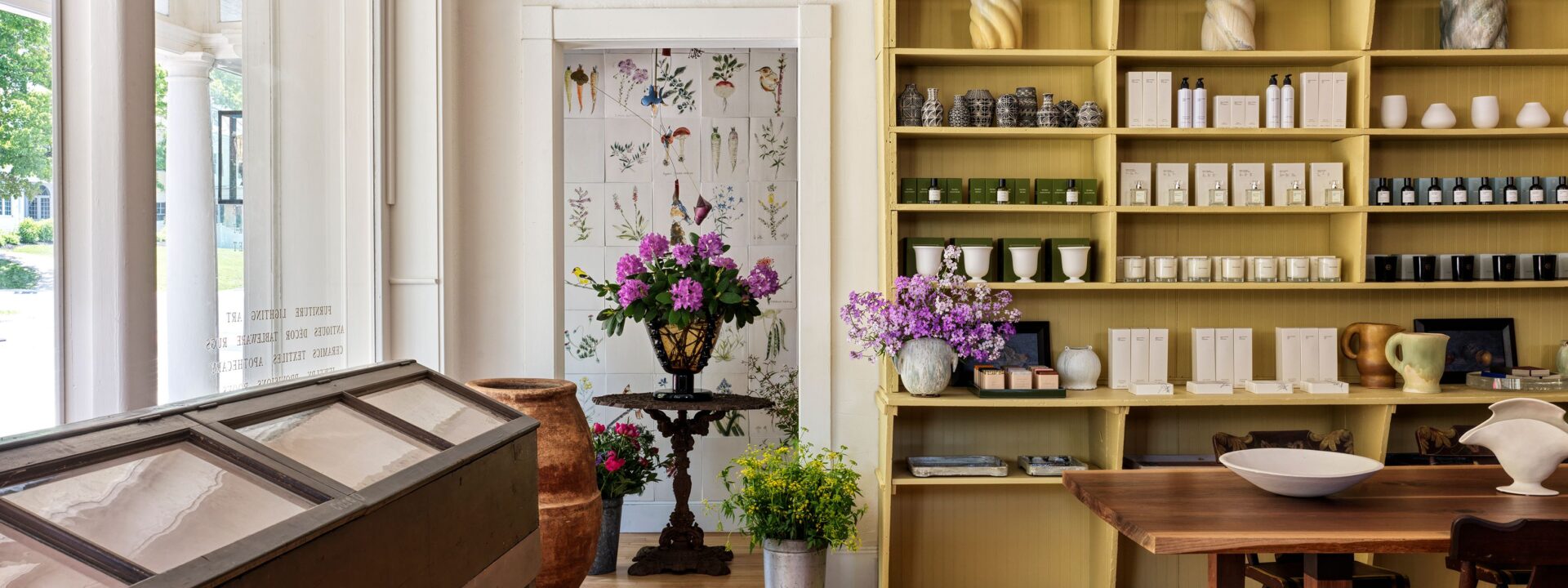
When Matthew Ames saw a listing for an early 20th-century building in downtown Lenox, he knew it would be the perfect spot for a project he’d been thinking about for nearly three years. He wanted to open a design and interiors gallery focused on craftsmanship, bringing together work from makers across many different fields. The 3,000-square-foot space—now called Walker Street Market—has served many purposes over the years, including as a general store, a jeweler, an antique shop, and later a department store. “People wPeople who grew up in town have memories of shopping here as kids,” Ames says. “It’s a very special building for the community, so it’s really exciting to be the caretaker of this space and give it a new life.”
If his name sounds familiar, Ames used to be a fashion designer in the early 2000s. His minimalist collections would still fit right in with today’s obsession with ’90s style. After several well-received seasons, he moved to Chicago to work as a gallerist, and eventually made his way back east. After about a year of restoring the building, Ames opened Walker Street Market to the public in July 2026.
The gallery features work from over 70 artists, with categories that include furniture, lighting, textiles, ceramics, jewelry, kitchenware, basketry, apothecary items, and everyday objects for the home. Several pieces were made specifically for the space and can be ordered on demand, along with select antiques like a cast iron zodiac table from the 1800s. Ames also teamed up with Robin Hill’s head gardener, James McGrath, to create a flower market for customers. It sits in a charming little nook at the front, decorated with floral tiles hand-painted by Bruno Grizzo.
It’s the kind of imaginative shop where you discover something new and unique every time you visit. Simone Bodmer-Turner’s organic ceramic tables, a handsome Shaker bench by George Sawyer, beautiful brooms with wood sapling handles by Erin McIntyre, and hand-carved walnut pendants from Ashley Joseph Martin—all of these inspire a deep appreciation for handmade objects crafted from natural materials.
In the 1880s, the property that is now The Inn at Kenmore Hall was a summer arts residency. “Painters like Robert Lewis Reid and Frederic Crowninshield spent days painting outdoors in our fields and then would hang their work in our center hall for nightly critiques,” Cole says. It also became a summer boarding house for visiting musicians and composers who were in town for nearby Tanglewood. “By all accounts, it was a very bohemian scene, with pianos moved in and violin or woodwind sounds drifting from other rooms,” Cole adds. A young Leonard Bernstein, early in his time with the BSO, even stayed there for a few summers in what is now their Carriage House cottage.
Today, the 18th-century Georgian-Federal home is a charming six-room getaway that strikes a balance between feeling comfortably at home and being on vacation. “We wanted guests to feel like they were visiting a friend’s lovely country estate—well-appointed, but not fussy or imposing in any way,” Cole says. Since the inn is also their residence, you’ll find Muytjens and Cole’s combined collections of books, objects, and furniture throughout the house. “We’re always adding or editing things here and there, letting the arrangements shift and evolve according to our whims.”
My visit happened to coincide with pleasant early June weather, but as summer turns to autumn, Cole says a special magic settles over the landscape. “The sunlight becomes more golden and seems to heighten everything you see,” he says. Their garden reaches its peak, with dahlias, amaranth, and celosia in abundance. “We have a trail that runs through about 10 acres of meadows, and by autumn, there are huge drifts of native asters, goldenrod, and centaurea.” And if you’re an early riser, he adds that cooler mornings often bring veils of mist rising between the valley and Lenox Mountain in the distance. “It’s truly breathtaking.”The community was established and reached its peak in the mid-1800s, then gradually declined and sold the land in 1960. But the Shakers’ influence on the Berkshires is truly impossible to overstate—from sustainable farming methods (ever heard of continuous-direction farming?) to innovative crafts and designs, like the practical yet beautiful Shaker box. In short, visiting the historic Hancock Shaker Village is a must-do when you’re in the Berkshires. In fact, follow my lead and catch a live demonstration of how these boxes are handmade (and pick up your own at their Mercantile Store).
Photo: Catskill Photography Studio
Drive less than 30 minutes west, and you’ll find the Shaker Museum pop-up. Here, artists like Maira Kalman and Kiki Smith are curating a rotating series of exhibits, choosing their favorite items from the museum’s vast collection and creating new paintings inspired by those Shaker objects. The pop-up also features a General Store selling curated goods from the artist-in-residence, including books, textiles, and design pieces. All proceeds go toward funding the Shaker Museum’s renovation, set to debut in 2028.
The Dream Away Lodge
Photo: Courtesy of writer
Photo: Courtesy of writer
Call me a nostalgia enthusiast, but when I discover a place was once a hangout for true legends, I’m all in. The Dream Away Lodge is a prime example, with its impressive roster of famous patrons. This farmhouse from the 1820s is rumored to have served as a brothel and speakeasy during the Great Depression, but it officially became a restaurant and bar in 1949. The original owner, Mama Frasca, welcomed Arlo Guthrie, Bob Dylan, Joan Baez, Allen Ginsberg, and the Rolling Thunder Revue in 1975. That visit led to The Dream Away being prominently featured in Dylan’s film Renaldo and Clara, further solidifying its status as a Berkshire County staple.
‘Tucked away’ is the perfect way to describe this hidden gem, nestled at the edge of October Mountain State Forest. It’s surrounded by flowers, tall trees, and a lush lawn that leads to a small fire pit—a great spot to unwind after dinner. For the 2026 season, The Dream Away Lodge is led by chef Caroline Fidanza, who was the opening chef at Williamsburg’s Diner and founder of Saltie, a beloved Brooklyn sandwich shop that closed in 2017.
Frequently Asked Questions
Here is a list of FAQs about visiting the Berkshires as a cultural hotspot written in a natural tone with clear concise answers
General Planning
1 Okay I keep hearing the Berkshires are a cultural hotspot What does that actually mean
It means this rural area in western Massachusetts is packed with worldclass arts Youll find renowned museums toptier theater and major classical music performances all set among beautiful mountains and small towns
2 Why is now the perfect time to visit Is there a specific season
Now generally refers to the summer and early fall This is when all the major festivals outdoor concerts and art exhibitions are in full swing The weather is also ideal for exploring the outdoor sculpture parks and hiking trails between cultural stops
3 Is the Berkshires just for older wealthy people Im in my 20s30s
Not at all While it has a long history with an older crowd theres a huge influx of young professionals and families Places like MASS MoCA in North Adams are very contemporary and edgy and there are great breweries farmtotable restaurants and hip bookstores that cater to a younger vibe
4 How much time do I need for a trip to the Berkshires
To really get a feel for it you need at least a long weekend If you want to hit multiple museums see a show at Tanglewood and do some hiking a full 45 days is ideal Its a lot more spread out than people expect so dont try to cram it into one day
5 What are the main towns I should base myself in
It depends on your vibe Lenox is the classic elegant hub near Tanglewood Stockbridge is the most historic and picturesque Great Barrington is the most lively with the best food and shopping North Adams is the gritty artsy alternative home to the massive MASS MoCA museum
Tickets Costs Practical Tips
6 Do I need to book tickets in advance for the big attractions
Yes absolutely For Tanglewood