Sana Raheem and Hiba Irshad grew up in Michigan and Iowa, immersed in the Muslim immigrant experience. Their childhoods were shaped by a close-knit circle of aunties—women who supported one another as they built new lives in America, raising their children together and lifting each other up.
Years later in New York, Raheem found herself longing for that sense of community. “I yearned for that,” said Raheem, a senior vice president at The Farmer’s Dog and founder of the stationery brand The Ramadan Edit. “I missed not having to explain my faith. I missed being around women who just understood—the fasting, the family obligations. So I decided, just like our mothers did, I would build that community myself.”
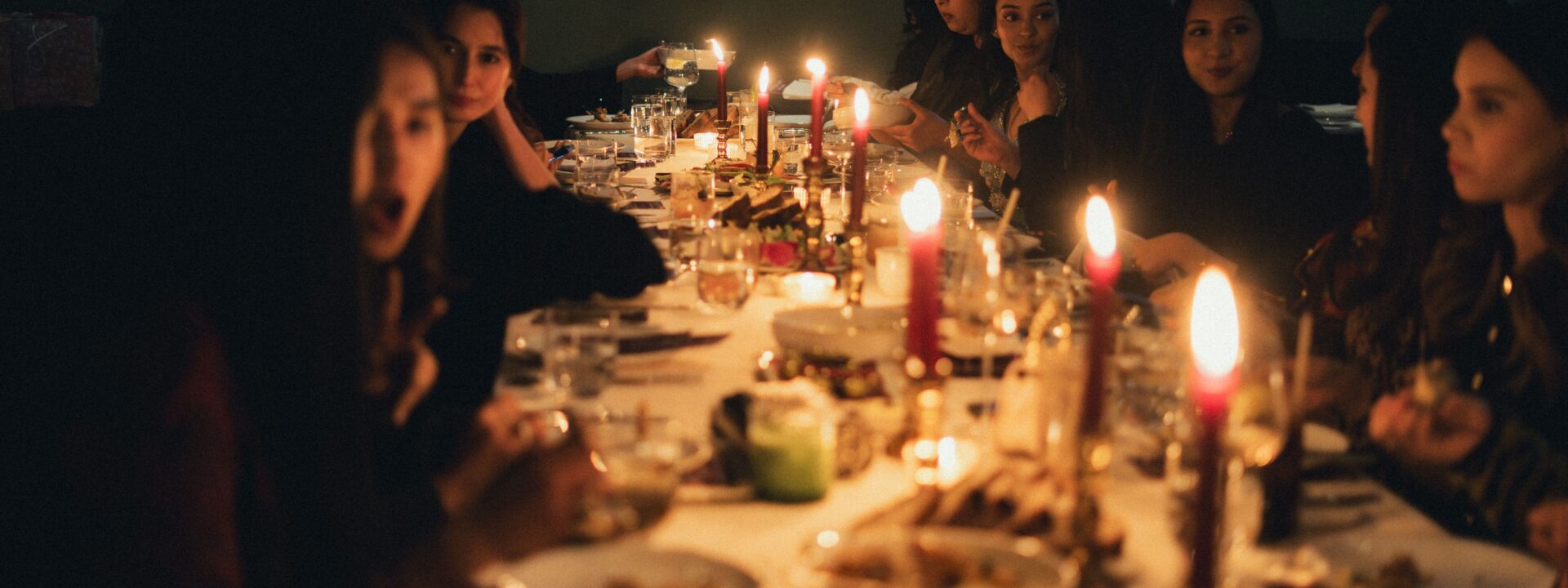
Last Monday, Raheem and Irshad—a former music executive and founder of the creative studio 25percent.co, which champions South Asian and Muslim talent—gathered 65 accomplished Muslim women for iftar, the evening meal that breaks the daily fast during Ramadan. The invitation suggested Ramadan-inspired evening wear, so I slipped into a delicate silk abaya embroidered with sequined palm trees by Dubai designer Sanah Yasin and headed to Maze, an alcohol-free members’ club in Manhattan’s Flatiron district.
The room buzzed with energy as qawwali music filled the air. Guests shimmered in kaftans, Palestinian thobes, Pakistani shalwar kameez, and fusion designs from labels like Chicago’s Azeeza, Dubai-based POCCAA by Alia, and India’s AMPM. I even spotted another guest wearing the same palm-tree abaya by Sanah Yasin. Above a lavish grazing table, event designer Sunji Chowdhury had crafted a stunning floral crescent from orchids, calla lilies, and roses, while slender red candles flickered throughout the space. One thing was clear: this was perhaps the chicest iftar I had ever attended.
For many, Ramadan is known as the month when Muslims refrain from eating and drinking—yes, even water—from sunrise to sunset. But it’s not as daunting as it sounds. These 30 days are also filled with community, charity, and deep gratitude. My own fondest Ramadan memories are rooted in homes: snatching my mother’s freshly fried samosas on their way to the iftar table, or gathering at friends’ houses after taraweeh prayers at the mosque and talking late into the night until suhoor, the pre-dawn meal. But in a city like New York, where many apartments aren’t set up for large gatherings and an “impromptu” dinner often means planning weeks in advance, nurturing that Ramadan spirit takes real effort.
Nayeema Raza, host of the podcast Smart Girl Dumb Questions, has lived in Muslim-majority countries like Indonesia, Jordan, Libya, and the UAE, where Ramadan is woven into the rhythm of daily life. “In some ways, it isn’t conducive to a New York City lifestyle,” she reflected as we sipped date and tamarind mocktails by the bar. “I admire people who create these spaces to come together and do something that’s quite hard—a month of sacrifice and discipline in a city that’s all about indulgence.”
When the adhaan, or call to prayer, echoed at sunset, I broke my fast with a date and began weaving through the room, reconnecting with old friends and introducing myself to new ones. Raheem and Irshad invited each guest to introduce themselves around the tables, occasionally stepping in to highlight impressive achievements that others had modestly downplayed. The room was filled with trailblazers from every field: New York Public Library curator Hiba Abid; Rana Abdelhamid, founder of the antiviolence nonprofit Malikah and author of Get Home Safe: A Guide to Self-Defense and Building Our Collective Power; celebrated artist Shahzia Sikander; model and Tunisian footwear brand founder Kenza Fourati; Ford Foundation CIO and Girl Scouts National President Noorain Khan; Dr. Syra Madad, chief biopreparedness officer at NYC Health + Hospitals; and many more.
Dinner isThe evening began with a sense of purpose and community. “It’s an amazing community of women across so many industries—the power is in building this community, leaning on each other, giving back,” said Samina Virk, CEO and CMO of Vestiaire Collective. “It’s quite humbling to be a part of this group, and I’m excited to see what comes of this.”
While the traumatic events unfolding in Iran, Palestine, Sudan, and the Gulf weighed heavily on guests’ minds, the focus turned to mutual support in a time when many feel isolated. “It’s a heavy time right now, we can all feel it,” said Irshad. “We have to come together and use our collective power and influence to change the narrative.” Over platters of rigatoni and grilled salmon, strangers quickly became friends. By the time dessert arrived—a cloud-like date cake with hints of orange blossom and cardamom—collaborative sparks were flying.
Connections flourished around the table. Celebrity stylist Engie Hassan, cofounder of the women’s wellness platform Revelist, offered to style poet and activist Emi Mahmoud for an awards ceremony in Norway. When New York state senate candidate Aber Kawas shared why she was running for office, chef Zainab Saadia Saeed leaned in and asked, “How can we help?” Actors met filmmakers, venture investors connected with entrepreneurs, and fashion designers exchanged contacts with makeup artists. Nabiha Syed, executive director of the Mozilla Foundation, told the room, “If you work in the areas of tech, culture, and power, I want to talk to you.”
After lingering far later than expected on a school night, we reluctantly began to head out—toting Ramadan Edit gift bags, brimming with inspiration, and eager to carry the evening’s convivial spirit throughout the rest of the month and beyond.
Frequently Asked Questions
FAQs NYC Iftar Dinner Orange Blossom Cake Inspiration
Beginner General Questions
1 What is this NYC Iftar dinner story about
Its about a specific Iftar dinner in New York City that became notable for its orange blossom cake The event and its unique dessert sparked creative ideas and inspiration for attendees and those who heard about it
2 What is orange blossom cake
Its a cake flavored with orange blossom water a fragrant floral essence made from the blossoms of bitter orange trees It gives the cake a light aromatic and slightly citrusy flavor common in Middle Eastern and Mediterranean desserts
3 Why did this particular dinner spark creative inspiration
The combination of a communal culturalreligious gathering the sensory experience of a unique and memorable dessert and the atmosphere of NYC likely prompted people to think about food community art or personal projects in new ways Its an example of how shared experiences can fuel creativity
4 Where did this dinner take place
The exact location isnt specified in the prompt but it was a hosted Iftar dinner somewhere in New York City possibly at a restaurant community center or private venue
Benefits Significance
5 Whats the significance of sharing special foods like this at Iftar
Sharing culturally significant or beautifully prepared foods during Iftar enhances the sense of community celebration and gratitude after a day of fasting It turns a meal into a memorable experience and can be a way to share heritage with others
6 How can a food experience inspire creativity
A novel taste or scent can trigger memories emotions and new associations The act of sharing it in a special setting adds layers of story and connection which can inspire writing art cooking event planning or even business ideas
Common Questions Practical Tips
7 Where can I find orange blossom water to try baking
You can find it in Middle Eastern grocery stores specialty food markets online retailers or sometimes in the international aisle of wellstocked supermarkets The brand Cortas is widely available
8 Im not Muslim Can I attend an Iftar dinner
Many community Iftars are open to guests of all faiths as a way to foster understanding and