Fashion’s waste crisis is well known. We’ve all seen images of post-consumer textile waste clogging beaches in Ghana and mountains of textile waste in Chile that are now visible from space. But what we rarely see is the secondary textile waste crisis hiding in plain sight: post-industrial, pre-consumer waste that includes fabric samples, swatches, and development prototypes, making up about 12% of fashion’s total fabric consumption. This is the waste stream that New York-based non-profit Fabscrap has spent the last decade tackling.
Fabscrap was founded in 2016 by Jessica Schreiber, an employee of the New York City Department of Sanitation. As more and more brands asked her how to dispose of excess fabric and she found few viable answers, Schreiber took her idea for a waste removal and fabric redistribution business to the short-lived TV show Project Runway: Fashion Startup, securing the funding to test Fabscrap with real brands. Co-founder and executive director Camille Tagle joined a year later, bringing the perspective of a former luxury eveningwear designer who was frustrated by what she saw as a “criminal” culture of waste and eager to do something about it.
Since then, Fabscrap has gone through its share of “revamps, corrections and additional streamlining,” says Tagle, who stepped into the executive director role after Schreiber left in 2025 to focus on her family. Today, it focuses on collecting pre-consumer waste from local brands and recirculating as much as possible, with small amounts going to downcycling or landfill.
It operates on a “pay as you throw” model, scaled to donation size. For smaller donations, brands pay per bag before collection. For larger donations, which usually arrive on pallets, brands pay per pound after Fabscrap has collected and weighed them. Tagle introduced this distinction in 2025 after a donation audit revealed that 24% of brands donated 84% of incoming materials that year. She also optimized warehouse processes, improving sorting rates by 58% over the past 18 months and reducing the backlog of donations by 159,407 lbs.
Over the last decade, Fabscrap has collected pre-consumer waste from more than 900 brands across the US, mainly around New York but also in Philadelphia, Pennsylvania, New Jersey, and Massachusetts. It currently has about 400 regular customers, ranging from luxury to mass market. J.Crew, PVH, Steve Madden, and Urban Outfitters parent company Urbn have worked with Fabscrap since it was founded, and several of those brands (plus others like Carolina Herrera) have also supported the non-profit with grants and group volunteering.
But Tagle says Fabscrap’s potential to scale is limited by a lack of industry collaboration. Reaching the next level and keeping more waste in circulation will depend on brand and manufacturing partners upstream designing with circularity in mind. There’s a long way to go.
First measure, then reduce
To prove you’re reducing waste, you need to know where you started. That’s why brand donations are weighed and catalogued before they’re sorted. It’s important that this data is broken down by brand, says Tagle, because you can’t reduce what you don’t measure. “We track each brand’s data individually, so they can understand their environmental impact,” she explains, noting that each brand receives an annual impact report showing the weight collected, the number of collections, and how those donations broke down into reuse, downcycling, and landfill.
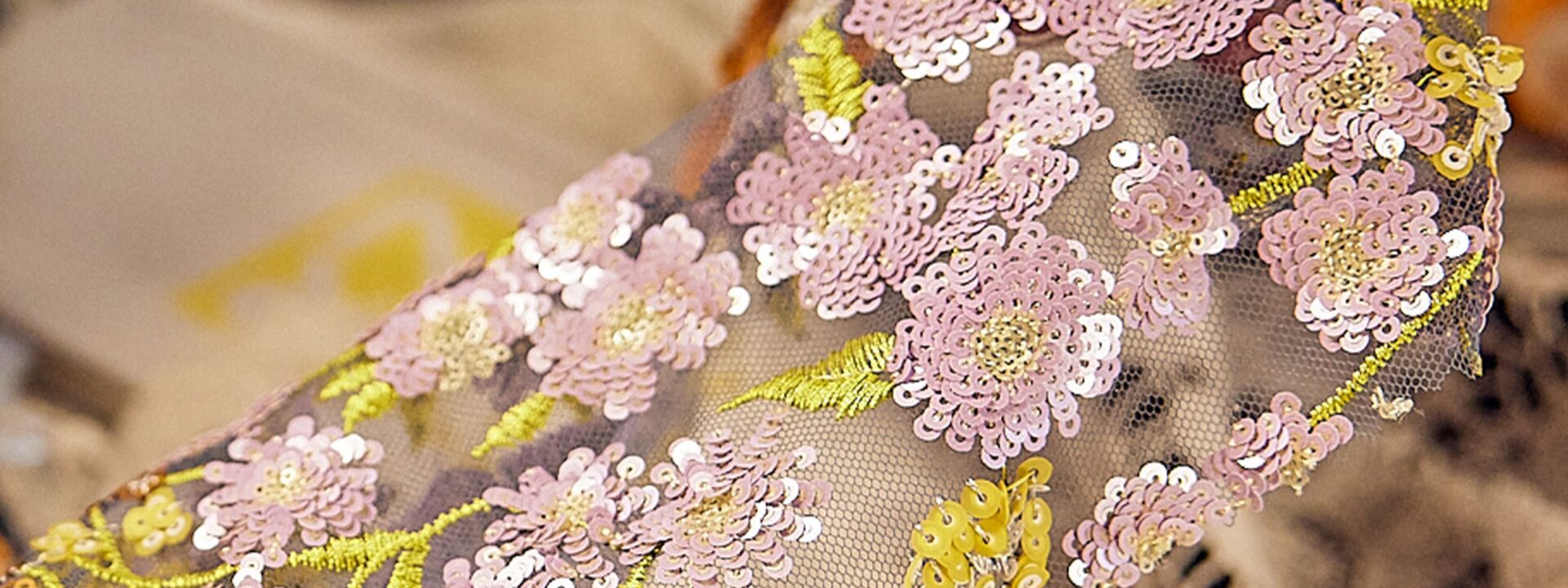
After the collection has been weighed, it gets processed and made ready for volunteers to sort through (there have been 10,000 volunteers and counting over the pasOver the past decade, investors and the industry have poured hundreds of millions of dollars into textile-to-textile recycling, chasing the elusive goal of turning mountains of post-consumer textile waste into new products. These efforts have mostly focused on cotton and polyester, with some solutions for blended fabrics, but most still leave out huge amounts of waste while struggling with slow, costly disassembly. The problem is that potential feedstocks get contaminated easily, especially in fashion—an industry obsessed with novelty and difference, where polyester might be decorated with sequins or cotton blended with elastane.
Larger fabric pieces and prototype samples with few imperfections are set aside for reuse, along with smaller leather pieces. These go through Fabscrap’s online store and in-person thrift store, which together form the nonprofit’s second-largest revenue stream after brand fees. Where possible, Fabscrap sets materials aside for reuse, selling them through its online shop and thrift store. Volunteers can pick materials from the store in exchange for their time.
Materials that can’t be reused—because they’re torn, stained, or just too small—are set aside for downcycling, usually shredded into insulation by Fabscrap’s partner in North Carolina. Preparing materials for downcycling is a “tricky” process, says Tagle, requiring volunteers to carefully remove stickers, safety pins, buttons, or zippers. Everything reusable is saved, including these fixtures and fastenings, but a small percentage still ends up in landfill.
Right now, one of the biggest landfill contributors is waste that brands mark as “proprietary” before collection, says Tagle. This category exists to keep identifiable logos or design features from re-entering the market, but many brands apply it too broadly to donations, reducing the chance for perfectly usable fabrics to be recirculated. It’s an ongoing struggle to teach brands to be less strict. “There’s really no reason why a leather hide with no branding should be marked as proprietary,” she notes.
Donations range from small offcuts to swatches to rolls of fabric and even prototype garments.
“There’s a misconception that it’s really easy to recycle fabric, but it’s actually very, very difficult,” says Tagle. Fabscrap tracked cotton and polyester waste separately for the first eight years, hoping to gather enough to make a meaningful feedstock donation to textile-to-textile recyclers, but the amount of qualifying material never exceeded 4% of total donations, she adds. “Our volunteers often leave with a new understanding of what it takes, and how many grey areas there are.”
That has been an unexpected benefit of its volunteer program, Tagle continues. “At the beginning, Fabscrap was about making the biggest environmental impact possible,” she explains. “That’s still core to what we do, but a really beautiful development has been engaging the public. So many textile recycling initiatives skip the general public entirely, but Fabscrap has volunteer opportunities built in, and our volunteers can go home with some fabric for their creative projects as a thank you. We’ve had well over 10,000 volunteers at this point. They geek out over fabric, they care about sustainability, and they’re excited to trade stories or sewing techniques, too. It’s become a genuinely strong community.”
During New York Climate Week in September, I had the chance to visit Fabscrap’s Brooklyn warehouse and see the process up close. It quickly became clear how time- and labor-intensive sorting and disassembly can be.
Much of the waste Fabscrap handles comes directly from design rooms. It’s a compleA chaotic mix of fabric samples, prototypes, and headers—the swatches that fabric mills and producers send to brands to showcase their seasonal range. No two are alike. Developmental samples are experimental by nature, often blending different materials and fibers, experimenting with sequins or embellishments, and sometimes adding zippers or buttons. Even the headers lack standardization—some have metal or paper hangers so they can be displayed on a rail; some are stapled or glued to a sheet of paper or cardboard listing their composition, while others arrive in binders; some are small squares, others larger rectangles. “Every swatch is completely random,” says Tagle. “When you don’t have standardization, you can’t automate anything.”
Textile mills send countless headers to brands each season, showcasing their seasonal offering. But these headers often come in different formats, and without standardization, it’s hard for Fabscrap to automate its process.
Development samples have limited potential for standardization, but headers are ideal for it, says Tagle. Late last year, Fabscrap released a white paper documenting its research into pre-consumer waste materials and offering recommendations for the industry to build circularity upstream. Among the suggestions was a framework for “smarter swatches” designed for disassembly and recycling or reuse. In an ideal world, according to Fabscrap, headers would be smaller than two yards, with no backing material, and a small sticker detailing material content and other descriptive elements such as weight and country of origin, as required.
This would help Fabscrap volunteers make sense of swatches so they know which materials qualify for recycling versus reuse or downcycling. But it would also reduce costs and environmental impacts for fabric mills, eliminating the need for paper, plastic, or metal components. To help textile mills assess the impact of their headers, Fabscrap also developed a Smart Swatch Scorecard, which assigns header designs a grade based on the number of components and how easy they are to disassemble.
Much of the waste Fabscrap receives is shredded or downcycled for use in insulation. But to do this, volunteers first have to remove any embellishments and fastenings, including buttons, which are recirculated in the store.
Going forward, Tagle says her focus is on this kind of industry education and collaboration, helping stakeholders at every step of the design process understand how their choices can enable and accelerate circularity downstream. “Finding ways to deal with the waste that nobody else wants to deal with is a huge puzzle,” says Tagle. “It will probably take us the next 10 years to solve.”
Frequently Asked Questions
FAQs Textile Waste Crisis After 10 Years Fabscrap Knows What Circular Fashion Is Missing
1 What is the textile waste crisis
Its the massive problem of clothing and fabric being thrown away instead of reused or recycled Millions of tons end up in landfills or incinerators every year polluting the environment
2 What is Fabscrap
Fabscrap is a nonprofit based in New York that collects textile waste from fashion brands designers and factories and finds ways to reuse or recycle it Its been operating for about 10 years
3 What is circular fashion
Circular fashion is a system where clothes and fabrics are kept in use as long as possiblereused repaired or recycledinstead of being made worn briefly and tossed Its the opposite of the take make waste model
4 Whats missing from circular fashion today according to Fabscrap
Infrastructure and followthrough Lots of brands talk about circularity but few have real systems to collect sort and process textile waste at scale Fabscrap says the missing piece is the unglamorous middle logistics sorting and actual recycling capacity
5 Why is textile waste such a big deal
Fashion is one of the most polluting industries in the world Making new clothes uses huge amounts of water and energy and discarded clothes release methane in landfills Most textiles never get recycled
6 What happens to donated clothes that arent sold
Many get shipped overseas downcycled into rags or insulation or burned A large share still ends up in landfills Only a small fraction becomes new clothing
7 What kinds of waste does Fabscrap handle
Mostly postindustrial wastescraps samples and unused fabric from brands and factories It also handles some postconsumer items
8 What does Fabscrap do with the fabric it collects
It sorts it and either resells it to artists students and designers or sends it to recyclers who turn it into new materials like insulation or yarn
9 Can all textiles be recycled
No Natural fibers like cotton and wool are easier to recycle Blended fabrics are much harder and often cant be recycled into new clothing