Before the mosh pits and the scream-alongs, there was a shop on the Ocean City boardwalk with punk CDs and records tucked away in the back. The front of the store was so generically Jersey Shore—full of Day-Glo boogie boards and hermit crabs in chicken-wire cages—that I’m not sure what drew me inside. But behind the beach kitsch lay a hidden trove of knowledge and history: Misfits, Dead Kennedys, and Bad Brains T-shirts folded logo-out on the back wall; crates of CDs labeled “Hardcore and Punk,” “Emo,” and “Indie”; pins, patches, and other band merch scattered across a plexiglass counter, under which sat pipes and rolling papers. As a metaphor for a suburban kid’s aesthetic awakening, it was almost too perfect—enter through the gift shop and discover the revolution.
This was the summer of 2001, after my freshman year of high school. At the time, it felt like—and still feels, after 25 more years of life—the tail end of the worst year I’d ever had. The previous fall, I’d started at a prestigious prep school, imagining I’d quickly find a group of book-loving oddballs to debate the origins of the Italian Renaissance with. Instead, I was relentlessly bullied by Phish-loving thugs in Polo shirts. Knowledge of Nantucket and various brands of lacrosse gear were the essential social currencies, and I had neither. Look, we’re all rich here, I wanted to say. Why don’t we talk about Dostoevsky like true aristocrats of the spirit? But I never actually said that, or much of anything. It turned out these were just the ordinary kind of aristocrats, brimming with bottomless confidence in their bad taste and their inherited reserves of casual cruelty.
Thursday, Brand New, Taking Back Sunday, Saves the Day, and countless more local and lesser-known bands—these became my bands.
Sure, I was a snob. But that didn’t make the ostracism, or my bewildered disappointment in the way of the world, hurt any less. With little else to do, I got great grades and tried my best not to cry in class too often.
Nick, a friend since sixth grade, had made the jump to the new school with me, and we grew closer through our shared unhappiness. Our tastes overlapped in the era’s alt-rock giants—the Smashing Pumpkins, Oasis, Sonic Youth (less popular, but clearly cooler for it), Radiohead and Blur when we felt thoughtful, and Rage Against the Machine for raging against the machine. We were punk-literate—our school’s Ethernet connection fed us info on the Sex Pistols and the Clash, and a quiet boy from our old school had lent me a jarringly abrasive Minor Threat record—but punk felt more like history than something alive.
Nick was also a gifted athlete, while I barely scraped onto the freshman soccer team. So, searching for something like an identity, I joined a mask improvisation troupe, the pet project of an ambitious new drama teacher who claimed to be bringing avant-garde methods from “the city.” On the first day, we did movement exercises wearing thick, textured masks with exaggerated features, “finding our characters”—as he earnestly put it—by lurching around the stage and interacting in silly voices. To my surprise, I felt lifted out of the self-consciousness and depression that had weighed me down since school began. No one gave me crap for being weird. In fact, the director egged me on, urging me to hunch and mutter even more. Shockingly, I was having fun.
During a game where we had to interview each other in character, I was paired with a petite, wiry girl in a white tank top and plaid pants covered in zippers, her hair half-dyed neon green. She was clearly a natural—shifty and kinetic in her movements, clever and surprising with her answers. I couldn’t help cracking up as she riffed in a French accent about her urgent need to acquire a stash of space lasers. The group caught on fast.No matter the situation, she was always the star, and everyone else had to play along. At the first Thursday show I went to…the real thrill came from surrendering your sense of self—still so undefined yet already marked by life—to the crowd.
After class, I found out her name was Emily. Like me, she was a first-year day student, not a boarder; she actually lived just across the street from school. She also confirmed what I’d guessed: she was into punk. The details are fuzzy now, but she was either in an emo band or had been recently, and she was dating—or had dated—an older guy in a ska group, or maybe it was the other way around. She seemed like she’d dropped in from another planet. How had I never met her before? Probably because she was off doing cool things.
Emily liked the Dead Kennedys (Nick and I instantly claimed their perfect song “Nazi Punks Fuck Off” as our anthem and mantra), along with a bunch of local and semi-local bands I never knew existed. These bands featured skinny guys with shaky voices, tearing through violent guitar riffs and screaming their lungs out in varying degrees. Thursday, Brand New, Taking Back Sunday, Saves the Day, and countless other local, lesser-known acts became my new soundtrack—the Jersey and New York emo bands I quickly embraced. It was Thursday above all, with their heavy riffs and cryptic lyrics that blurred heartbreak with world-changing events (“That’s how it was on the first day / We saw Paris in flames”), that really captured my heart and mind. Their sound was harsh enough to scare off normal people, but they were also sensitive and pretentious, just like me. I hunted down their songs, and others, on pirate sites online, scoured the Princeton Record Exchange for their CDs, and traded them with Nick to burn and make mixes.
I hung out with Emily in the improv group, but she stayed a mysterious, almost aspirational figure, always seeming ready to leave. I barely made it through the school year and retreated to the Jersey Shore for the summer with my family. Discovering the punk shop on the boardwalk sped up my emo education dramatically. I spent hours there, memorizing band names, album art, and song titles. The guys behind the counter were classic Jersey know-it-alls, straight out of Clerks, sneering when I asked what record they were playing. (I knew it was Sunny Day Real Estate—I just didn’t know which album!) By summer’s end, I could talk my way through scene histories and subgenres: hardcore, SoCal punk, ska, with some metal mixed in (after all, it was the era of Slipknot, too). I’d found my place the way I always did—by studying.
The shows, once Nick and I started going that fall, were a whole different experience. I’d been to a few concerts before, but none demanded participation like punk shows did. At my first Thursday show, at Club Krome in South Amboy, I realized being in the audience was a role nearly as important as being onstage. You sweated on your neighbors, shoved and bumped in the pit or stood guard around its edges, and screamed every word—no matter how ridiculous—as if you’d written them yourself. The joy came from handing over your sense of self—mine still unformed yet already bruised—to the crowd, without worrying about who you were or who you were supposed to be. In my black T-shirts and jeans, with my plain haircut and unstylish wire-frame glasses, I basically wanted to disappear.
Martin’s new novel follows five friends navigating the uncertain transition to life after college.
Photo: Courtesy of Macmillan
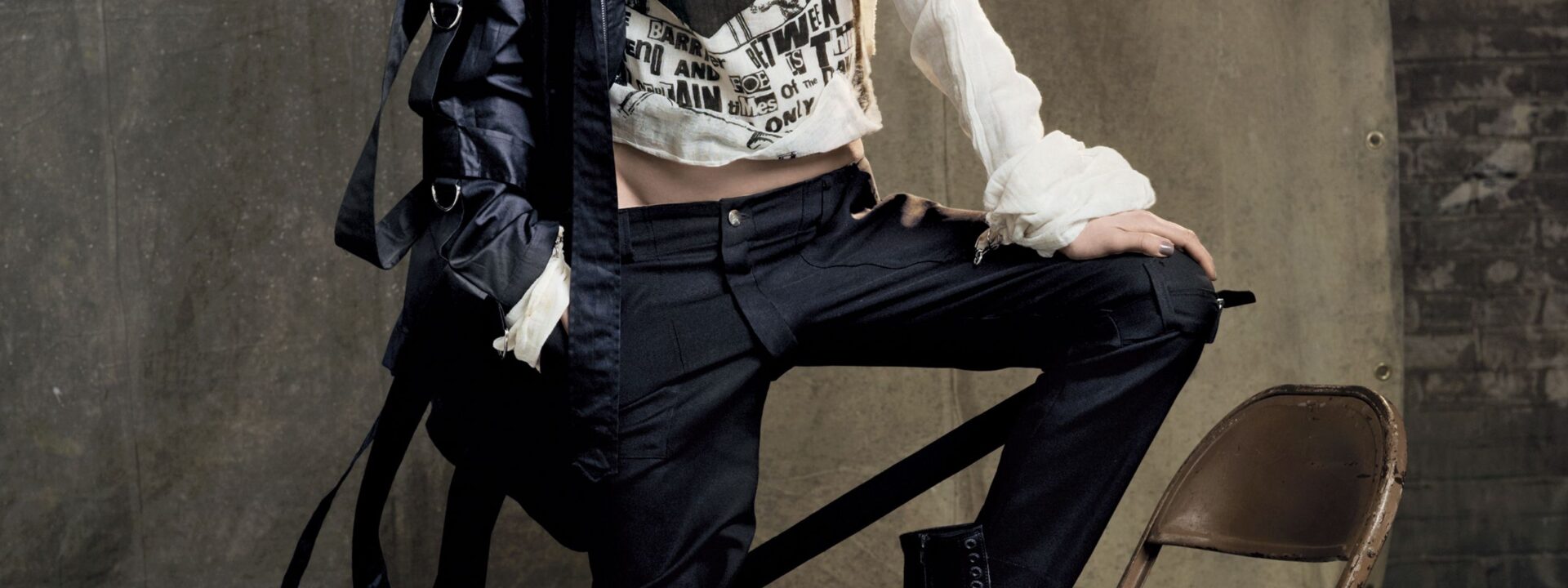
Maybe that’s why, when I look back on all those nights spent in those places, I struggle to actually picture myself there. Punk, dating back at least to the Sex Pistols in London and the Ramones in New York, has always been as much about style as it is about the music itself. Even in the relatively overlooked early 2000s, within an emo and hardcore scene that was at the time…Obsessed with “authenticity,” punk put its many spectacles on full display: mohawks and studded leather, denim jackets covered in safety-pinned and ironed-on patches, bondage pants, torn shirts, and every kind of facial piercing. My own understated look fit the bands I liked, meant to highlight the ordinary, everyday nature of songs about heartbreak and betrayal. Looking back, I now see a link I couldn’t grasp or act on then—between the joy I found in improv and the performative possibility of being a kid at a punk show. A change of clothes, a shift in attitude, could have been transformative.
Emily brought dramatic energy to the shows, thrashing through crowds in surreal thrift-store outfits, crowd-surfing, stage-diving, and taking elbows to the face with theatrical flair. I envied how at home she felt in those moments, legitimate in a way I never did. What it would have taken, I think, was a leap—or at least a hop—into the artificial or fantastical, something I wouldn’t allow myself. If I had, a different kind of transcendence might have been possible; I might have become someone else. As it was, I loved being among the punks and earned my small battle scars and stories. But I never fully stepped into the story, never found my role.
In the years that followed, I turned my energy toward writing—a fundamentally inward pursuit, though it does require a kind of persona, a sort of armor, to do it well. I fell in and out of love with Emily, who fell in and out of love with other people, other selves. We both fell out of love with emo, though I’d like to think I’ve carried its spirit of hysterical, wounded masculinity heroically into my adulthood and marriage. Last December in Brooklyn, at a sold-out hometown show for Geese—a band whose youth and attitude carry a trace of emo in its DNA—I found myself the old man in a sea of ecstatic teenagers, silently criticizing their too-choreographed moshing and their habit of filming themselves in the pit. The next morning, I watched the videos they’d posted. They looked amazing. I wasn’t in any of them.
Frequently Asked Questions
Of course Here is a list of FAQs about My Journey with Emo designed to sound like questions from a real person with clear and direct answers
Getting Started The Basics
Q What exactly is My Journey with Emo
A Its a personal process of learning to understand identify accept and manage your emotions in a healthy way Its about building a better relationship with your feelings
Q Isnt this just about being happy all the time
A Not at all Its about experiencing the full range of emotionssadness anger fear joywithout being overwhelmed by them Its about balance not constant happiness
Q Im not very in touch with my feelings Where do I even start
A Start by simply noticing physical sensations in your body Tension a flutter in your stomach a tight chest These are often clues Then try to name the feeling with a simple word I feel stressed or I feel excited
Q Do I need to see a therapist to do this
A While a therapist can be an excellent guide you can start the journey on your own through selfreflection journaling and mindfulness Therapy is a powerful tool if you feel stuck or are dealing with intense emotions
Benefits Challenges
Q Whats the real benefit of doing this Wont it make me overthink everything
A The main benefit is emotional resilience Youll react less impulsively make better decisions and have healthier relationships Its about observing feelings without getting stuck in overthinking them
Q I often feel overwhelmed by strong emotions like anger or anxiety How do I handle that
A First create space Take a few deep breaths or step away for a moment Acknowledge the feeling I am feeling really angry right now This simple act of naming it can reduce its intensity and help you choose how to respond
Q Is it normal to feel worse before feeling better on this journey
A Yes sometimes As you start paying more attention you might become more aware of uncomfortable feelings youve been avoiding This is a normal part of the process and a sign youre making progress