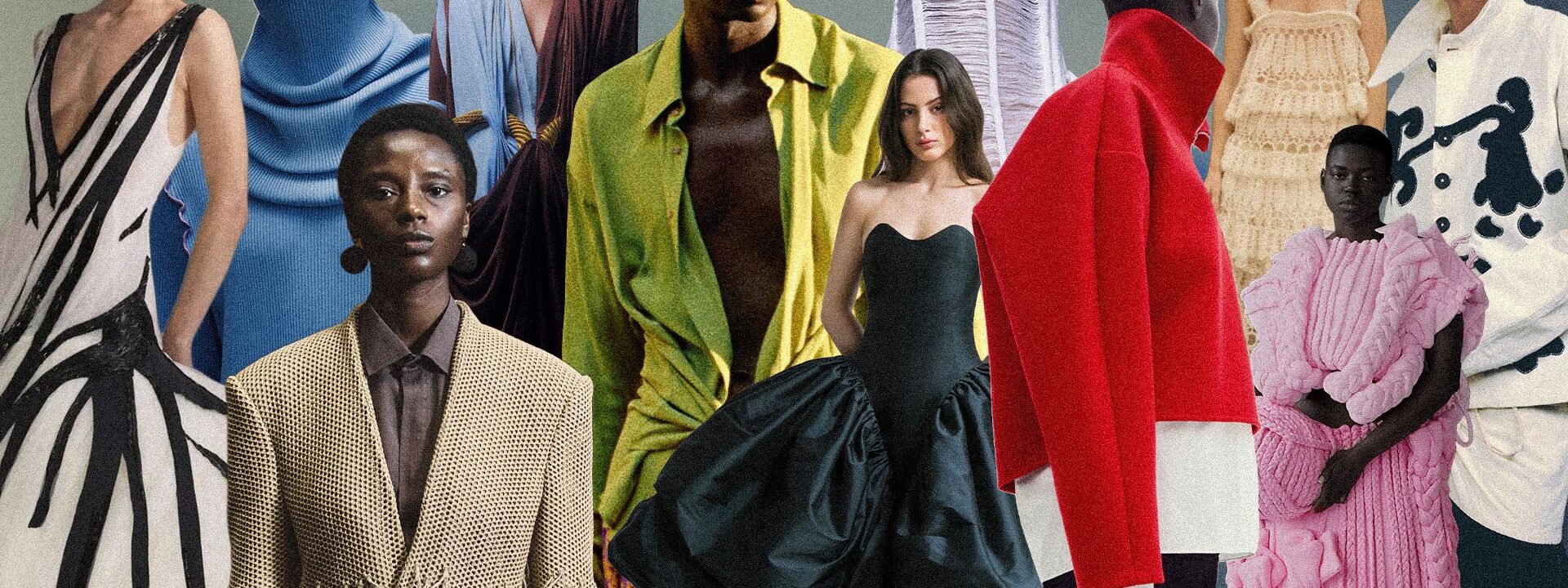
The best thing about working in fashion is discovering the amazing variety of new designers around the world. The way Taiwanese designer 01 Woomin interprets a suit jacket is very different from what Brazil’s Misci creates, but both are exciting takes on the classic style. It’s also always thrilling to find new disruptors, like Anthony Calydon in Paris. “Self-taught, [Calydon] represents to me a new generation of young French designers building brands directly with their community, in control of their own narrative,” says Claire Thomson-Jonville, head of editorial content at Vogue France.
To showcase these unique voices globally, Vogue asked each of its international editions to nominate an emerging designer from their region. “Vogue is such a powerful bolster for brands and designers, I love to see that support translate into success,” says Chloe Malle, American Vogue’s head of editorial content.
Meet this generation’s class of global designers, below.
Adria: Tanja Vidic by Tanja Vidic and Abbas Mandegar
Based in: Borås, Sweden, and Ljubljana, Slovenia
Founded: 2025
Tanja Vidic is a Slovenian designer who specializes in experimental knitwear. Her work blends traditional knitting techniques and craftsmanship with bold, provocative design, unconventional colors, and recycled materials. Her approach is shaped by growing up in a small town in Slovenia, its DIY culture, and the need to work with limited resources. She recently teamed up with Rick Owens to create 20 knitted looks for his Hollywood collection, and her designs have been worn by Cardi B. —Milan Djacic, Vogue Adria
Arabia: Ziyad Buainain by Ziyad Albuainain
Based in: London
Founded: 2021
Ziyad Buainain represents a new generation of Saudi designers eager to make their mark beyond the region. His designs are confident, with generous volumes that still feel modern. They appeal to a younger audience that values both boldness and a certain minimalism. He’s also very aware of the world around him, working with deadstock, recycled, and responsibly sourced fabrics. —Manuel Arnaut, Vogue Arabia
Australia: Samuel Lewis by Samuel Lewis
Based in: Melbourne
Founded: 2023
Launched in 2023, Samuel Lewis is an Australian Taiwanese designer who grew up in Canberra, Vietnam, New Zealand, and the Philippines, before graduating from Polimoda Fashion School. He gained global attention after dressing Lady Gaga for the 2025 Grammy Awards and Coachella, and also worked on her tour wardrobe with her stylists, Nick Royal and Peri Rosenzweig. Lewis has since created looks for Madonna, Chappell Roan, Jennie, and Rosé. His pieces are currently made to order while he works on a full collection show, with signature designs like the striking “mattress” dress, and his broader work is defined by contrasting shapes and experimental textures. —Christine Centenera, Vogue Australia
Brazil: Misci by Airon Martin
Based in: São Paulo
Founded: 2018
Design that looks to Brazil rather than drawing inspiration from elsewhere is at the heart of Misci’s philosophy. Reimagined tailoring, marked by body-conscious cutouts and innovative silhouettes, is one of the brand’s signatures. Two materials have become synonymous with Misci: custom-woven jacquards, often featuring hidden tongue-in-cheek phrases, and pirarucu leather, a sustainable alternative made from the skin of the Amazonian pirarucu fish. The label’s handbags are popular and have become instantly recognizable in Brazil.
The brand’s name comes from the word miscegenation, reflecting the unique blend of cultures that has shaped Brazil through successive waves of immigration since the 19th century. Artistic movements like modernism and popular celebrations such as Carnaval come together in Misci’s universe, resulting in urban, contemporary clothing with a distinctly Brazilian point of view. —Maria Laura Ferreira dasNeves, Vogue Brazil
China: Shushu/Tong by Liushu Lei and Yutong Jiang
Based in: Shanghai
Founded: 2015
Shushu/Tong is a womenswear label based in Shanghai, created by Liushu Lei and Yutong Jiang in 2015. The brand rethinks femininity with a modern twist, mixing romantic details like bows, lace, and delicate trims with sharp tailoring, unexpected shapes, and a confident, contemporary attitude. What makes Shushu/Tong stand out is how honestly it reflects today’s Chinese women—playful yet sure of themselves, soft yet full of energy. —Rocco Liu, Vogue China
Czech Republic: Tomáš Višňovský by Tomáš Višňovský
Based in: Prague
Founded: 2018
Slovak designer Tomáš Višňovský is quickly becoming one of the most exciting new voices in our region. Still finishing his studies at Prague’s Academy of Arts, Architecture and Design, he pairs precise tailoring with a deep look at historical clothing, reworking traditional garment shapes through a modern eye. His collections blend technical skill with an emotional, story-driven approach, making him a standout talent worth keeping an eye on. —Milena Žuravljova, Vogue Czech Republic
France: Anthony Calydon by Anthony Calydon
Based in: Paris
Founded: 2023
I see what Anthony Calydon is doing, and I find his work both interesting and desirable. He started his own label in Le Marais, Paris, and he’s quietly building a loyal following around a clear vision: elevated streetwear, ribbed knits, jersey, and some denim. He’s especially strong on accessories—I loved his ribbed-knit tote bag this summer. Self-taught, he represents, to me, a new wave of young French designers who build brands directly with their community and stay in control of their own story. —Claire Thomson-Jonville, Vogue France
Germany: Lou de Bètoly by Lou de Bètoly
Based in: Berlin
Founded: 2018
Lou de Bètoly is an extraordinary mix of couture skill and sustainable innovation. Designer Odély Teboul (working under the name Lou de Bètoly) turns interesting materials, like vintage and deadstock fabrics, into unique haute couture pieces made entirely in-house. Traditional techniques—such as embroidery, weaving, and knitting—are reworked into a contemporary, mostly feminine and sensual look. The resulting one-of-a-kind pieces show that sustainable fashion can be luxurious, glamorous, and artistic all at once. The label’s international attention—with orders from celebrities like Jennie and Cardi B—shows how relevant this vision is today. Lou de Bètoly impressively proves that a forward-thinking aesthetic and true craftsmanship can come together. —Kerstin Weng, Vogue Germany
Greece: 240791 by Eleni Kavvada
Based in: Athens
Founded: 2021
Athens-born and Italy-educated Eleni Kavvada launched 240791—named after her birth date—as a deeply personal expression of her love for fashion. Her sculptural shapes, exaggerated volumes, couture-level craftsmanship, and imaginative use of reclaimed and unconventional materials create an avant-garde language that often results in one-of-a-kind, flowing pieces. More recently, Kavvada introduced 240791 ready-to-wear, turning her conceptual approach into more wearable clothing. She’s one of those rare designers who leaves you wondering where her creativity will go next. What will 240791 look and feel like five years from now? I can’t wait to find out. —Eliss Kiss, Vogue Greece
Hong Kong: Kinyan Lam by Kinyan Lam
Based in: Hong Kong
Founded: 2023
Hong Kong designer Kinyan Lam—a 2026 LVMH Prize semifinalist and one of Fashion Asia’s “10 Asian Designers to Watch”—brings something rare to the local scene: a quiet emotional depth and storytelling that feels almost radical against the louder, faster work around him. A graduate of the Hong Kong Design Institute and London College of Fashion, and trained in natural dyeing, Lam works under the principle of “slow by dDesigning in close collaboration with over 60 female artisans in Guizhou, China, the brand gently revives and reinterprets centuries-old botanical dyeing and hand-embroidery techniques. The result is a collection of refined, nature-inspired pieces that feel both timeless and contemporary. Step into the studio or flip through the delicately crafted brand book, and you can sense the weight of time and patience in every detail. In Lam’s hands, cultural preservation becomes something living and wearable—supporting rural communities while creating pieces rich in cultural narrative that are increasingly prized by fashion insiders and high-end buyers. —Simon Au, Vogue Hong Kong
India: Taarini Anand by Taarini Anand
Based in: Mumbai
Founded: 2025
Taarini Anand launched her eponymous menswear label in 2025. Her love for hand-knitting—learned over the years from her maternal grandmother and mother—translates into fun, maximal designs that remain wearable, while shaking things out of predictability within the menswear space. With an emphasis on Indian hand-loom, embroidery, and weaving techniques, her largely gender-agnostic design language has global appeal while staying true to its roots. Anand’s ability to balance whimsy and practicality makes hers a label to watch. —Rochelle Pinto, Vogue India
Italy: Des Phemmes by Salvo Rizza
Based in: Milan
Founded: 2019
Founded by Salvo Rizza in 2019, Des Phemmes is a Milan-based womenswear brand defined by its combination of Italian artisanal craftsmanship, couture techniques, and contemporary ready-to-wear. Textile experimentation, embroidery, and refined material research are central to its design approach, resulting in collections that balance decorative detail with functional silhouettes and everyday wearability. The label works closely with Italian manufacturers and artisans, placing particular emphasis on fabric development and hand-finished techniques. Before establishing the brand, Rizza graduated from Istituto Marangoni in Milan and gained experience at Giambattista Valli, where he developed an understanding of couture construction and embellishment. He later collaborated with Italian fashion houses including Max Mara, Emilio Pucci, and Philosophy di Lorenzo Serafini, working across ready-to-wear collections. This professional background informs Des Phemmes’s design language, which combines traditional craftsmanship with a contemporary approach to femininity and material innovation. —Francesca Ragazzi, Vogue Italia
Japan: Cobble Du by Rico Mori
Based in: Tokyo
Founded: 2024
Founded in 2024 by Rico Mori, a designer with a background in jewelry design, Cobble Du is a Japanese fashion label known for its sculptural, architectural silhouettes. The brand also publishes RIPUBLIC, a zine created in collaboration with a diverse range of artists and creatives. Most recently, Cobble Du was featured in the October issue of Vogue Japan as part of “Designers’ Dialogue,” in which Mori joined designer Julie Kegels for a conversation about the beauty of imperfection. With its distinctive design language and multidisciplinary approach, Cobble Du is quickly emerging as one of Japan’s most closely watched fashion labels. —Kazumi Asamura Hayashi, Vogue Japan
Korea: Post Archive Faction by DongJoon Lim and Sookyo Jeong
Based in: Seoul
Founded: 2018
Founded in 2018 by DongJoon Lim and Sookyo Jeong, Post Archive Faction is a brand that reimagines everyday garments through a futuristic lens. It blends streetwear influences, technical fabrics, and experimental pattern cutting. The label was nominated as a semifinalist for the 2021 LVMH Prize, served as the guest designer at Pitti Uomo 2025, and has continued to present its collections during PFW menswear season. —Kwangho Shin, Vogue Korea
Mexico: La Petite Mort by Jonathan Cortez and Andrés Durán
Based in: Medellín, Colombia
Founded: 2018
Colombian designers Jonathan Cortez and Andrés Durán, founders of La Petite Mort, have shaped a tailoring laHere is the rewritten text in fluent, natural English:
Latin America: A language with a distinctly Latin American identity. Rooted in artisanal craftsmanship, their creations expand traditional tailoring codes by reflecting the many voices, traditions, and cultural contexts that coexist across the region. —Karla Martinez, Vogue Mexico
Netherlands: Tess van Zalinge by Tess van Zalinge
Based in: Amsterdam
Founded: 2016
Tess van Zalinge is redefining Dutch couture through architectural silhouettes, poetic storytelling, meticulous craftsmanship, and a deeply considered approach to sustainability. From her Amsterdam atelier, she creates demi-couture collections that transform reclaimed materials into modern heirlooms, where heritage, innovation, and femininity meet. —Linda Gümüs-Gerristen, Vogue Netherlands
Philippines: Bagasáo by Joseph Bagasao
Based in: Manila
Founded: 2016
Founded in Manila by Joseph Bagasao, Bagasáo is a contemporary womenswear label known for unexpected silhouettes, precise construction, and a deep respect for craftsmanship. Hand-stitched details, contrasting topstitching, and surprising fabric combinations define the label’s signature style. With sustainability at its core, Bagasáo works with natural fibers, repurposed textiles, and a careful approach to production. —Trickie Lopa, Vogue Philippines
Poland: Karen Arcanjo by Karen Arcanjo
Based in: Orneta, Poland
Founded: 2021
Karen Arcanjo is a Polish designer who draws on her country’s folk traditions and rich culture of handcraft to create a distinctly contemporary fashion language. Working with independent artisans across Poland, she incorporates crochet, hand-knitting, and embroidery into garments that celebrate the time, knowledge, and individuality held within handmade techniques. Rather than quoting folklore literally, she distills its textures, methods, and emotional memory into modern, quietly expressive silhouettes. Her work shows how regional craft can be preserved as a living and evolving form of design. —Ina Lekiewicz, Vogue Poland
Portugal: Arndes by Ana Rita de Sousa
Based in: Porto, Portugal
Founded: 2019
Focused on craftsmanship and sustainability, Ana Rita de Sousa, the designer behind Arndes, always wanted to express herself through unconventional silhouettes in textiles, ensuring that form and function always found their sweet spot in the brand’s designs. Committed to reducing waste by reusing deadstock fabrics or upcycling staples, turning classics into fashion statements, this made-in-Portugal name is exactly what any wardrobe that loves timeless pieces with a touch of design needs and wants. A case in point: its winter collection, which prioritizes rich textures and lines that feel familiar yet unconventional. —Sofia Lucas, Vogue Portugal
Scandinavia: Taus by Freyja Taus and Juho Lehiö
Based in: Copenhagen
Founded: 2024
The Danish design duo behind Taus, Freyja Taus and Juho Lehiö, describe their Copenhagen studio as a demi-couture house, built on archival tailoring and dressmaking seen through a contemporary lens. Every look is handmade, thoughtfully constructed, and highly complex at the same time. Their commitment to upcycled and deadstock materials, their archival references that never tip into retro, and their passion for craftsmanship make us at Vogue Scandinavia fall in love with everything they make. Founded in 2024, they already work at a pace and level of intention that most established houses have long since abandoned. —Martina Bonnier, Vogue Scandinavia
Singapore: Putri Adif by Putri Adif
Based in: Singapore
Founded: 2025
Putri Adif is one of Singapore’s most compelling emerging designers, bringing a distinctly Southeast Asian perspective to the conversation around fashion, heritage, and innovation. Drawing on her Javanese and Peranakan ancestry, she translates traditional dress and family heirlooms into a contemporary language shaped by sculptural construction and digital fabrication. Her work reflects the complexity of Singapore itself: culturally layered, technologically progressive, and connected to the wider region. Through her thoughtful neThrough her negotiation of memory and material, Putri is helping to define a bold and original vision for Singaporean fashion. —Desmond Lim, Vogue Singapore
Spain: Ernesto Naranjo by Ernesto Naranjo
Based in: Madrid
Founded: 2018
Spanish designer Ernesto Naranjo has been a finalist for the CFDA/Vogue Fashion Fund four times (2019, 2022, 2024, and the current 2026 edition). Born in Seville, he studied at Central Saint Martins and worked for top labels like Balmain (with Olivier Rousteing) and Maison Margiela (led by John Galliano) before launching his own brand. His experimental approach to patterns, craftsmanship, and draping is central to his work. International stars such as Zendaya and Ester Expósito have recently worn his deconstructed, timeless pieces. —Inés Lorenzo, Vogue España
Taiwan: 01 Woomin by Hua
Based in: Taipei
Founded: 2020
01 Woomin is a Taiwanese womenswear label founded in 2020 and led by designer Liu Hsu-Hua (Hua). Hua studied at Parsons School of Design in New York and later interned with German designer Melitta Baumeister. The brand blends minimalism, practicality, and deconstruction, with a strong focus on fabric, tailoring, draping, and craftsmanship. Its collections mainly use natural Japanese fabrics and Italian wool, emphasizing understated silhouettes and feminine lines. —Leslie Sun, Vogue Taiwan
Thailand: Sirivannavari by Her Royal Highness Princess Sirivannavari Nariratana Rajakanya
Based in: Bangkok
Founded: 2005
Founded in 2005 by Her Royal Highness Princess Sirivannavari Nariratana Rajakanya, Sirivannavari is a luxury fashion house where Western elegance meets the richness of Thai craftsmanship. Guided by the princess’s distinctive creative vision, the brand is known for its refined tailoring, modern femininity, and exceptional savoir faire. At its core is a commitment to preserving artisanal excellence through the Sirivannavari Atelier and Embroidery Academy, where traditional Thai techniques are reimagined with contemporary design. Since joining the official Milan Fashion Week calendar in 2024, Sirivannavari has continued to bring Thai creativity to the global stage, celebrating heritage through a confident, modern expression of luxury. —Kullwait Laosuskri, Vogue Thailand
Turkey: Amor Garibovic by Amor Garibovic
Based in: Istanbul
Founded: 2018
Born in Serbia with Balkan roots and now based in Istanbul, Amor Garibovic studied fine arts at Mimar Sinan Fine Arts University before founding his eponymous brand in Nişantaşı. Known for high-energy couture and dramatic, sculptural eveningwear, Garibovic skillfully bridges rich regional heritage with modern global glamour. His striking custom pieces have appeared in Vogue Türkiye and drawn international attention, notably dressing pop icons like Doja Cat for her world tour, along with top regional stars. —Zeynep Akdogan, Vogue Türkiye
Ukraine: Cili Nochi by Anastasia Bobrovska and Olena Polyvian
Based in: Kyiv
Founded: 2025
Cili Nochi is an exciting emerging designer duo playing with the Y2K aesthetic, creating sexy womenswear staples—like deep-cut draped dresses, asymmetric bra tops, and second-skin leotards. Think Kylie Minogue’s golden era. They’ve instinctively struck a chord with a younger crowd and have been featured in Vogue Ukraine with bold, hot-girl summer looks that feel unapologetic and incredibly feminine. —Venya Brykalin, Vogue Ukraine
United Kingdom: Steve O Smith by Steve O Smith
Based in: London
Founded: 2022
I first discovered Steve O Smith about a year ago in a small studio space in Paris, where he had set up shop for a few days during Fashion Week. His collection was displayed very simply on mannequins but still felt vibrant and full of life. The distinctive black-and-white brushstrokes made each of his neat skirt suits and dresses look like miniature artworks—such a fresh, modern take on a painterly motif, especiallyFor the evening, I asked Smith to create something for me for this year’s Met Gala, given the art theme. The dress he made is easily one of the simplest yet most beautiful looks I’ve ever worn on the red carpet. There’s a playful, childlike charm to his work that’s really captivating, but also something refined and elegant in how the clothes are cut. That balance feels special and very true to British style. —Chioma Nnadi, British Vogue
United States: Attersee by Isabel Wilkinson Schor
Based in: New York
Founded: 2021
Walking into the Attersee studio on the Upper East Side feels like stepping into an elegant, unique world. I try not to use the phrase “jewel box,” but there’s something about being inside a box of fine chocolates, with the atelier’s custom walnut woodwork. Isabel Wilkinson Schor’s pieces blend elegance with ease, using rich fabrics like techno satin and silk linen slub, while keeping the silhouettes simple and understated. The clothes can be worn as a full outfit or mixed piece by piece into your existing wardrobe. My favorites are the artist’s jackets and the ultra-thin cashmere T-shirts. —Chloe Malle, American Vogue
Frequently Asked Questions
Here is a list of FAQs about Vogues Global Class of Emerging Designers split into beginner and advanced categories
Beginner Questions
1 What exactly is Meet Vogues Global Class of Emerging Designers
Its an annual editorial feature published by Vogue that spotlights a select group of upandcoming fashion designers from around the world Its essentially Vogues stamp of approval on the next big names in fashion
2 How are the designers chosen
Vogues editors along with international contributors scout fashion weeks design competitions and social media They look for designers with a unique point of view strong craftsmanship and the potential to become a major label
3 Is this a competition or a contest
No its not a competition There is no winner or prize money It is purely an editorial showcase and a massive publicity opportunity for the chosen designers
4 Im a new designer How can I apply to be in it
You cant apply Vogue does not accept submissions Designers are discovered through Vogues own network and scouting process
5 What are the benefits of being featured
The main benefit is global exposure Being featured in Vogue instantly puts a young brand on the radar of luxury buyers stylists celebrities and investors It often leads to stockist deals and press coverage worldwide
Advanced Practical Questions
6 Does being in the Class guarantee commercial success
No While it provides a massive platform it doesnt guarantee sales Many alumni have become household names but success still depends on the designers business acumen production capabilities and ability to maintain momentum after the hype dies down
7 What is the typical size of the class
It varies by year but the list is usually highly curated and relatively smalltypically between 10 and 20 designers This exclusivity makes the recognition even more significant
8 Are the designers always brand new or can they have existing businesses
They are emerging which usually means they have been operating for less than five years However they often have previous experience working at major luxury houses before launching their own names