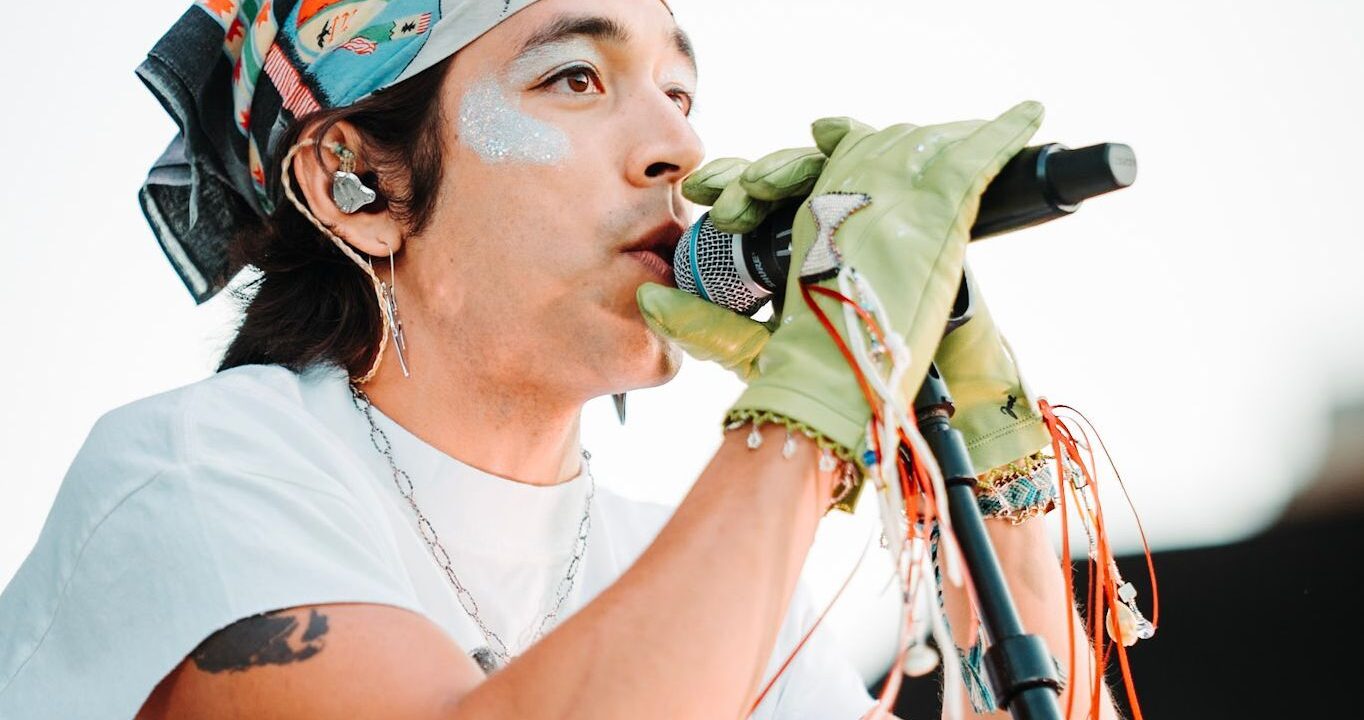
Growing up in Sioux Falls, South Dakota, Oglala Lakota artist Mato Wayuhi—who both acts in and composes for the series Reservation Dogs—fell in love with rap music. “These artists spoke to me more than my own Lakota music did,” says Wayuhi, citing influences like André 3000, Lauryn Hill, and Tyler, the Creator.
When he started rapping and producing himself, he saw an opportunity to bring both worlds together. “I immediately understood how it could be a vehicle to represent my own community in a way that exceeds others’ expectations of Native sound,” he explains. That vision comes through on his latest album, Bygoner, released in November, which blends rap, R&B, and pop with reflections on his personal experiences and identity.
Featuring some of Wayuhi’s most personal and introspective songs to date, Bygoner explores themes of self-reflection and vulnerability—often in the context of love or desire. “Bygoner was inspired by my side-ho era,” says Wayuhi, who is Two-Spirit. “I was falling for folks who were emotionally unavailable, so I had to reckon with what that says about me. I also wanted to strengthen my songwriting and bass-playing skills. Much of what you hear is tailored to those exercises.”
On the title track, for example, Wayuhi delivers a catchy goodbye to an ex. “Your forgiveness ain’t my business anymore,” he sings. “Don’t have a clue what I’m doing, but at least I’m doing me.” On “The Sunroof Song,” he croons about the difficulty of moving on: “Ain’t it something when you move on, and you just want what you don’t need anymore.”
Throughout the album, Wayuhi weaves in elements from his Native culture, especially humor. As he raps on “Suckerz,” featuring Awu: “Girl, you’re Native—what are you doing sitting on your ass? Do you not know that you can get into any national park for free?”
Even more distinctive than his sound is Wayuhi’s personal style, which shines during his live performances. (He often plays sets at events like the annual Santa Fe Indian Market, where he’s also known to walk the runway.) “My style speaks to who I want to be and who got me here,” he says. His vibrant wardrobe—filled with bold prints, beadwork jewelry, and plenty of sleeveless shirts—is built from thrifted finds and pieces by contemporary Indigenous designers like Jamie Okuma. “My style is based on unpredictability, novelty, and the phrase ‘thrifted and gifted,’” Wayuhi notes. “I like one-of-a-kind pieces, not for their price, but for the journey of how you got it and from whom.”
In his new music video “Leftovers,” Wayuhi wears items like a printed ledger art sweater by prominent Indigenous designer Lauren Good Day (whom he has modeled for before). He says he enjoys using fashion as another form of performance art. “Right now, I’m in my twunk era, so I’ve been wearing lots of muscle tees from ’90s powwows and bespoke leather gloves made by my friend Taylor Uchytil, which I’ll be wearing on tour next year,” he shares.
As his star continues to rise, Wayuhi aims to keep experimenting with his sound and expanding his creative practice. That’s part of why he collaborated with so many other exciting Indigenous artists on Bygoner, such as Tia Wood. “One of my goals is to start writing for artists and producing their records,” says Wayuhi, “so I wanted to communicate that by featuring these other Native artists, providing a left-of-center landscape for them to explore their own sounds.” Thankfully, he’s already carved out a special sound that is unmistakably his own.
Frequently Asked Questions
Frequently Asked Questions About End the Year by Listening to Rising Indigenous Artist Mato Wayuhis New Album
General Beginner Questions
Q Who is Mato Wayuhi
A Mato Wayuhi is a rising Lakota composer producer and artist Hes best known for creating the acclaimed score for the TV series Reservation Dogs His work blends contemporary music with Indigenous storytelling
Q Whats the name of his new album
A The specific album title would need to be confirmed as this prompt references a new album Check his official website or streaming platforms for the latest release
Q Why is it suggested to end the year by listening to it
A Its a reflective time His music often explores themes of community identity and resilience offering a thoughtful and powerful soundtrack for looking back on the year and looking forward
Q What genre of music does he make
A His style is eclectic often blending elements of hiphop RB soul electronic and traditional Indigenous sounds Its modern cinematic and deeply personal
Q Where can I listen to the album
A On all major streaming platforms like Spotify Apple Music YouTube Music and Bandcamp Purchasing it on Bandcamp often directly supports the artist more
Deeper Engagement Advanced Questions
Q How does Mato Wayuhi incorporate his Indigenous heritage into his music
A Through lyrical themes spoken word the use of traditional instruments and melodies and by centering stories from his community and experience Its not just aesthetic its foundational to his work
Q What are the main themes I should listen for in this album
A Expect themes of cultural pride personal and collective history healing the complexities of modern Indigenous life and celebrations of community and resistance
Q I loved the Reservation Dogs score How is this album similar or different
A It likely shares the same emotional depth and sonic creativity The album may be more personal and less directly narrative giving him a platform for his own voice beyond scoring for characters
Q Why is it important to support rising Indigenous artists like Mato Wayuhi
A It helps amplify vital often underrepresented narratives in the music industry