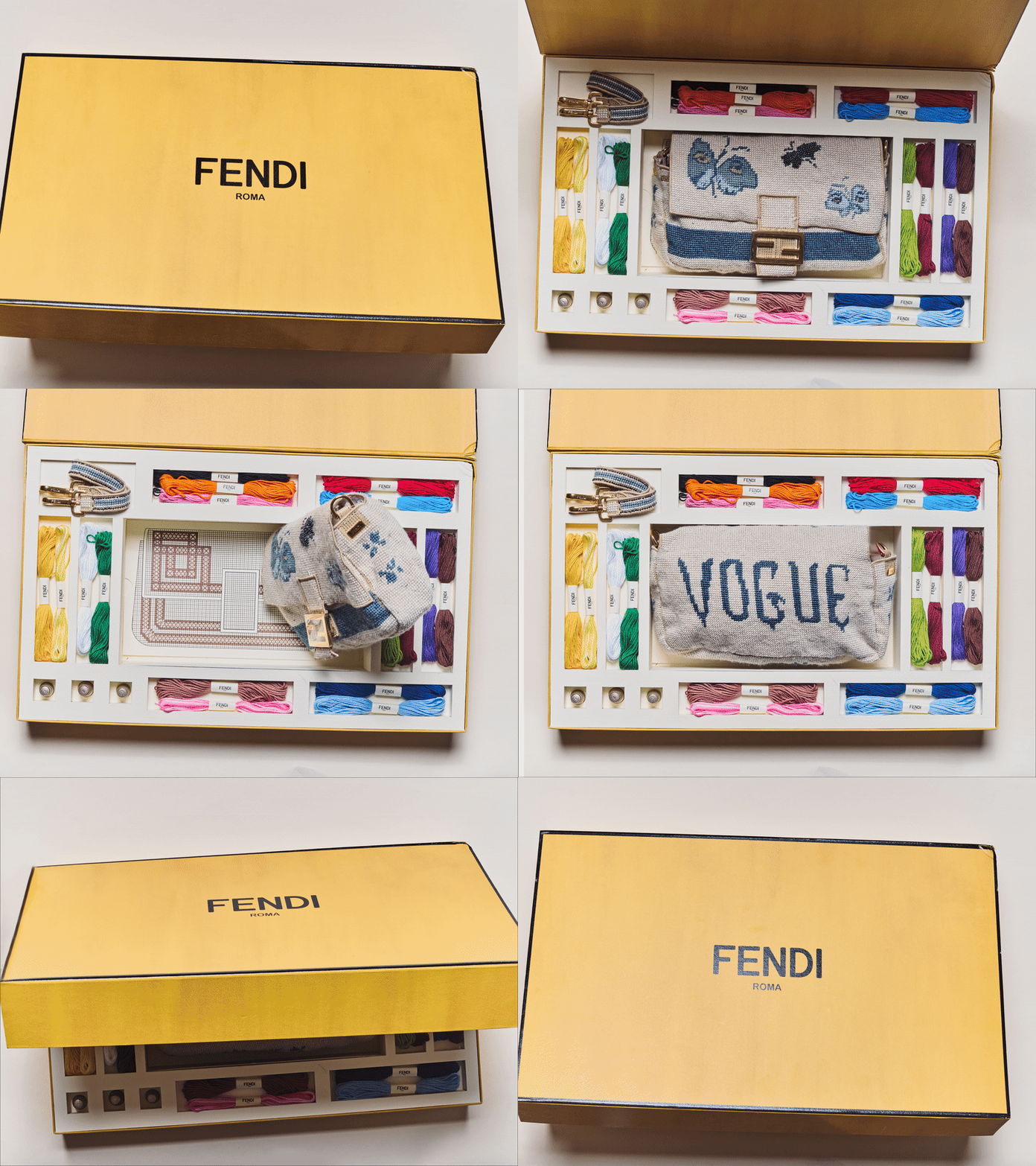
Hello from the craft corner. At the end of last year, I took on the challenge of stitching Fendi’s needlepoint Baguette in time for New York Fashion Week. This is the story of how it came together.
It all began in November with a press release announcing the return of Fendi’s needlepoint Baguette kit, first launched in 2009. I had no idea the DIY bag had become an online craze; I was simply excited by a project that blended my work and personal passions: fashion and needlepoint.
My commute past Old Greenwich’s local needlework shop, The Village Ewe, sparked this hobby. Even though I worried it made me the ultimate Connecticut stereotype, I was quickly drawn to the hands-on, meditative rhythm of stitching. There’s something satisfying about watching the canvas fill up square by square. My only hang-up is that I’m rarely completely happy with my stitches and often feel like pulling everything out to start over. (I’ve been asked, “Can you remake the Fendi Baguette multiple times?” Theoretically, yes, but the canvas would eventually stretch out.)
I contacted Fendi to see if they’d be interested in collaborating. My idea was to design the Baguette using imagery from the Vogue Archive. The PR team agreed, and soon a large yellow box arrived at the office. Inside was the blank canvas Baguette, surrounded by skeins of colorful thread, a needle, thimbles, and a suggested Greek key pattern. Setting the guide aside, I logged into the Vogue Archive and searched for “Christian Bérard.” Known as Bébé to friends like Coco Chanel and Christian Dior, he was a fashion icon in Paris before and after the war. Even today, designers like Anna Sui still reference his work. He’s one of my favorite artists—I love his loose, expressive lines and his use of color.
I knew exactly what I was looking for: a page of his butterfly drawings from 1937. One butterfly with human eyes had always fascinated me. Next, I started browsing Vogue covers year by year. I gathered several Art Deco options and an unexpected find from 1908, featuring what I’d call a drip logo—a precursor to graffiti artist Krink’s style. But I’m getting ahead of myself.
I met with our global design director, Parker Hubbard, who voted for the drip logo and helped me arrange the butterflies. We decided to put the butterflies on the front and the logo on the back. Wanting something for the sides and bottom, I asked Isaac Lobel in the archive if he had the 1939 issue of Vogue Paris with Bérard’s needlepoint on the cover, hoping there might be more stitching inside. The issue wasn’t available in New York, but French archivist Laure Fournis tracked down a copy and shared digital files.
There wasn’t time to have the design painted onto the canvas by a professional, so Parker and I transferred it the old-fashioned way, tracing from a pattern. With printouts in hand, I went home and made my first stitch on December 20. It soon became clear that the twisted handle and sides I’d imagined were beyond my skill, so I tried recreating one of the abstract, butterfly-like flowers from that 1939 magazine. As for colors, after staring at the tan blank canvas and my black-and-white printouts, I chose a sand hue for the bag’s body and slate grays for the designs.And so I began to embroider. I stitched on planes and on the Metro-North train; I stitched in meetings and dreamed of stitching. I had weekly check-ins with my friends at The Village Ewe, who offered advice and cheered me on. Not satisfied with how the logo looked, I switched the palette from grays to muted blues. Then, thinking the design seemed a bit flat, I experimented with beading one of the butterflies. The text worked with big black beads, but in the end I chose micro glass beads in a steely blue. Baguette bags have a soft structure, so to give mine some shape, I sewed wire into the seams and along the top of the front flap. A little over a month into the project, I grew frustrated with the stitching on the sides of the bag—the narrowest and most difficult part to sew—so I pulled almost all of it out and started again. The final piece was the small strap, which I made with blue and sand stripes, edged with beads.
Dear reader, the goal was met: I carried the bag during New York Fashion Week. It proves, I guess, that you can have your Baguette and wear it too.
—Zoe Gustavia Anna Whalen
Photographed by Phil Oh
Documenting the Process
Frequently Asked Questions
FAQs I Sewed Fendis DIY Needlepoint Baguette for NYFW
Q1 What is the Fendi DIY Needlepoint Baguette
A Its a craft kit from Fendi that lets you handstitch the iconic Baguette bags front panel You assemble the finished piece into a bag yourself
Q2 Why would someone make one instead of buying a regular bag
A Its a unique personalized fashion statement Making it yourself adds sentimental value and showcases creativity making it a perfect conversation starter for an event like NYFW
Q3 Isnt needlepoint really hard Do I need experience
A The kit is designed to be approachable for beginners with clear instructions Basic patience and following the pattern are key No prior expert sewing skills are needed
Q4 How long did it take you to complete it
A Completion time varies but it typically takes between 20 to 40 hours of stitching depending on your speed and dedication Its a significant project not a lastminute task
Q5 Was it expensive
A Yes the kit itself is a luxury item with a high price tag The cost is for the brand materials and the unique DIY experience
Q6 What was the hardest part of the process
A For most its maintaining consistent stitch tension and keeping the canvas clean during the many hours of work The final assembly can also be tricky
Q7 How did people at NYFW react to your handmade bag
A It garnered major attention Fashion insiders appreciated the craftsmanship and personal touch It stood out amidst other designer pieces
Q8 Is the finished bag sturdy enough for everyday use
A Its surprisingly durable for special occasions However the needlepoint fabric is more delicate than standard leather so its best for events not heavy daily wear and tear
Q9 Any tips for someone starting this project for a big event
A Start months in advance Work in good light use a frame or hoop to keep canvas taut and dont rush the stitching Practice a small section first to get comfortable