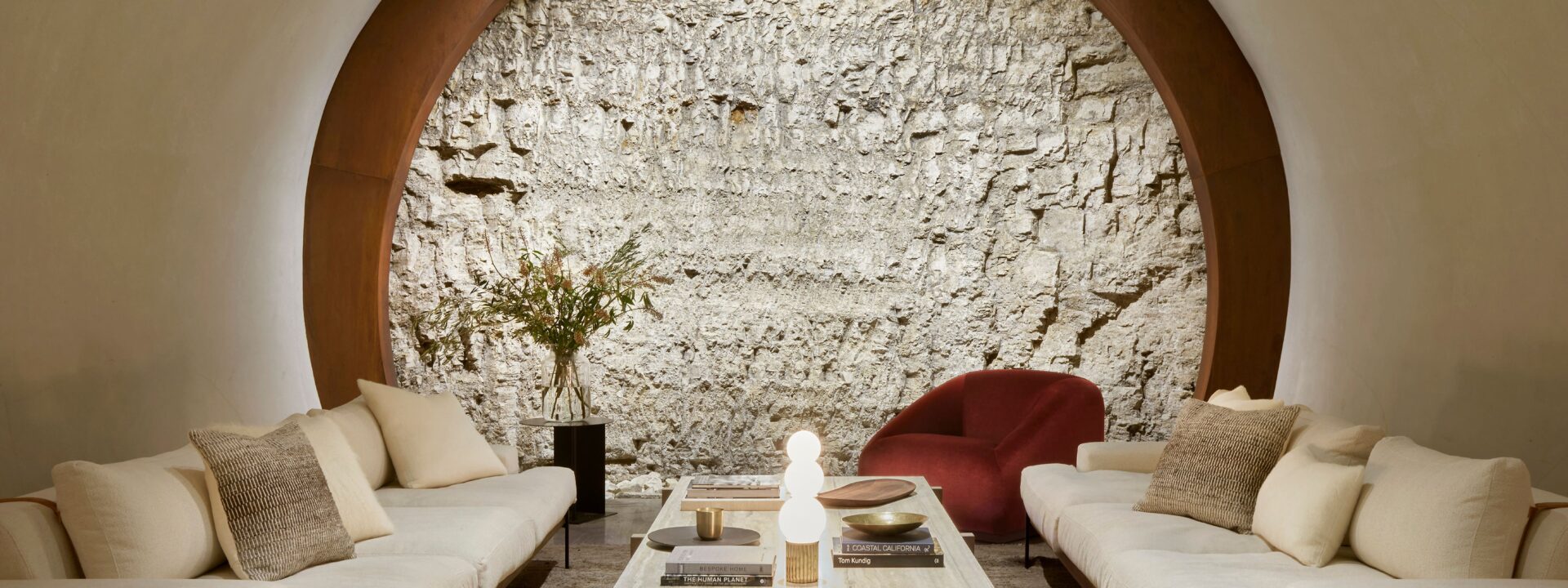
Exploring the merits of a cave might feel a little silly. On one hand, caves are humanity’s oldest form of architecture—clearly a big deal! But on the other hand, when’s the last time any of us actually set foot in one? For most people, the answer is not recently. However, if you’re like me and have discovered the otherworldly pleasure of tasting wine underground, the topic of caves doesn’t seem so silly after all. On a practical level, storing wine in a subterranean chamber helps maintain cool, consistent temperatures that are ideal for aging. But from a theatrical perspective, the chance to descend into the earth, wander through dark corridors, and sample historic bottles by candlelight? That’s an experience I’d recommend prioritizing.
For many, wine tasting as a weekend activity usually brings to mind pastoral verandas overlooking rolling vineyards, bathed in sunshine. That’s all well and good, but there’s something about a cave—so moody, so mysterious—that truly ignites the soul. The first time this really hit me was during a visit to Champagne several years ago, deep inside the region’s iconic crayères. These tunnels date back to Roman times, when Cretaceous chalk was quarried, partly to build the city above. Over a thousand years later, the crayères found a new purpose: storing and aging Champagne. Walking through these ancient passageways, running my fingers over limestone walls so soft and damp that chalk dust clung to my fingertips, felt like pure, unadulterated time travel. It’s beyond me why more people aren’t hanging out in wine caves.
Photo: Leif Carlsson for Champagne Billecart-Salmon
Elsewhere around the world, caves play a similarly important role in a wine region’s identity. From the tuffeau caves of the Loire Valley to the volcanic chambers of Santorini, there’s an underground experience for every kind of cave enthusiast. Below are five memorable destinations wine lovers should know about for future subterranean journeys.
Napa Valley, California
Schramsberg Vineyards
Photo: Getty Images
Wine caves require specific geological conditions to exist, with rock type being the most critical. The rock needs to be soft enough to excavate, yet hard enough to remain self-supporting once carved out. That’s why materials like volcanic tuff fit the bill—and that’s exactly what you find in Napa Valley. This famous California wine region sits in an area of ancient volcanic activity, with hills on either side of the valley made of volcanic rock. The first Napa caves were dug in the late 1800s by wineries like Schramsberg and Beringer (both still open for tastings). Prohibition halted development for decades, and it wasn’t until the early 1980s that wine cave production picked up again. Far Niente is credited with building the first modern cave, sparking a revival that has since grown into a thriving cave community across the valley. Today, dozens of Napa Valley wineries have underground cellars, including favorites like Pine Ridge Vineyards, Inglenook, and Hall Rutherford (plus a highly anticipated cave at Bouchaine Vineyards opening this fall).
Santorini, Greece
Photo: Getty Images
Wine has been made in Santorini for thousands of years, and it’s known for vines woven into baskets at ground level to protect them from the island’s strong winds. (Look up a photo!) It’s also famous for its volcanic soil, a result of the Minoan eruption around 1600 BC, which blew out the volcano’s center and left behind a dramatic caldera. The island’s caves come from this same volcanic geology, with soft pumice and tuff rock that winemakers have used as cellars for centuries, carved directly into the hillsides. It’s a dreamlike wine region by any measure, and no visit to the island is complete without some kind of cave experience. A few ideas to get you started: the “secret” wine cave at Mystique, the 400-year-old wine cellar at Vedema, and a honeymoon-worthy wine tasting put together by the team at Canaves Collection.Champagne, France
The wine caves at Champagne Billecart-Salmon in France.
Photo: Leif Carlsson for Champagne Billecart-Salmon
Much of the bedrock beneath Champagne was formed millions of years ago from the shells and tiny organisms of an ancient sea. The result? Brilliant white chalk that’s perfect for caves and also stores water for the vines growing above. These caves are ideal for méthode champenoise, which needs steady temperature and humidity, no light, and no vibration. Naturally, there’s no shortage of tours and tastings in Champagne. For the Roman-era tunnels mentioned earlier, head to the city of Reims, where they’re most common. And be sure to add charming villages like Aÿ to your plans, where producers like Billecart-Salmon offer tours of their chalk tunnels and elegant grounds—including the historic one-hectare Clos Saint-Hilaire vineyard, which produces their most prestigious wine of the same name.
Willamette Valley, Oregon
Photo: Abbott Claim
While the wine region as a whole isn’t especially known for its caves, the Willamette Valley has a few standout options that would make a great addition to your Oregon wine country trip. First, Abbott Claim offers candlelit tastings of their low-intervention wines in an underground cellar (caviar included). Then there’s the legacy cave tour at Archery Summit, which takes guests through its barrel-filled caves carved into the basalt bedrock of the Dundee Hills. And while it’s not technically a cave, the Barrel Hall at Antica Terra feels just like one. After entering through a tunnel of black-stained cedar planks, guests arrive at a long table surrounded by Douglas fir walls and wine shelves, with a glowing paper lantern overhead.
Loire Valley, France
Photo: Getty Images
If you’ve spent any time in the Loire Valley, you already know the chateau is the main attraction. These grand castles were built from quarried tuffeau, leaving limestone tunnels that were later used for aging wine. In the Saumur wine region, underground caves provide a dark, quiet space for sparkling wines made in the méthode traditionnelle. For a fun twist on a cave tour, Bouvet-Ladubay lets you hop on a vintage bicycle and pedal through their ancient tunnels. Over in Vouvray (where some of the world’s best chenin blanc is made), producers like Maison Brédif welcome visitors into their 10th-century troglodyte cellars, which hold rare wines dating back to the late 1800s. And if you’re in the mood for a celebrated cabernet franc, French Side Travel can take you into the heart of the Bourgueil region to taste in atmospheric underground cellars like Domaine de la Chevalerie.
Frequently Asked Questions
Here is a list of FAQs about the best wine cave tastings around the world written in a natural conversational tone
Beginner Questions
1 What exactly is a wine cave tasting Is it just a regular tasting in a basement
A wine cave tasting is a tour and sampling experience held inside a real cave or underground cellar Unlike a standard tasting room these caves offer naturally cool humid conditions perfect for aging wine You get to taste wine straight from the barrel or bottle right where it was stored
2 Are wine caves cold Should I bring a jacket
Yes most wine caves are a constant 5060F yearround Even if its hot outside youll feel a chill inside Definitely bring a light jacket or sweater even in summer
3 Do I need to be a wine expert to enjoy a cave tasting
Not at all Most tours are designed for everyone from beginners to experts Guides usually explain the basics of how the cave works and why its special for aging wine Just come ready to learn and enjoy
4 Which countries are famous for wine cave tastings
The top spots are France Spain Portugal and Argentina Youll also find incredible caves in California and Italy
Intermediate Advanced Questions
5 How are wine caves different from regular cellars or wine bars
Natural wine caves are carved into rock or hillsides using the earths insulation to maintain stable temperature and humidity Regular cellars are manmade structures that require mechanical cooling Caves often have limestone or chalk walls which can add minerality to the wines character
6 Whats the best time of year to visit a wine cave
Spring and fall are ideal because the weather is mild However visiting in peak summer is actually great because the cave provides a refreshing escape from the heat Avoid rainy seasons if the cave has dirt floors
7 Ive heard of biodynamic wines in caves What does that mean
Biodynamic farming is an organic holistic approach that treats