Perhaps no actor has ever been as completely defined by their own image as Marilyn Monroe. More than 60 years after her death, her look is still instantly recognizable—even to people who have never watched a single one of her movies: that half-smile, the platinum curls, the flowing white halter dress. “A student once told me, ‘I’m so surprised to learn that Marilyn Monroe was an actress,’” says Foster Hirsch, a film historian, author, and professor at Brooklyn College. “‘I thought she was just famous.’”
But looking at Monroe’s work on screen—she appeared in about 30 films in the 15 years before her sudden death—reveals something more surprising. She wasn’t just a movie star; she was a deeply skilled performer with perfect comic timing, emotional depth, and a talent for making even the most carefully crafted image feel natural.
Still, these abilities weren’t widely appreciated during her lifetime, Hirsch notes. “Many people thought you went to a Marilyn Monroe movie just to enjoy her beauty or because she was a star. And did that require acting skills? Of course it did! She had an instinctive sense of what the camera needed to make an impact. But I don’t think she got much credit for that, even from critics.”
As Film Forum celebrates Monroe’s centennial with a broad retrospective of her films, Hirsch highlights five performances that challenge her myth: the dangerous femme fatale that Hollywood quickly abandoned, the dramatic actor buried by studio typecasting, and the roles that suggest Monroe’s greatest performance may have been playing the version of herself the world wanted to see.
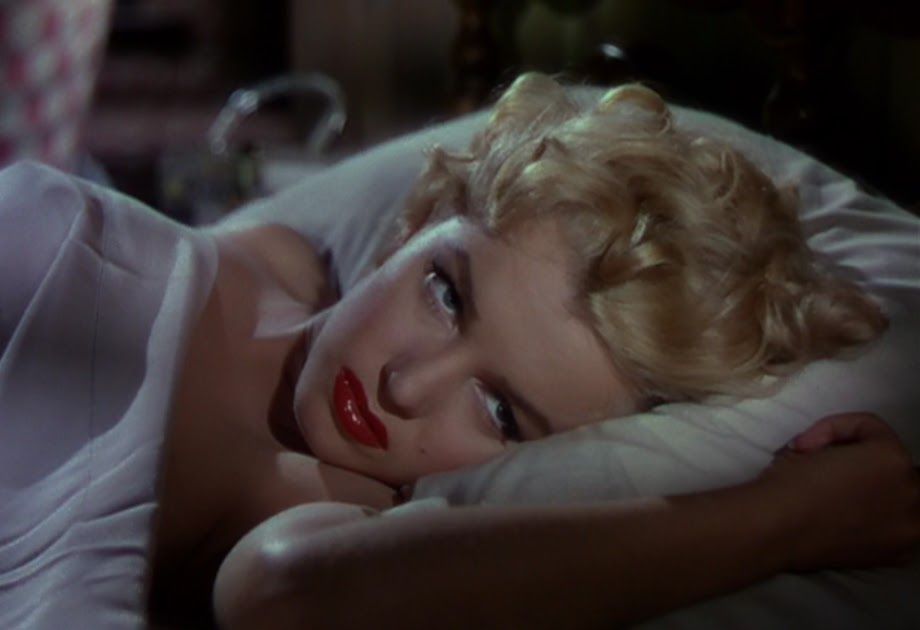
Niagara (1953)
Photo: Courtesy of Film Forum
I’m old enough to have seen these films when they first came out. When Niagara was released, people almost immediately started talking about a great new movie star being born. But the way she’s presented in that film is unlike anything the studio did with her afterward. Here, she’s a film noir femme fatale. She’s dangerous. Her beauty and sexuality are actually deadly to the men around her, and Monroe’s character knows it. Her studio, 20th Century Fox, decided they wanted to present her mainly as a light comedian. They created this persona of the sexy blonde, which in the 1950s meant a certain kind of sexual restraint. They didn’t want her to have a threatening sexual image, but a much more likable and universally appealing one.
How to Marry a Millionaire (1953)
Photo: Courtesy of Film Forum
Here, she feels so fresh, blending the dizzy, flighty blonde archetype with a cleverness that didn’t offend anyone. She wasn’t aggressive or pushy. She invited us in, so you felt like you were on her side. Audiences loved her—she was hugely popular at the time. Monroe’s softness is contrasted with the sharp, tough quality of Lauren Bacall, whom people didn’t like. And Betty Grable knew the studio was grooming Marilyn to replace her—Grable had been Fox’s top star in the ’40s with her musicals and comedies—yet she was very generous and kind to her. This film set the template for the Marilyn Monroe archetype at Fox: a charming sex bomb who posed no threat to anyone.
She said she enjoyed doing comedies, but she believed she had more range than that. She hoped to appear in The Brothers Karamazov, and it sounds almost ridiculous to say, but if she had worked on her voice, maybe she could have done it emotionally. Her voice typecast her. It was a bit too thin, high-pitched, and breathy. She needed voice training to be taken seriously as a dramatic actress in a variety of roles.
The Seven Year Itch (1955)
Photo: Courtesy of Film Forum
I saw this at a repertory theater a few years ago, and when Marilyn makes her first entrance, I’ve never seen an audience react like that: a collective sigh of pleasure throughout the theater. The character isn’t named in the film—she’s just called The Girl—andYou see this fresh, beautiful, instantly appealing person. It was like everyone let out a collective sigh of welcome: So nice to see you, Marilyn. People felt that sense of closeness and connection. Of course, this includes what’s probably the most famous image in any Hollywood film—her standing over a subway grate as her dress flies up. But it’s also a really skillful performance. If you cast that role with an actress who seems a little threatening or even suggestive, the whole scene changes. With Marilyn, it’s completely innocent. The character has no idea what effect she’s having on this summer bachelor.
Bus Stop (1956)
Photo: Courtesy of Film Forum
This is a more serious role that really requires the actor to imagine a past life for the character. Monroe attended The Actors Studio midway through her career and trained with Lee Strasberg. She wanted more training as a performer, and he taught her the Method, which involves actors looking into their own backgrounds to find connections to the character. When she came back from the Studio, she made Bus Stop, which is heavily based on that inner work. But she already knew how to do it. If you watch Don’t Bother to Knock from 1952, where she plays a deeply disturbed babysitter, you can see she was drawing on her own experiences even then, without any formal training. She was a natural comedian and dramatic actress. But something about her fame kept people from taking her seriously as a performer. Here, she gives a performance worthy of an Oscar nomination, plain and simple.
Don Murray, her co-star in Bus Stop, said working with Marilyn was very difficult because she was late, seemed not to know her lines, and was terribly distracted. Many scenes required at least 40 takes before she got them right. All the lightness, playfulness, and airiness of her public image were very different from the real Marilyn, who was a deeply troubled woman. She’s probably the most psychoanalyzed movie star in film history because she seems so open to us. There’s something so honest in her acting that she almost gave us permission to talk about her, just as we still do all these years later.
Some Like It Hot (1959)
Photo: Courtesy of Film Forum
According to critics and historians, this is the best film she ever appeared in after becoming a star. It’s not her greatest performance, because she’s doing what she’s already done. There’s something new in The Misfits, her last film, which isn’t as good as Some Like It Hot, but her performance has surprising range and depth. At the time, she was going through a very difficult period, and there are moments when it almost feels like Marilyn’s own pain or struggles come through, rather than the character’s. Maybe I’m reading too much into it. But there’s a hint of darkness beneath the sunny surface in that film.
Together, these films show just how good she was. She was a great movie star, a wonderful comedian, and could handle straight drama too. This disproves the idea that movie stars don’t need to act. Sometimes playing the image the studio created for you, over and over again, actually requires a lot of technique and acting skill. The private Marilyn was very complicated—the bubbly quality on screen was a construction. She was acting brilliantly all the time.
Marilyn 100 runs from May 29 through June 11 at Film Forum.
Frequently Asked Questions
Here is a list of FAQs about Marilyn Monroes five best movie performances written in a natural tone with clear answers
BeginnerLevel Questions
1 Which Marilyn Monroe movie is considered her absolute best
Most critics and fans agree that Some Like It Hot is her finest film Its a hilarious comedy where she plays a sweet slightly clueless singer and she perfectly balances humor with genuine charm
2 What are the five movies I should watch if I want to see her best work
The most commonly agreedupon list includes
1 Some Like It Hot
2 Gentlemen Prefer Blondes
3 The Seven Year Itch
4 Bus Stop
5 Niagara
3 Was Marilyn Monroe just a dumb blonde in her movies or could she really act
That was the image the studio promoted but her best performances show she was a brilliant comedic actress In Bus Stop she proved she could handle serious dramatic roles too She had perfect timing and a real vulnerability on screen
4 Why is Some Like It Hot so highly praised
Its a masterclass in comedy Monroe plays Sugar Kane a ukuleleplaying singer Her timing is flawless shes incredibly funny and she holds her own against comedy legends like Jack Lemmon and Tony Curtis The movie is also just really really funny
5 Is Gentlemen Prefer Blondes a good place to start
Absolutely Its the movie that cemented her dumb blonde persona but shes actually the one in control Her performance of Diamonds Are a Girls Best Friend is iconic and she has great chemistry with Jane Russell
IntermediateLevel Questions
6 What makes her performance in Bus Stop different from her other movies